Businesses outgrow their space, shrink, relocate or sell. When that happens partway through a multi-year commercial lease, two of the most common exits are subletting the space or assigning the lease to someone else. They sound similar, but they create very different legal relationships and leave the original tenant with different levels of risk.
The basic difference
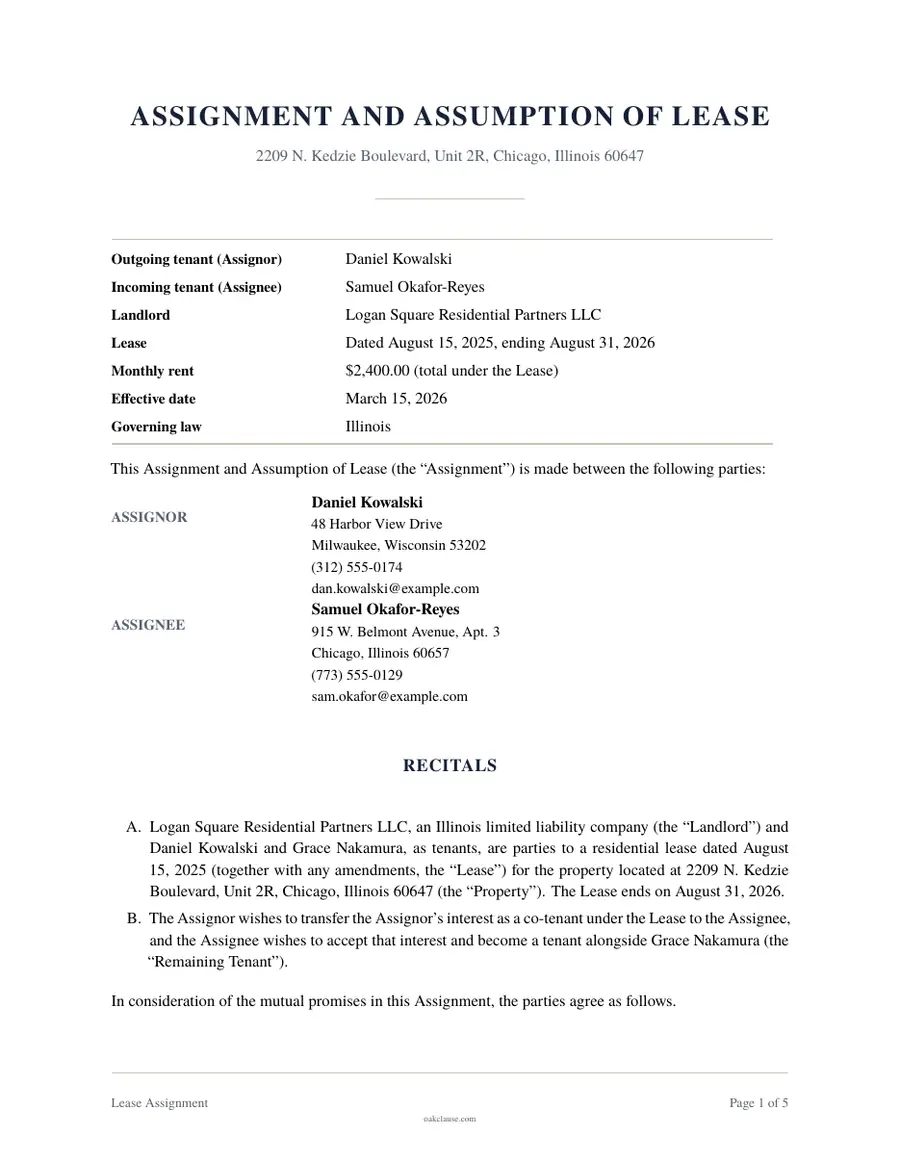
In an assignment, the tenant transfers its entire interest in the lease, for the whole remaining term, to a new tenant called the assignee. The assignee steps into the tenant's shoes and deals directly with the landlord, paying rent and performing the lease obligations.
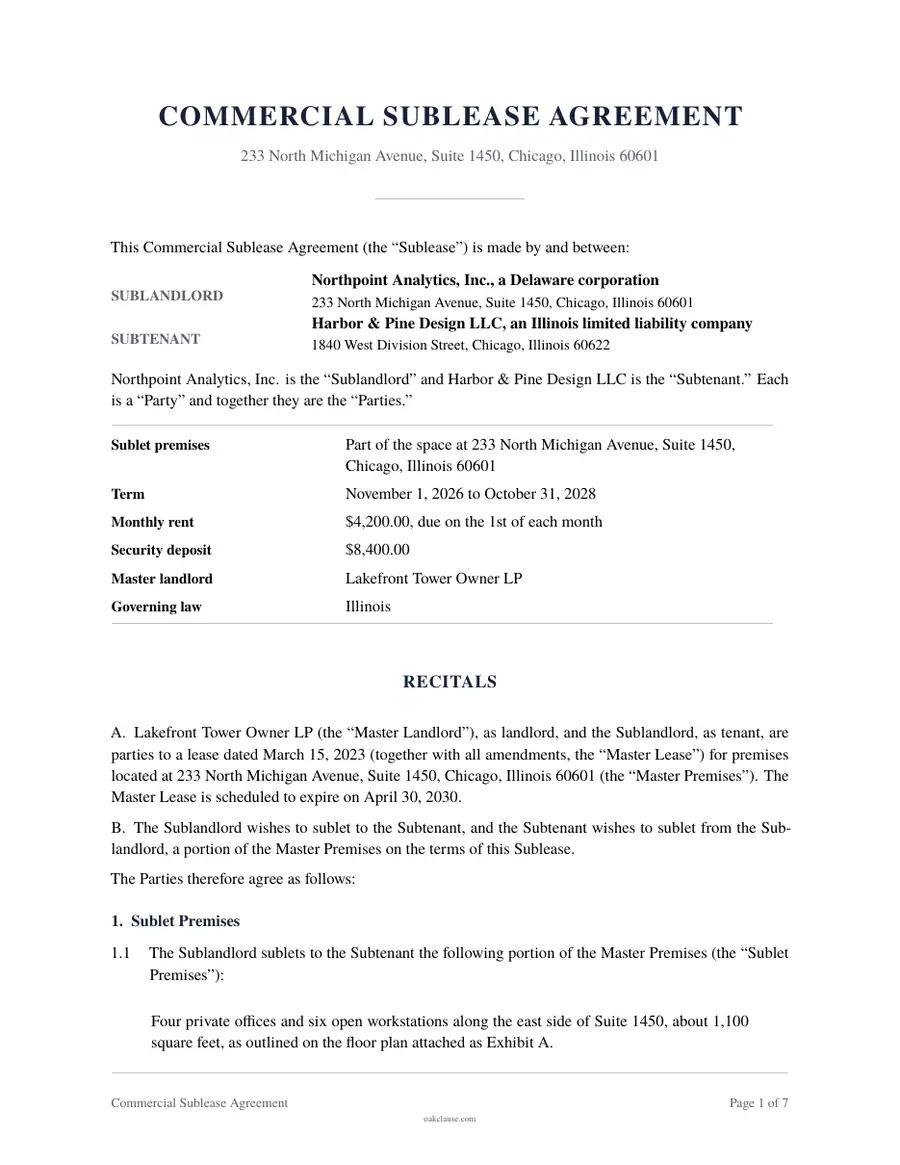
In a sublease, the tenant keeps its lease and becomes a landlord to a subtenant, usually for part of the space, part of the remaining term or both. The subtenant pays rent to the original tenant, who continues paying the landlord under the main lease. The landlord and subtenant generally have no direct contract with each other.
- Assignment: whole premises, whole remaining term, new tenant deals with the landlord
- Sublease: some or all of the premises, for some or all of the term, original tenant stays in the middle
- A transfer of the entire space for the entire remaining term is often treated as an assignment, whatever the parties call it
Who remains liable
This is the point many tenants miss. In most cases, assigning a lease does not release the original tenant. Unless the landlord agrees in writing to a release, sometimes called a novation, the original tenant generally remains responsible if the assignee stops paying rent or damages the premises. The assignee is also liable to the landlord for obligations arising after the assignment.
In a sublease, the original tenant remains fully responsible to the landlord for the entire lease, including any default by the subtenant. If the subtenant stops paying, the tenant still owes the full rent. The tenant's remedy is against the subtenant under the sublease.
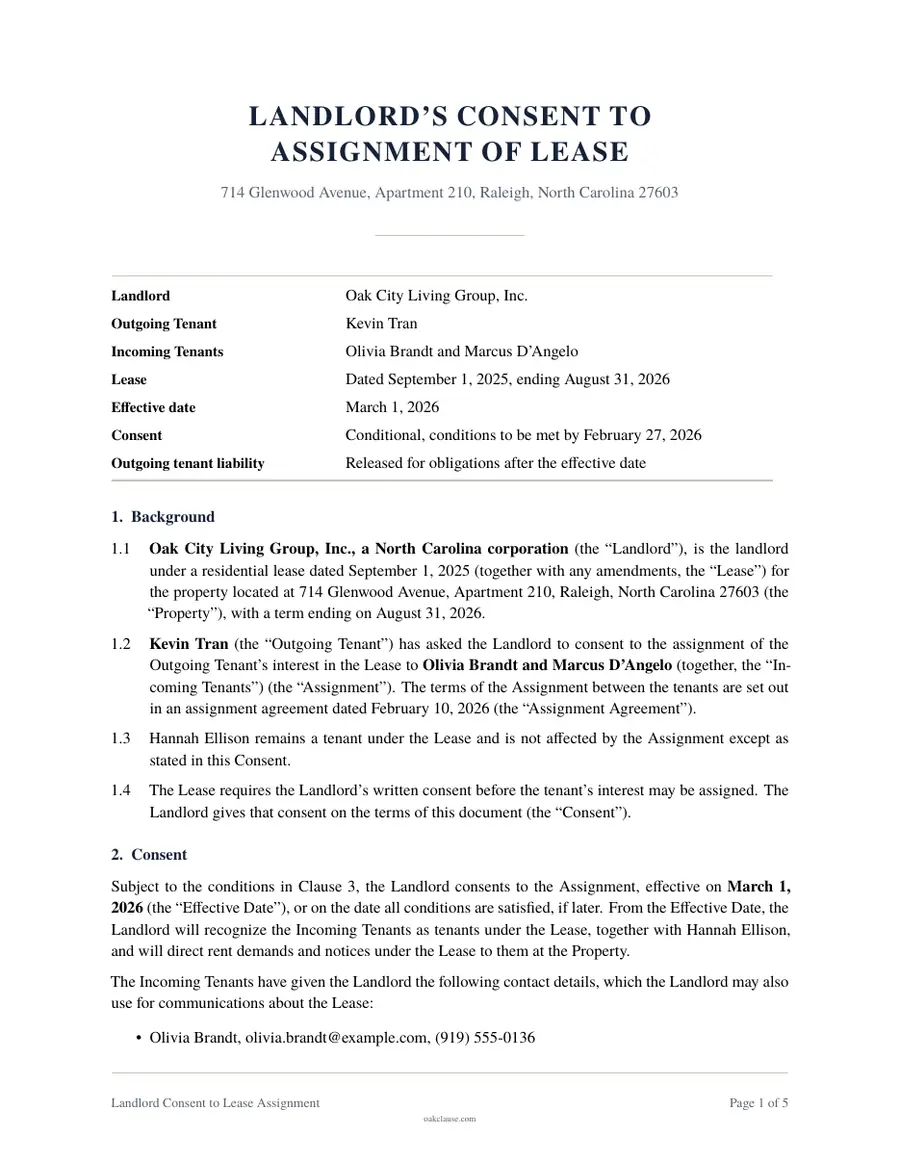
If you are leaving permanently and want a clean break, negotiate for a release as part of the landlord's consent. Landlords often agree only if the assignee is financially strong, provides a guarantee or a larger deposit, or if the tenant pays a fee.
Reading the transfer clause
Almost every commercial lease contains a clause restricting assignment and subletting. The exact wording controls what you can do, so read it carefully before marketing the space. Common provisions include:
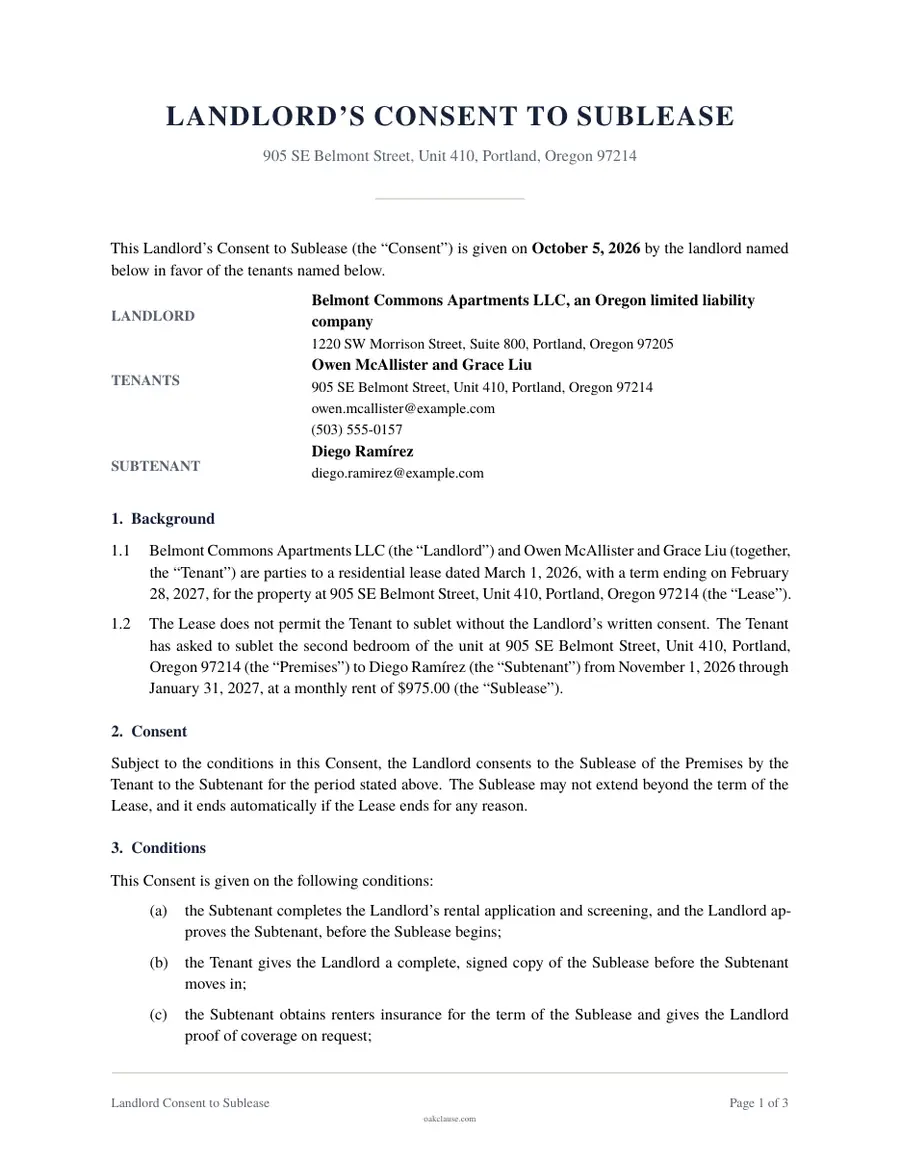
- Consent requirement: no assignment or sublease without the landlord's prior written consent
- Consent standard: whether consent may not be unreasonably withheld, or may be withheld in the landlord's sole discretion
- Change of control: treating a sale of the tenant company, or a merger, as an assignment that needs consent
- Recapture right: allowing the landlord to terminate the lease and take back the space instead of approving the transfer
- Profit sharing: requiring the tenant to share any rent the subtenant pays above the main lease rent
- Permitted transfers: allowing transfers to affiliates or a buyer of the business without consent, sometimes subject to net worth tests
- Fees: reimbursing the landlord's legal and review costs
When consent can be refused
If the lease says consent will not be unreasonably withheld, the landlord generally needs a legitimate commercial reason for saying no, such as the proposed tenant's weak financials, a use that conflicts with other tenants or the building's character, or a use that would increase wear or insurance risk. Courts in different states interpret reasonableness differently, and some states imply a reasonableness standard even where the lease is silent while others do not.
If the lease gives the landlord sole discretion, consent can usually be refused for almost any reason. Transferring without required consent is typically a default that can let the landlord terminate the lease.
What the landlord will want to see
Prepare a complete request package. A well-documented request moves faster and gives the landlord fewer reasons to delay.
- The proposed assignee's or subtenant's identity, business description and intended use
- Financial statements, tax returns or credit references
- The draft sublease or assignment agreement and key business terms
- Any proposed alterations to the space
- Evidence of insurance meeting the lease requirements
- Guarantors, if offered
Drafting a sublease
A sublease should be consistent with the main lease, because a subtenant cannot receive more rights than the tenant has. Many subleases incorporate the main lease terms by reference and make clear which obligations the subtenant takes on, such as maintenance, utilities, insurance and compliance with building rules, and which remain with the tenant.
Address rent and how operating expenses or taxes pass through, the sublease term (which must end on or before the main lease expiry), the security deposit, how the tenant will handle repair requests that require landlord action, and what happens if the main lease ends early. Attach the landlord's consent.
Drafting an assignment
An assignment agreement transfers the lease and typically includes the assignee's agreement to assume all obligations going forward. It should handle the security deposit, apportionment of rent and expenses as of the effective date, the condition of the premises and any furniture or fixtures included, and indemnities between the parties for obligations before and after the transfer. The landlord's consent, and any release of the original tenant, is usually a separate signed document.
Which option fits?
An assignment usually suits a tenant leaving the space permanently, selling its business or handing the entire space to someone else. A sublease suits a tenant that needs to shed only part of its space, expects to return, or cannot find someone willing to take on the full remaining term. Other options, such as negotiating an early termination with the landlord, may also be worth exploring.
Checklist before you transfer
Before signing with a new occupant, confirm that you have:
- Read the transfer, change-of-control and recapture clauses
- Decided whether you need a full exit or partial relief
- Vetted the new occupant's finances and intended use
- Submitted a complete consent request and received written consent
- Negotiated a release if you are assigning and want to walk away
- Signed a sublease or assignment that matches the main lease
- Handled deposits, prorations, keys and insurance certificates