Landlord Consent to Lease Assignment
Approve a tenant's request to hand their lease to someone new, on your terms, with a written record of any conditions and whether the original tenant is released.
Includes 30 days of edits
- 5 to 20 minutes
- Print-ready PDF
What is a Landlord Consent to Lease Assignment?
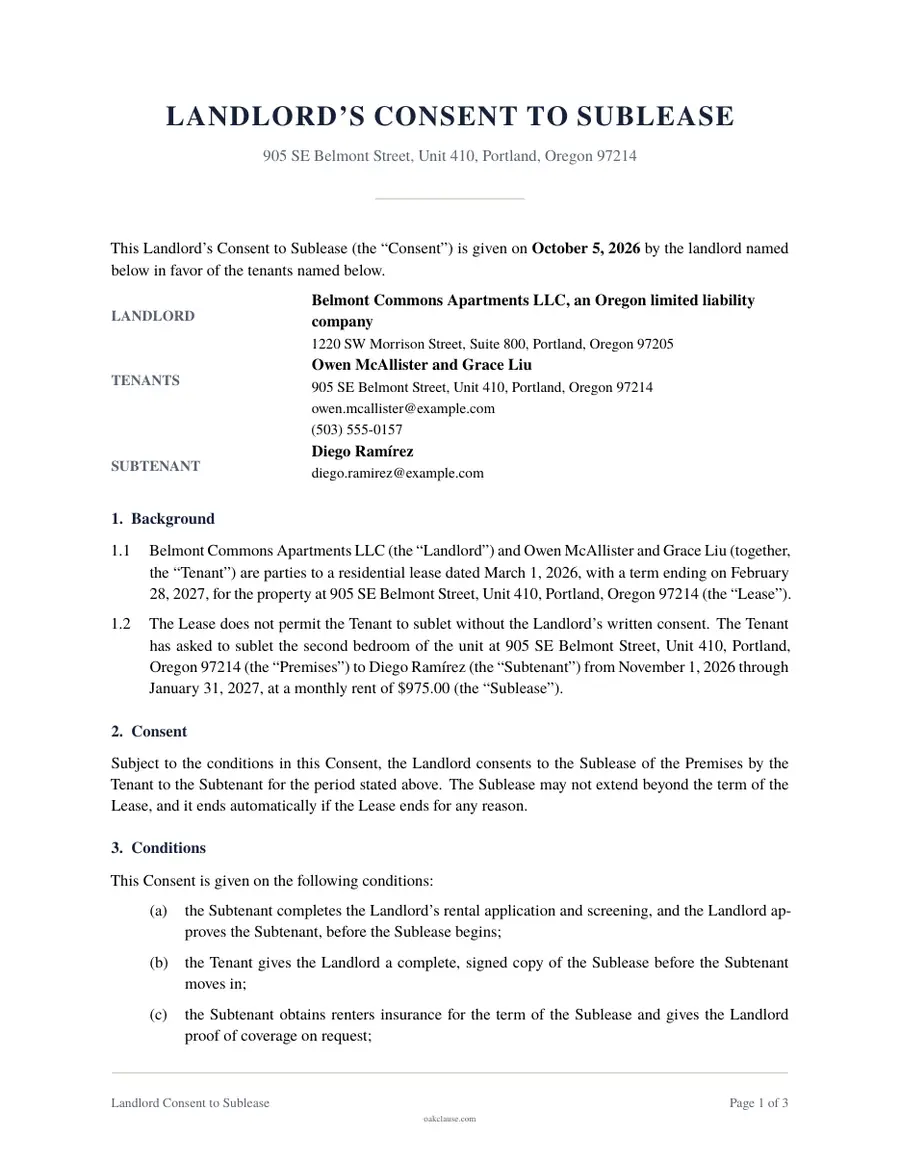
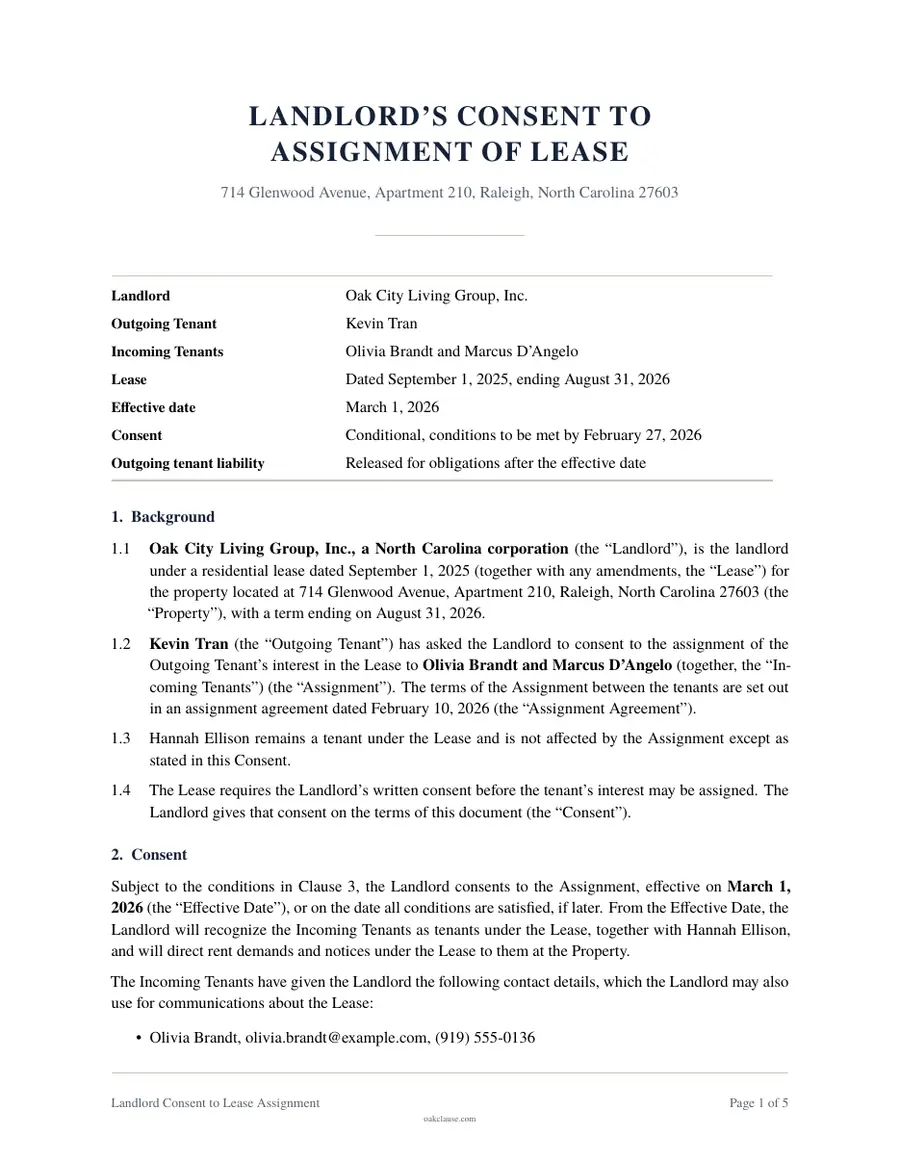
A landlord consent to lease assignment is a written approval that lets a current tenant transfer their lease to a new tenant. Most residential leases forbid assignment without the landlord's written permission, so this document is what turns a tenant's request into an authorized transfer.
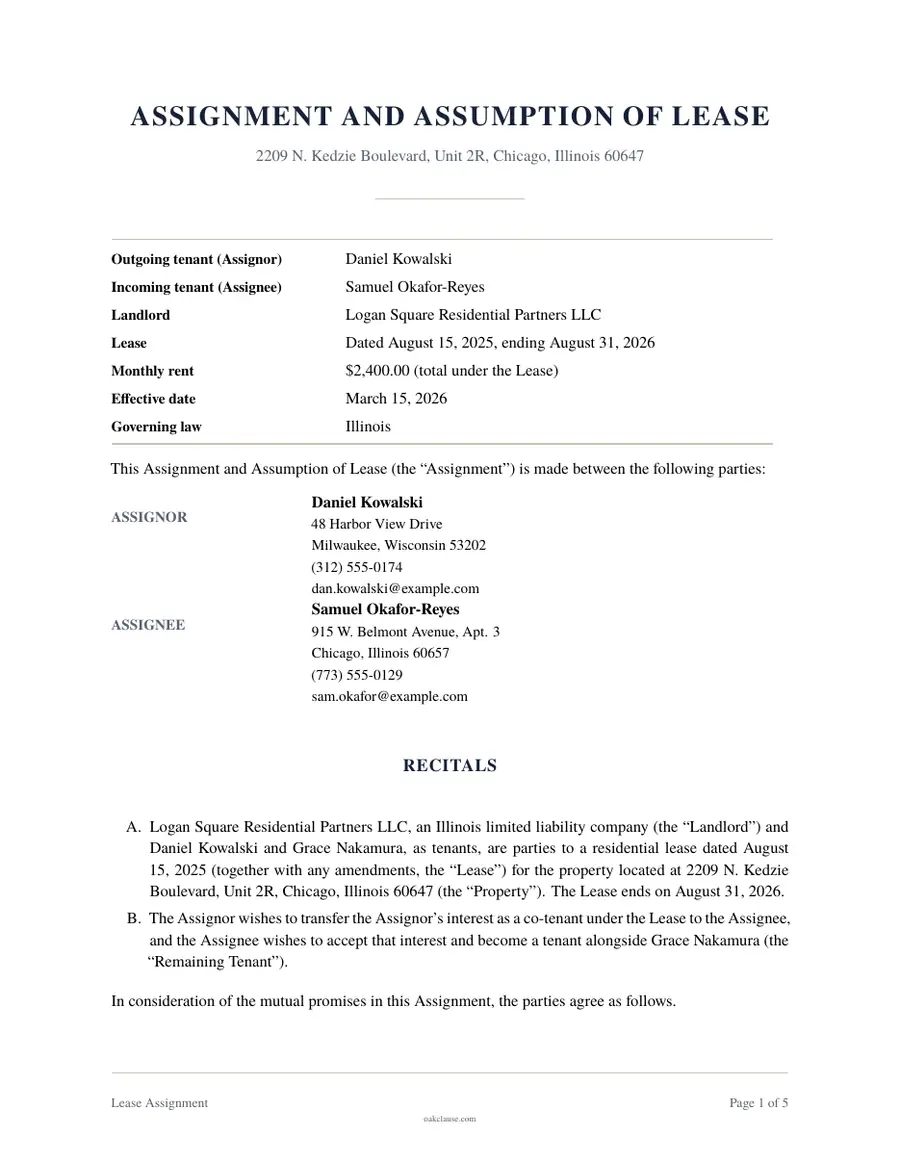
The consent does more than say yes. It identifies the lease, the outgoing and incoming tenants and the date the transfer takes effect, and it lets the landlord attach conditions, such as a new deposit, proof of renters insurance or a processing fee. It also states clearly whether the outgoing tenant is released from future liability or stays responsible if the new tenant does not pay.
Because a consent is often read years later, when a deposit is returned or a dispute arises, clear wording matters. The consent also confirms that approving this one transfer does not waive the landlord's right to approve or refuse any future assignment or sublease.
When to use it
- A tenant has asked to transfer their lease to a replacement tenant and you are willing to approve it.
- You want to approve an assignment only if the new tenant meets certain conditions first.
- One roommate is leaving and you are approving a replacement roommate on the lease.
- The outgoing and incoming tenants have signed an assignment agreement that requires your written consent.
- You want a clear record of whether the original tenant remains liable after the transfer.
What is included
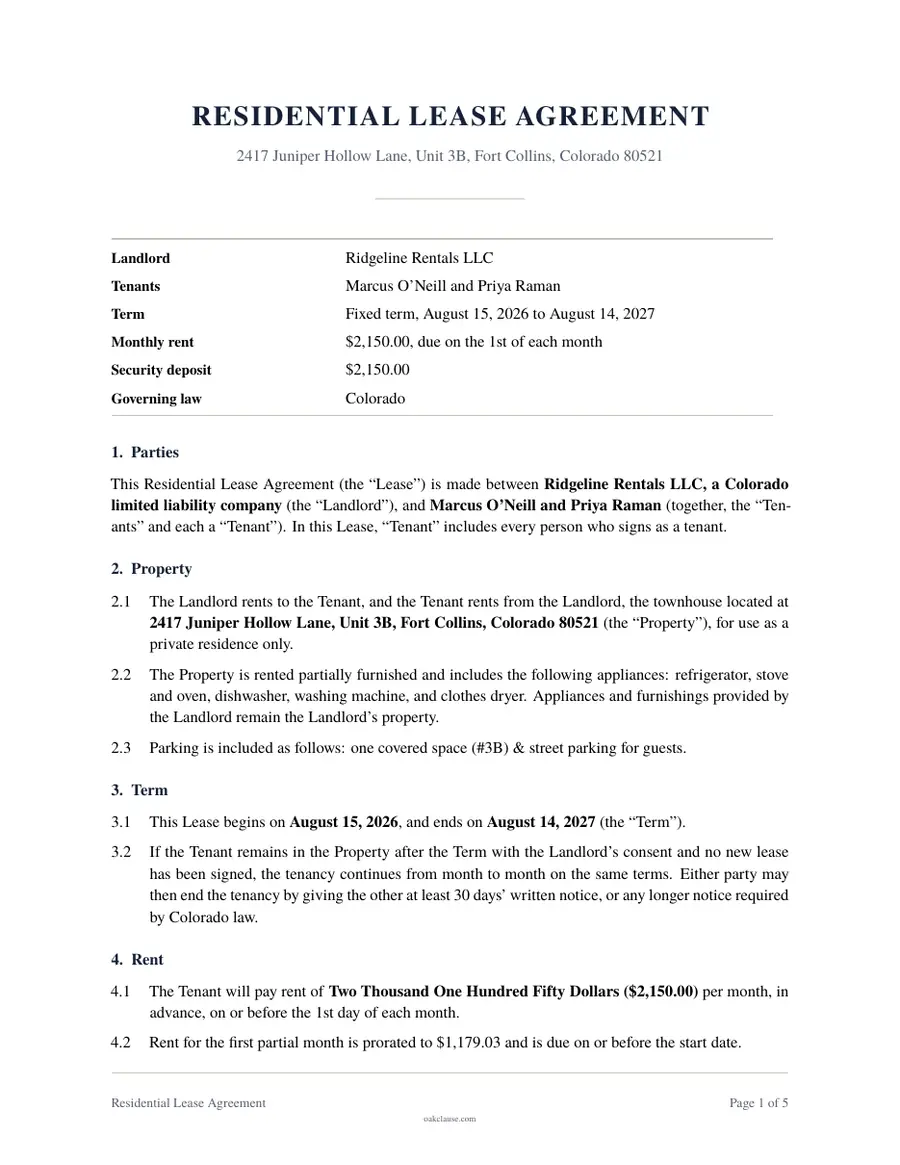
- Identification of the lease, property, landlord and tenants
- Consent to the specific assignment and its effective date
- Optional conditions, such as a new deposit, fee or insurance
- Release of the outgoing tenant or confirmation of continuing liability
- Security deposit treatment after the transfer
- Any changes to rent or other lease terms tied to the transfer
- Statement that consent does not cover future assignments
- Acknowledgment signed by the outgoing and incoming tenants
- Optional notary acknowledgment
How to make your Consent to Assignment
Answer the questions
Tell us about the parties and the terms you want. Most documents take about 5 to 20 minutes.
Review the preview
Check the draft as you go and change any answer. The document updates instantly.
Download, sign and keep a copy
Download a print-ready PDF, sign it with the other parties, and give everyone a copy.
Frequently asked questions
Is a landlord required to consent to a lease assignment?
It depends on the lease and the state. Many leases let the landlord refuse for any reason, while others, and the laws of some states, require the landlord to act reasonably and not withhold consent arbitrarily. Fair housing laws apply as well, so a refusal can never be based on a protected characteristic. Check your lease and your state's rules before deciding.
Does consenting to an assignment release the original tenant?
Not automatically. In most places the original tenant stays liable for the lease after an assignment unless the landlord expressly releases them. This document asks you to choose, and states the result clearly so both tenants understand where they stand.
Can a landlord charge a fee for consenting to an assignment?
Many landlords charge a reasonable processing or screening fee, but some states and cities limit or prohibit certain tenant fees. If you include a fee, the consent applies it only to the extent the law allows. Confirm the local rules before charging one.
Should I screen the new tenant before consenting?
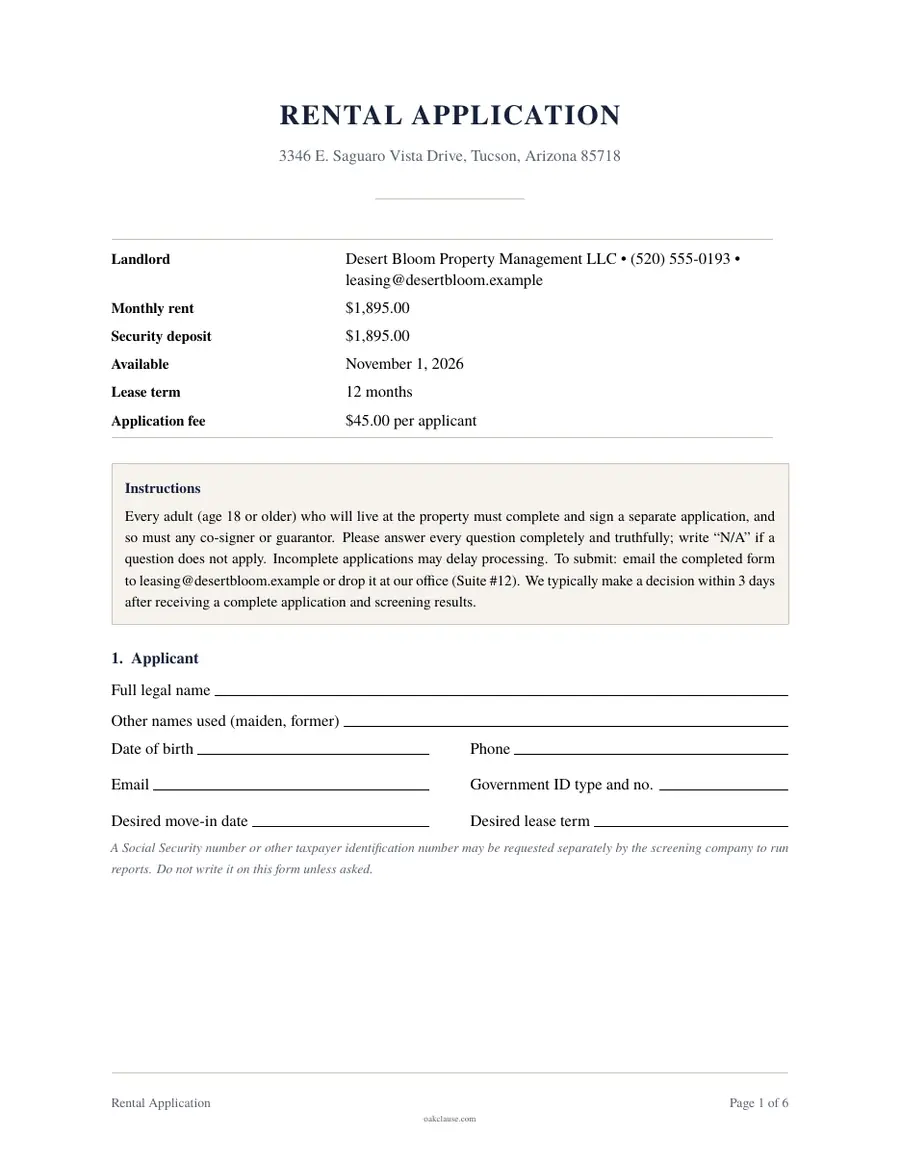
Most landlords screen an incoming tenant the same way they would screen any applicant, typically with a rental application, credit and background checks where permitted, and references. Screening must be applied consistently and in line with fair housing and consumer reporting laws.
What is the difference between consent to assignment and consent to sublease?
With an assignment, the new tenant takes over the lease and deals directly with the landlord. With a sublease, the original tenant stays on the lease and rents to a subtenant. Each needs its own consent, and approving one does not approve the other.
What happens to the security deposit after an assignment?
The landlord can keep the existing deposit and treat it as belonging to the new tenant, refund the outgoing tenant and collect a new deposit, or follow whatever the tenants agreed between themselves. Whatever approach is chosen, the deposit must still be held and returned as the state's law requires.
Who signs the consent?
The landlord or an authorized agent signs to give consent. It is good practice to have the outgoing and incoming tenants sign an acknowledgment as well, confirming they accept any conditions. This document includes that acknowledgment as an option.