Landlord Consent to Sublease
Record a landlord's written permission for a tenant to sublet, with any conditions attached, or send the landlord a clear written request for that permission.
Includes 30 days of edits
- 5 to 20 minutes
- Print-ready PDF
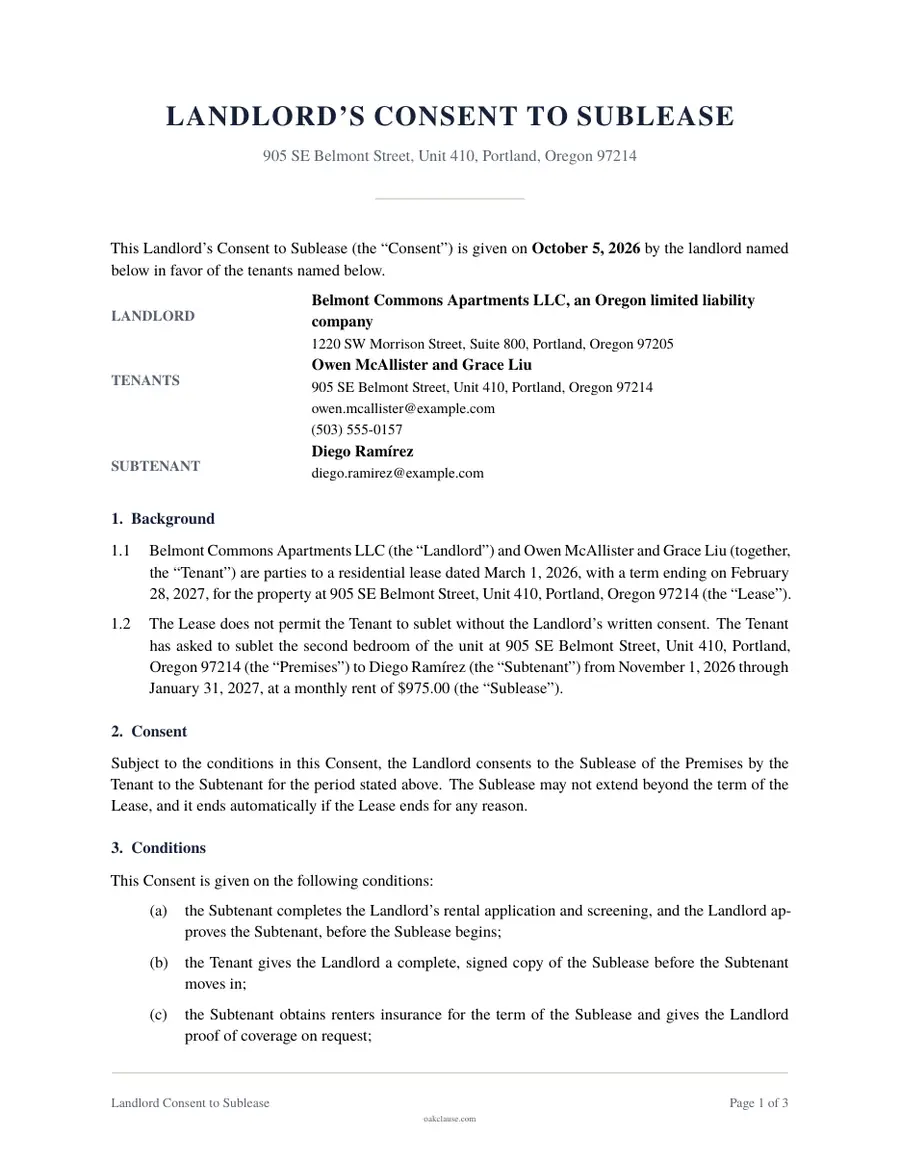
What is a Landlord Consent to Sublease?
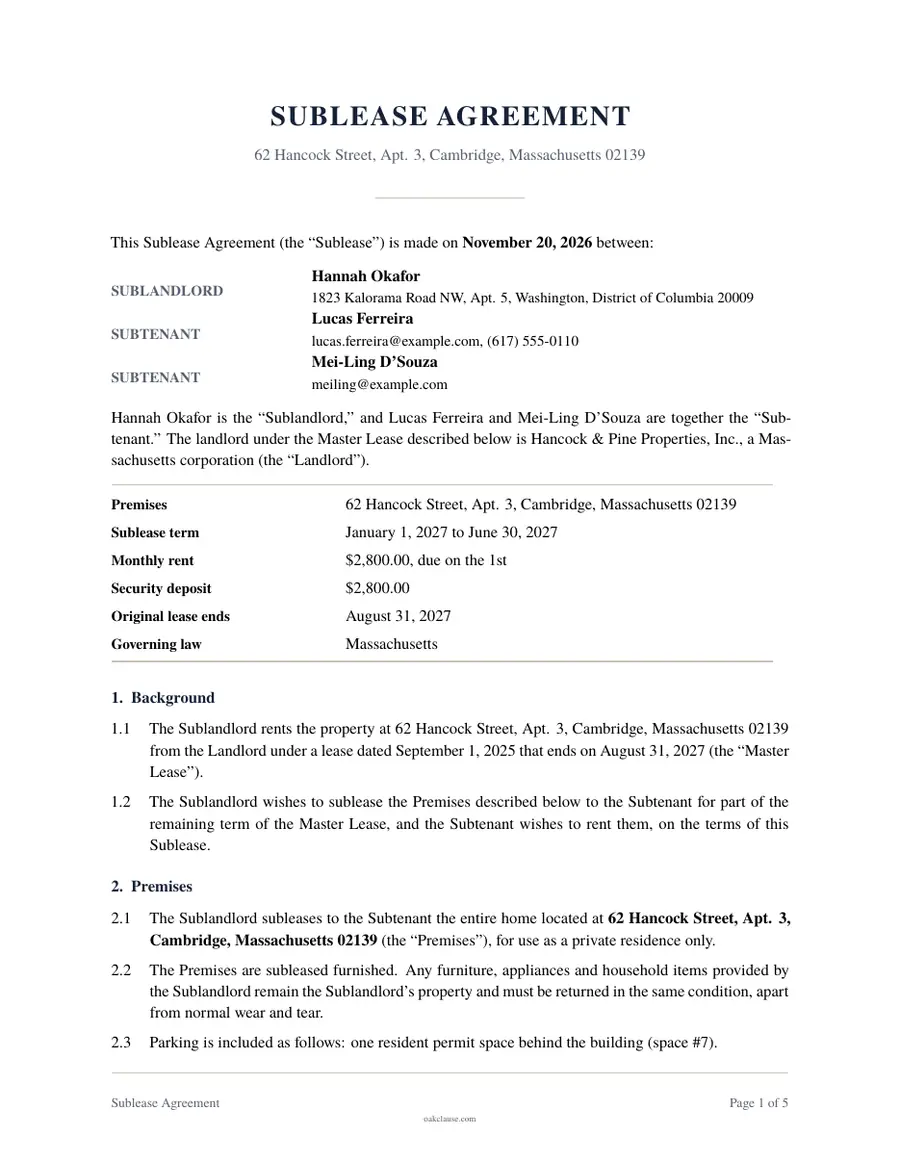
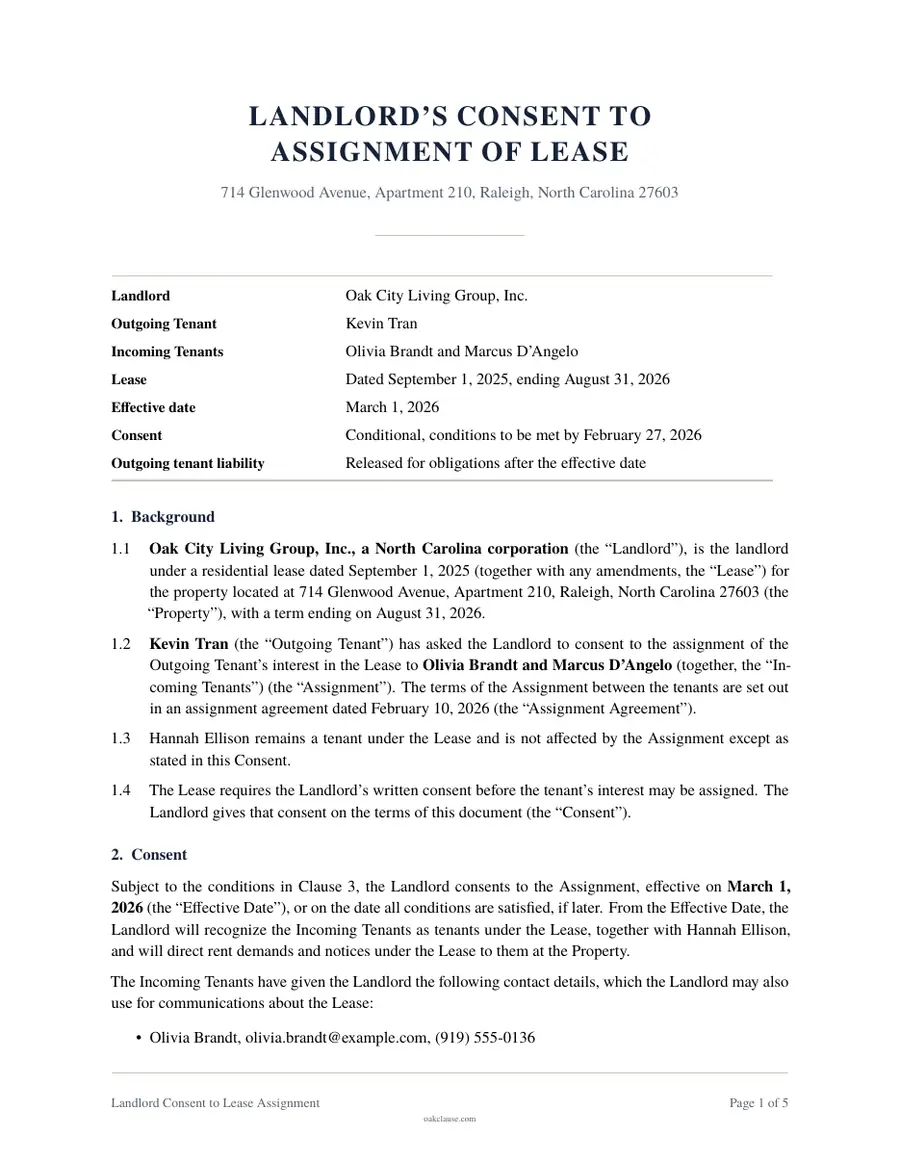
A landlord consent to sublease is a short document in which a landlord agrees that a tenant may rent all or part of the home to a subtenant for a set period. It identifies the original lease, the tenant, the subtenant, the sublease dates and the part of the home involved, and it lists any conditions the landlord attaches, such as screening the subtenant or requiring renters insurance.
Most residential leases say the tenant may not sublet without the landlord's written consent. Getting that consent in writing protects everyone: the tenant can show the sublet was approved, the subtenant knows the arrangement is authorized, and the landlord confirms that the original tenant stays responsible for the lease and that the approval covers only this particular sublet.
This document works in two ways. A landlord can use it to grant consent with conditions, with optional acknowledgment lines for the tenant and the subtenant. A tenant can use it to request consent in a letter that includes a response section the landlord can sign to approve or decline.
When to use it
- A tenant has asked to sublet and the landlord is willing to approve it in writing.
- The landlord wants to attach conditions, such as an application, insurance or an extra deposit.
- You are a tenant and need to ask your landlord for permission before subletting.
- A subtenant wants proof that the landlord approved the sublet before signing a sublease.
- A building manager needs a standard form for documenting approved sublets.
What is included
- Landlord, tenant and subtenant details
- Reference to the original lease and the property
- Sublease dates and whether the whole home or a room is sublet
- Statement of consent or a written request for consent
- Conditions such as screening, insurance and no further subletting
- Optional additional deposit or processing fee
- Confirmation that the tenant remains responsible under the lease
- Limits of the consent and governing law
- Signature and acknowledgment blocks, or a landlord response section
How to make your Consent to Sublease
Answer the questions
Tell us about the parties and the terms you want. Most documents take about 5 to 20 minutes.
Review the preview
Check the draft as you go and change any answer. The document updates instantly.
Download, sign and keep a copy
Download a print-ready PDF, sign it with the other parties, and give everyone a copy.
Frequently asked questions
Does a landlord have to approve a sublease?
It depends on the lease and the state. Many leases require written consent, and some states or cities limit when a landlord may refuse a reasonable request or require a response within a set time. Others leave the decision largely to the lease. Check your lease and local rules.
Is the original tenant still responsible after the landlord consents?
Usually yes. Consenting to a sublease does not release the original tenant from the lease. The tenant remains responsible for the rent and for any damage, including damage caused by the subtenant, unless the landlord agrees in writing to release them. This form states that the tenant remains responsible.
Can a landlord charge a fee to approve a sublease?
Some leases allow a reasonable processing or screening fee, and some landlords ask for an additional deposit. A few states and cities restrict these charges. The form lets you include a fee or extra deposit, which applies only to the extent the law allows.
What information should a tenant include when requesting consent?
Landlords typically want the subtenant's name and contact details, the sublease start and end dates, whether the whole unit or a room is being sublet, the reason for the sublet, and enough information to screen the subtenant. A copy of the proposed sublease is often helpful.
Is consent to one sublease consent to future subleases?
No. This form makes clear that the consent applies only to the named subtenant and the stated dates. Any later sublet or a lease assignment requires a new written consent.
What is the difference between a sublease and an assignment?
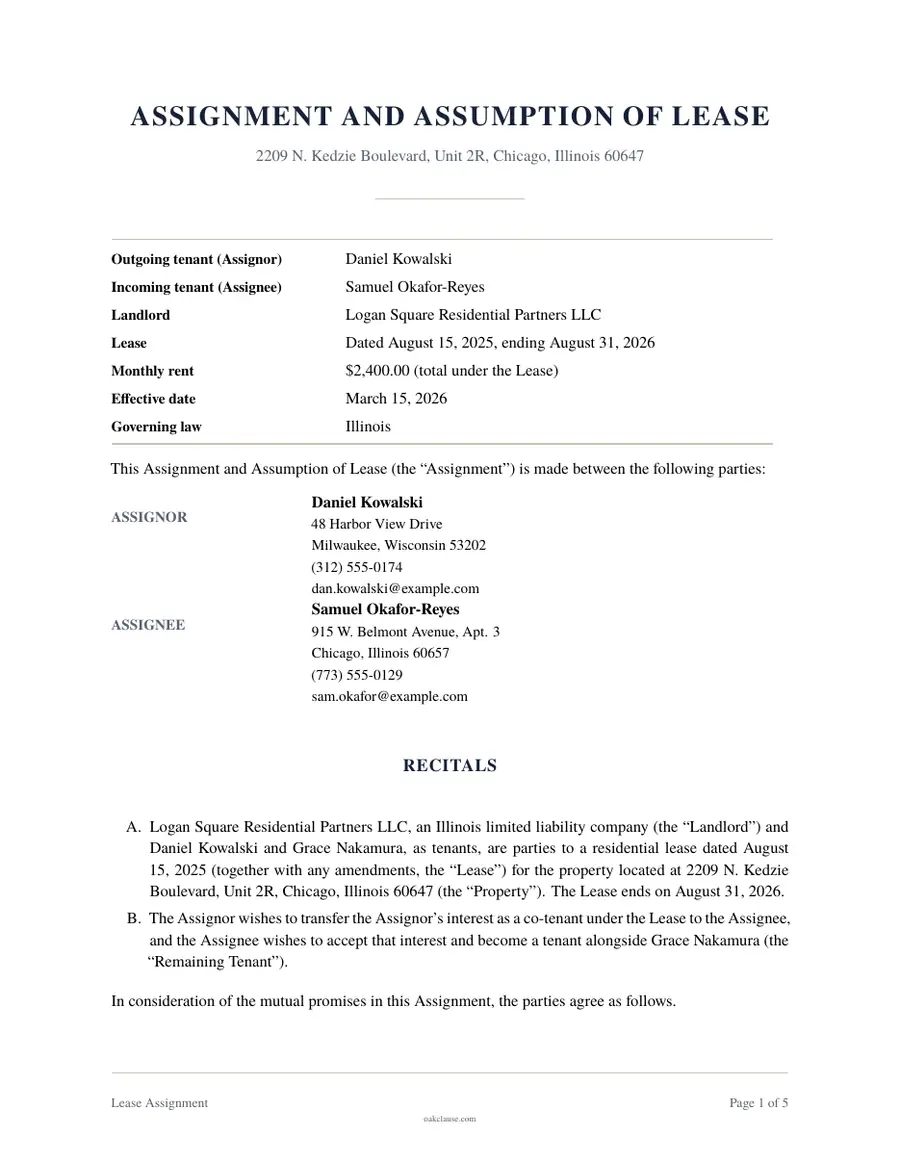
In a sublease the original tenant keeps the lease and the subtenant rents from them for part of the term. In an assignment the tenant transfers the whole remaining lease to someone new. This form covers subleases; an assignment needs a separate consent.
Does the subtenant need to sign?
It is optional but useful. When the subtenant signs the acknowledgment, they confirm that they have read the conditions and agree to follow the original lease, which makes the conditions easier to enforce.