Sublease Agreement
Rent out your apartment or a room to a subtenant while you are away, with clear terms on rent, deposit, dates and the rules of your original lease.
Includes 30 days of edits
- 5 to 20 minutes
- Print-ready PDF
- State-specific
What is a Sublease Agreement?
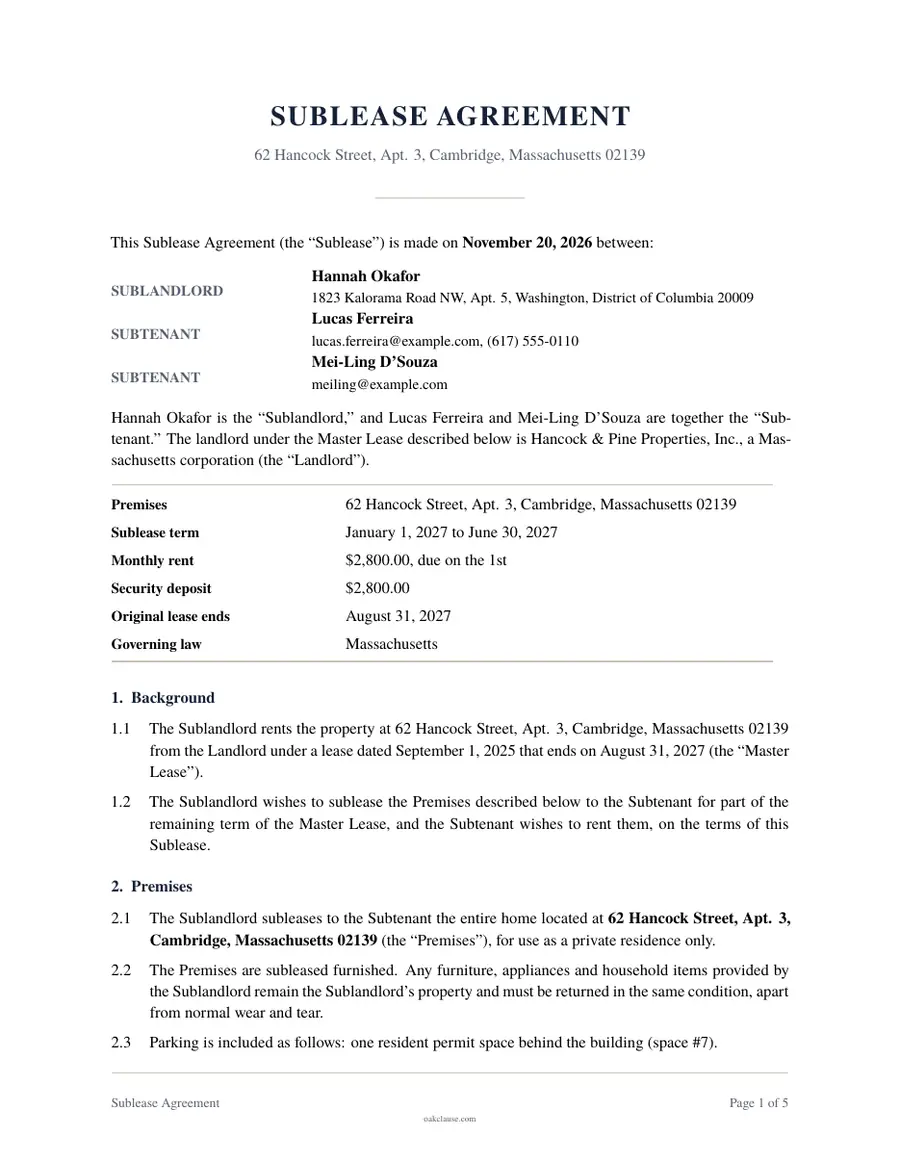
A sublease agreement is a contract between a tenant who already rents a home (the sublandlord) and a new person who will live there for part of the remaining lease term (the subtenant). The original tenant keeps their lease with the landlord and stays responsible for it, while the subtenant pays rent to, and follows rules set by, the original tenant.
Subleasing is common when a tenant leaves for a summer, a work assignment or a semester abroad and plans to come back, or when a tenant wants to fill a spare room. A written sublease protects the original tenant by requiring the subtenant to follow the original lease and pay for any damage, and protects the subtenant by fixing the rent, deposit and move-out date.
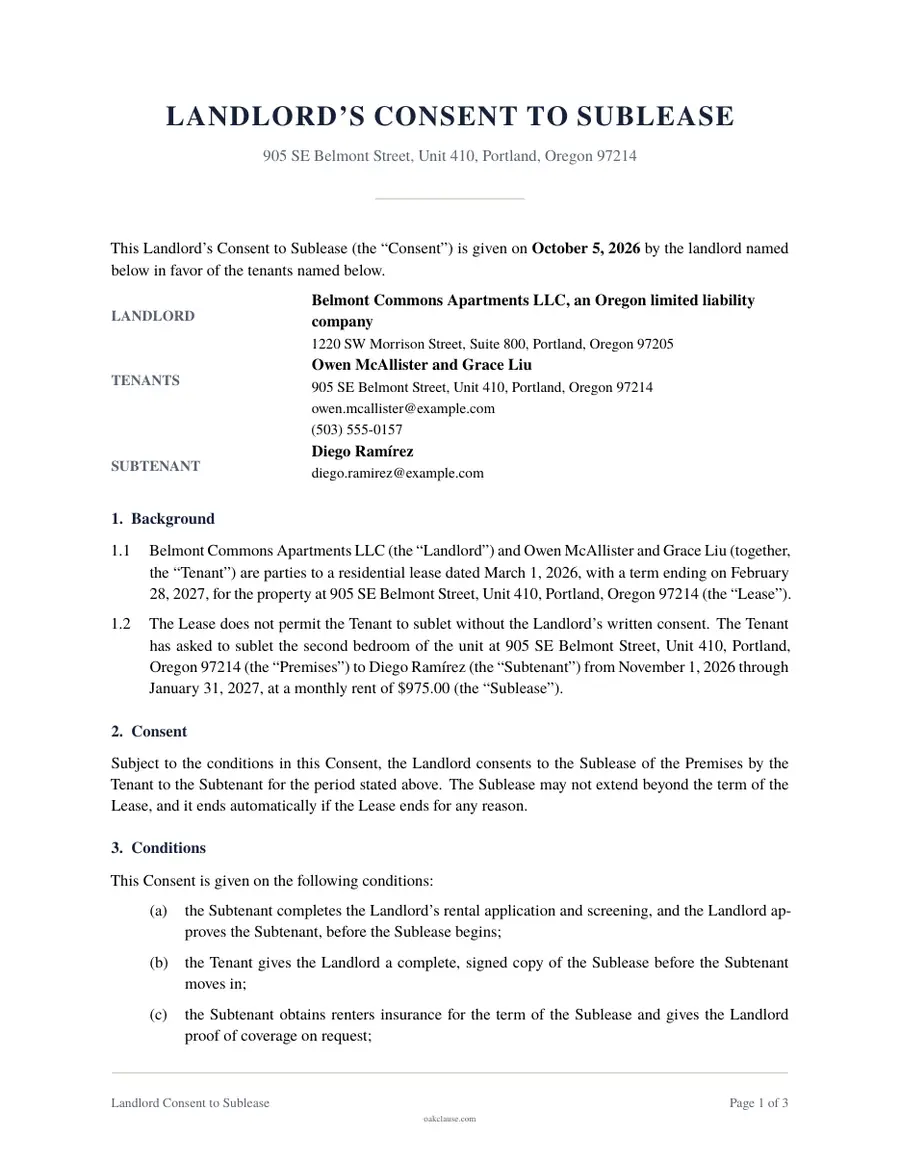
Most leases restrict subletting or require the landlord's written consent, and some states and cities give tenants specific rights to sublet or limit a landlord's ability to refuse. This agreement records whether consent has been obtained, makes the sublease subject to the original lease, and defers to the property's state law on deposits, notices and removal.
When to use it
- You will be away for a few months and want someone to live in your apartment and cover the rent.
- You want to rent a spare room in your rented home to a subtenant.
- You are moving out before your lease ends and the landlord allows a sublet rather than an assignment.
- You are a subtenant and want written terms with the person you are renting from.
- Your landlord has approved a sublet and asked to see the sublease terms.
What is included
- Sublandlord, every subtenant and the original landlord
- Details of the original lease and the landlord's consent
- Whole home or a single room, furnishings and parking
- Sublease start and end dates that fit within the original lease
- Rent, due date, payment method and late fee
- Security deposit and utilities
- Pets, smoking, guests and the sublandlord's stored belongings
- Compliance with the original lease and what happens if it ends early
- Lead-based paint disclosure for older homes
- Signature blocks with an optional landlord consent block
How to make your Sublease
Answer the questions
Tell us about the parties and the terms you want. Most documents take about 5 to 20 minutes.
Review the preview
Check the draft as you go and change any answer. The document updates instantly.
Download, sign and keep a copy
Download a print-ready PDF, sign it with the other parties, and give everyone a copy.
State-specific sublease
States take different approaches to subletting. In some, a tenant may sublet only with the landlord's consent, while others limit when a landlord may refuse consent or give tenants in certain buildings a specific right to sublet. States and cities also regulate security deposits, the notice needed to end a tenancy, and the process for removing an occupant who will not leave, and those rules can apply between a tenant and a subtenant just as they do between a landlord and a tenant. This sublease uses the selected state for governing law and defers to that state's requirements on deposits, notices and removal, so check your state and city rules and your original lease before signing.
51 states shown
- ALAlabama
- AKAlaska
- AZArizona
- ARArkansas
- CACalifornia
- COColorado
- CTConnecticut
- DEDelaware
- DCDistrict of Columbia
- FLFlorida
- GAGeorgia
- HIHawaii
- IDIdaho
- ILIllinois
- INIndiana
- IAIowa
- KSKansas
- KYKentucky
- LALouisiana
- MEMaine
- MDMaryland
- MAMassachusetts
- MIMichigan
- MNMinnesota
- MSMississippi
- MOMissouri
- MTMontana
- NENebraska
- NVNevada
- NHNew Hampshire
- NJNew Jersey
- NMNew Mexico
- NYNew York
- NCNorth Carolina
- NDNorth Dakota
- OHOhio
- OKOklahoma
- OROregon
- PAPennsylvania
- RIRhode Island
- SCSouth Carolina
- SDSouth Dakota
- TNTennessee
- TXTexas
- UTUtah
- VTVermont
- VAVirginia
- WAWashington
- WVWest Virginia
- WIWisconsin
- WYWyoming
Frequently asked questions
What is the difference between a sublease and a lease assignment?
In a sublease, the original tenant keeps the lease and rents some or all of the home to a subtenant for part of the remaining term, often planning to return. In an assignment, the original tenant transfers the entire remaining lease to a new tenant who deals with the landlord directly. In both cases the original tenant may stay responsible to the landlord unless the landlord releases them.
Do I need my landlord's permission to sublease?
Usually, yes. Most leases require the landlord's written consent before a tenant sublets, and subletting without it can be a breach of the lease. Some states and cities set rules about when a landlord may refuse. Get written consent and keep a copy with the sublease.
Am I still responsible to my landlord if my subtenant does not pay?
Yes. The original tenant remains responsible under the lease for the full rent and for any damage, even if the subtenant caused the problem. That is why this sublease requires the subtenant to follow the original lease and to reimburse the sublandlord for losses they cause.
Can I charge my subtenant more rent than I pay?
It depends on your lease and local law. Some leases and some rent-regulated areas limit sublet rent to what the tenant pays, sometimes with an allowance for furniture. Check your lease and local rules before setting the rent.
Should the subtenant get a copy of the original lease?
It is a good idea. The subtenant agrees to follow the original lease's rules, so they need to know what those rules are. You may remove the rent amount or other private details if your lease and local law allow.
What happens if the original lease ends early?
A sublease cannot last longer than the original lease. If the original lease ends for any reason, the sublease ends too. This agreement requires the sublandlord to tell the subtenant promptly and to refund any rent paid for time after the end date.
Can I sublease just one room?
Yes. You can choose to sublease the entire home or a single room with shared use of the common areas. The agreement adjusts its wording to match.
Does a sublease need to be notarized?
No. Like most residential leases, a sublease is generally valid once the parties sign it. Notarization is not usually required.