Roommate Agreement
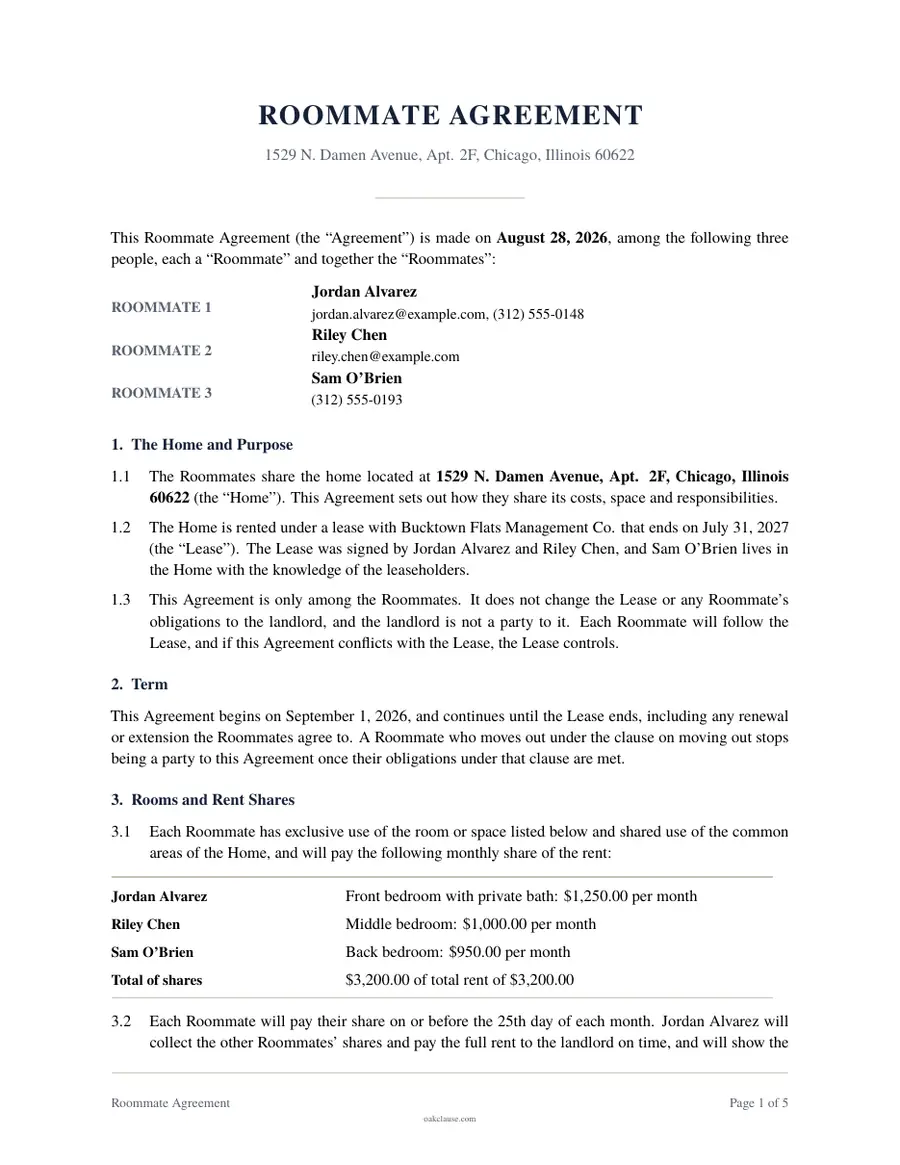
Agree up front how you and your roommates split rent, bills and the deposit, and how you share the kitchen, chores, guests and quiet time.
Includes 30 days of edits
- 5 to 20 minutes
- Print-ready PDF
What is a Roommate Agreement?
A roommate agreement is a written contract among people who share a home. It records who lives in which room, how much of the rent and utilities each person pays, who collects and forwards payments, how the security deposit is divided, and the house rules everyone has agreed to live by. It also sets out what happens when someone wants to move out early.
A roommate agreement is separate from the lease with the landlord. If several roommates signed the lease, each of them is usually responsible to the landlord for the full rent, no matter how the roommates split it among themselves. The roommate agreement does not change that, but it gives roommates a clear record of their promises to each other, which makes it easier to settle disagreements and, if needed, to recover money from a roommate who does not pay a share.
Most roommate disputes are about money, cleaning, noise and guests. Writing down the expectations before anyone moves in, or when a new roommate joins, removes much of the guesswork and gives everyone a fair process for raising problems.
When to use it
- You are moving into an apartment or house with one or more roommates.
- A new roommate is joining an existing household and you want everyone on the same page.
- Only some roommates signed the lease and the others pay their share to them.
- You own the home and rent rooms to housemates who share common areas with you.
- Bills, chores or guest visits have become a source of friction and you want clear rules.
What is included
- Every roommate, their assigned room and their share of the rent
- How the household relates to the landlord's lease
- Rent due date and who collects and pays it
- Security deposit contributions and refunds
- Shared utilities, how they are split and repayment deadlines
- Household supplies, food and shared belongings
- Cleaning and chores, quiet hours, guests, smoking and pets
- Moving out early, notice and finding a replacement
- Resolving disagreements and signature blocks for every roommate
How to make your Roommate Agreement
Answer the questions
Tell us about the parties and the terms you want. Most documents take about 5 to 20 minutes.
Review the preview
Check the draft as you go and change any answer. The document updates instantly.
Download, sign and keep a copy
Download a print-ready PDF, sign it with the other parties, and give everyone a copy.
Frequently asked questions
Is a roommate agreement legally binding?
Generally, yes. It is a contract among the roommates, and courts, including small claims courts, can enforce promises about money such as rent shares, bills and deposit contributions. House rules about chores or noise are harder to enforce in court, but writing them down still helps roommates hold each other to what they agreed.
How is a roommate agreement different from a lease?
A lease is between the landlord and the tenants and covers the rent owed to the landlord and the rules of the property. A roommate agreement is only among the people who live together. It cannot change what the lease requires, and the landlord is not bound by it.
If my roommate does not pay, am I responsible for their share?
If you both signed the lease, the landlord can usually hold either of you responsible for the full rent. The roommate agreement lets you recover the unpaid share from your roommate afterward. Check your lease to see how responsibility is set up.
Should rent always be split equally?
Not necessarily. Many households split rent by room size, private bathrooms or other features. This agreement lets you set a specific amount for each roommate, and utilities can be split equally or in proportion to rent.
What happens if a roommate wants to move out early?
The agreement sets a notice period and says whether the departing roommate must find a replacement the others approve, or keep paying their share until someone takes the room. Adding a new person to the lease usually requires the landlord's approval as well.
Does the landlord need to approve a roommate agreement?
No. The landlord does not have to sign or approve it. However, the landlord's permission is usually needed before a new person moves in, and some leases limit the number of occupants or require every adult to sign the lease.
Can we change the agreement later?
Yes. Roommates can update it at any time by signing a written change. It is a good idea to sign a fresh agreement whenever someone moves in or out.