Lease Amendment
Change the rent, dates, tenants, pets or other terms of a lease that is already signed, and keep a clean written record that everyone agreed to it.
Includes 30 days of edits
- 5 to 20 minutes
- Print-ready PDF
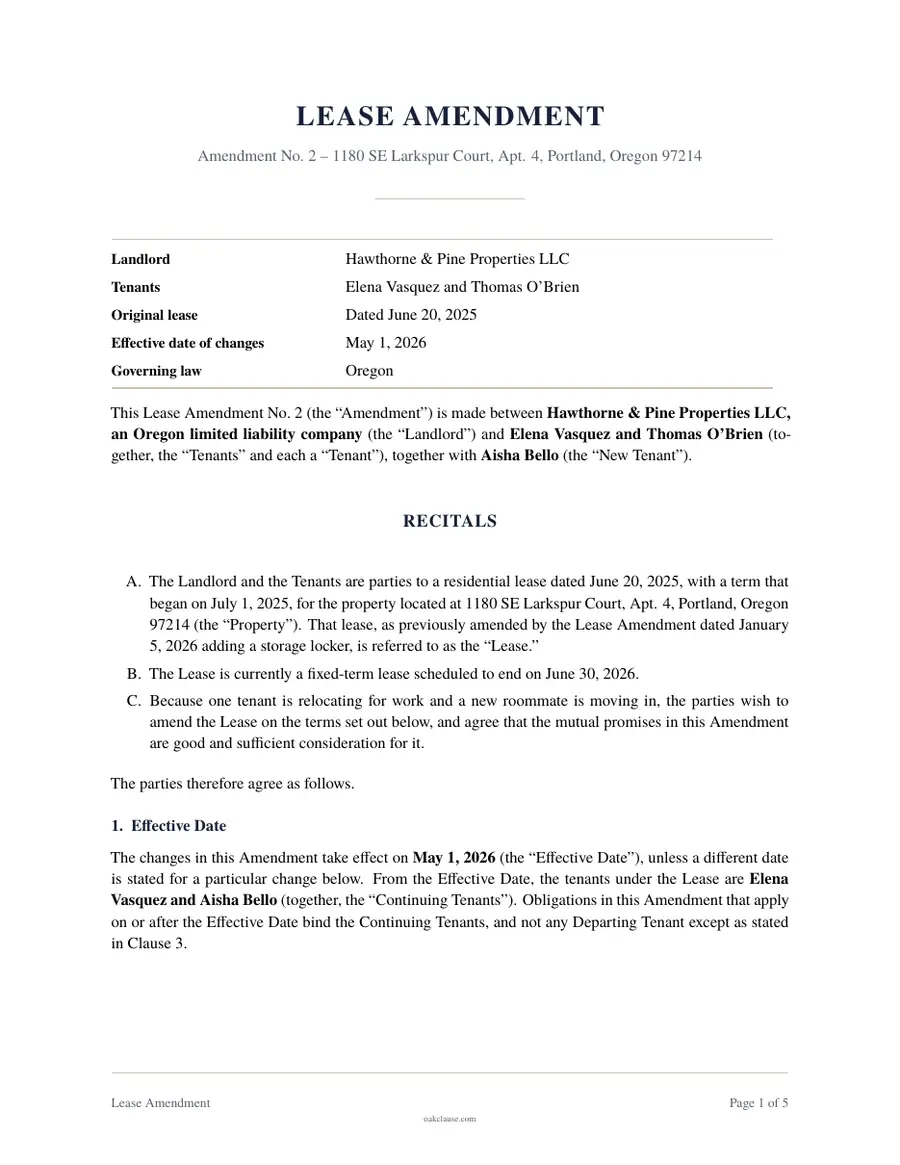
What is a Lease Amendment?
A lease amendment is a short agreement that changes one or more terms of an existing residential lease while leaving the rest of the lease in place. It identifies the original lease, spells out exactly what is changing and from what date, and confirms that every other term stays the same.
Putting a change in writing avoids the classic dispute where a landlord and tenant remember a phone call differently. Because a signed lease can usually be changed only by another signed writing, an amendment signed by the landlord and every tenant is the cleanest way to show that the change was agreed rather than imposed.
This amendment walks you through the changes people make most often, including a new rent amount, an extension or early end date, adding or removing a tenant, allowing a pet, and shifting utilities or parking, and it also lets you rewrite any other clause in your own words.
When to use it
- The landlord and tenants have agreed on a new rent amount partway through the lease.
- You want to extend a lease, shorten it, or switch between a fixed term and month-to-month.
- A roommate is moving out, or a new adult is moving in and should be added to the lease.
- The landlord has agreed to allow a pet, or a parking space or utility arrangement is changing.
- You want to correct or reword a specific clause without signing a whole new lease.
What is included
- Identification of the original lease, property and any earlier amendments
- Recitals explaining why the lease is being amended
- New rent amount and the date it takes effect
- Term extension, early end date or change of tenancy type
- Added tenants, departing tenants and changes to other occupants
- Pet permission, pet deposit and pet rent
- Security deposit, utility and parking changes
- Custom replacement wording for any other clause
- Confirmation that all other lease terms remain in effect
- Signature lines for every party and an optional notary acknowledgment
How to make your Lease Amendment
Answer the questions
Tell us about the parties and the terms you want. Most documents take about 5 to 20 minutes.
Review the preview
Check the draft as you go and change any answer. The document updates instantly.
Download, sign and keep a copy
Download a print-ready PDF, sign it with the other parties, and give everyone a copy.
Frequently asked questions
What is the difference between a lease amendment and a lease addendum?
The terms overlap, but an addendum usually adds new material when the lease is first signed, such as a pet or parking addendum, while an amendment changes terms after the lease is already in effect. Either way, the document works only if every party to the lease signs it.
Can a landlord amend a lease without the tenant's agreement?
Generally not during a fixed-term lease. The terms of a signed lease bind both sides until it ends, so a change requires both sides to agree. In a month-to-month tenancy a landlord can often change terms going forward by giving the advance written notice required by state law, which is a notice rather than an amendment.
Who needs to sign a lease amendment?
The landlord or the landlord's authorized agent and every tenant who signed the original lease should sign. If a new tenant is being added, that person signs too. A tenant who is leaving should also sign so the record shows they agreed to the change in their status.
Does a lease amendment need to be notarized?
Usually not. Most residential lease amendments are valid with the parties' signatures alone. A notary may be useful if the lease itself was notarized or recorded, or if the parties simply want extra proof of who signed. This document lets you add a notary acknowledgment if you want one.
Can I use an amendment to raise the rent?
Yes, if the tenants agree to the increase and sign. If the landlord is raising rent on a month-to-month tenancy without the tenants' agreement, a rent increase notice that meets the state's notice requirements is the more usual document. Some cities also limit how much or how often rent can rise.
What happens to the security deposit when a tenant leaves mid-lease?
Most landlords keep the full deposit in place until the whole tenancy ends, and the departing tenant settles their share privately with the remaining tenants. This amendment lets you record that arrangement or state that the parties have handled it themselves, so there is no confusion later.
Is a departing tenant still responsible for the rent?
Unless the landlord agrees to release them, a tenant who signed the lease usually stays responsible for its obligations even after moving out. This amendment lets the landlord choose whether to release the departing tenant from obligations arising after the effective date or keep them liable.
Should I sign a new lease instead of an amendment?
An amendment is well suited to a few targeted changes. If you are changing many terms at once, or the original lease is outdated or hard to follow, signing a fresh lease is often clearer. A local attorney can help when the changes are significant or disputed.