Lease Assignment
Hand your lease over to a new tenant who takes on the rest of the term, with clear terms on rent, the deposit, move-out and whether you stay on the hook.
Includes 30 days of edits
- 5 to 20 minutes
- Print-ready PDF
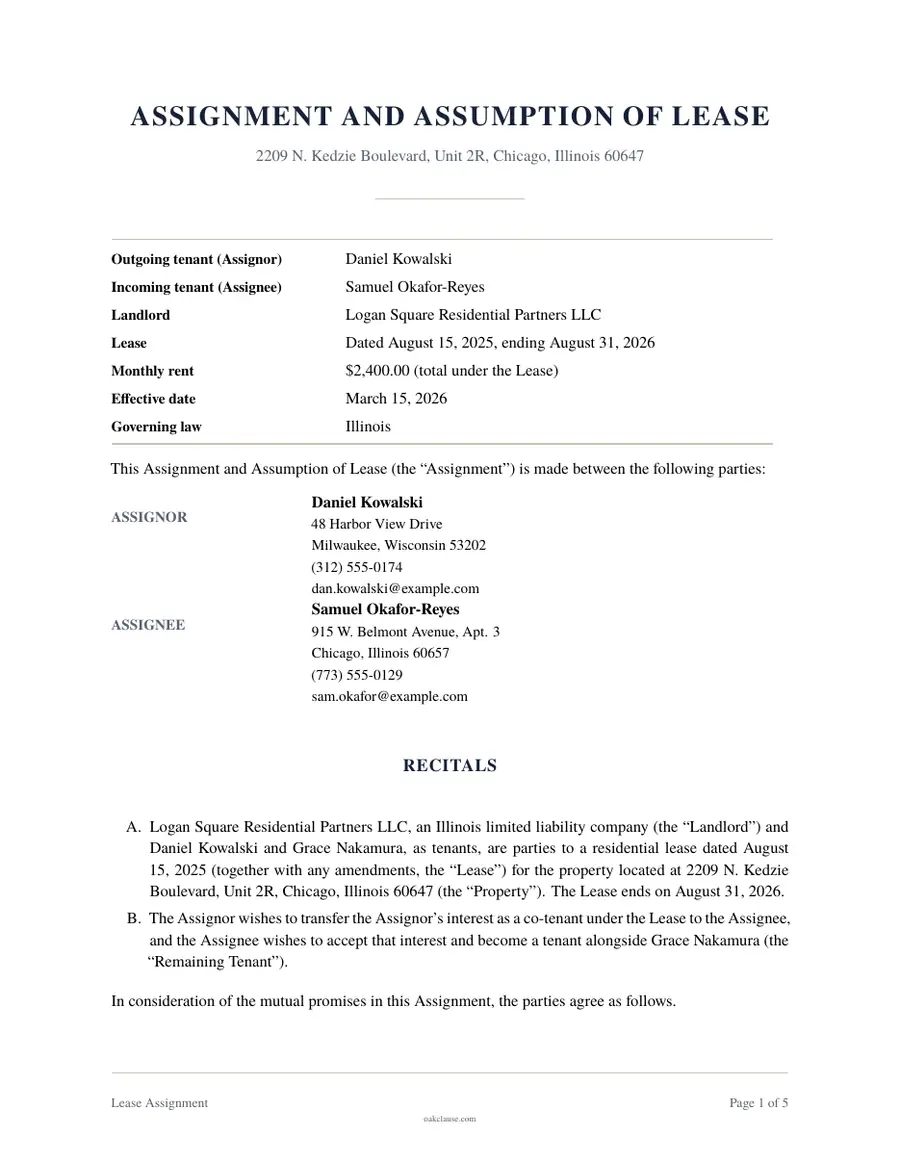
What is a Lease Assignment?
A lease assignment is an agreement in which a current tenant (the assignor) transfers their entire interest in a residential lease to a new tenant (the assignee). The assignee steps into the assignor's shoes, moves in, pays rent directly to the landlord and agrees to follow every term of the lease for the time that is left.
An assignment is different from a sublease. In a sublease the original tenant keeps the lease and becomes a kind of landlord to the subtenant. In an assignment the original tenant gives up their place entirely, and the new tenant deals directly with the landlord from the effective date.
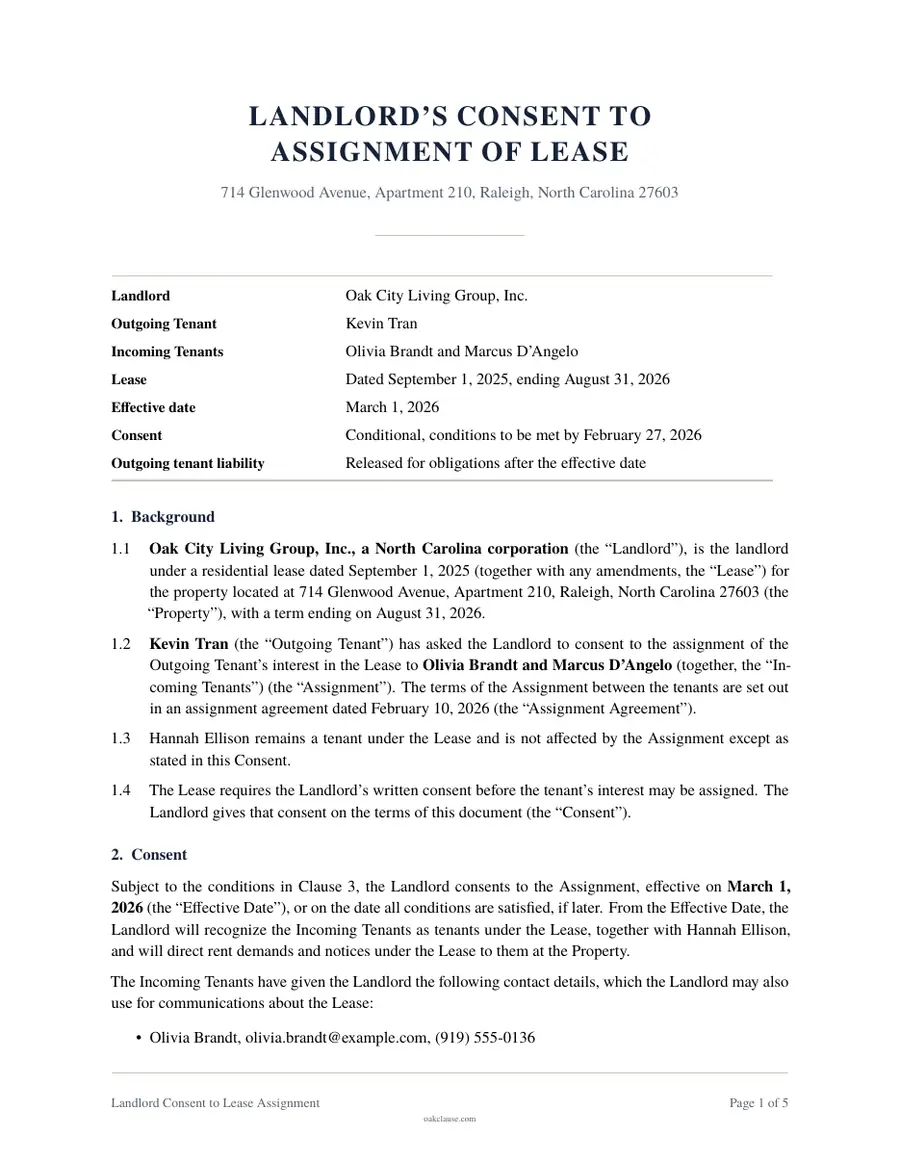
Most leases require the landlord's written consent before a tenant can assign, and even after an assignment the original tenant usually remains responsible if the new tenant fails to pay, unless the landlord agrees to release them. This document lets you include the landlord's consent and release on the same page, or note that consent is being obtained separately.
When to use it
- You need to move out before your lease ends and someone else wants to take it over.
- One roommate is leaving and a replacement will take over that roommate's share of the lease.
- You found a new tenant to avoid paying rent on a home you no longer live in.
- A landlord has approved a transfer and wants the outgoing and incoming tenants to sign a written agreement.
- The incoming tenant is paying you for furniture, the deposit or other items you are leaving behind.
What is included
- Identification of the lease, landlord, property and remaining term
- Full or partial transfer of the outgoing tenant's interest
- The new tenant's promise to assume all lease obligations
- Effective date, possession date and any payment between the tenants
- Split of rent and charges before and after the transfer
- Security deposit handling and reimbursement
- Property condition, keys and personal property left behind
- Representations, mutual indemnities and release or continuing liability
- Landlord consent block with an optional release of the outgoing tenant
- Signature lines and an optional notary acknowledgment
How to make your Lease Assignment
Answer the questions
Tell us about the parties and the terms you want. Most documents take about 5 to 20 minutes.
Review the preview
Check the draft as you go and change any answer. The document updates instantly.
Download, sign and keep a copy
Download a print-ready PDF, sign it with the other parties, and give everyone a copy.
Frequently asked questions
What is the difference between a lease assignment and a sublease?
In an assignment the original tenant transfers their whole interest in the lease and moves out for good, and the new tenant pays the landlord directly. In a sublease the original tenant keeps the lease, rents some or all of the home to a subtenant, and stays the subtenant's point of contact. A sublease agreement is the better fit if you plan to come back.
Do I need my landlord's permission to assign my lease?
Usually, yes. Most residential leases say the tenant cannot assign without the landlord's written consent, and an assignment made without required consent can be treated as a breach of the lease. Some states also have rules about when a landlord may refuse consent. Check your lease first and get consent in writing.
Am I still responsible for the lease after I assign it?
In most cases the original tenant stays liable to the landlord if the new tenant stops paying or damages the home, because the landlord never agreed to let the original tenant go. The way to end that liability is a written release from the landlord, which this document can include in the landlord's consent block.
What happens to my security deposit?
There are three common approaches: the new tenant reimburses you and the deposit stays with the landlord, the landlord refunds you and collects a new deposit from the new tenant, or you simply transfer your interest in the deposit without payment. This document lets you choose one and records the amount.
Can I charge the new tenant for furniture or other items I leave behind?
Yes, the outgoing and incoming tenants can agree on a price for furniture, appliances they own or other personal property. Items that belong to the landlord are not yours to sell. The agreement lists what is included and confirms whether the items are transferred as-is.
Should we inspect the home before the assignment takes effect?
It is a good idea. A walk-through with the landlord, or at least between the two tenants, creates a record of the home's condition on the transfer date. That record helps decide later whether damage happened before or after the new tenant moved in.
Can a roommate assign just their share of a lease?
Yes, if the landlord and the other roommates agree. In that case the departing roommate assigns only their interest, the remaining tenants stay on the lease, and the new roommate joins them. This document has an option for that kind of partial assignment.
Does a lease assignment need to be notarized?
Most residential lease assignments do not need a notary. A notary acknowledgment can still be useful as extra proof of who signed, and it may be expected if the original lease was notarized or recorded. You can add one when you create the document.