Ending someone's employment is one of the hardest things an employer does, and it is also one of the riskiest. Most terminations are perfectly lawful, but a rushed or poorly documented one can lead to a discrimination claim, an unpaid wage dispute or a damaged reputation. This guide explains the general rules and a practical process you can follow.
At-will employment and its limits
In almost every US state, employment is presumed to be at will. That means either the employer or the employee can end the relationship at any time, for any reason or no reason, with or without notice. Montana is the main exception: after a probationary period, employers there generally need good cause to dismiss an employee.
At-will does not mean anything goes. An employer cannot fire someone for an illegal reason, and it may have given up some of its at-will freedom through its own promises. Before deciding, ask whether any of the following limits apply.
- A written employment contract that sets a fixed term or lists the only reasons for termination
- A union collective bargaining agreement with just-cause and grievance procedures
- Handbook language or verbal assurances that could be read as promising job security or a specific discipline process
- Anti-discrimination, anti-retaliation and whistleblower laws (see below)
- Public policy exceptions recognized in many states, such as firing someone for serving on a jury or refusing to break the law
Reasons you can never rely on
Federal law prohibits employers of a certain size from making employment decisions based on race, color, religion, sex (including pregnancy, sexual orientation and gender identity), national origin, age (40 and over), disability or genetic information. Many states and cities extend these protections to smaller employers and add categories such as marital status, military status or political activity.
Retaliation is just as important and is now the most frequently alleged violation in charges filed with the federal Equal Employment Opportunity Commission. An employee generally cannot be dismissed for complaining about discrimination or harassment, requesting a disability or religious accommodation, taking protected family or medical leave, reporting safety problems, filing a workers' compensation claim, or discussing wages with coworkers. If the person recently did any of these things, slow down and make sure the reason for the termination is legitimate, documented and unrelated.
Build the record before the decision
Most termination disputes turn on documents. If you are dismissing someone for performance or conduct, the file should show that the employee knew what was expected, was told when they fell short and had a fair chance to improve. That record also helps you confirm, for yourself, that the decision is sound.
- Written job description and performance expectations
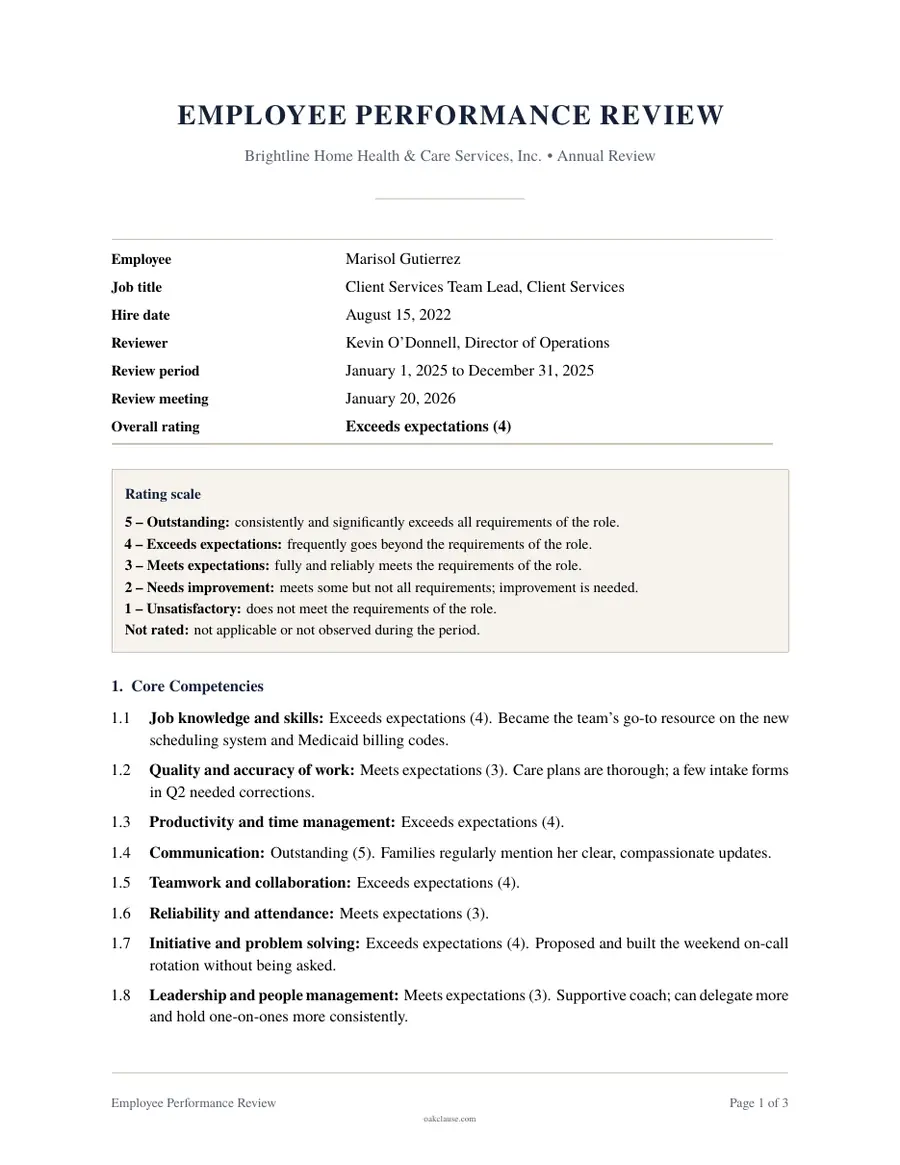
- Performance reviews that honestly reflect the problems, not inflated ratings
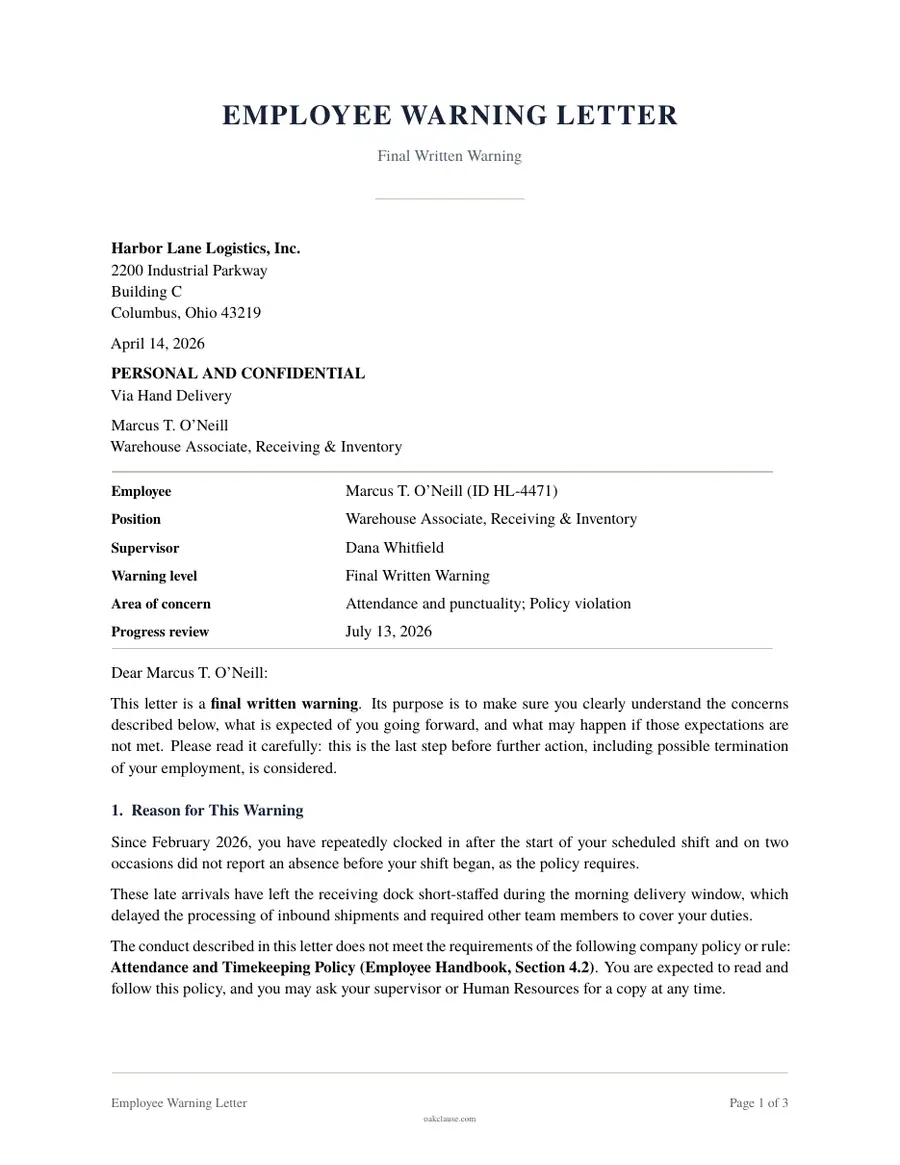
- Written warnings describing the specific issue, the expected change and the consequences
- Notes of coaching conversations with dates and who was present
- Evidence of any misconduct, such as an incident report or investigation summary
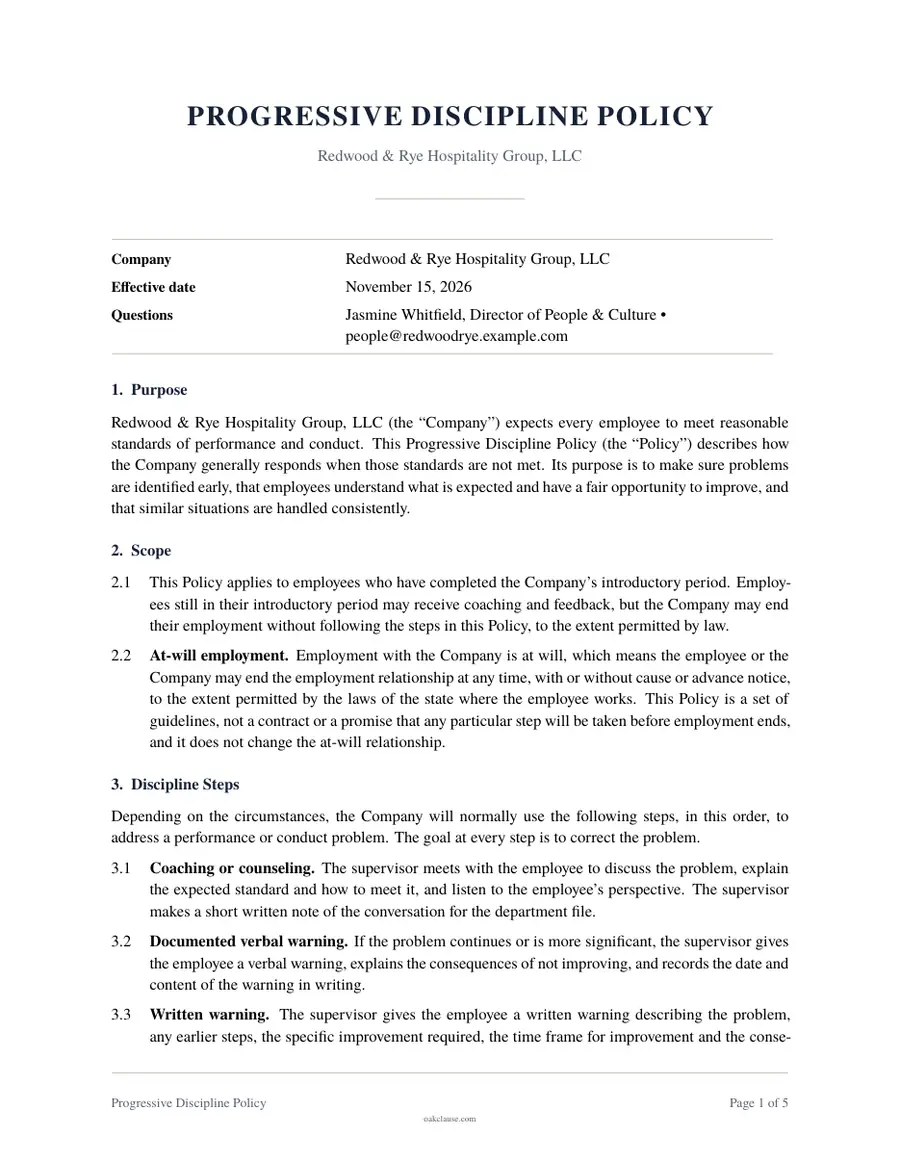
- Confirmation that you followed your own discipline policy, or a written reason why you did not
Check consistency and timing
Ask how you have treated other employees who did something similar. Treating one person more harshly than comparable colleagues is a common source of discrimination claims. Look at timing as well: a termination that comes shortly after a leave request, a complaint or the announcement of a pregnancy invites suspicion, even if the reasons are genuine.
If the decision involves several employees at once, such as a layoff, use objective selection criteria, apply them the same way to everyone and review the results to see whether any protected group is disproportionately affected. Larger employers should also check the federal Worker Adjustment and Retraining Notification (WARN) Act and any state equivalent, which can require advance written notice of plant closings and mass layoffs.
Plan the meeting
Termination meetings should be short, private and respectful. Decide in advance who will deliver the message, usually the direct manager with an HR representative or second manager present as a witness. Choose a time that lets the employee leave discreetly.
State the decision clearly at the start, give a brief, truthful reason consistent with your records, and avoid debating it. Do not make jokes, apologize in ways that suggest the decision was unfair, or offer reasons that differ from the documentation. Explain what happens next: final pay, benefits, return of company property and any severance offer.
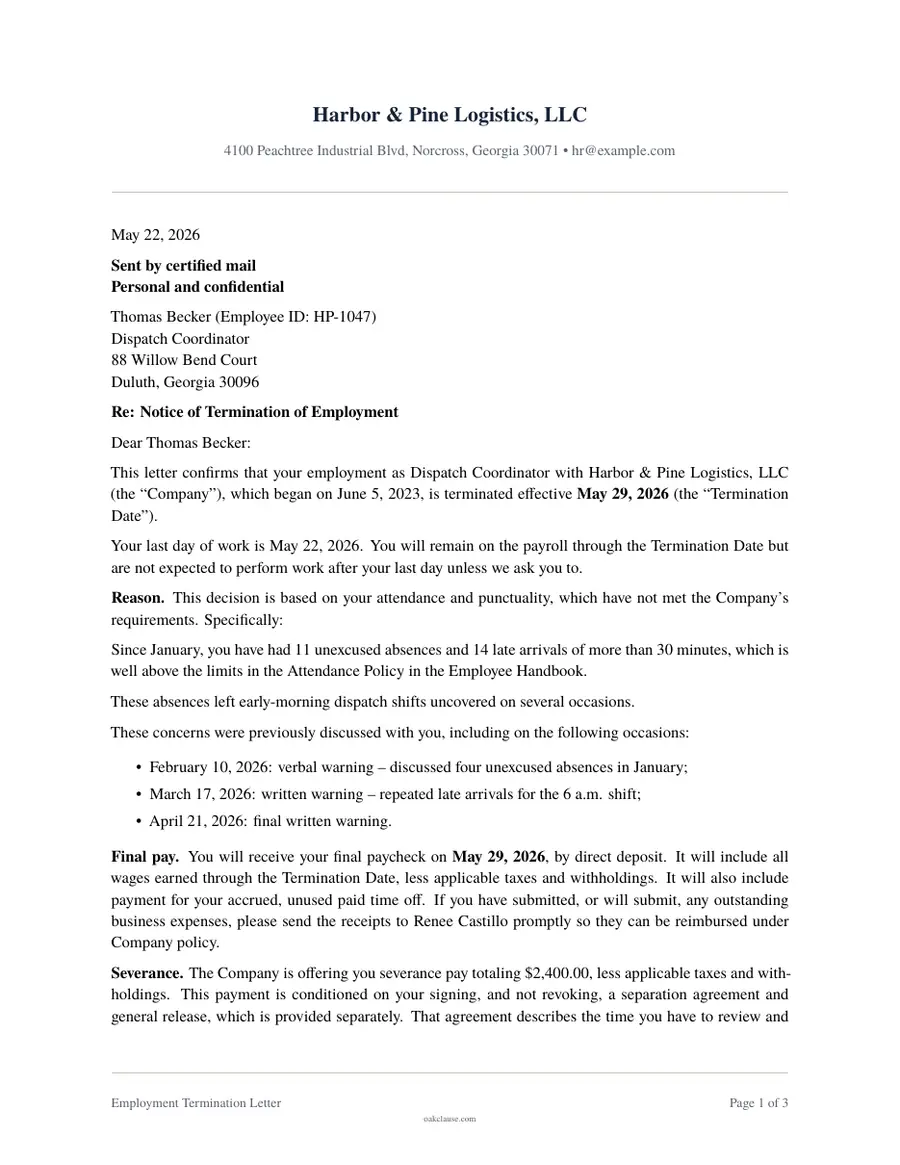
- Prepare a written termination letter that confirms the effective date and key logistics
- Have the final paycheck or a clear payment date ready
- List company property to collect: laptop, phone, keys, badges, credit cards
- Arrange for system access to be removed at the time of the meeting
- Plan how personal belongings will be returned
- Prepare benefits information, including health coverage continuation
Final pay and benefits
State law controls when the final paycheck is due, and the deadlines vary widely. Some states require payment on the last day of work when the employer ends the employment, others allow until the next regular payday. Many states also require payout of earned, unused vacation or paid time off, especially when the employer's policy does not clearly say otherwise. Check your state's rules before the meeting.
Employers with 20 or more employees that offer a group health plan are generally subject to COBRA, which lets departing employees and their families continue coverage at their own expense for a limited period. Many states have similar continuation laws for smaller employers. Some states also require employers to give a written notice about unemployment insurance or a separation notice at the time of termination.
Severance and releases
No federal law requires severance pay, though a contract, policy or past practice might. Many employers offer severance in exchange for a signed release of claims. For the release to be enforceable, the employee must receive something they were not already entitled to, and the agreement should be written in plain language.
Special rules apply to releases of age discrimination claims by employees aged 40 or older. Under federal law, the employee generally must be advised in writing to consult an attorney, be given at least 21 days to consider the agreement (45 days in a group layoff, along with certain disclosures) and have 7 days after signing to revoke it. Some states impose their own requirements on what releases may cover.
After the employee leaves
Keep communications about the departure factual and limited. Tell the team only what they need to know to cover the work. When prospective employers ask for a reference, many businesses confirm only dates of employment and job title to reduce the risk of a defamation claim. Retain personnel and payroll records for the periods required by federal and state law, and respond honestly to any unemployment claim.
Quick checklist
Before you finalize a termination, confirm each of the following:
- The reason is legitimate, documented and consistent with how others were treated
- No contract, union agreement or handbook promise limits the decision
- The employee has not recently engaged in protected activity, or the timing has been carefully reviewed
- Final pay timing and PTO payout rules for your state are known
- Benefits continuation and any required state notices are ready
- Any severance offer and release meets federal and state requirements
- Access removal and property return are planned