Employment Termination Letter
Confirm the end of an employee's job in a clear, respectful letter that covers the termination date, final pay, benefits, company property and next steps.
Includes 30 days of edits
- 5 to 20 minutes
- Print-ready PDF
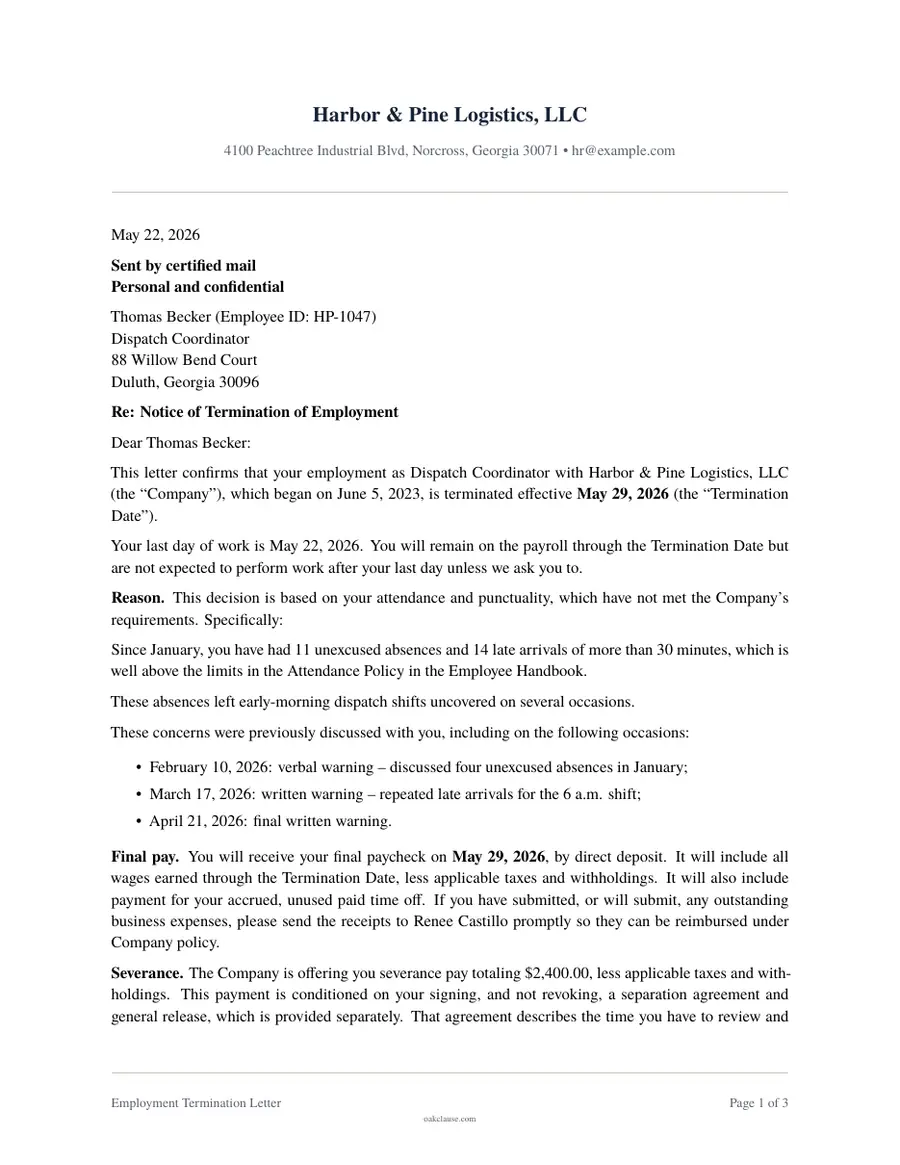
What is an Employment Termination Letter?
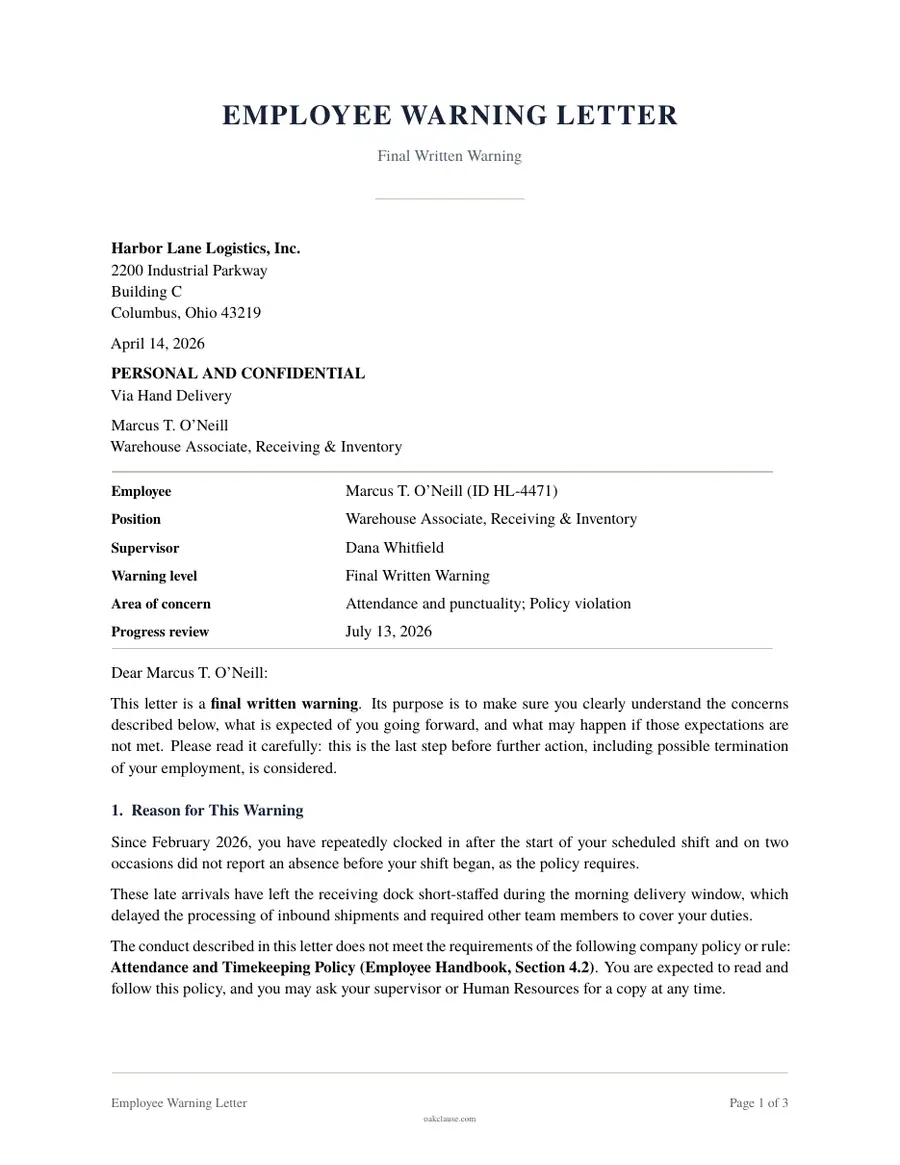
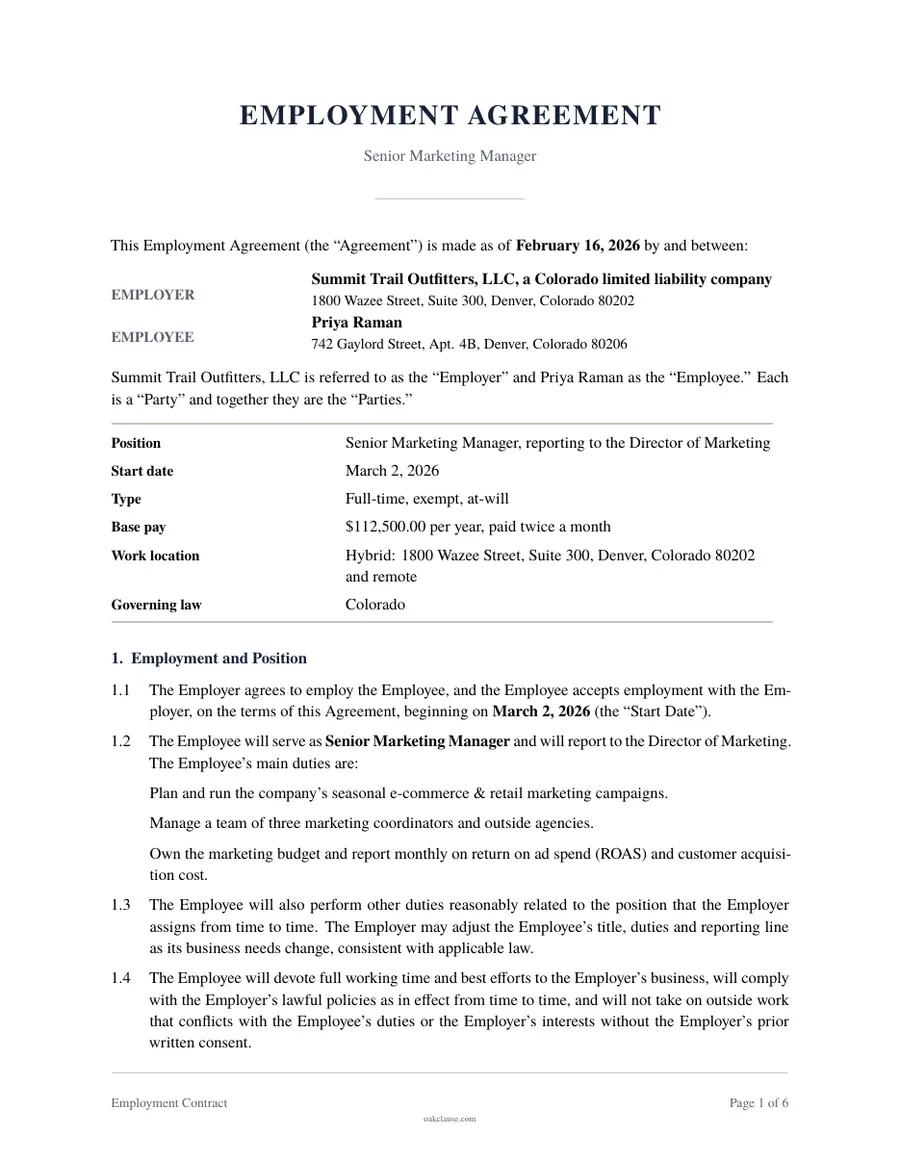
An employment termination letter is the employer's written notice to an employee that their employment is ending. It confirms the last day of employment and explains what happens next: when the final paycheck will arrive, what happens to benefits, which company property must be returned and who to contact with questions.
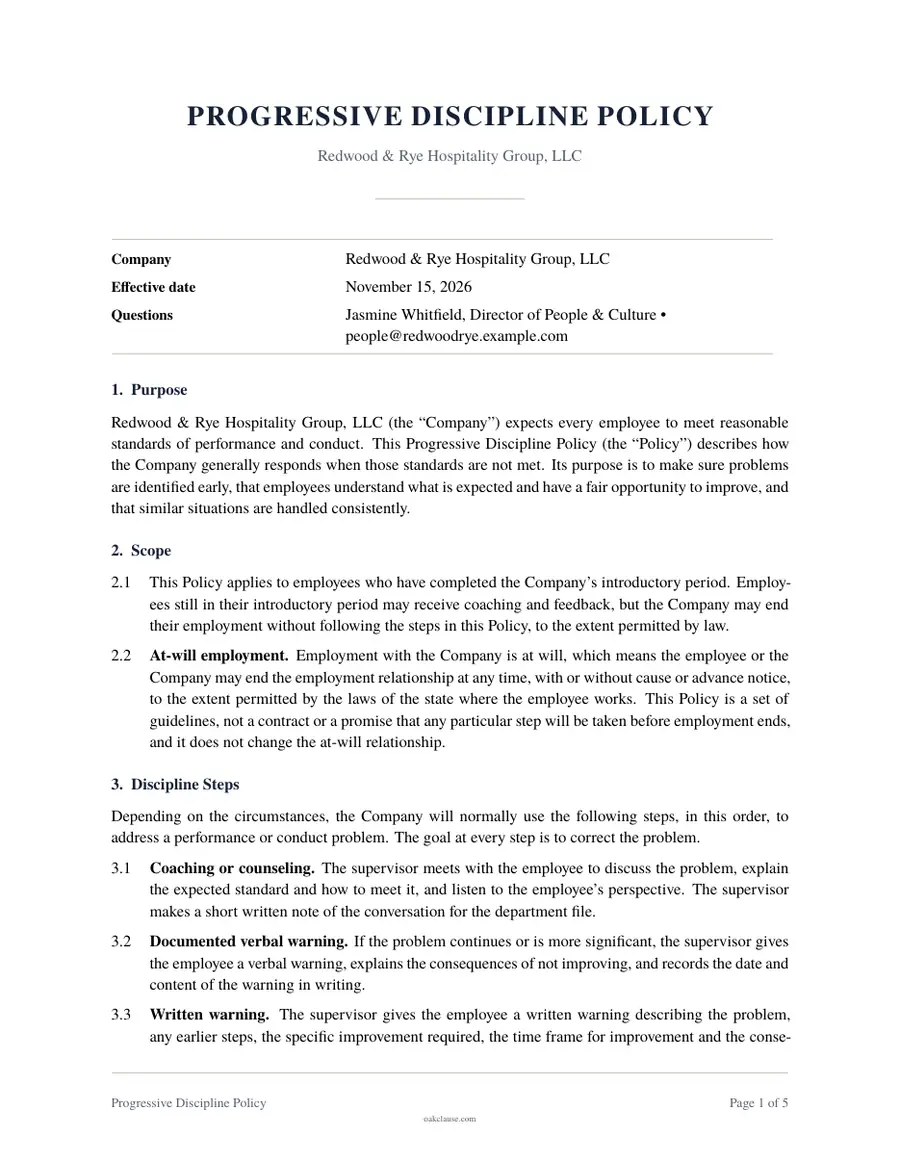
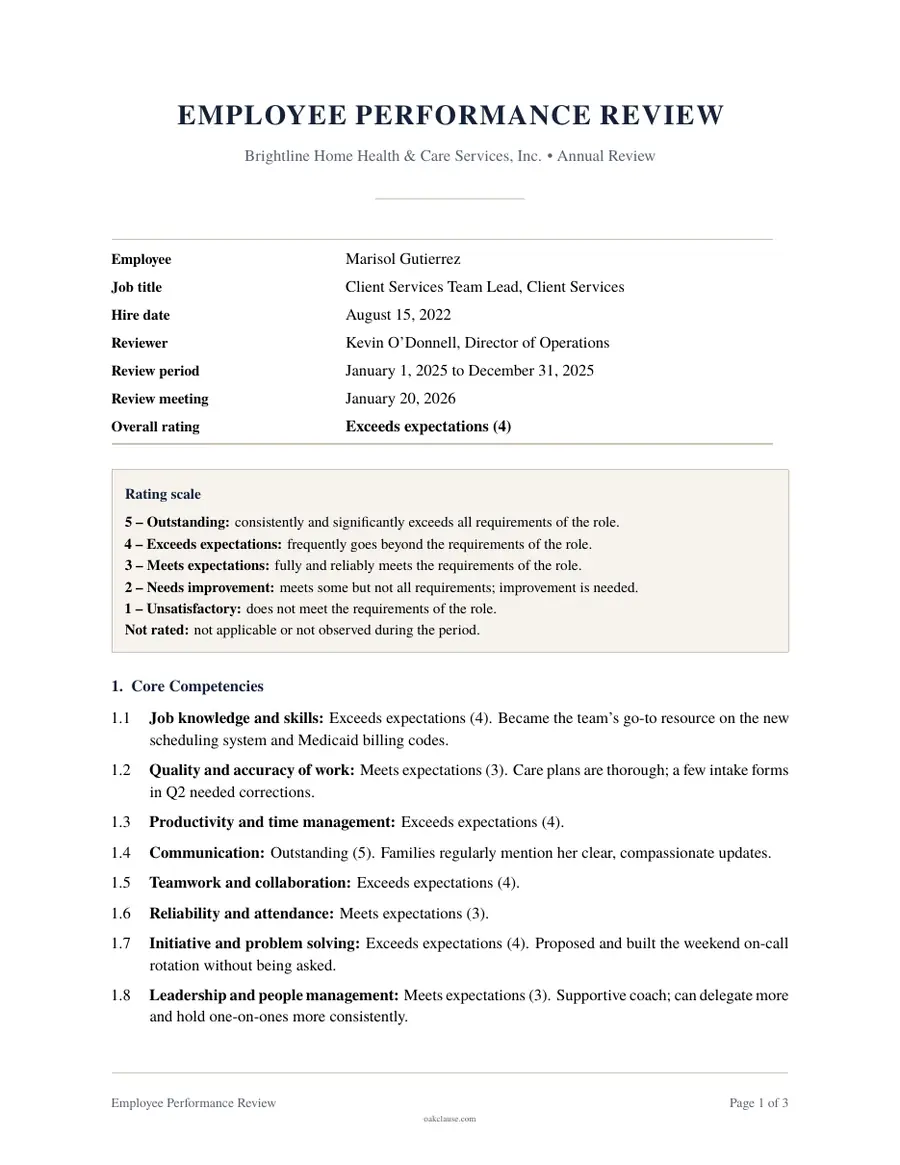
Termination letters are used for many situations, from performance or conduct problems to layoffs, position eliminations and the end of a temporary assignment. When a reason is given, a calm, factual description that matches the employer's records helps reduce confusion and disputes later. In at-will employment, an employer can also choose to confirm the termination without stating a reason.
A written letter creates a clear record for both sides. Some states require employers to give departing employees written notice of the separation, information about unemployment insurance, or other specific notices, so the letter is often delivered together with any state-required forms.
When to use it
- You are ending an employee's employment for performance, attendance or conduct reasons after earlier warnings.
- A position is being eliminated as part of a layoff, reorganization or business closure.
- A temporary, seasonal or project-based assignment is coming to an end.
- You have already told the employee in a meeting and want to confirm the details in writing.
- You want a consistent record of final pay, benefits and property return for your personnel file.
What is included
- Company letterhead, date and delivery method
- Termination date and last day worked
- Optional reason for termination with supporting details
- Summary of prior warnings, when relevant
- Final paycheck, accrued paid time off and severance terms
- Health coverage continuation and other benefits information
- Return of company property, with a deadline
- Reminder of confidentiality and other continuing obligations
- Contact person for questions and optional exit interview
- Optional employee acknowledgment of receipt
How to make your Termination Letter
Answer the questions
Tell us about the parties and the terms you want. Most documents take about 5 to 20 minutes.
Review the preview
Check the draft as you go and change any answer. The document updates instantly.
Download, sign and keep a copy
Download a print-ready PDF, sign it with the other parties, and give everyone a copy.
Frequently asked questions
Do employers have to give a reason for firing someone?
In most of the United States, employment is at-will, so an employer generally does not have to give a reason for ending it, as long as the real reason is not illegal, such as discrimination or retaliation. Some employers choose to state a brief, accurate reason for clarity. Employees covered by a contract or union agreement may have additional rights.
Is a termination letter required by law?
There is no general federal requirement to give a termination letter. However, some states require employers to provide written notice of separation, information about unemployment benefits, or a statement of the reason for discharge on request. Check your state's rules, and consider whether any state-required forms should be delivered with the letter.
When must the final paycheck be paid?
Final pay deadlines are set by state law and vary widely. Some states require payment on the last day of work or within a short time after termination, while others allow payment on the next regular payday. This letter states the date you choose, so confirm that it meets your state's deadline.
Does unused vacation have to be paid out?
It depends on the state and on the employer's written policy. Some states treat earned vacation as wages that must be paid at termination, while others allow a policy that forfeits unused time. The letter lets you state whether accrued time off will be paid.
What is COBRA and should it be mentioned?
COBRA is a federal law that lets many employees and their families keep group health coverage for a period after employment ends, usually at their own cost. It generally applies to employers with 20 or more employees, and many states have similar continuation laws for smaller employers. The plan administrator normally sends a separate election notice.
Should severance be offered in exchange for a release?
Severance is not generally required by law, but many employers offer it in exchange for the employee signing a release of claims. A release has to meet specific legal requirements, especially for employees age 40 or older, so it is usually prepared as a separate agreement, often with an attorney's help.
Does the employee have to sign the termination letter?
No. The employee's signature is not needed to end employment. Some employers ask the employee to sign only to acknowledge receiving the letter, which does not mean the employee agrees with its contents.
How should a termination letter be delivered?
Many employers hand the letter to the employee at a termination meeting, then send a copy by email or mail. Using a method that creates a record of delivery, such as email or certified mail, is helpful if the employee is not present.