Employee Warning Letter
Put a performance or conduct problem in writing, spell out what needs to change and by when, and keep a clear record for the personnel file.
Includes 30 days of edits
- 5 to 20 minutes
- Print-ready PDF
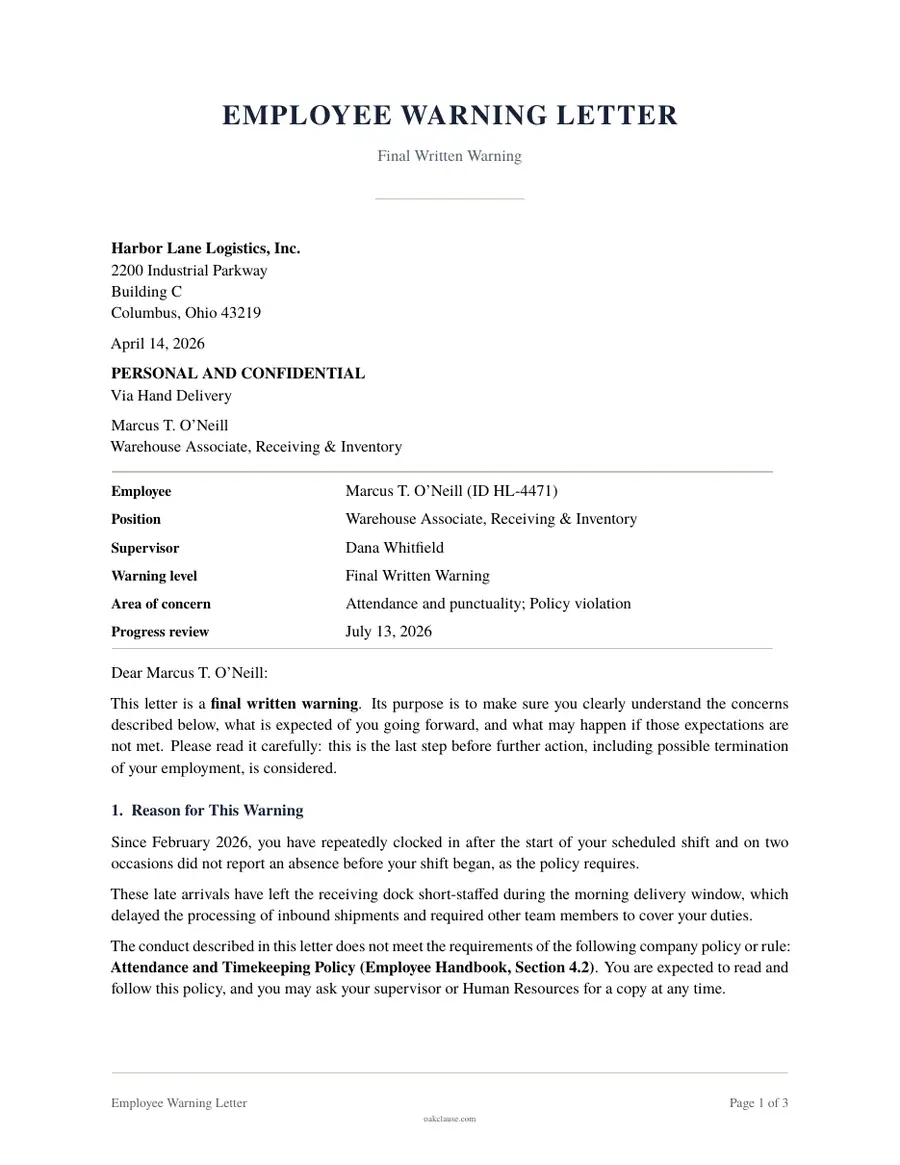
What is an Employee Warning Letter?
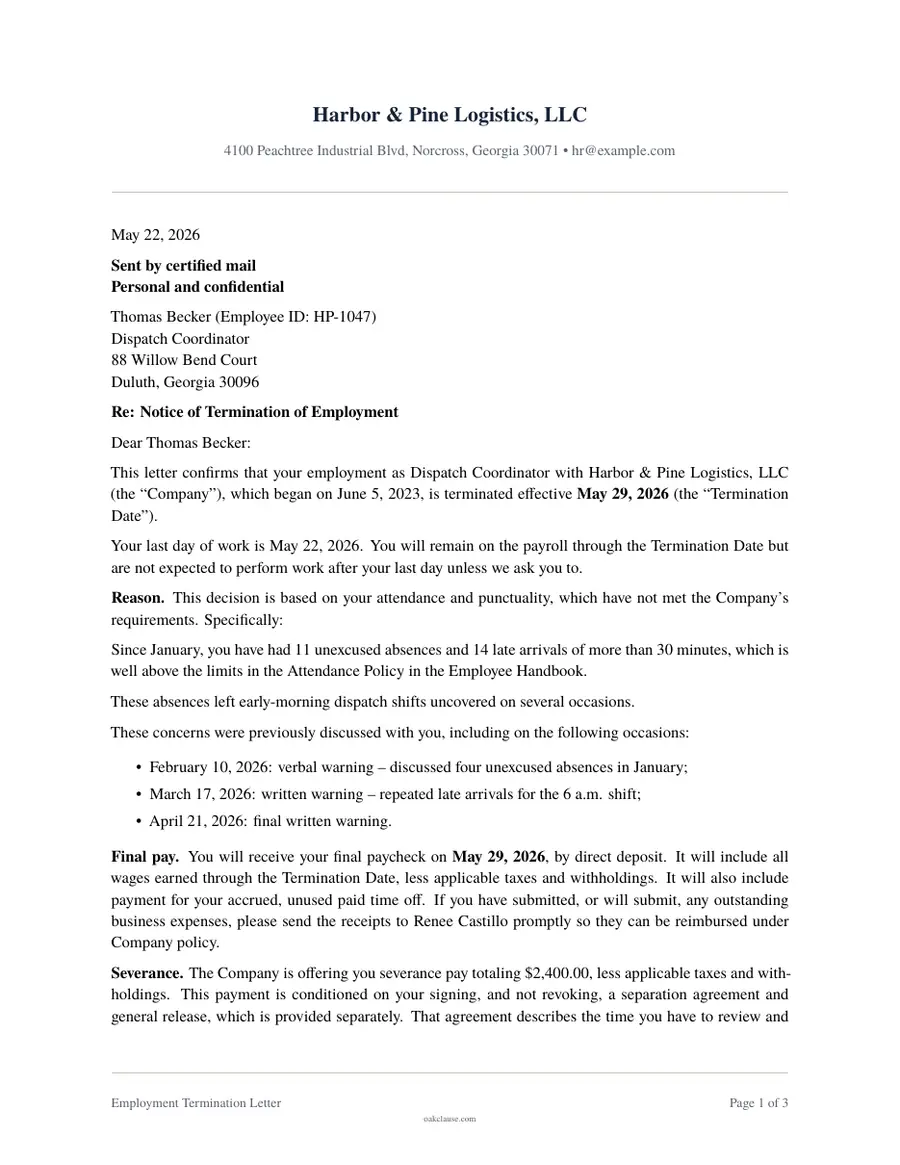
An employee warning letter, sometimes called a write-up or written reprimand, is a formal notice from an employer telling an employee that a specific problem with their performance, attendance or behavior has been noticed and must be corrected. It describes what happened, refers to the workplace rule or expectation involved, and explains what the employee needs to do going forward.
A good warning letter is factual rather than emotional. It lists dates and incidents, mentions any earlier conversations or discipline, sets measurable expectations, and states what may happen if the problem continues. Giving the employee a chance to respond in writing and to sign an acknowledgment shows that the process was fair and that the employee actually received the notice.
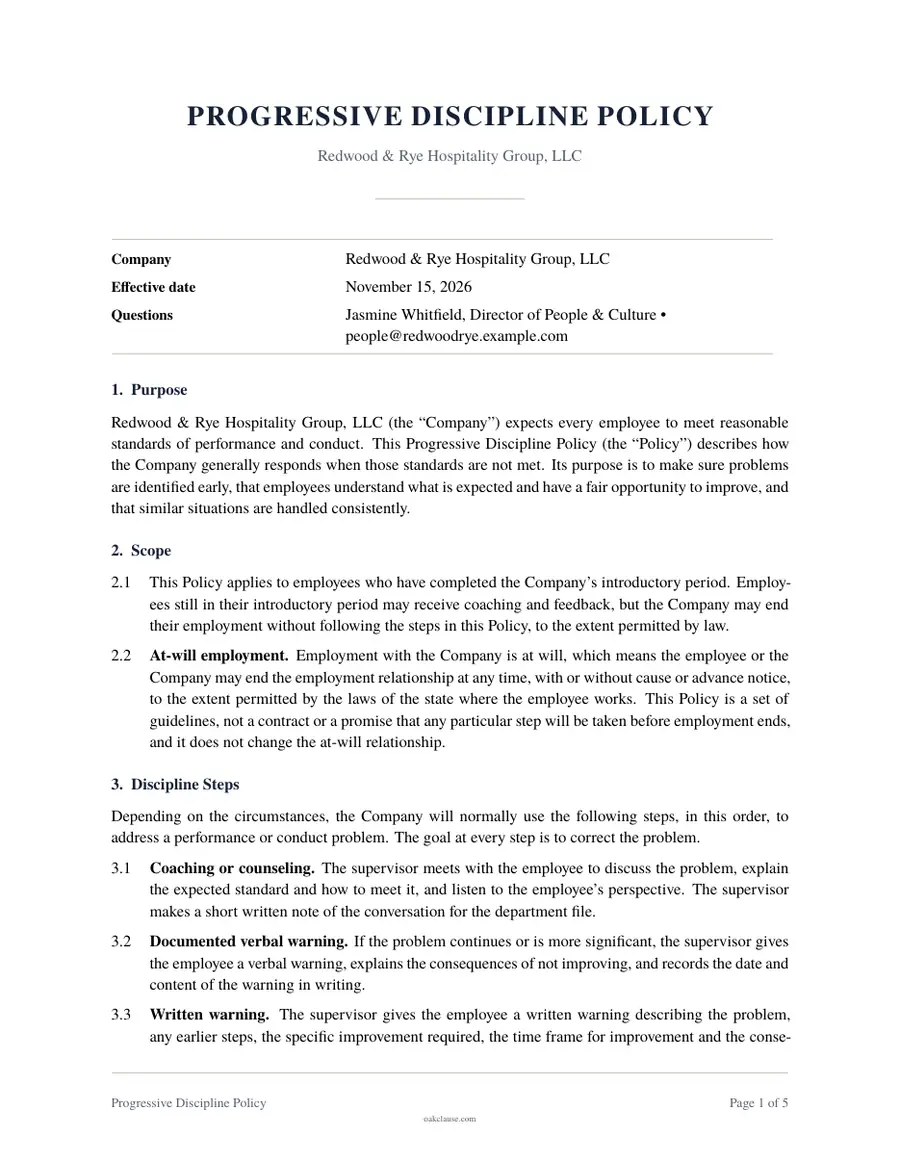
Warning letters are a core part of most progressive discipline programs. Consistent, well-documented warnings help managers treat employees evenly and give the business a reliable record if a later decision, such as a termination, is ever questioned.
When to use it
- An employee keeps arriving late, missing shifts or leaving early without approval.
- Work quality or productivity has stayed below expectations after informal coaching.
- An employee broke a written company policy, safety rule or code of conduct.
- You held a verbal warning conversation and want a written record of it.
- Earlier warnings have not worked and you need to issue a final written warning before considering termination.
What is included
- Employer details, letter date and delivery method
- Employee name, position, department and supervisor
- Warning level, from documented verbal warning to final written warning
- Categories of concern and any policy that was violated
- Dated list of specific incidents
- History of earlier coaching or discipline
- Clear improvement expectations, support offered and a review date
- Consequences of continued problems and an optional at-will statement
- Employee response rights and signed acknowledgment of receipt
- Optional witness line for when an employee declines to sign
How to make your Warning Letter
Answer the questions
Tell us about the parties and the terms you want. Most documents take about 5 to 20 minutes.
Review the preview
Check the draft as you go and change any answer. The document updates instantly.
Download, sign and keep a copy
Download a print-ready PDF, sign it with the other parties, and give everyone a copy.
Frequently asked questions
Is an employer required to give a warning before firing someone?
Most private employment in the United States is at will, so a warning is usually not legally required. However, an employer may have committed to a discipline process in a handbook, employment contract or union agreement. Consistent warnings also make it easier to show that a later decision was based on legitimate, documented reasons.
What should a warning letter include?
A clear description of the problem, the dates of specific incidents, the policy or expectation involved, any earlier warnings, what the employee must do to improve, the timeframe for improvement, and what may happen if the problem continues. It should also give the employee a way to acknowledge receipt and respond.
What if the employee refuses to sign the warning?
An employee's refusal to sign does not make the warning invalid. The manager can note the refusal on the letter and ask a witness, such as an HR representative or another manager, to sign confirming that the letter was delivered. The acknowledgment in this document explains that signing confirms receipt, not agreement.
Can the employee respond to a warning letter?
Many employers let employees submit a written response that is kept with the warning in the personnel file. Some states also give employees rights to review their personnel files or to add a rebuttal statement, so check your state's rules and your own policies.
What is the difference between a verbal warning and a written warning?
A verbal warning is a conversation in which a manager raises a concern. Many employers still document it in writing so there is a record that it happened. A written warning is a more formal step, and a final written warning makes clear that the next problem may lead to termination.
How long does a warning stay in an employee's file?
That depends on the employer's own policy. Some companies treat warnings as active for a set period, such as six or twelve months, after which they no longer count toward the next disciplinary step, while the record itself is kept. Record retention rules also vary, so many employers keep personnel records for several years.
Should I mention the employee's health, family situation or other personal matters?
Keep the letter focused on observable conduct and performance. References to medical conditions, pregnancy, religion, age or other protected characteristics can create legal risk. If a performance issue may be connected to a disability or protected leave, talk with HR or an employment attorney before issuing a warning.
Does a warning letter need to be notarized?
No. A warning letter is an internal employment record. It is signed by the manager and, ideally, by the employee to confirm receipt. A witness signature can be helpful when the employee declines to sign.