Progressive Discipline Policy
Set out the escalating steps your business takes when performance or conduct falls short, so problems are handled fairly, consistently and on the record.
Includes 30 days of edits
- 5 to 20 minutes
- Print-ready PDF
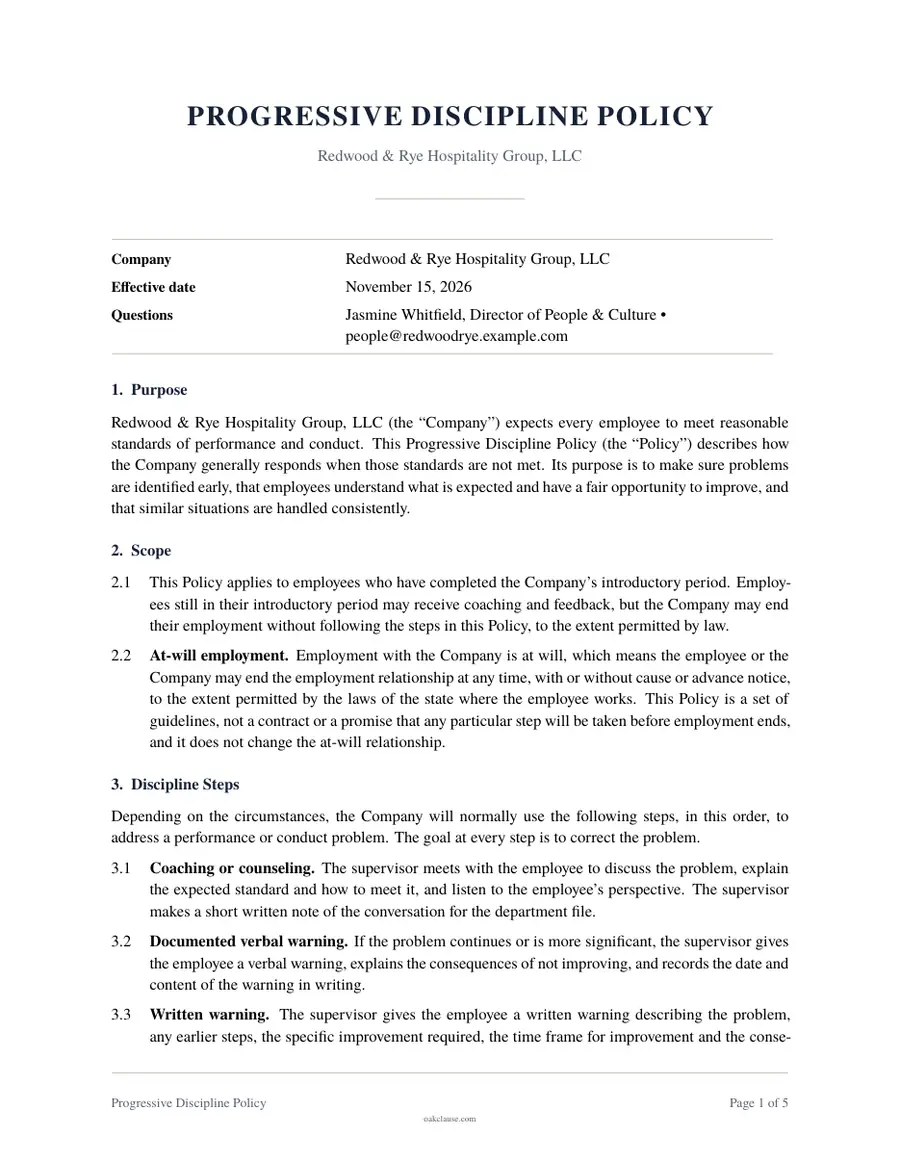
What is a Progressive Discipline Policy?
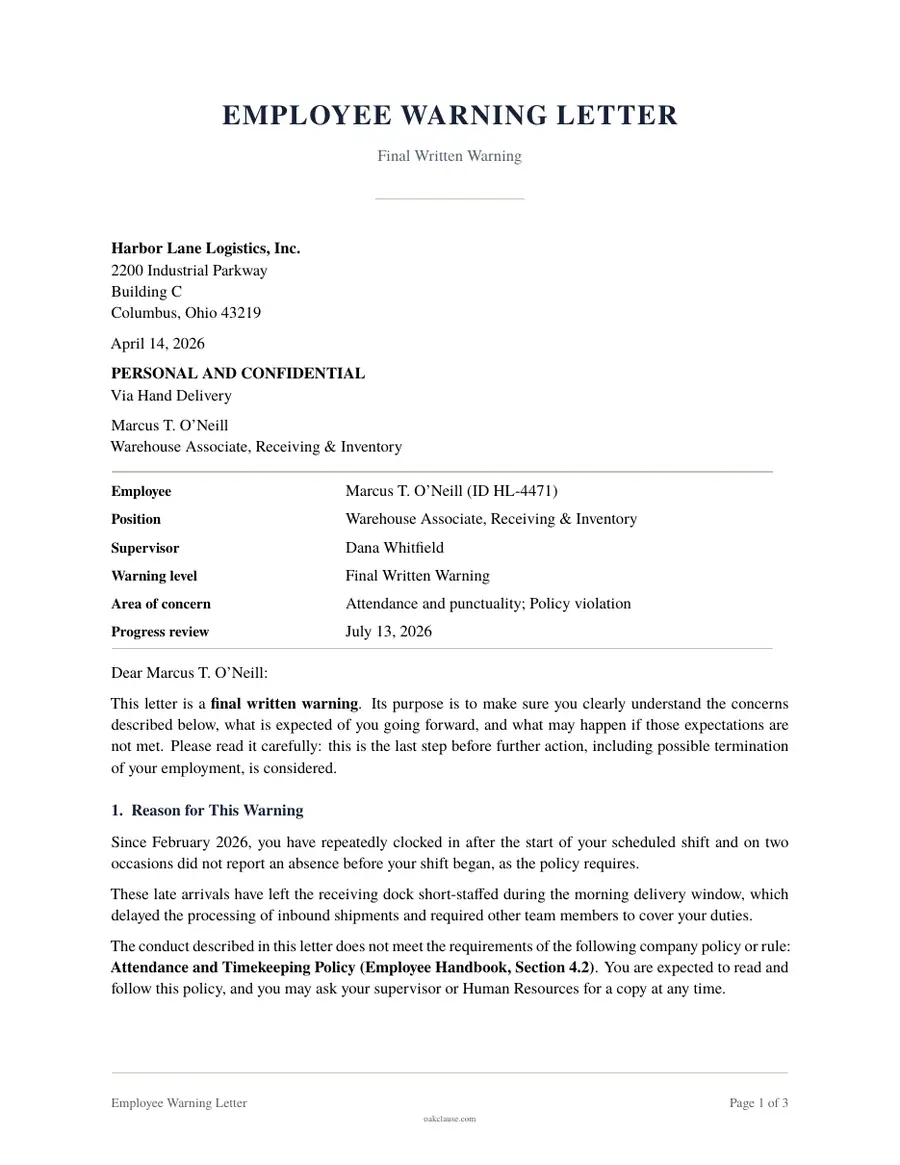
A progressive discipline policy describes how a business responds to performance or conduct problems in stages that become more serious if the problem continues. A typical sequence starts with coaching or a verbal warning, moves to a written warning and a final warning, and may end with suspension or termination.
The goal is to give employees a fair chance to correct a problem before the consequences escalate, and to give managers a consistent playbook. Applying the same steps to similar situations and documenting each one helps an employer show that decisions were based on legitimate business reasons rather than on bias or retaliation.
A well-written policy also keeps flexibility. It explains that serious misconduct can lead to immediate action, that management may skip or repeat steps, and, for at-will employers, that the policy does not promise any particular process. This policy covers all of those points and includes an optional blank warning form managers can use to document each step.
When to use it
- You want managers to handle performance and conduct problems the same way across the business.
- You are adding a discipline section to your handbook or replacing an informal practice.
- You want a written record of the steps taken before a termination decision.
- You need a standard form for documenting warnings and employee acknowledgments.
- You want to explain when serious misconduct can lead to immediate termination.
What is included
- Purpose, scope and at-will statement
- The discipline steps you choose, in order
- Optional performance improvement plan and suspension rules
- Management discretion to skip or repeat steps
- Examples of misconduct that may lead to immediate termination
- Documentation, employee response and record retention
- Optional appeal or review process
- Employee acknowledgment and blank warning form
How to make your Progressive Discipline Policy
Answer the questions
Tell us about the parties and the terms you want. Most documents take about 5 to 20 minutes.
Review the preview
Check the draft as you go and change any answer. The document updates instantly.
Download, sign and keep a copy
Download a print-ready PDF, sign it with the other parties, and give everyone a copy.
Frequently asked questions
What is progressive discipline?
Progressive discipline is an approach in which the response to a workplace problem becomes more serious each time it happens or continues, for example moving from a verbal warning to a written warning to termination. It gives employees notice and an opportunity to improve.
Does a progressive discipline policy change at-will employment?
It can if it is written as a promise. This policy states that the steps are guidelines, that the company may skip steps, and that it does not change at-will employment, which helps keep the employer's flexibility in states that follow at-will employment.
Can an employer skip steps?
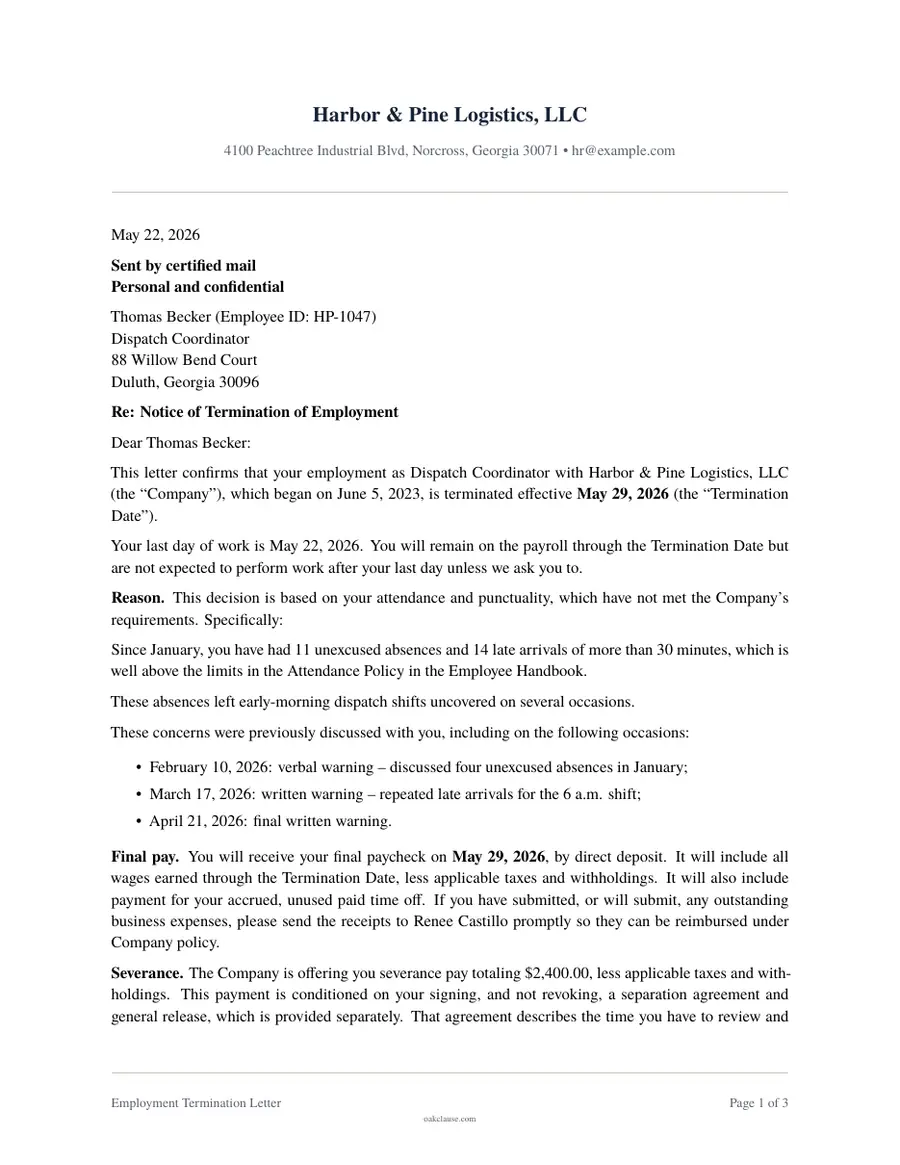
Yes, if the policy reserves that right, as this one does. Serious misconduct such as violence, theft or harassment is commonly handled with immediate suspension or termination rather than a warning.
Should employees sign written warnings?
It is a common practice. The signature confirms the employee received the warning, not that they agree with it. If an employee refuses to sign, the manager can note the refusal and have a witness sign. This policy and the included form follow that approach.
Can an employer suspend an employee without pay?
Often yes, but there are limits. Unpaid suspensions of salaried exempt employees can affect their exempt status under wage and hour law unless they meet specific conditions, and some states add rules. This policy lets you choose paid or unpaid suspension and commits to following wage and hour law.
How long should warnings stay active?
Many employers treat warnings as active for six to twelve months, after which a repeat problem may start at an earlier step. Others keep all warnings active. This policy lets you choose an active period while still keeping the records in the personnel file.
What is a performance improvement plan?
A performance improvement plan, or PIP, is a written plan that identifies specific performance gaps, sets measurable goals and a timeline, and describes the support the employer will provide. It is often used for performance problems rather than misconduct.
Can discipline be retaliatory?
Discipline must never be used to punish someone for legally protected activity, such as reporting harassment, requesting an accommodation, taking protected leave or discussing wages. Consistent documentation of legitimate reasons is an important safeguard.