Employee Handbook
Put your workplace rules, pay practices, time off and benefits in one organized handbook that new and current employees can actually read and follow.
Includes 30 days of edits
- 5 to 20 minutes
- Print-ready PDF
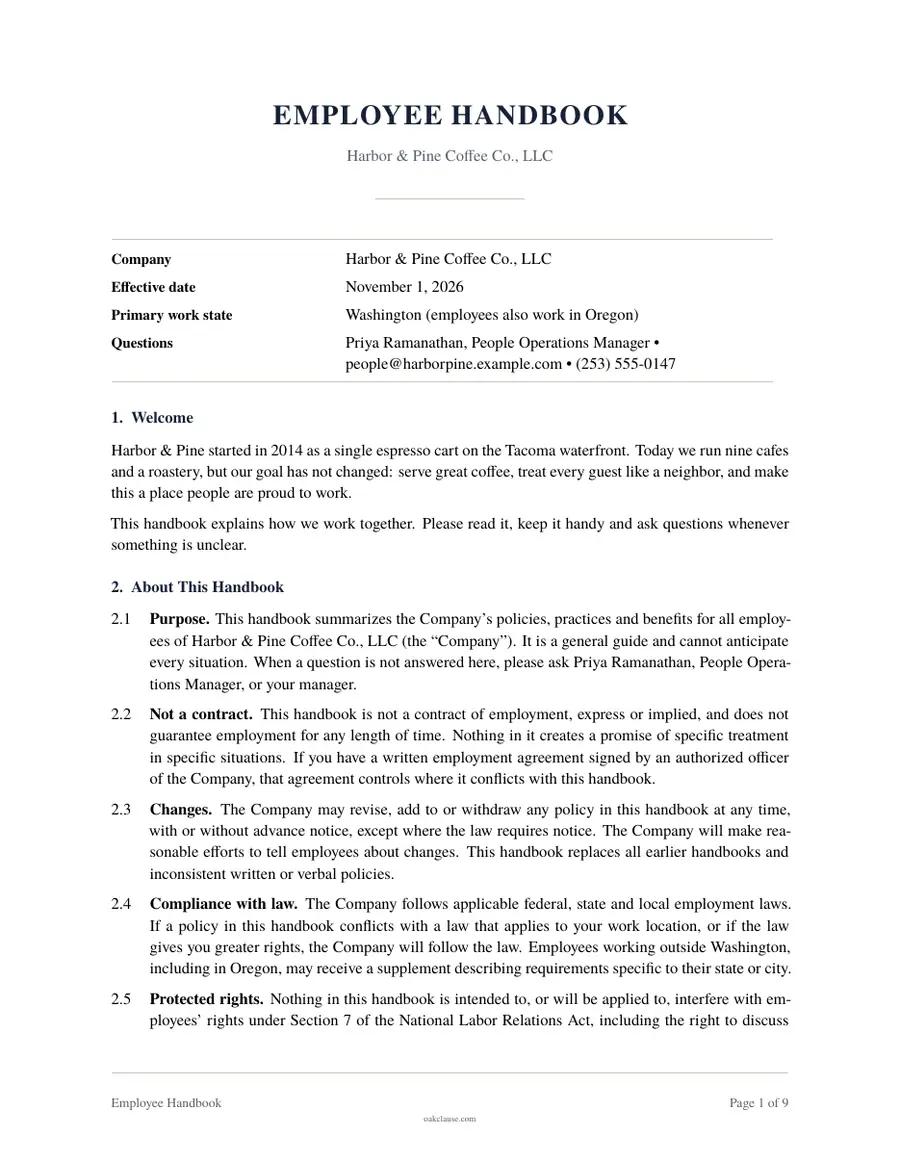
What is an Employee Handbook?
An employee handbook is a written guide that explains how your business works for the people who work there. It covers the practical questions employees ask in their first weeks, such as when payday is, how time off works and whom to call with a problem, as well as the standards of conduct the business expects from everyone.
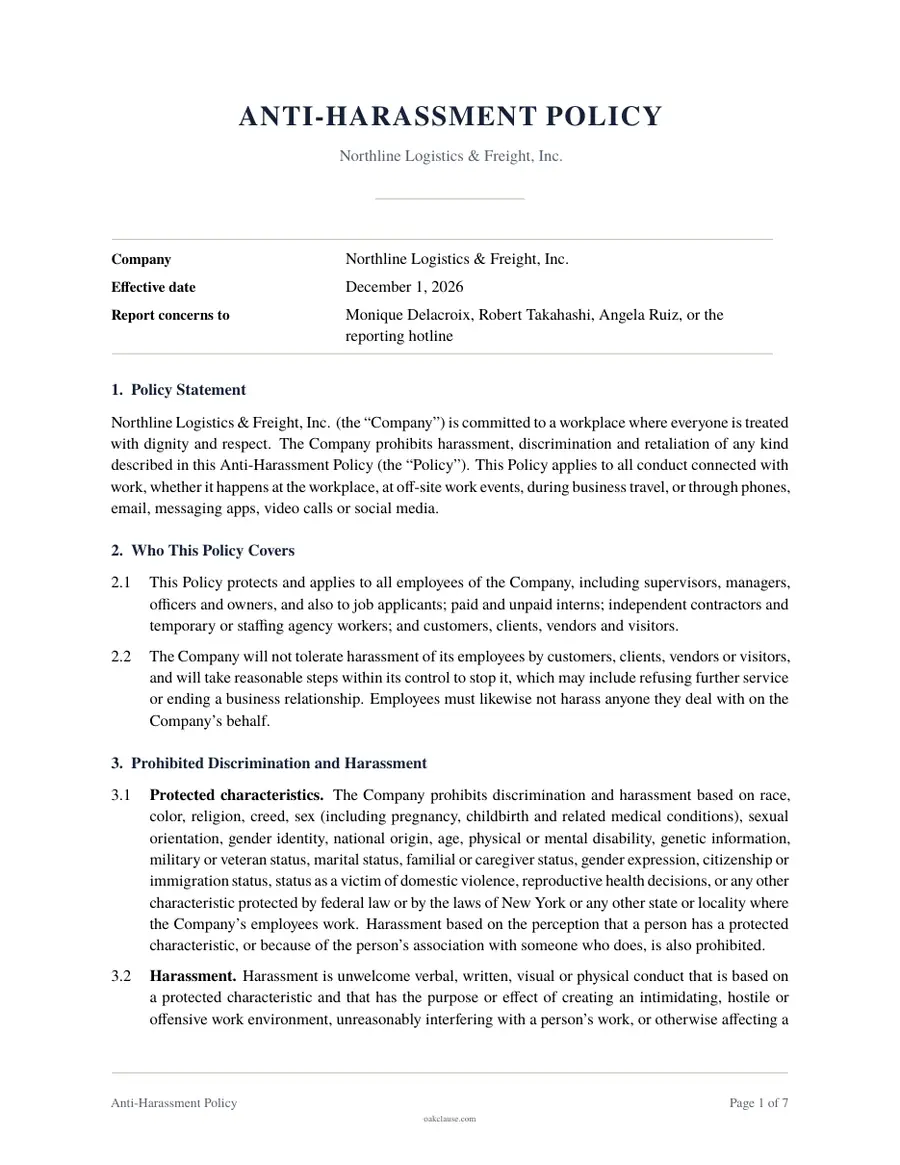
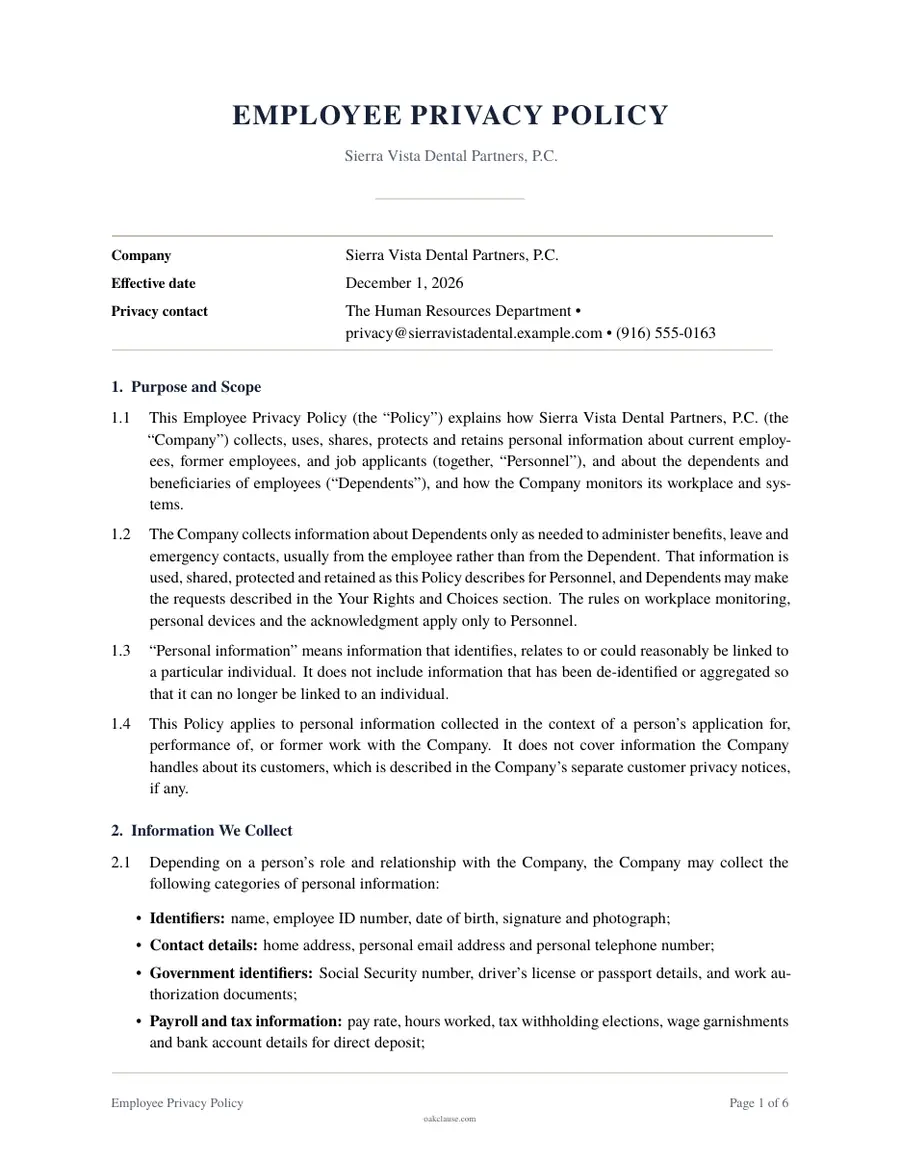
A handbook also documents policies that employers commonly want in writing: equal employment opportunity, anti-harassment and complaint procedures, reasonable accommodation, leave, timekeeping and overtime, and the use of company technology. Having those policies written down and acknowledged by each employee makes it easier to apply them consistently and to show what employees were told if a question comes up later.
Most handbooks are deliberately not contracts. This one states that the handbook does not create a contract of employment, that the business can update it, and, if you choose, that employment is at will. It also defers to federal, state and local law wherever the law sets its own rules, so a requirement that applies to your workplace still applies even when the handbook does not spell it out.
When to use it
- You are hiring your first employees and want written policies from day one.
- Your business has grown and informal practices are being applied inconsistently.
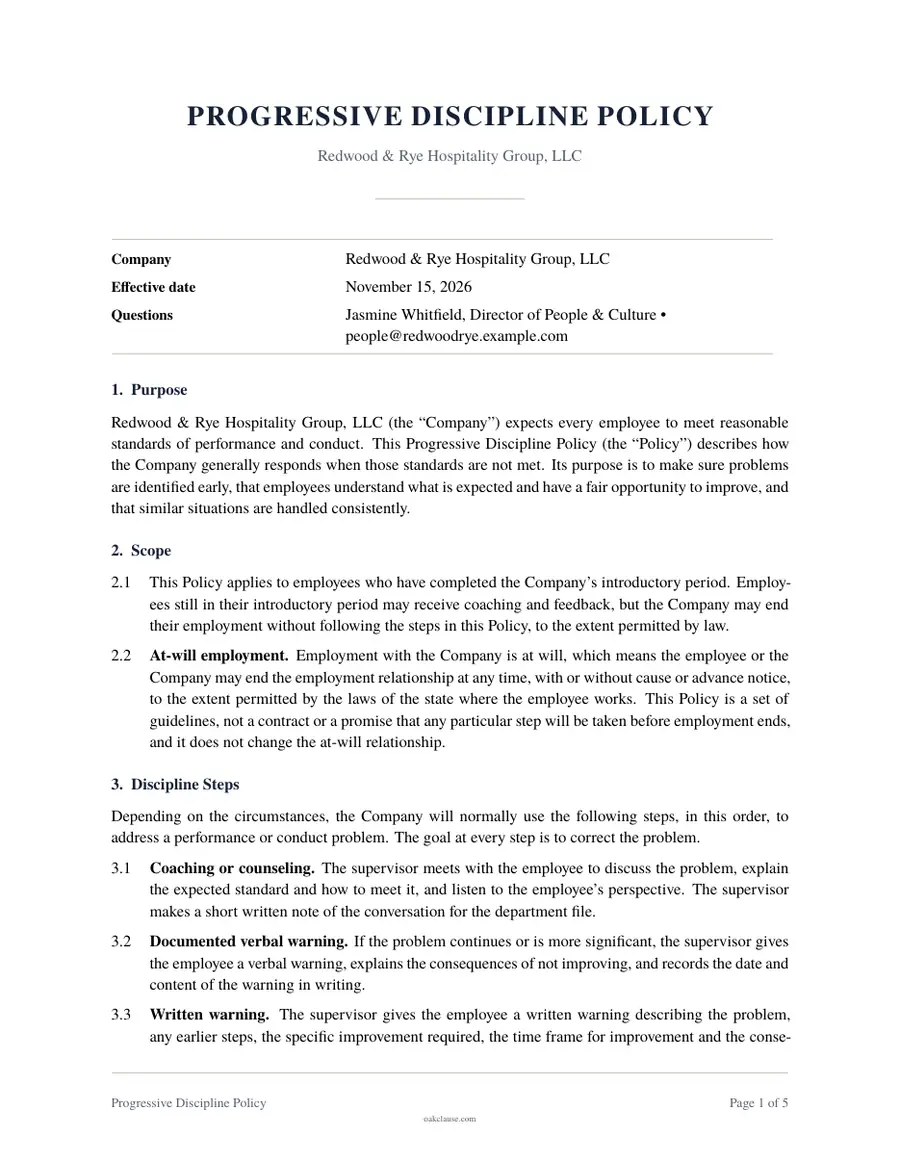
- Your existing handbook is out of date or no longer reflects how you pay, schedule or support staff.
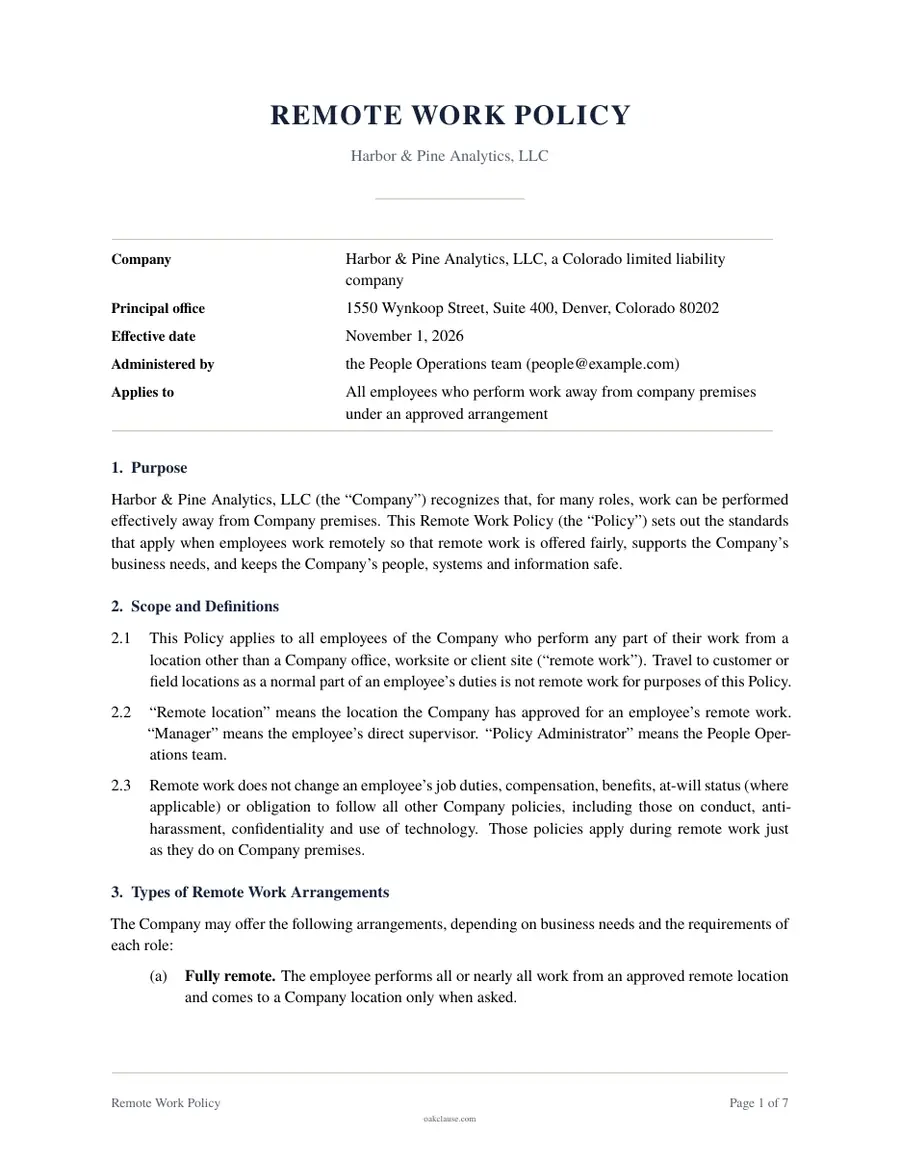
- You are adding benefits, remote work or a new time-off plan and want it explained in one place.
- You want every employee to sign an acknowledgment that they received and read your policies.
What is included
- Welcome message and purpose of the handbook
- At-will statement and handbook-is-not-a-contract disclaimer
- Equal employment opportunity, anti-harassment and accommodation policies
- Employment classifications and introductory period
- Work hours, timekeeping, overtime, breaks and pay schedule
- Holidays, paid time off and leaves of absence
- Benefits overview with eligibility
- Conduct, attendance, dress code, drug and alcohol, and technology rules
- Complaint procedure, separation from employment and custom policies
- Employee acknowledgment and receipt form
How to make your Employee Handbook
Answer the questions
Tell us about the parties and the terms you want. Most documents take about 5 to 20 minutes.
Review the preview
Check the draft as you go and change any answer. The document updates instantly.
Download, sign and keep a copy
Download a print-ready PDF, sign it with the other parties, and give everyone a copy.
Frequently asked questions
Is an employee handbook legally required?
No federal law requires private employers to have a handbook. However, many specific notices and policies are required by federal, state or local law, and a handbook is a convenient place to communicate them. Required workplace posters must still be displayed separately.
Is an employee handbook a contract?
It should not be, and this handbook says so clearly. Courts in some states have treated handbook promises as binding when the language suggested a contract, which is why the handbook includes a disclaimer and reserves the right to change policies.
What does at-will employment mean?
At-will employment means either the employer or the employee can end the employment relationship at any time, with or without cause or notice, as long as the reason is not illegal. Most US states follow at-will employment, but there are exceptions, and an employer can agree to different terms in a written contract.
Do I need a separate handbook for each state?
Many multistate employers use one core handbook plus state supplements that cover rules that differ, such as paid sick leave, meal and rest breaks, and final pay timing. This handbook defers to the law of the state where each employee works and lets you note any state-specific supplements.
Should employees sign the handbook?
Asking each employee to sign an acknowledgment of receipt is a common practice. It shows the employee received the handbook and understood where to find the policies. The acknowledgment form at the end of this handbook confirms receipt; it does not turn the handbook into a contract.
How often should a handbook be updated?
Many employers review their handbook at least once a year and whenever laws, benefits or practices change. Employment laws, especially on leave and pay, change frequently at the state and local level. When you update the handbook, distribute the new version and collect new acknowledgments.
Can I include an unlimited PTO policy?
Yes. This handbook supports a combined PTO bank, separate vacation and sick time, or a flexible (unlimited) time-off approach. Keep in mind that some states and cities require paid sick leave or regulate payout of accrued vacation, so the handbook defers to those laws.
Does the handbook replace a written employment contract?
No. A handbook sets general policies for everyone. If you have a written agreement with a particular employee, such as an employment contract or offer letter with specific terms, the handbook states that the signed individual agreement controls where the two conflict.