Anti-Harassment Policy
Spell out what harassment is, how employees can report it and how your business will investigate and respond, in a clear written policy your team can rely on.
Includes 30 days of edits
- 5 to 20 minutes
- Print-ready PDF
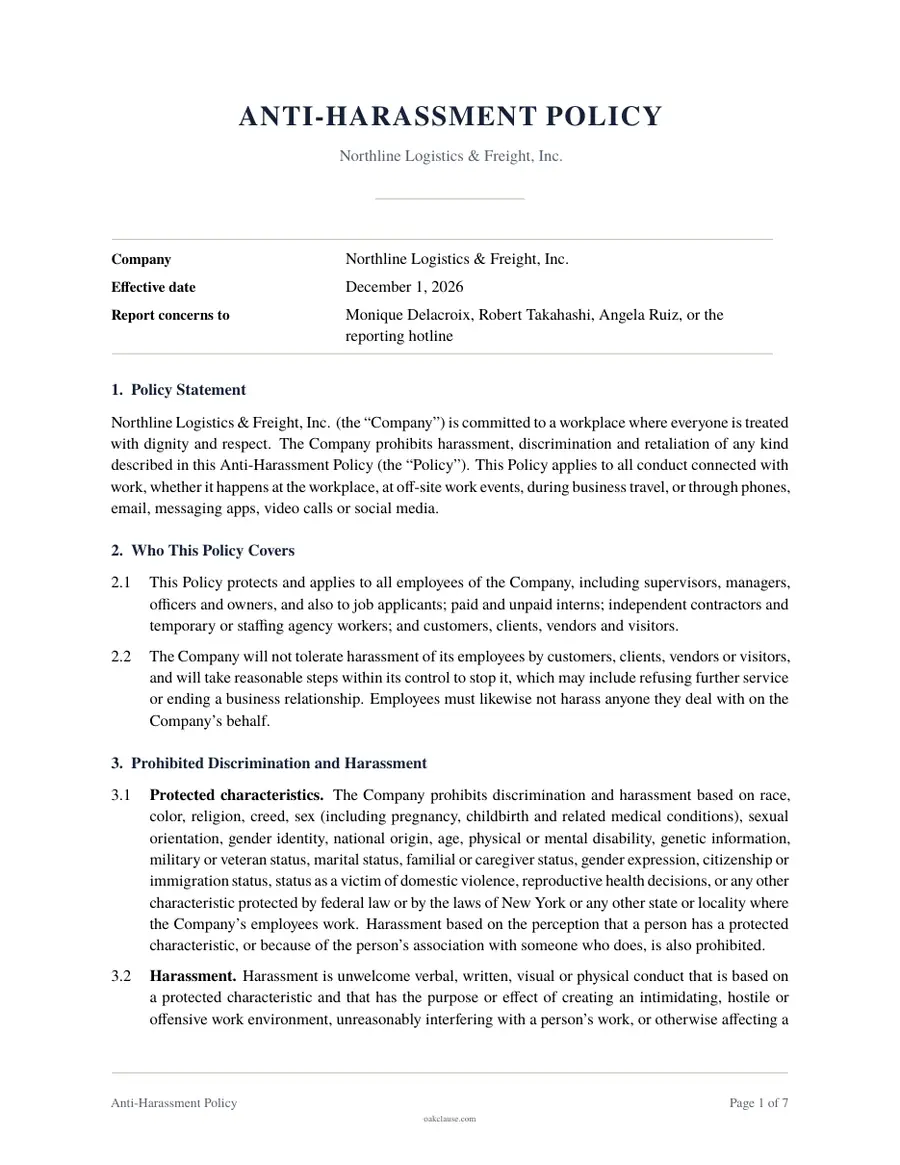
What is an Anti-Harassment Policy?
An anti-harassment policy is a written statement that a business does not tolerate harassment, discrimination or retaliation, and that explains exactly what employees should do if they experience or see it. It defines prohibited conduct with concrete examples, names the people employees can report to, and describes how complaints are investigated and resolved.
A clear policy matters for two reasons. First, it helps prevent problems by setting expectations for everyone, including managers, customers and vendors. Second, when a complaint does arise, a policy that was communicated to employees, offered more than one way to report and was actually followed is an important part of how an employer shows it took reasonable care to prevent and correct harassment.
Federal law sets a baseline, and many states and cities add protected characteristics, require written policies or training, or require particular content. This policy covers the core elements, lets you add characteristics and reporting channels, and defers to the law of the state where employees work for anything that is required there.
When to use it
- You are hiring employees and want a standalone harassment policy in place from the start.
- Your handbook mentions harassment only briefly and you want detailed reporting and investigation steps.
- Your state or city requires employers to distribute a written harassment policy.
- You have added new managers or locations and want everyone to know who handles complaints.
- You want to address workplace relationships and conduct by customers, vendors or contractors.
What is included
- Policy statement and who the policy covers
- Protected characteristics, including any you add
- Definitions and examples of sexual and other harassment
- Multiple reporting channels, including an optional hotline and anonymous reports
- Investigation process, confidentiality and interim measures
- Corrective action and anti-retaliation protections
- Optional workplace relationship rules
- Training commitments and outside agency contacts
- Employee acknowledgment form
- Optional harassment complaint form
How to make your Anti-Harassment Policy
Answer the questions
Tell us about the parties and the terms you want. Most documents take about 5 to 20 minutes.
Review the preview
Check the draft as you go and change any answer. The document updates instantly.
Download, sign and keep a copy
Download a print-ready PDF, sign it with the other parties, and give everyone a copy.
Frequently asked questions
Is an anti-harassment policy required by law?
Federal law does not require a written policy in every case, but federal anti-discrimination laws make employers responsible for preventing and correcting harassment, and a written policy is a central part of that. Some states and cities do require written policies, specific content or training, so check the rules where your employees work.
What counts as harassment at work?
Under federal law, unlawful harassment is unwelcome conduct based on a protected characteristic, such as race, sex, religion, age or disability, that is severe or pervasive enough to create a hostile work environment, or that becomes a condition of employment. Some states and cities set a lower bar. Many employers prohibit offensive conduct before it reaches any legal threshold, and this policy does so.
Who should employees report harassment to?
A good policy offers more than one option so that no one has to report to the person who is harassing them. This policy lets you name several contacts, such as a manager, HR and an owner, and add a hotline or anonymous reporting option.
Does the policy cover customers and vendors?
It can. Employers may be responsible for harassment of employees by non-employees, such as customers or contractors, when they knew or should have known about it and did not act. You can choose to extend the policy to conduct by and toward third parties.
Can investigations be kept confidential?
Investigations should be kept as confidential as possible, but complete confidentiality cannot be promised because the employer may need to interview witnesses and take action. This policy explains that information is shared only with people who need to know it.
What is retaliation?
Retaliation is any adverse action, such as firing, demotion, a schedule cut or harassment, taken against someone because they reported harassment or took part in an investigation. It is prohibited by federal law and by this policy, even when the original complaint is not substantiated.
Should the policy address workplace romance?
Many employers choose to, especially relationships between a supervisor and someone they supervise, because of the risk of favoritism and later harassment claims. This policy lets you require disclosure of such relationships or prohibit them.
Do employees need harassment training?
Several states and some cities require harassment prevention training for employers of a certain size, and many other employers provide it voluntarily. This policy lets you state how often training is given and defers to any training rules where you operate.