Idaho Commercial Lease Agreement
Put the deal for office, retail, restaurant or industrial space in writing.
Includes 30 days of edits
- 5 to 20 minutes
- Print-ready PDF
- Tailored to Idaho
Commercial Lease rules in Idaho
Commercial leases are governed mostly by contract law, and businesses have more freedom to set their own terms than residential tenants do. State law still matters in several areas: the notice and court procedures a landlord must follow before taking back the space, whether a landlord must try to re-let the premises after a tenant leaves early, rules on security deposits that some states extend to commercial tenancies, and how sales or rental taxes apply to rent. This lease is governed by the law of the state where the property is located and defers to that law on each of these points. Landlord lien rights in a tenant's property and the formalities needed to record a lease also vary by state; this lease does not address them, so check local rules if they matter to your deal. Some cities also have their own commercial tenant rules, so check local requirements before signing.
When you create this document for Idaho, the questionnaire uses Idaho as the governing law and adds wording that defers to Idaho requirements where they apply. Laws change, so confirm current rules with official Idaho sources or a local attorney for anything critical.
What is a Commercial Lease Agreement?
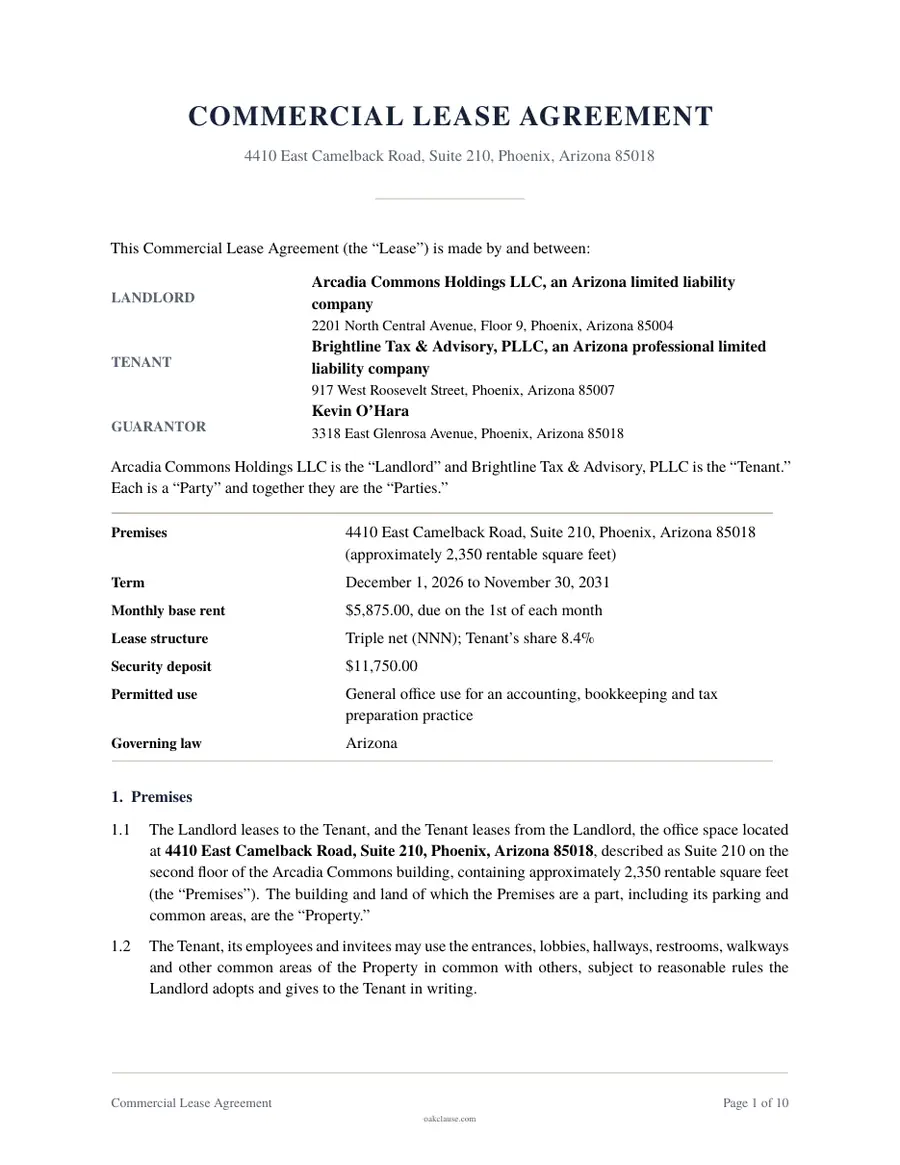
A commercial lease agreement is a contract in which a property owner (the landlord) gives a business (the tenant) the right to occupy space for business purposes in exchange for rent. It covers the space itself, how long the tenant may stay, how rent and operating costs are calculated, what the tenant may do in the space, and who pays for repairs, insurance and improvements.
Commercial leases work differently from home leases. Most consumer-protection rules that apply to residential tenants do not apply to businesses, so the written lease does far more of the work. Terms such as a gross or triple net structure, annual rent increases, a tenant improvement allowance or renewal options can shift tens of thousands of dollars between the parties over the life of the lease, which is why they need to be spelled out clearly.
This lease asks where the property is located and uses that state's law to govern the agreement. Where a state sets rules that cannot be changed by contract, such as the procedures a landlord must follow to recover possession, the lease defers to those rules rather than stating a specific deadline or limit.
When to use it
- You own office, retail, restaurant, medical, warehouse or industrial space and are leasing it to a business.
- You are a business owner and want the terms you negotiated with a landlord captured in a complete lease.
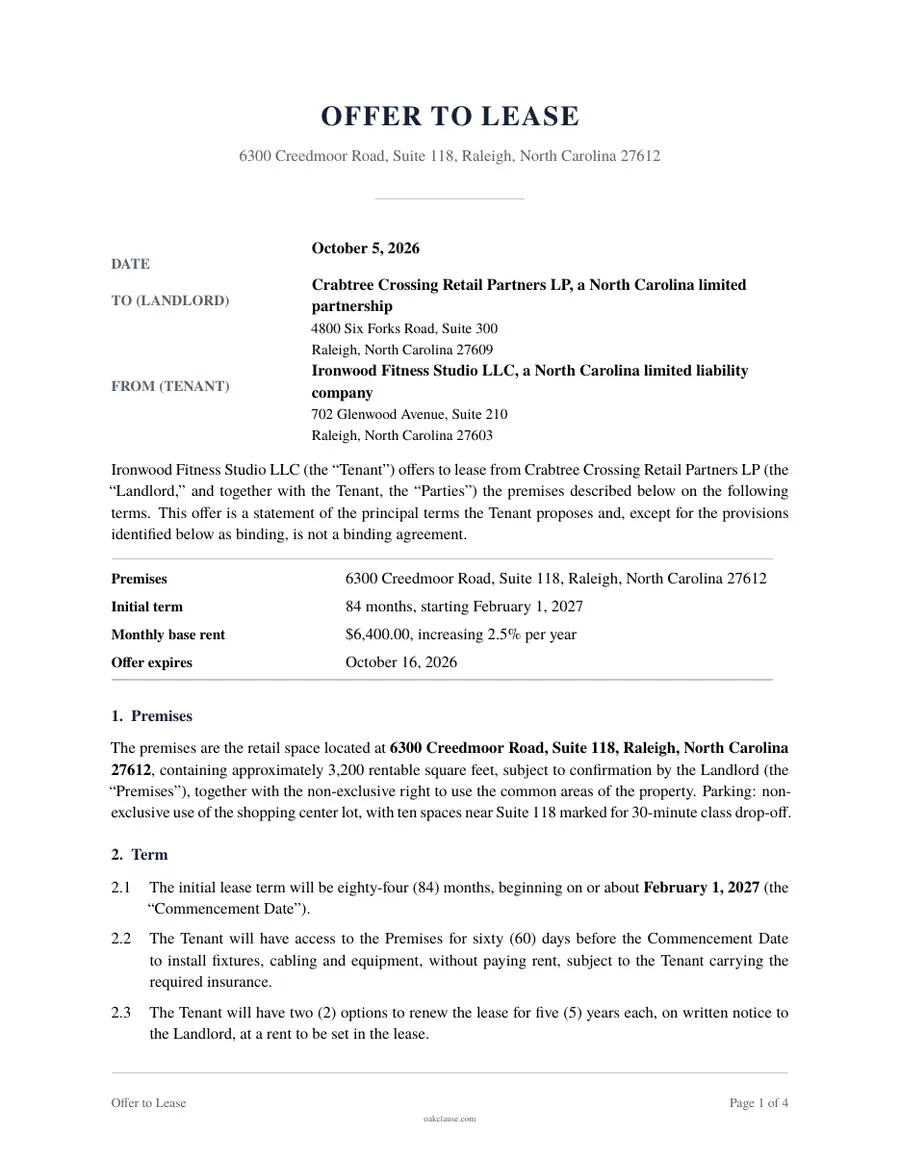
- You have signed a letter of intent or offer to lease and now need the full lease document.
- You want to choose between a gross, modified gross or triple net rent structure and document who pays which costs.
- You are renewing or replacing an older lease for space your business already occupies.
What is included
- Landlord, tenant and optional personal guarantor
- Premises description, square footage and parking
- Lease term, early access and renewal options
- Base rent, annual increases and free rent periods
- Gross, modified gross or triple net operating expenses
- Security deposit, late charges and holdover rent
- Permitted use, exclusive use and signage
- Tenant improvements, alterations, maintenance and utilities
- Insurance, indemnity, casualty and condemnation
- Assignment, default, dispute resolution and signatures
How to make your Commercial Lease
Answer the questions
Tell us about the parties and the terms you want. Most documents take about 5 to 20 minutes.
Review the preview
Check the draft as you go and change any answer. The document updates instantly.
Download, sign and keep a copy
Download a print-ready PDF, sign it with the other parties, and give everyone a copy.
Commercial Lease in another state
Back to the general commercial lease page51 states shown
- ALAlabama
- AKAlaska
- AZArizona
- ARArkansas
- CACalifornia
- COColorado
- CTConnecticut
- DEDelaware
- DCDistrict of Columbia
- FLFlorida
- GAGeorgia
- HIHawaii
- IDIdaho
- ILIllinois
- INIndiana
- IAIowa
- KSKansas
- KYKentucky
- LALouisiana
- MEMaine
- MDMaryland
- MAMassachusetts
- MIMichigan
- MNMinnesota
- MSMississippi
- MOMissouri
- MTMontana
- NENebraska
- NVNevada
- NHNew Hampshire
- NJNew Jersey
- NMNew Mexico
- NYNew York
- NCNorth Carolina
- NDNorth Dakota
- OHOhio
- OKOklahoma
- OROregon
- PAPennsylvania
- RIRhode Island
- SCSouth Carolina
- SDSouth Dakota
- TNTennessee
- TXTexas
- UTUtah
- VTVermont
- VAVirginia
- WAWashington
- WVWest Virginia
- WIWisconsin
- WYWyoming
Frequently asked questions
What is the difference between a gross lease and a triple net lease?
In a gross lease, the tenant pays one rent amount and the landlord pays the building's property taxes, insurance and common area costs out of that rent. In a triple net (NNN) lease, the tenant pays a lower base rent plus its share of those three cost categories. A modified gross lease sits in between, with the parties choosing which costs the tenant pays. This lease lets you pick the structure and list the costs that pass through.
Does a commercial lease need to be notarized or recorded?
Most commercial leases are valid once both parties sign, without a notary. Some states require extra formalities for long leases, and a lease, or a short memorandum of it, generally must be notarized before it can be recorded in the county land records. You can add a notary acknowledgment to this lease if you plan to record it or simply want the extra formality.
What is a personal guaranty and why do landlords ask for one?
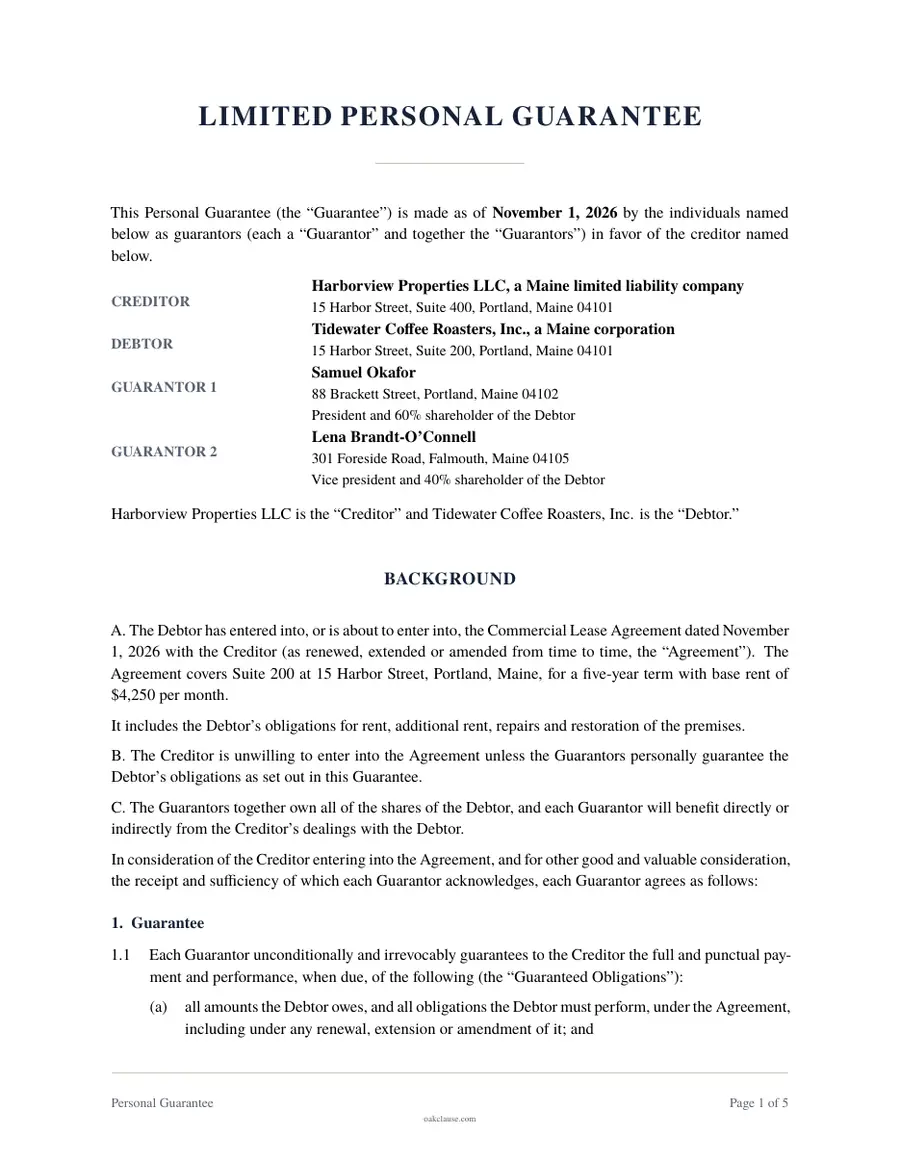
A personal guaranty is a promise by an individual, usually the owner of the tenant business, to pay the rent and perform the lease if the business does not. Landlords often ask for one when the tenant is a new company or a limited liability entity with few assets. This lease includes an optional guaranty section and a separate signature line for the guarantor.
How are annual rent increases usually handled?
Common approaches are a fixed percentage increase each year, a fixed dollar increase, or an adjustment tied to an inflation index such as the Consumer Price Index. Some leases keep rent flat for short terms. Choose the approach you negotiated and the lease will describe when and how the rent changes.
What is a tenant improvement allowance?
A tenant improvement allowance is money the landlord agrees to contribute toward building out or renovating the space for the tenant, such as new walls, flooring or lighting. The tenant usually manages the work and is reimbursed up to the allowance. Alternatively, the landlord may perform specified work itself, or the tenant may accept the space as-is.
Can a commercial tenant sublease or assign the lease?
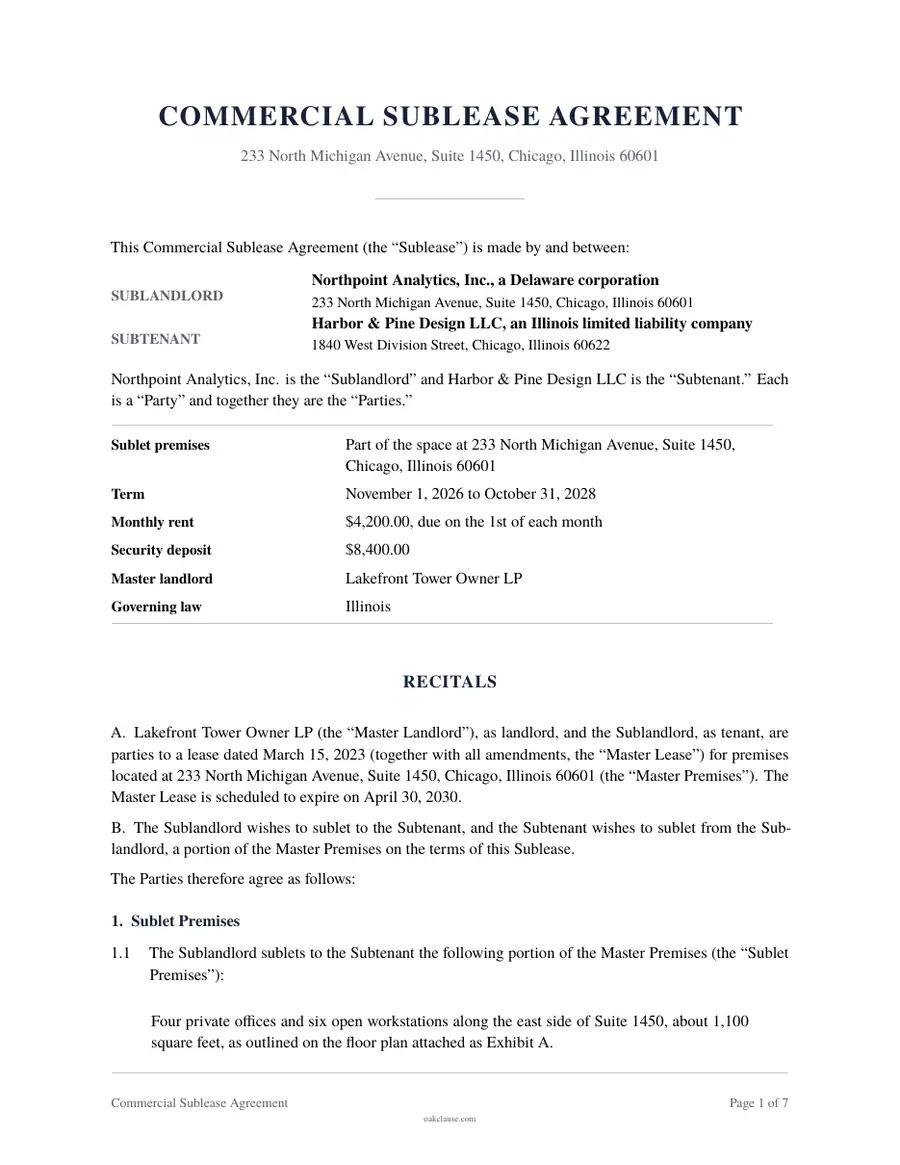
Only if the lease allows it. Most commercial leases require the landlord's written consent before a tenant assigns the lease or sublets any part of the space. You can choose whether consent may not be unreasonably withheld, is at the landlord's sole discretion, or whether transfers are prohibited.
What happens if the tenant stays after the lease ends?
A tenant who stays without a new agreement is a holdover tenant. Commercial leases commonly charge a higher holdover rent, often expressed as a percentage of the last monthly rent, to encourage a timely move-out. The landlord must still follow state law procedures to recover possession.
Are commercial tenants protected by the same laws as residential tenants?
Generally not. Many protections that apply to home renters, such as habitability requirements and deposit caps, do not apply to commercial space or apply only in limited form. That makes the written lease especially important. For a large or long-term lease, having an attorney review the final document is a sensible step.
More Idaho documents
Other documents people prepare for Idaho, each with the state’s rules where we have checked them.
All Idaho documents and rules