Offer to Lease
Propose the main terms for renting commercial space before anyone pays for a full lease.
Includes 30 days of edits
- 5 to 20 minutes
- Print-ready PDF
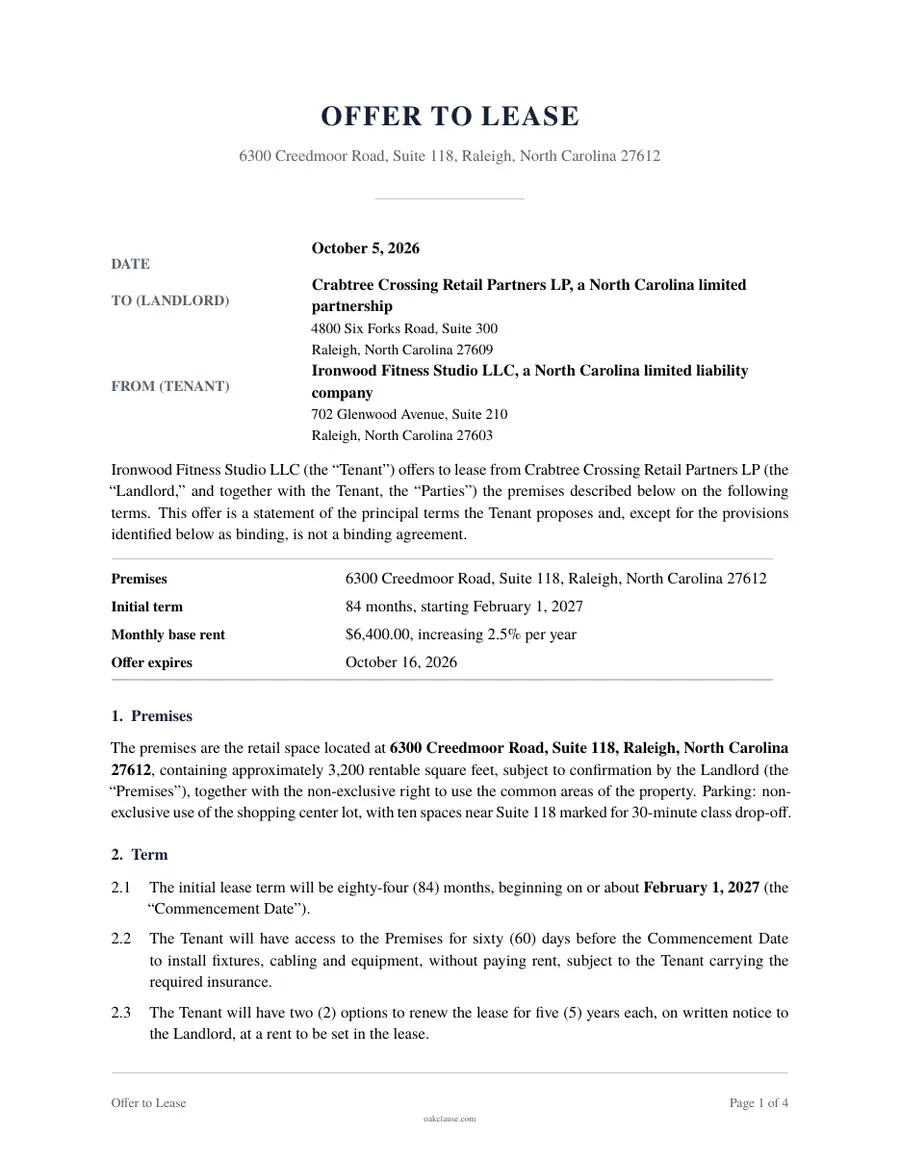
What is an Offer to Lease?
An offer to lease is a written proposal from a prospective tenant to a property owner describing the key terms on which the tenant would like to rent a space. It covers the premises, rent, length of the lease, deposit, permitted use, improvements and any conditions the tenant needs satisfied, and it gives the landlord a deadline to accept.
Most offers to lease are non-binding on the main business terms. They work like a letter of intent: once both sides sign, they confirm that the deal is close enough to justify drafting and negotiating a complete commercial lease, but neither side is bound to lease the space until that lease is signed. A few provisions, such as confidentiality or a short exclusive negotiating period, are often made binding so that both sides can rely on them while the lease is being prepared.
Putting the terms in writing early saves time and legal fees. It surfaces disagreements about rent, operating costs, build-out allowances or renewal options before lawyers draft a long document, and it gives the landlord's attorney a clear outline to follow.
When to use it
- You have found office, retail, restaurant or industrial space and want to make a formal proposal to the landlord.
- A landlord or broker has asked for your terms in writing before preparing a lease.
- You want to lock in an exclusive negotiating period while you finish due diligence on a space.
- You need landlord approval of key terms before applying for financing, permits or a franchise approval.
- You are comparing several locations and want each landlord to respond to the same set of terms.
What is included
- Prospective tenant, landlord and offer date
- Premises, square footage and parking
- Proposed lease term, commencement date and renewal options
- Base rent, annual increases, free rent and operating costs
- Security deposit and personal guaranty
- Permitted use, exclusivity and signage
- Landlord work or tenant improvement allowance
- Conditions such as financing, permits or inspections
- Binding or non-binding effect, confidentiality and exclusivity
- Offer deadline and landlord acceptance block
How to make your Offer to Lease
Answer the questions
Tell us about the parties and the terms you want. Most documents take about 5 to 20 minutes.
Review the preview
Check the draft as you go and change any answer. The document updates instantly.
Download, sign and keep a copy
Download a print-ready PDF, sign it with the other parties, and give everyone a copy.
Frequently asked questions
Is an offer to lease legally binding?
It depends on how it is written. This document lets you choose. Most commercial offers to lease are non-binding on the business terms, meaning neither side must sign a lease, while a few protective clauses such as confidentiality and exclusivity are binding. If you choose a binding offer, the parties agree to enter into a lease on the stated terms once it is accepted, which carries more risk if details are left open.
What is the difference between an offer to lease and a letter of intent?
In commercial real estate the terms are often used interchangeably. Both summarize the main deal points before the lease is drafted. An offer to lease is usually written from the tenant's side and includes an acceptance block for the landlord, while a letter of intent may be prepared by either side.
How long should the landlord have to accept the offer?
Commonly a few business days to two weeks. A short deadline keeps negotiations moving and lets you pursue other spaces if the landlord does not respond. If the landlord does not sign by the deadline, the offer simply expires.
What conditions can a tenant include?
Typical conditions include obtaining financing, zoning approval or building permits for the intended use, a satisfactory inspection of the space, approval from a franchisor or lender, and agreement on the final lease. Each condition should be described clearly so both sides know when it has been met.
Should I pay a deposit with an offer to lease?
Some landlords ask for a deposit when the offer is accepted, to show good faith. If you pay one, the offer should say whether it will be applied to the first month's rent or the security deposit and when it will be refunded if a lease is not signed. Paying through a broker's trust account or escrow can add protection.
Can I negotiate after the landlord signs?
Yes, when the offer is non-binding. The full lease will cover many more issues than the offer, and both sides will continue to negotiate those details. However, reopening the main deal points without a good reason can damage trust, so it helps to think the core terms through before you sign.
Do I need a lawyer to make an offer to lease?
Many businesses prepare the offer themselves or with a broker. Because the offer shapes the lease that follows, it is a good idea to have an attorney review it if the space, rent or improvement costs are significant, or if you are agreeing to binding terms.