Letter of Intent
Put the main points of a proposed deal in writing before anyone pays for a full contract.
Includes 30 days of edits
- 5 to 20 minutes
- Print-ready PDF
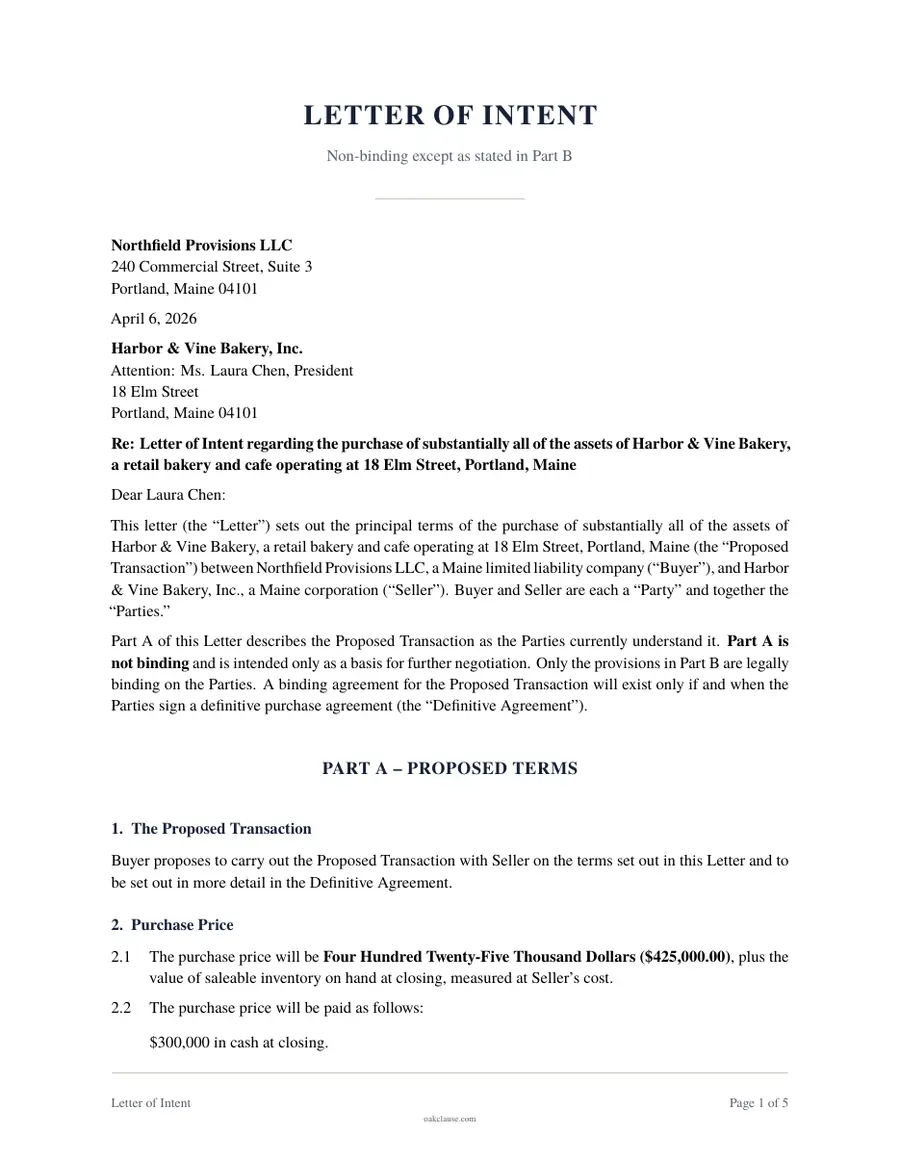
What is a Letter of Intent?
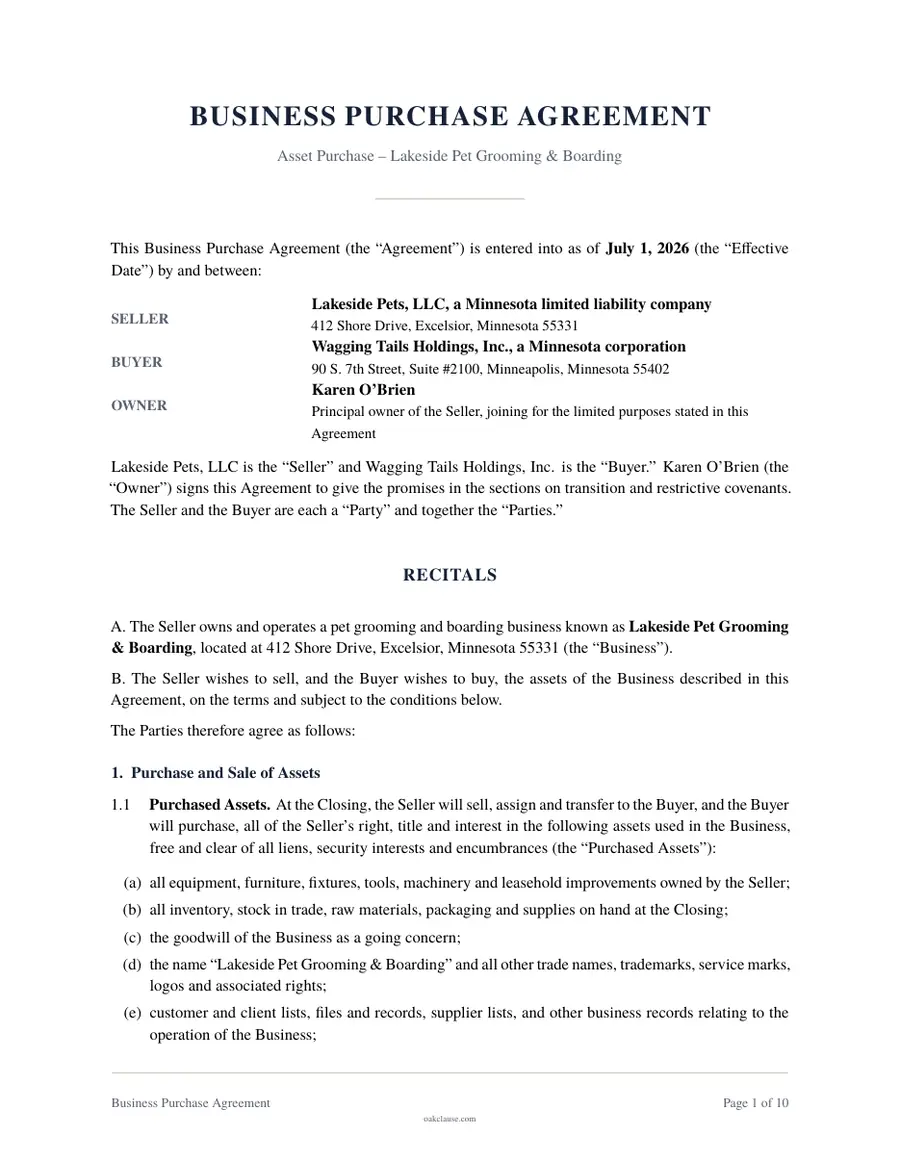
A letter of intent, often shortened to LOI, is a short document in which one party describes the deal it proposes to make with another. It usually covers the price, how it will be paid, the expected timeline, and the conditions that must be met before the deal can close. Similar documents are sometimes called a memorandum of understanding, a term sheet or a heads of agreement.
Most letters of intent are deliberately non-binding on the business terms. They let both sides confirm they agree on the essentials before investing time and legal fees in a detailed purchase agreement, lease or joint venture contract. A few clauses, however, are usually meant to be binding from the moment the letter is signed, such as confidentiality, a period of exclusive negotiation, and who pays which costs.
Because courts look closely at the words used, a well-drafted letter states plainly which parts are binding and which are not. This letter does exactly that, lists the proposed terms in numbered sections, and ends with an acceptance block so the recipient can countersign if they agree.
When to use it
- You want to buy a business, a building or a set of assets and need to make a written proposal to the owner.
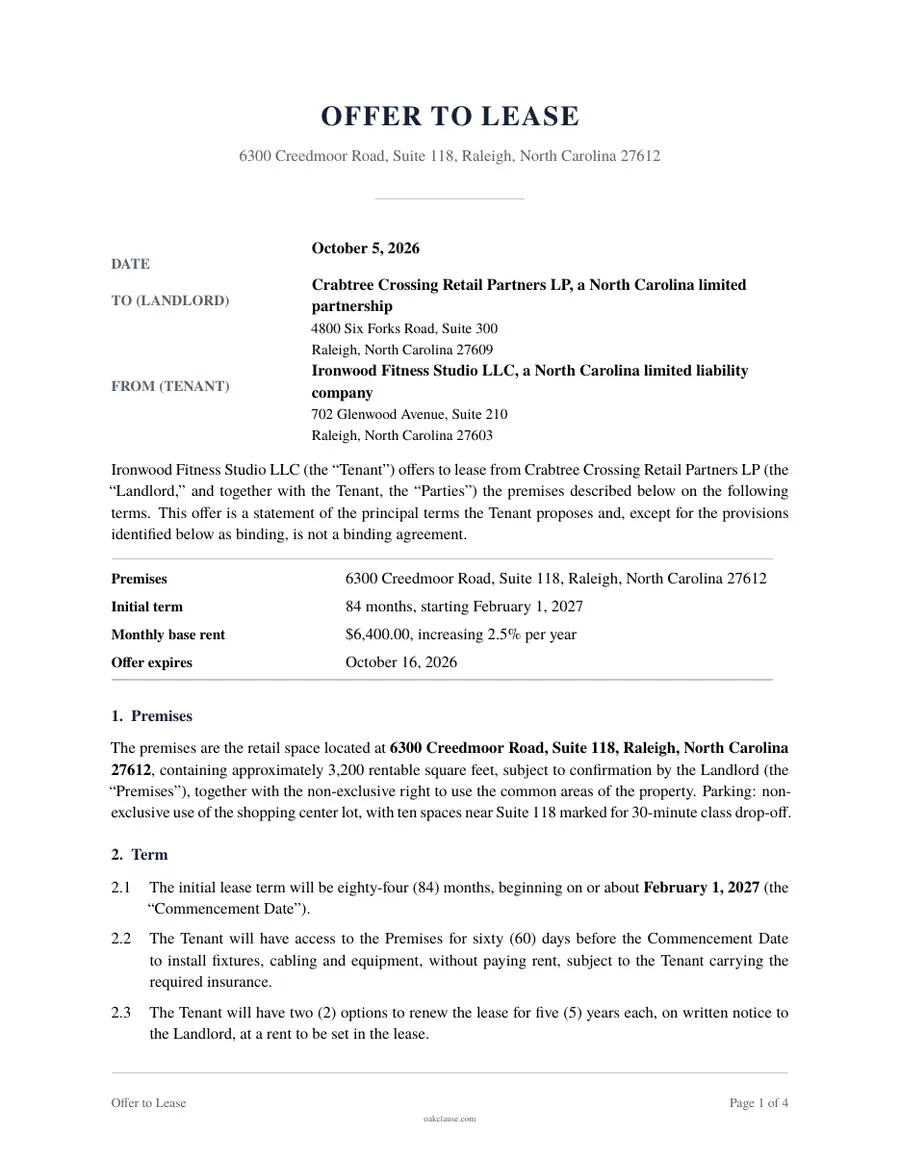
- You are negotiating a commercial lease and want to confirm rent, term and improvements before the landlord drafts the lease.
- Two companies are planning a joint venture, supply deal or partnership and want to record the shared understanding.
- A lender, investor or board asks to see the agreed outline of a deal before approving it.
- You want a short period of exclusive negotiation while you complete due diligence.
What is included
- Description of the proposed transaction and the parties' roles
- Proposed price, payment structure and any good-faith deposit
- Due diligence period and target dates for signing and closing
- Conditions that must be satisfied before closing
- Your own additional proposed terms, each in its own section
- Optional binding exclusivity (no-shop) period
- Optional binding confidentiality and cost-sharing provisions
- Clear statement of which provisions are binding and which are not
- Offer expiration date, governing law and acceptance signature block
How to make your Letter of Intent
Answer the questions
Tell us about the parties and the terms you want. Most documents take about 5 to 20 minutes.
Review the preview
Check the draft as you go and change any answer. The document updates instantly.
Download, sign and keep a copy
Download a print-ready PDF, sign it with the other parties, and give everyone a copy.
Frequently asked questions
Is a letter of intent legally binding?
It depends on the wording. Most letters of intent say the business terms are not binding until a final agreement is signed, while a few provisions, such as confidentiality and exclusivity, bind the parties immediately. This letter lets you choose that structure or make the whole letter binding, and it states the choice in plain words.
What is the difference between a letter of intent and a memorandum of understanding?
They are very similar. Both record a preliminary understanding before a final contract. A memorandum of understanding is more common for partnerships, government and nonprofit arrangements, while a letter of intent is more common for purchases, leases and acquisitions. The legal effect depends on the content, not the title.
What does an exclusivity or no-shop clause do?
It stops the recipient from negotiating with, or seeking offers from, anyone else for a set number of days. This gives the proposing party time to complete due diligence and draft the final agreement without worrying about being outbid. Exclusivity clauses are usually binding even when the rest of the letter is not.
Should I include the purchase price in a letter of intent?
Usually yes. The price and payment structure are the terms the other side cares about most, and stating them early avoids wasted effort. If the price depends on information you do not have yet, you can describe how it will be calculated or state a range in the additional terms.
Who signs a letter of intent?
The party proposing the deal signs and sends the letter. If the recipient agrees, it countersigns the acceptance block at the end and returns a copy. A business should sign through someone with authority, such as an owner, officer or manager.
What happens after a letter of intent is signed?
The parties typically carry out due diligence, negotiate the details and sign a definitive agreement, such as a business purchase agreement, commercial lease or joint venture agreement. If either side walks away before then, a non-binding letter generally does not require them to complete the deal.
Does a letter of intent need to be notarized?
No. A letter of intent is valid when signed by the parties, and electronic signatures are generally accepted. Notarization is not customary for this type of document.
Can a non-binding letter of intent still create obligations?
In some cases, yes. Courts in certain states have found a duty to negotiate in good faith, or even a binding contract, based on a letter's wording and the parties' conduct. Stating clearly which provisions are binding, and avoiding language that suggests the deal is final, helps reduce that risk. For high-value deals, an attorney can review the letter before it is sent.