Business Purchase Agreement
Buy or sell an existing business with a written agreement that pins down the price, what is included, how payment works and what each side promises before and after closing.
Includes 30 days of edits
- 5 to 20 minutes
- Print-ready PDF
What is a Business Purchase Agreement?
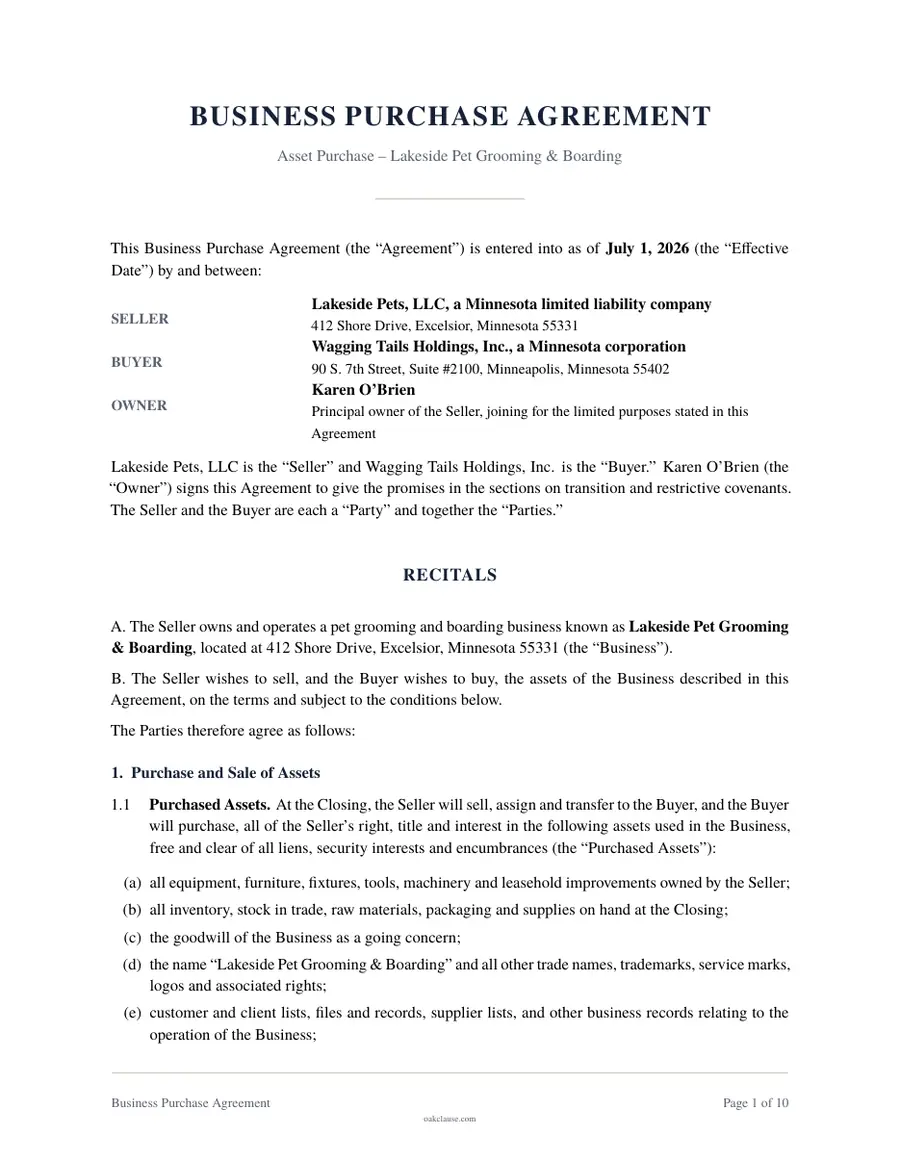
A business purchase agreement is the contract that transfers ownership of an existing business from a seller to a buyer. It records the price and how it will be paid, describes exactly what the buyer is getting, sets a closing date, and lists the conditions that must be met before the deal is final.
There are two common ways to buy a small business. In an asset purchase, the buyer acquires selected assets, such as equipment, inventory, customer lists, the trade name and goodwill, and usually takes on only the liabilities it agrees to. In an equity purchase, the buyer acquires the owner's shares or membership interests, so the company itself, with all of its contracts, history and liabilities, changes hands. This agreement handles either structure.
Beyond the price, the agreement protects both sides with representations about the business, a due diligence period, rules for employees and existing contracts, an optional non-compete and training period from the seller, and indemnification if a promise turns out to be untrue. Because a business sale can carry significant tax and liability consequences, many buyers and sellers have an attorney and an accountant review the final terms.
When to use it
- You are selling your small business, franchise location or professional practice to a new owner.
- You are buying an existing business and want the price, included assets and seller promises in writing.
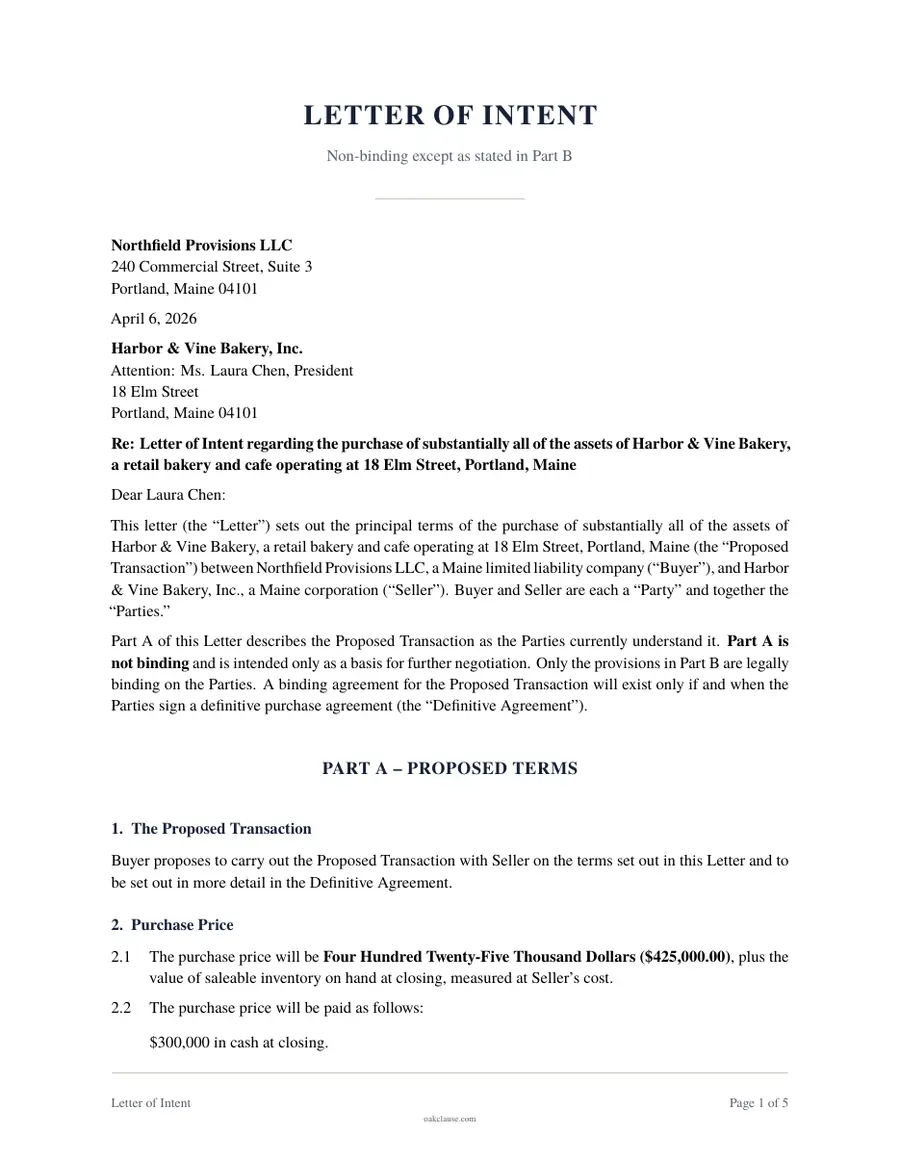
- You and the other side have agreed on a letter of intent and are ready for the definitive agreement.
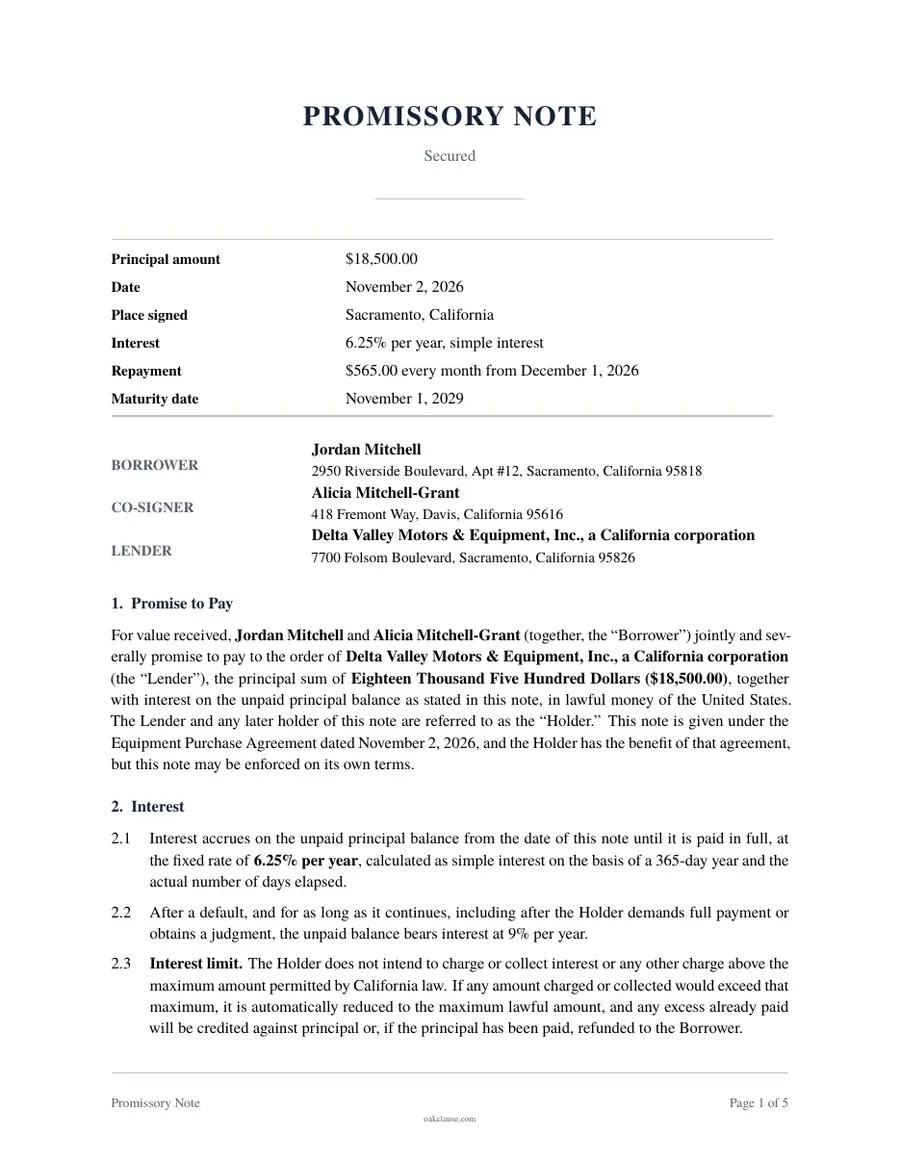
- You are selling a business partly on seller financing and need the note terms recorded.
- You are buying all of the shares or membership interests of a company from its owner.
What is included
- Asset purchase or equity purchase structure
- Included and excluded assets, inventory and assumed liabilities
- Purchase price, deposit and optional seller financing
- Purchase price allocation for tax reporting
- Due diligence period and closing conditions
- Seller and buyer representations and warranties
- Employees, existing contracts and expense prorations
- Optional non-compete, non-solicitation and transition training
- Indemnification, termination and dispute resolution
- Schedule of key assets and signature blocks
How to make your Business Purchase Agreement
Answer the questions
Tell us about the parties and the terms you want. Most documents take about 5 to 20 minutes.
Review the preview
Check the draft as you go and change any answer. The document updates instantly.
Download, sign and keep a copy
Download a print-ready PDF, sign it with the other parties, and give everyone a copy.
Frequently asked questions
What is the difference between an asset purchase and a stock purchase?
In an asset purchase, the buyer chooses which assets to buy and which liabilities, if any, to assume, and the seller's company stays behind with everything else. In a stock or membership interest purchase, the buyer acquires the company itself, including all of its assets, contracts and liabilities. Buyers of small businesses often prefer asset purchases because they limit exposure to unknown debts.
What does goodwill mean in a business sale?
Goodwill is the value of a business beyond its physical assets, such as its reputation, customer relationships, location and brand. It is often a large part of the price for service businesses and is usually transferred together with a non-compete from the seller, so the seller cannot immediately reopen nearby and take the customers back.
Why do buyer and seller need to allocate the purchase price?
For an asset purchase, federal tax rules require the price to be allocated among classes of assets, and both sides generally report that allocation to the IRS on Form 8594. The allocation affects how much of the gain the seller pays tax on at ordinary rates and how quickly the buyer can depreciate or amortize what it bought, so agreeing on it in the contract avoids conflicting filings.
How does seller financing work?
With seller financing, the buyer pays part of the price at closing and signs a promissory note for the rest, paying the seller in installments with interest. The seller usually keeps a security interest in the business assets until the note is paid. This agreement sets the down payment, interest rate and repayment period, and the note itself is signed at closing.
Is a seller's non-compete enforceable?
Non-competes given by the seller of a business are generally treated more favorably than employee non-competes, because they protect the goodwill the buyer paid for. They still must be reasonable in time, geography and scope, and a few states restrict them more than others. This agreement applies the non-compete only to the extent the governing state's law allows.
Can a buyer be responsible for the seller's unpaid taxes?
In some states, yes. A buyer of business assets can be held liable for certain unpaid taxes of the seller unless the buyer obtains a tax clearance certificate or withholds part of the price. This agreement requires the parties to follow any such state procedure and makes the seller responsible for its taxes for periods before closing.
What happens to the business's employees?
In an asset sale, employees are usually terminated by the seller and may be offered new jobs by the buyer. In an equity sale, they stay employed by the same company. This agreement lets you choose the approach and makes the seller responsible for wages and benefits earned before closing.
Do I need a letter of intent before a business purchase agreement?
Not necessarily. A letter of intent is useful for agreeing on the main terms and securing exclusivity before both sides spend money on due diligence and drafting. For smaller or straightforward deals, the parties often go directly to the purchase agreement.
Does a business purchase agreement need to be notarized?
Usually not. The agreement is binding once signed by both parties. Some closing documents, such as deeds, vehicle title transfers or certain assignments, may need notarization under state rules.