Purchase Order
Send suppliers a professional purchase order that spells out exactly what you are buying, the agreed prices, where to ship and when you will pay, with standard terms built in.
Includes 30 days of edits
- 5 to 20 minutes
- Print-ready PDF
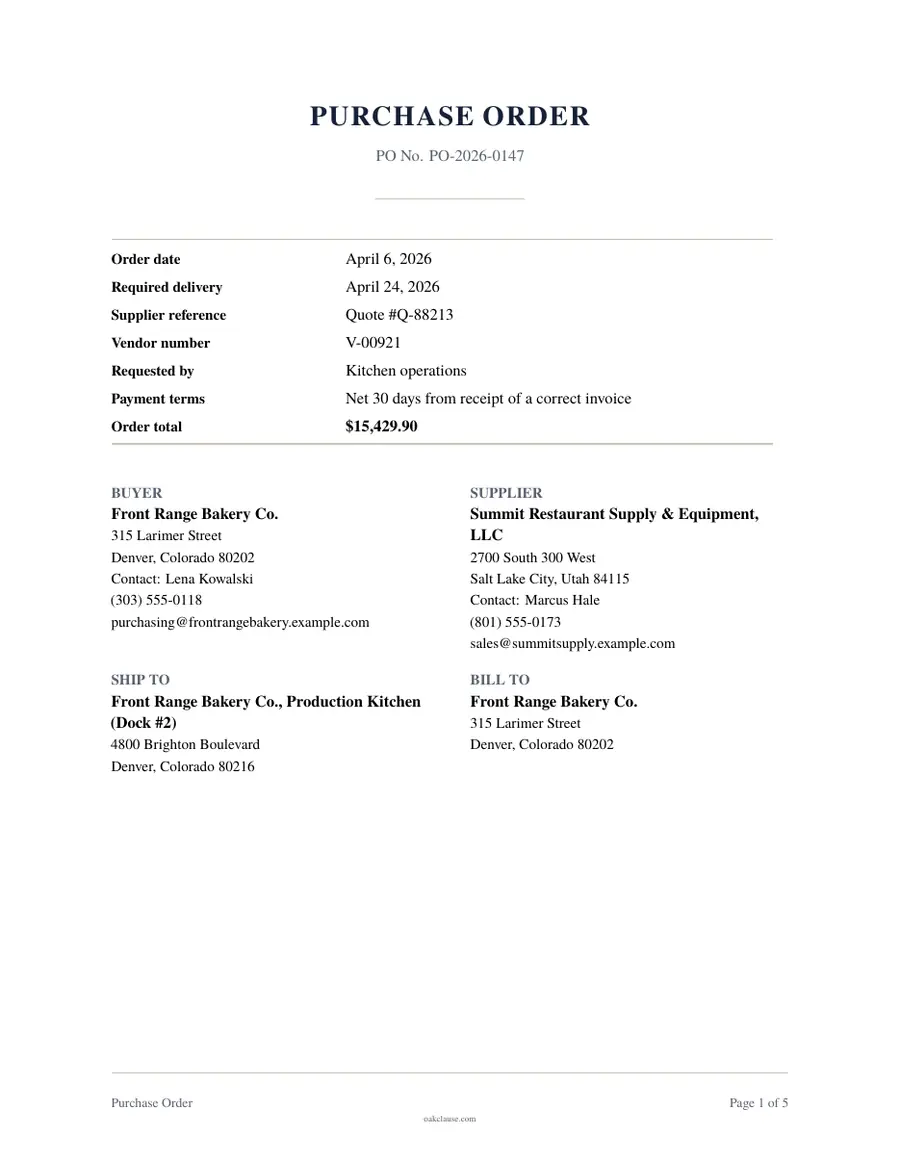
What is a Purchase Order?
A purchase order, usually shortened to PO, is a document a buyer sends to a supplier to order goods or services. It lists each item with its quantity and agreed price, gives shipping and billing addresses, sets a required delivery date and states the payment terms. Each PO carries its own number so both sides can match it to shipments, invoices and payments.
Once the supplier accepts a purchase order, by signing it, confirming it in writing or shipping the goods, it generally becomes a binding contract for that order. That is why many purchase orders include standard terms and conditions covering inspection, warranties, changes, cancellation and invoicing. These terms protect the buyer if goods arrive late, damaged or not as ordered.
Purchase orders also help businesses control spending. They create an approval trail, make it easy to check that an invoice matches what was actually ordered and received, and give the accounting team a clear record for budgeting, audits and taxes.
When to use it
- You are ordering inventory, raw materials, equipment or supplies from a vendor.
- You want written confirmation of prices and quantities before a supplier ships.
- Your business needs a numbered record to match against invoices and receipts.
- You are ordering services, such as installation or repairs, at an agreed price.
- A supplier has sent a quote and you want to formally accept it on your own terms.
What is included
- PO number, order date and quote reference
- Buyer, vendor, ship-to and bill-to details
- Itemized lines with item numbers, quantities and unit prices
- Automatic subtotal, discount, sales tax, shipping and total
- Required delivery date, shipping method and shipping terms
- Payment terms and invoicing instructions
- Standard terms on acceptance, inspection, warranties and cancellation
- Authorized signature and optional vendor acknowledgment
How to make your Purchase Order
Answer the questions
Tell us about the parties and the terms you want. Most documents take about 5 to 20 minutes.
Review the preview
Check the draft as you go and change any answer. The document updates instantly.
Download, sign and keep a copy
Download a print-ready PDF, sign it with the other parties, and give everyone a copy.
Frequently asked questions
Is a purchase order a legally binding contract?
A purchase order is an offer to buy. It generally becomes a binding contract once the supplier accepts it, for example by signing an acknowledgment, confirming the order or shipping the goods. Until then, the buyer can usually withdraw or change it.
What is the difference between a purchase order and an invoice?
The buyer issues a purchase order before the sale to say what it wants to buy and on what terms. The seller issues an invoice after delivering goods or services to request payment. Accounts payable teams often match the PO, the delivery receipt and the invoice before paying.
How should I number purchase orders?
Use a unique number for every order so it can be traced. Many businesses use a simple sequence, such as 1001, 1002, or combine a year or department code with a sequence, such as 2026-0147. Ask the supplier to show the PO number on every packing slip and invoice.
What does FOB mean on a purchase order?
FOB stands for free on board. FOB destination generally means the supplier bears the risk of loss until the goods reach the buyer, while FOB origin or shipping point generally means the risk passes to the buyer once the goods are handed to the carrier. Because usage varies, the PO spells out which side bears the risk in plain words.
What if the supplier's terms conflict with mine?
Conflicting forms are common in business purchasing. This PO states that its terms control and that additional or different terms in the supplier's documents do not apply unless the buyer agrees in writing. How conflicts are finally resolved can depend on state law and the parties' conduct, so for large or ongoing supply relationships a negotiated supply agreement may be a better fit.
Do I need to charge sales tax on a purchase order?
The buyer does not charge sales tax, but the supplier may need to collect it. If the purchase is for resale or is otherwise exempt, the buyer usually provides an exemption or resale certificate. You can enter a tax rate or mark the order as tax exempt.
Can I cancel a purchase order?
The standard terms let the buyer cancel any part of an order that has not yet shipped by giving written notice, paying only for work already performed on custom items. Once goods have shipped, cancellation is usually handled as a rejection or return under the inspection terms.