Invoice Form
Bill clients clearly and get paid faster.
Includes 30 days of edits
- 5 to 20 minutes
- Print-ready PDF
What is an Invoice?
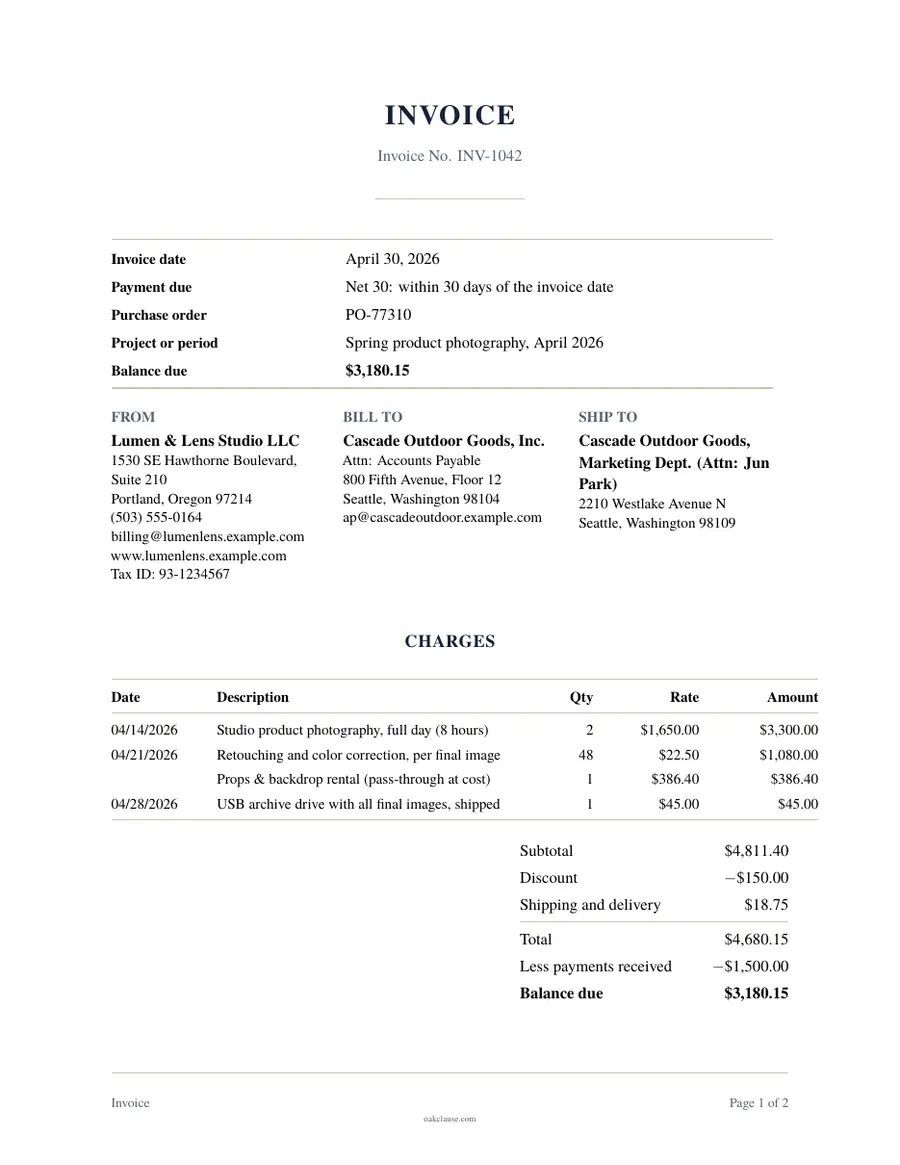
An invoice is a document a business or freelancer sends to a customer to request payment for goods delivered or services performed. It identifies who is billing whom, lists each charge with its quantity and rate, adds any tax, shipping or discounts, and shows the total amount due and the date by which it must be paid.
A clear invoice makes it easy for the customer to approve and pay, and reduces back-and-forth about what is owed. It also creates a dated record of the sale that both sides rely on for bookkeeping, tax returns and, if payment is late, any collection effort. Many customers will not pay without an invoice that references their purchase order number.
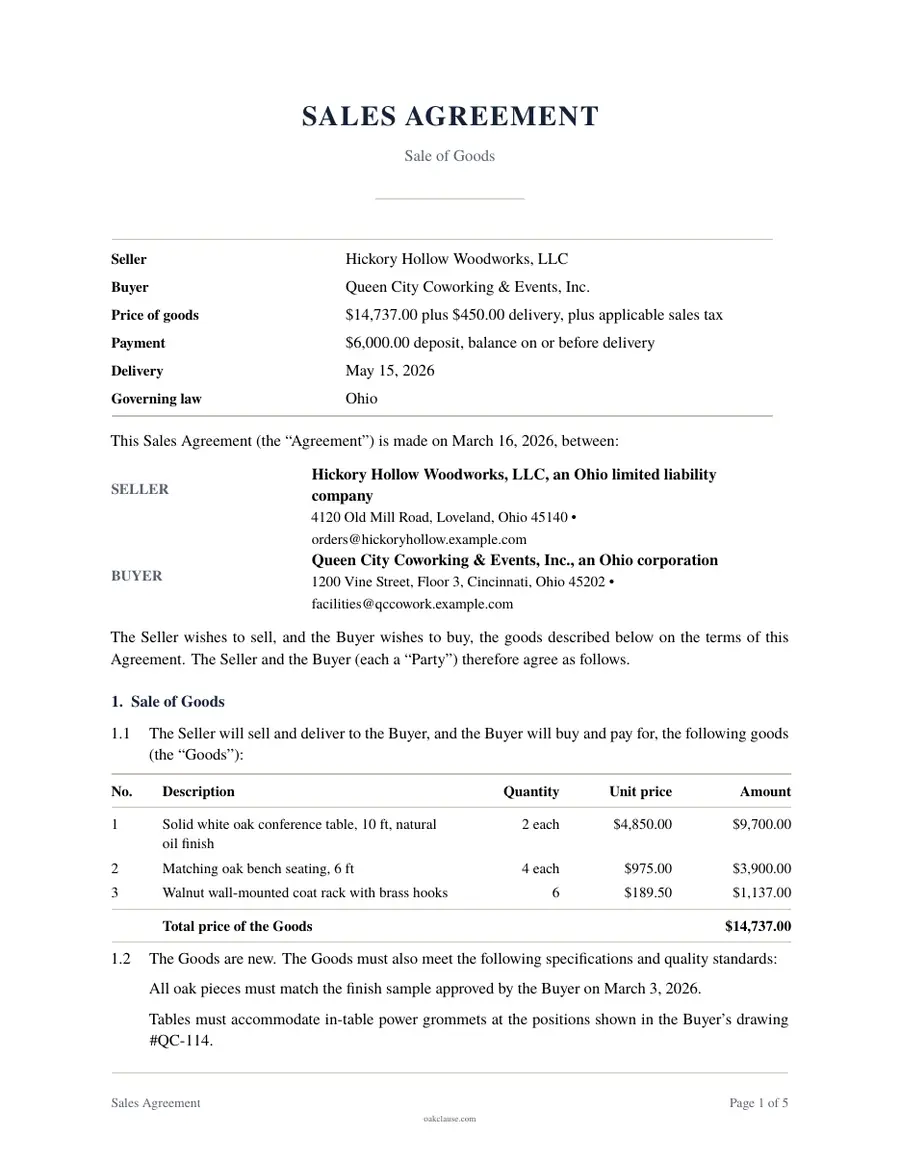
An invoice is not a contract on its own. The underlying agreement, such as a service agreement, sales agreement or accepted purchase order, sets the price and terms, and the invoice applies them. Where late fees are charged, they should match what the customer agreed to and stay within the limits allowed by law.
When to use it
- You have delivered goods or completed work and need to request payment.
- You bill clients on a recurring schedule, such as monthly or at each project milestone.
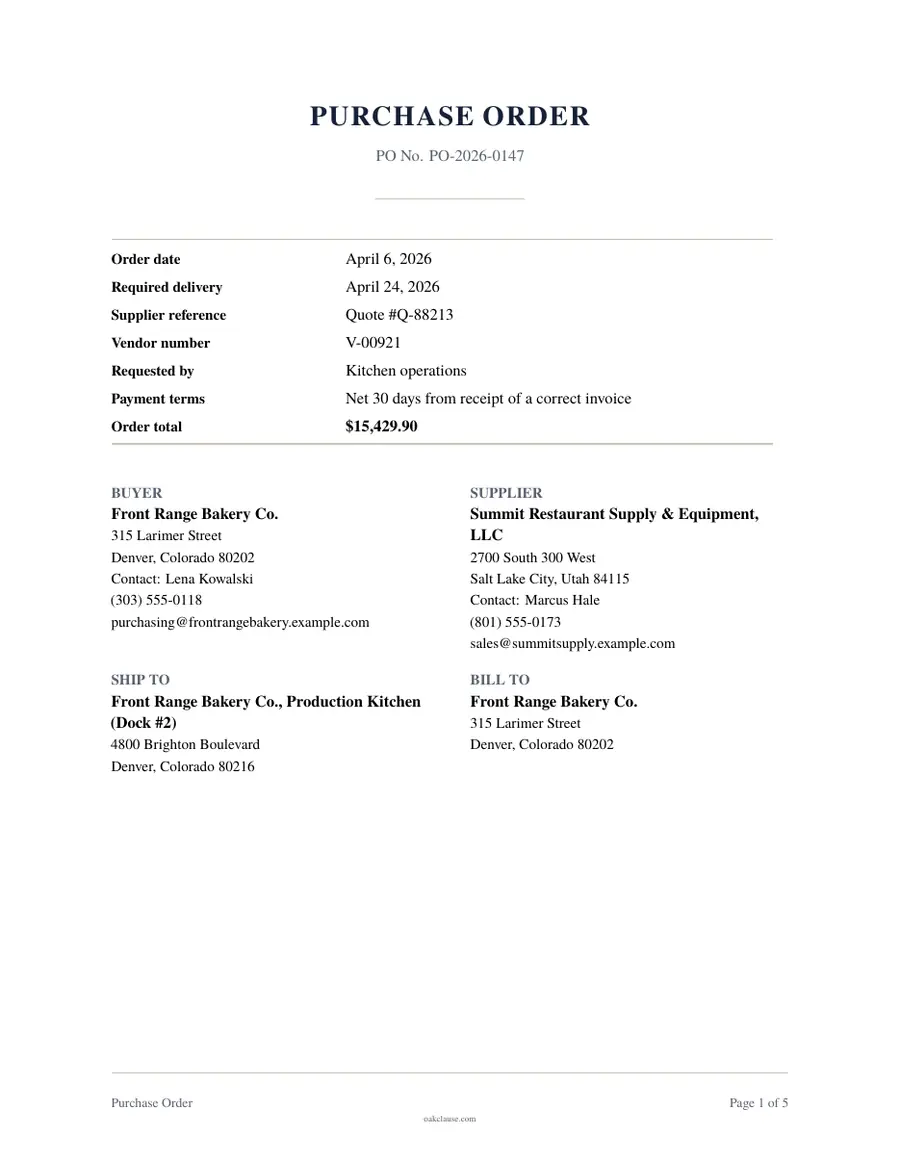
- A customer asked for an invoice to match against its purchase order.
- You took a deposit and want to bill the remaining balance.
- You want a consistent, professional record of every sale for bookkeeping and taxes.
What is included
- Invoice number, invoice date and due date
- Your business details and the customer's billing information
- Optional ship-to address and purchase order reference
- Itemized charges with dates, quantities and rates
- Automatic subtotal, discount, sales tax, shipping and total
- Credit for deposits or payments already received
- Payment methods and instructions
- Late payment terms and notes to the customer
How to make your Invoice
Answer the questions
Tell us about the parties and the terms you want. Most documents take about 5 to 20 minutes.
Review the preview
Check the draft as you go and change any answer. The document updates instantly.
Download, sign and keep a copy
Download a print-ready PDF, sign it with the other parties, and give everyone a copy.
Frequently asked questions
What must an invoice include?
At a minimum, a useful invoice shows a unique invoice number, the invoice date, your business name and contact details, the customer's name and address, a description of each charge with quantities and prices, the total amount due, the due date and how to pay. Some customers and industries require additional details, such as a purchase order number or a tax identification number.
How should I number my invoices?
Give every invoice a unique number and keep them in sequence, for example INV-1001, INV-1002, or a year-based format such as 2026-014. Sequential numbering makes it easy to track payments and is helpful if your books are ever reviewed.
What does net 30 mean?
Net 30 means the full amount is due within 30 days after the invoice date. Net 15 and net 60 work the same way with different periods. Due on receipt means the customer should pay as soon as they receive the invoice.
Can I charge a late fee on an unpaid invoice?
Generally, late fees or interest are enforceable when the customer agreed to them in advance, for example in your contract or written terms, and when the amount stays within the limits set by state law. States set different maximum interest rates, so the invoice applies late charges only to the extent permitted by law.
Do I need to charge sales tax on my invoice?
It depends on what you sell, where your customer is and the rules of the states where you do business. Many services are not taxed, while most physical goods are, unless the customer is exempt or buying for resale. Check with your state's revenue department or a tax professional, then enter the correct rate.
Should I put my Social Security number on an invoice?
No. If a customer needs your taxpayer information, it is safer to provide it separately on the IRS form designed for that purpose. Many sole proprietors obtain an employer identification number (EIN) from the IRS to use instead of their Social Security number on business paperwork.
What is the difference between an invoice and a receipt?
An invoice asks for payment that is still owed. A receipt confirms that payment has been received. If a customer pays an invoice in full, you can mark it paid or send a separate receipt.
What should I do if a client does not pay?
Start with a polite reminder that includes a copy of the invoice, then follow up by phone or email. If payment is still not made, a formal demand letter often helps. For larger amounts, small claims court, a collection agency or an attorney may be options, depending on the amount and your agreement.