Sales Agreement
Lay out exactly what is being sold, for how much, and how it will be paid for, delivered and inspected.
Includes 30 days of edits
- 5 to 20 minutes
- Print-ready PDF
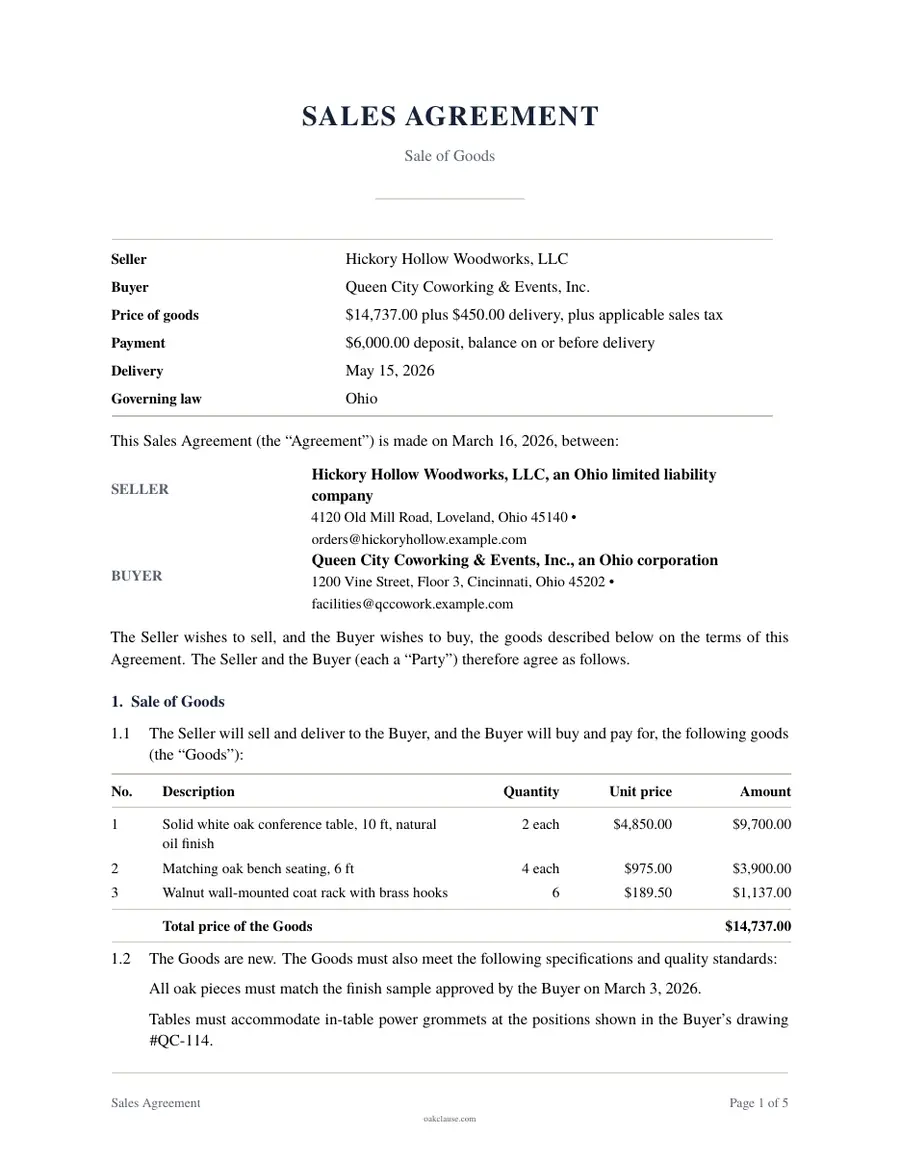
What is a Sales Agreement?
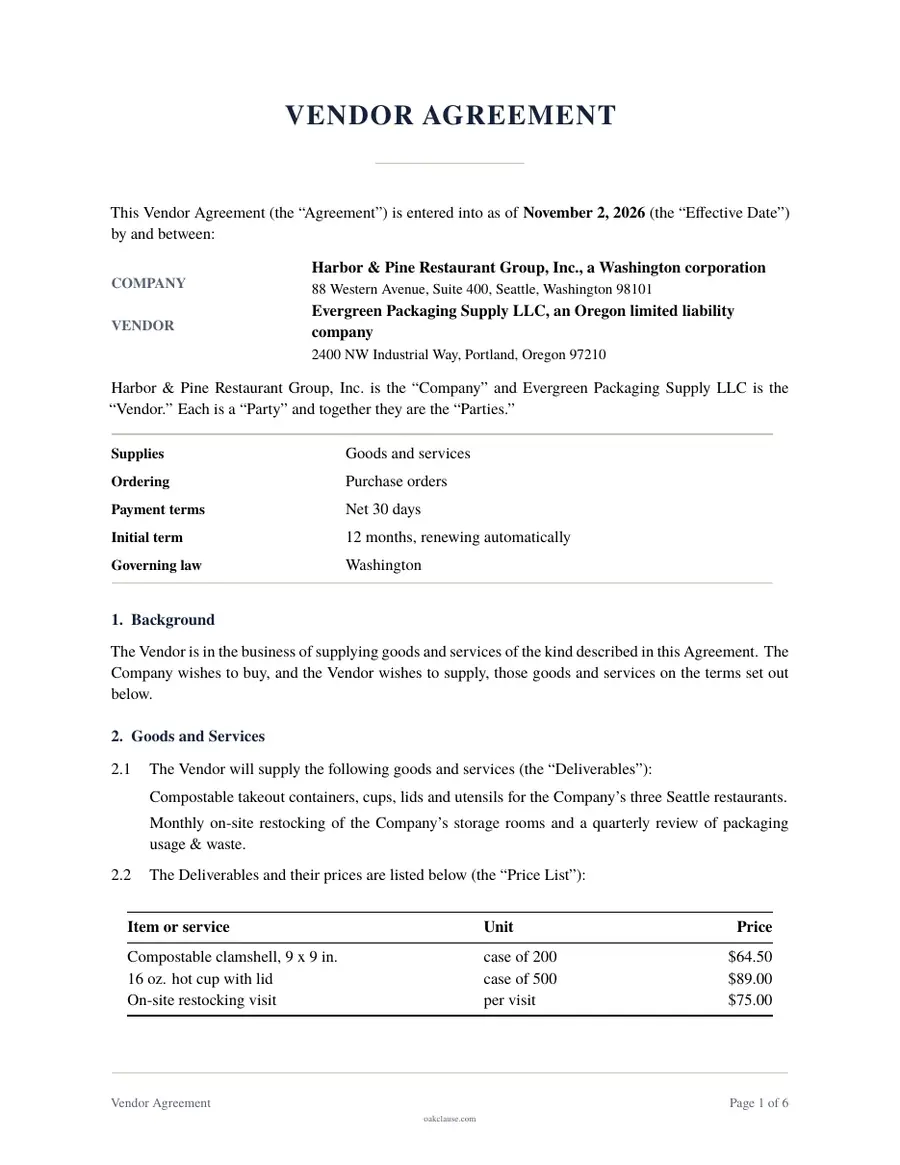
A sales agreement, sometimes called a sales contract or purchase agreement for goods, is a contract in which a seller agrees to transfer goods to a buyer for a price. It covers the goods themselves (description, quantity and unit price), the payment terms, how and when the goods will be delivered, when ownership and the risk of loss pass to the buyer, and what happens if the goods turn out to be defective.
In the United States, sales of goods are generally governed by Article 2 of the Uniform Commercial Code, which every state except Louisiana has adopted in some form. The UCC fills in many terms when a contract is silent, such as implied warranties and default delivery rules. A written agreement lets the parties choose their own terms instead, for example by selling goods as is or by setting a specific inspection window.
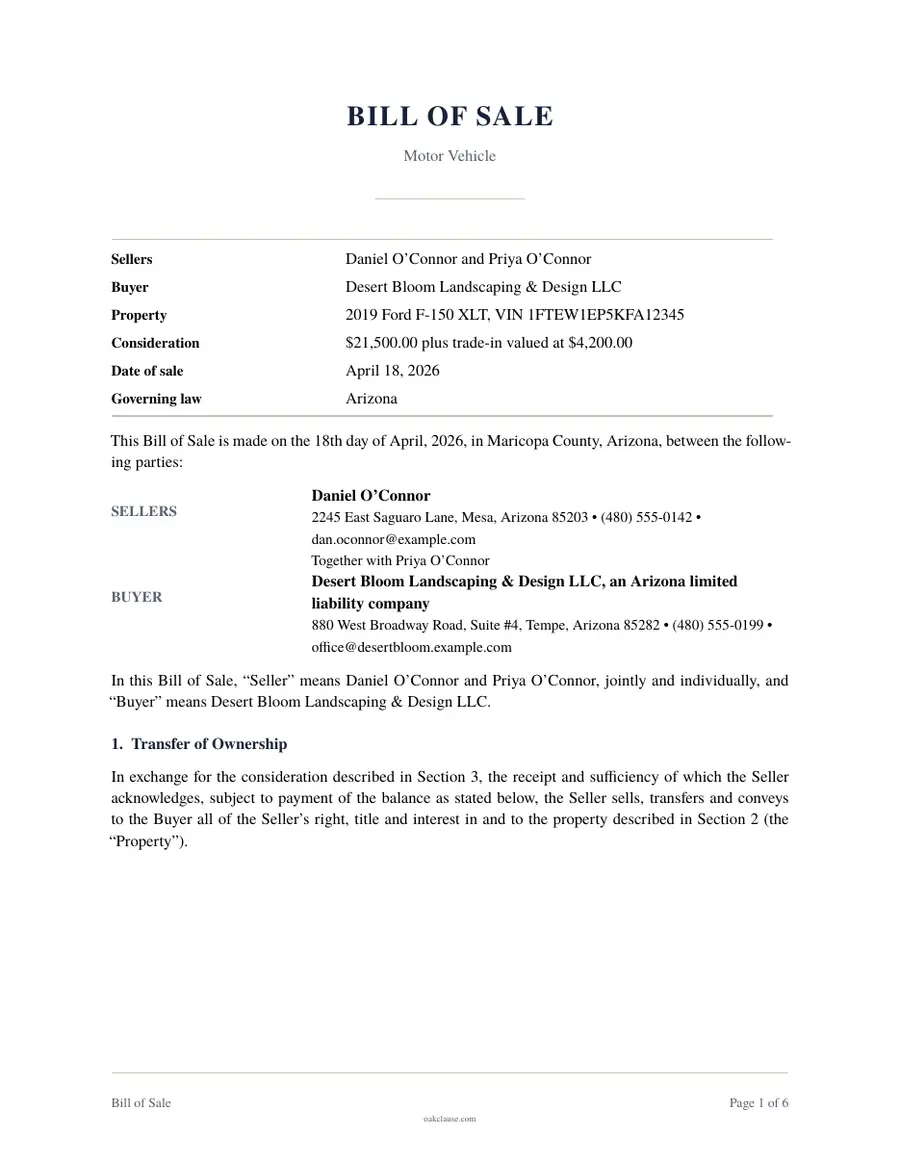
Unlike a bill of sale, which records a transfer that has already happened, a sales agreement usually comes first and sets the rules for a sale that will be completed later, often with a deposit, a delivery date and a period for the buyer to inspect the goods. It works well for one-time sales between businesses, between a business and a customer, or between individuals selling goods of significant value.
When to use it
- You are selling or buying goods that will be delivered or paid for at a later date.
- The sale involves several items, custom specifications or a significant price.
- You want to agree on who pays for shipping and who bears the risk if goods are lost in transit.
- You need to set out warranty, inspection and return terms in writing.
- A buyer is paying a deposit and you want clear rules on the balance and what happens if either side backs out.
What is included
- Seller and buyer details, including businesses and signers
- Itemized list of goods with quantities, unit prices and total
- Deposit, balance and payment schedule with accepted methods
- Shipping charges, sales tax and late payment terms
- Delivery method, date and location
- Transfer of title and risk of loss
- Inspection, rejection and return rights
- Warranty or as-is terms and limitation of liability
- Default, force majeure and dispute resolution
- Governing law, entire agreement and signatures
How to make your Sales Agreement
Answer the questions
Tell us about the parties and the terms you want. Most documents take about 5 to 20 minutes.
Review the preview
Check the draft as you go and change any answer. The document updates instantly.
Download, sign and keep a copy
Download a print-ready PDF, sign it with the other parties, and give everyone a copy.
Frequently asked questions
What is the difference between a sales agreement and a bill of sale?
A sales agreement sets the terms of a sale before it is completed, including payment, delivery, inspection and warranties. A bill of sale is a shorter document that confirms ownership has actually passed from the seller to the buyer. Many transactions use both: the agreement when the deal is struck, and the bill of sale at delivery.
Does a sale of goods have to be in writing?
Under the Uniform Commercial Code, a contract for the sale of goods priced at or above a certain amount generally must be supported by a signed writing to be enforceable, with some exceptions. Even when it is not strictly required, a written agreement is the best evidence of what the parties agreed and helps prevent disputes.
Can I sell goods as is?
Generally yes. Sellers can usually disclaim implied warranties, such as the warranty of merchantability, if the disclaimer is clear and conspicuous. Some states limit as-is sales to consumers, and federal law restricts disclaimers when a seller gives a written warranty on consumer products, so check the rules that apply to your sale.
When does the buyer become responsible if goods are lost or damaged?
It depends on the delivery terms. The agreement lets you choose whether risk of loss passes when the goods are handed to a shipping carrier or only when they reach the buyer. If goods are picked up or delivered by the seller, risk normally passes when the buyer receives them.
What happens if the goods are defective?
The agreement gives the buyer a set number of days after delivery to inspect the goods and notify the seller of any defect or shortage. The seller can then repair, replace or refund the nonconforming goods. Goods not rejected within that period are treated as accepted, subject to any warranty.
Should I charge sales tax?
Sales tax rules depend on the state, the type of goods and whether the buyer is reselling them or is exempt. The agreement states whether the price includes tax and which party is responsible for it, but it does not decide whether tax is owed. A tax professional or your state's revenue department can confirm your obligations.
Can the seller keep ownership until the buyer pays in full?
The agreement lets you choose whether title passes on delivery or only after full payment. Keeping title until payment gives the seller a contractual right, but to protect that interest against third parties a seller may also need to file a financing statement under the UCC. For high-value credit sales, consider speaking with an attorney.
Is this agreement suitable for selling real estate or a business?
No. This agreement is designed for movable goods. Real estate, a business as a going concern, vehicles requiring title transfer, and securities have their own documents and legal requirements.