Vendor Agreement
Set clear terms with the businesses that supply you.
Includes 30 days of edits
- 5 to 20 minutes
- Print-ready PDF
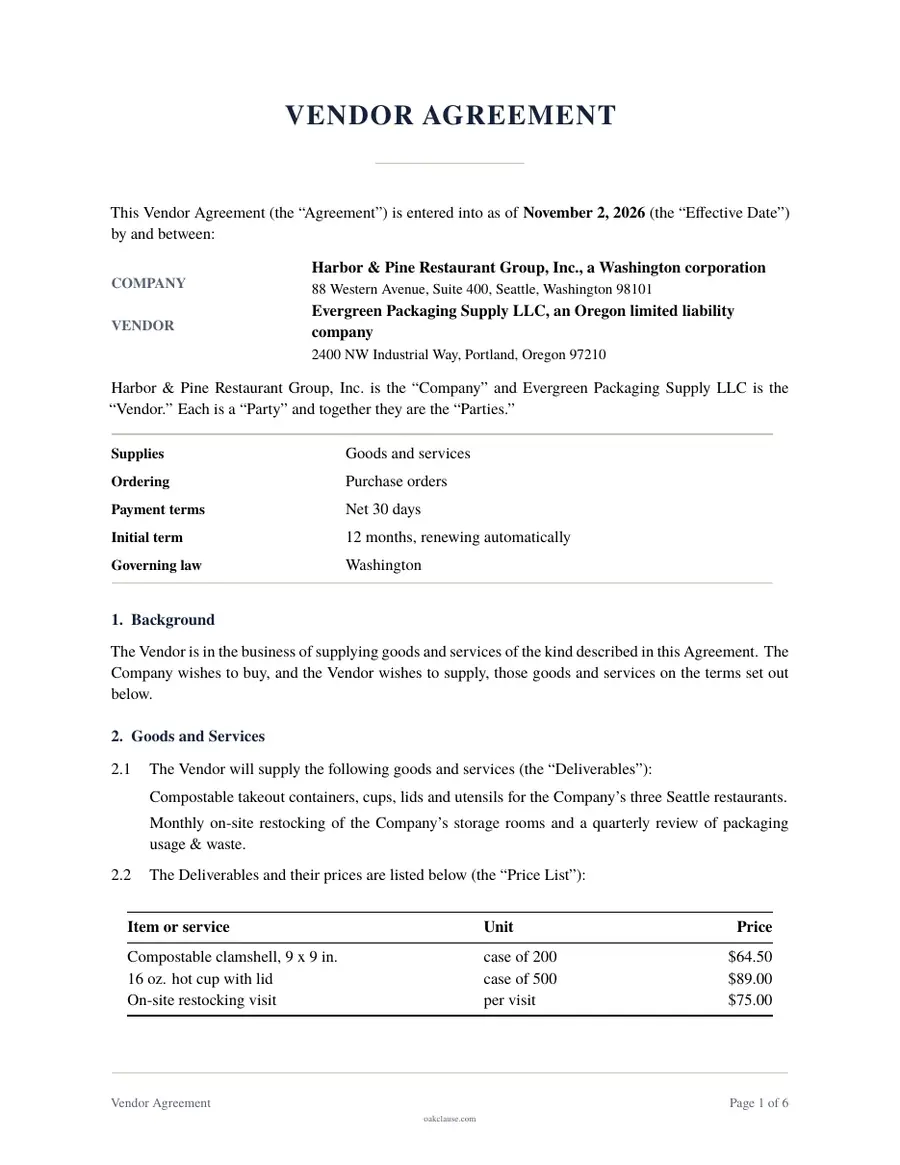
What is a Vendor Agreement?
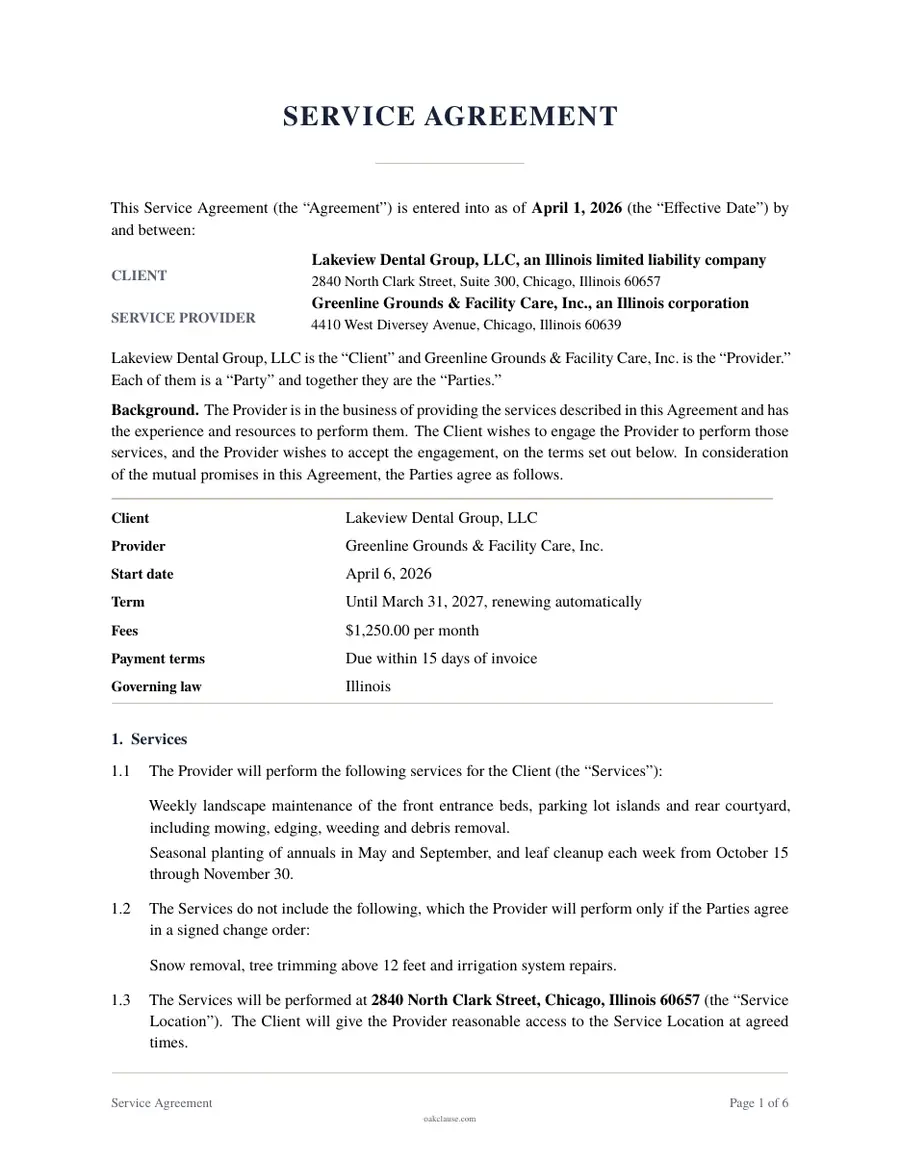
A vendor agreement, also called a supplier agreement or vendor contract, is a contract between a business and an outside company that supplies it with goods, services or both on an ongoing basis. Instead of negotiating every order from scratch, the parties agree the ground rules once and then place orders under them.
The agreement describes what the vendor will supply, how orders are placed, the prices and payment terms, and the delivery, inspection and acceptance process. It also allocates risk through warranties, indemnities, insurance requirements and a limit on liability, so both sides know who is responsible if goods are defective or a service falls short.
A written vendor agreement helps a business keep its supply chain predictable and its costs under control, and it gives the vendor certainty about how and when it will be paid. It also sets out how either party can end the relationship and what happens to open orders and confidential information when it does.
When to use it
- Your business buys products, parts or supplies from the same supplier on a recurring basis.
- You are bringing on a service vendor such as a cleaning, maintenance, logistics or catering company.
- You want consistent terms that apply to every purchase order instead of relying on the vendor's invoice terms.
- You need a vendor to carry insurance, meet quality standards or follow your policies.
- You are a vendor who wants agreed payment terms and a clear acceptance process with a customer.
What is included
- Description of goods and services, with an optional price list
- Ordering through purchase orders or a fixed scope
- Delivery, title, risk of loss, inspection and acceptance
- Pricing, invoicing, payment terms and late payment interest
- Product and service warranties
- Insurance requirements and indemnification
- Limitation of liability and confidentiality
- Term, renewal, termination for convenience or for cause
- Force majeure, compliance with laws and independent contractor status
- Governing law, dispute resolution and signature blocks
How to make your Vendor Agreement
Answer the questions
Tell us about the parties and the terms you want. Most documents take about 5 to 20 minutes.
Review the preview
Check the draft as you go and change any answer. The document updates instantly.
Download, sign and keep a copy
Download a print-ready PDF, sign it with the other parties, and give everyone a copy.
Frequently asked questions
What is the difference between a vendor agreement and a purchase order?
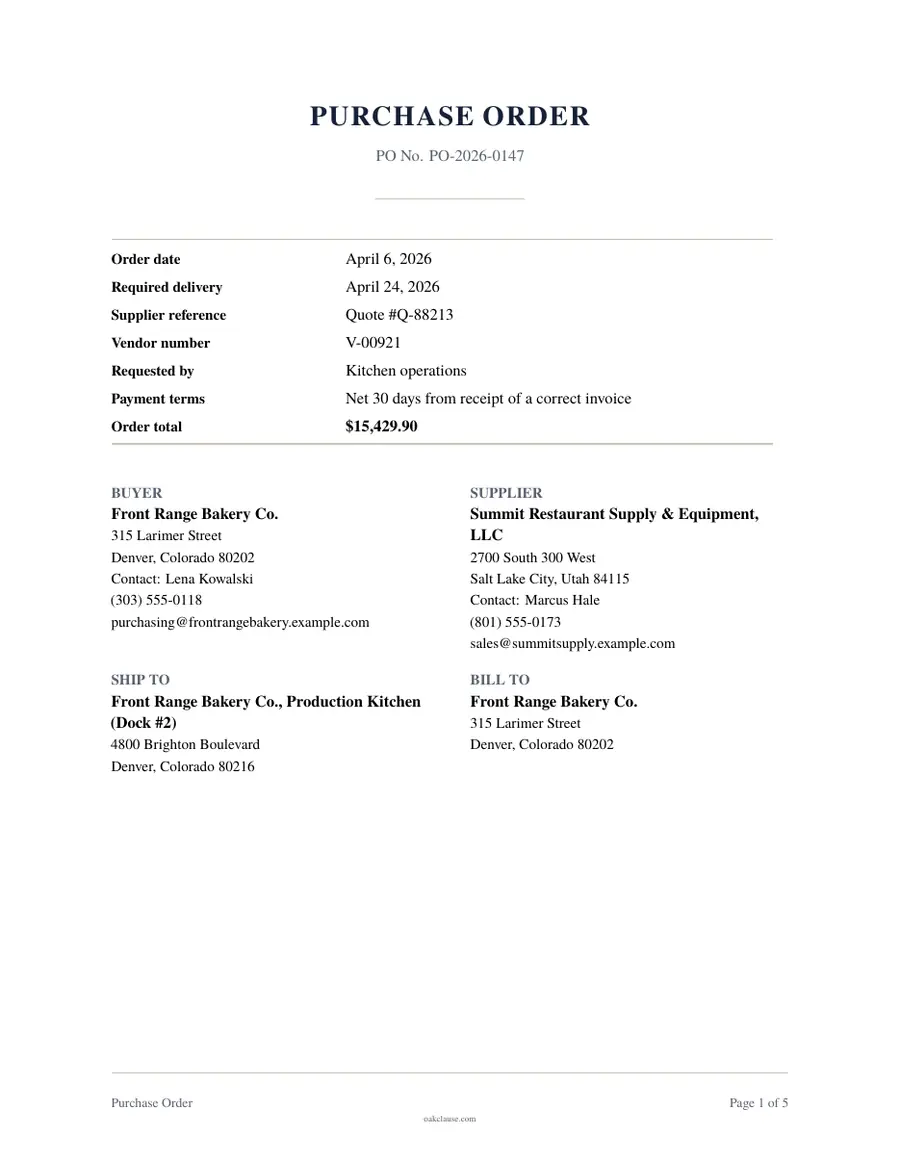
A vendor agreement sets the overall terms of the relationship, such as pricing, payment, warranties and liability. A purchase order is a specific request for particular goods or services on a particular date. Under this agreement, each purchase order is governed by the agreement's terms, which take priority over conflicting terms printed on the vendor's forms.
Is a vendor agreement the same as a supplier agreement?
In everyday use the terms are interchangeable. Supplier agreement is more common when the vendor provides physical goods or materials, while vendor agreement is often used for both goods and services.
What are net payment terms?
Net terms set how many days the buyer has to pay after receiving a correct invoice. For example, net 30 means payment is due within 30 days. This agreement lets you choose the number of days and whether late payments carry interest.
Should a vendor be required to carry insurance?
Many businesses require vendors to carry general liability insurance, and sometimes product liability, professional liability or workers' compensation coverage, especially if the vendor works on site. This agreement lets you list the required coverage and minimum amounts.
What does a limitation of liability clause do?
It caps how much one party can recover from the other, often at the amount paid under the agreement over a recent period, and excludes indirect losses such as lost profits. Caps usually do not apply to indemnity obligations, confidentiality breaches or intentional misconduct. Some states limit how far these clauses can go.
Can I end a vendor agreement early?
Yes, if the agreement allows it. This agreement lets either party end it for any reason with written notice, and end it sooner if the other party breaches and does not fix the problem within a cure period. Orders already accepted are handled as set out in the termination clause.
Does a vendor agreement make the vendor exclusive?
Not unless you say so. This agreement is non-exclusive by default, which means the buyer can use other suppliers and the vendor can sell to other customers. You can add an exclusivity term if both sides agree.
Does a vendor agreement need to be notarized?
No. A vendor agreement is valid when signed by authorized representatives of both businesses. Electronic signatures are generally accepted for commercial contracts.