Request for Proposal (RFP)
Get comparable, well-organized bids from vendors by describing your project, requirements, schedule and how proposals will be judged in one clear document.
Includes 30 days of edits
- 5 to 20 minutes
- Print-ready PDF
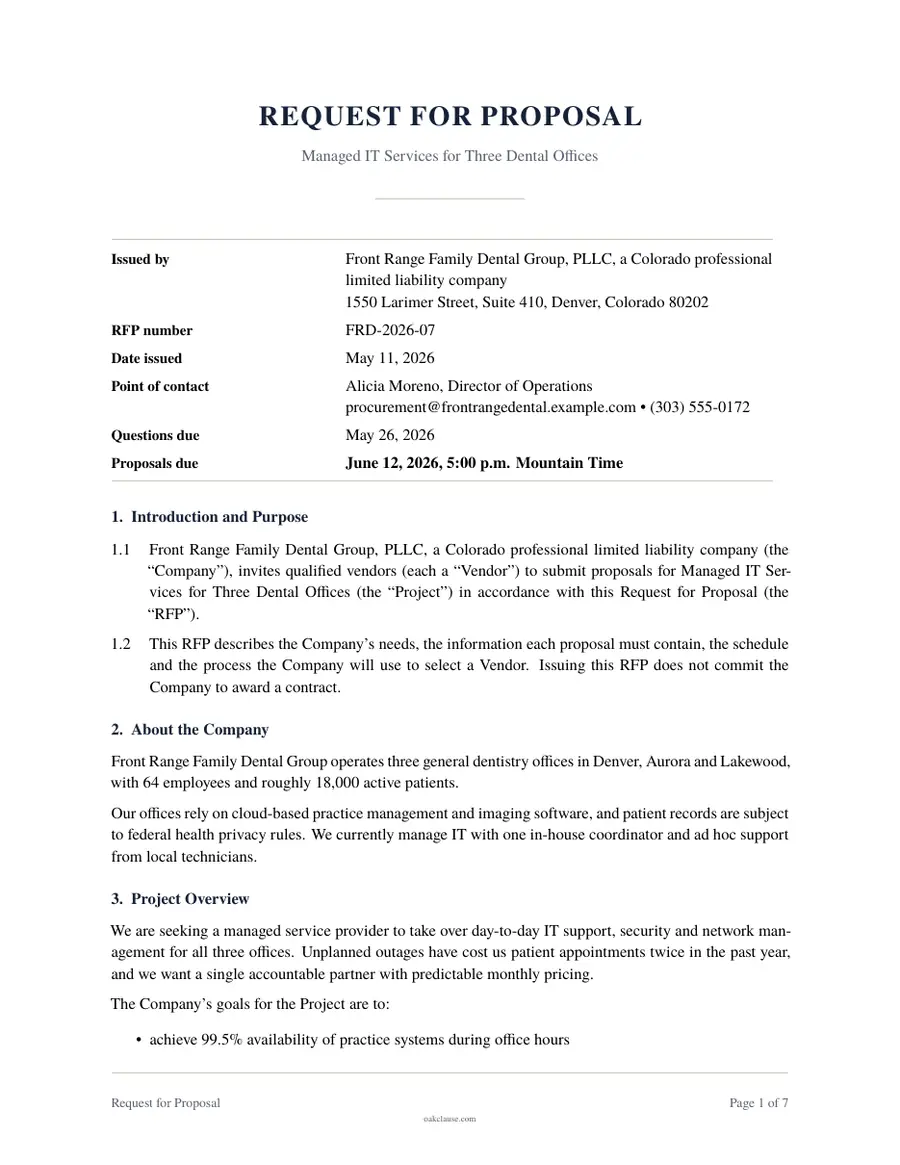
What is a Request for Proposal?
A request for proposal, or RFP, is a document an organization sends to potential vendors to invite them to propose how they would deliver a product, service or project, and at what price. Instead of collecting informal quotes that are hard to compare, an RFP asks every vendor to answer the same questions in the same format.
A complete RFP explains who you are and why you need help, describes the scope of work and the requirements a vendor must meet, sets a firm timeline for questions and submissions, tells vendors exactly what their proposals must contain and how to submit them, and discloses the criteria you will use to choose a winner. The clearer the RFP, the more useful the responses.
An RFP is an invitation, not a contract. It normally reserves the issuer's right to reject any proposal, to negotiate with one or more vendors and to cancel the process, and it makes clear that a binding relationship only begins when a final contract is signed. Public agencies often follow additional procurement rules, so this template is designed primarily for private businesses and nonprofits.
When to use it
- You need an outside vendor for a sizable project and want to compare several options fairly.
- Your organization's purchasing policy requires competitive bids above a certain amount.
- The project is complex enough that vendors need to propose an approach, not just a price.
- You want vendors to compete on quality, experience and value rather than price alone.
- You need a written record of how and why a vendor was selected.
What is included
- Issuer details, RFP number and a single point of contact
- Organization background and project overview
- Scope of work with mandatory and preferred requirements
- Budget disclosure options
- Key dates, from questions deadline to vendor selection
- Optional pre-proposal meeting and notice of intent to respond
- Submission instructions and required proposal contents
- Weighted or unweighted evaluation criteria
- Insurance, confidentiality and reservation-of-rights terms
- Optional proposal submission form for vendors to sign
How to make your RFP
Answer the questions
Tell us about the parties and the terms you want. Most documents take about 5 to 20 minutes.
Review the preview
Check the draft as you go and change any answer. The document updates instantly.
Download, sign and keep a copy
Download a print-ready PDF, sign it with the other parties, and give everyone a copy.
Frequently asked questions
What is the difference between an RFP, an RFQ and an RFI?
A request for information (RFI) gathers general information about what vendors offer, usually early in planning. A request for quotation (RFQ) asks for prices when you already know exactly what you want. A request for proposal (RFP) asks vendors to propose both a solution and a price, and is used when the approach matters as much as the cost.
Is an RFP a binding contract?
No. An RFP is an invitation to submit offers. This template states that issuing the RFP does not obligate you to award a contract and that any engagement will be governed by a separate written agreement signed by both parties.
Should I disclose my budget in an RFP?
Sharing a budget or range helps vendors propose a solution that fits, and it filters out vendors who are far outside your price range. Some organizations prefer not to disclose a figure so they can see unanchored pricing. This template supports a fixed amount, a range or no disclosure.
How long should vendors have to respond?
It depends on the project's complexity. Simple service requests may need only a couple of weeks, while large technical projects often allow a month or more. Build in time for vendor questions and for you to publish answers before the due date.
How should I evaluate proposals?
Decide your criteria before you issue the RFP and share them with vendors. Many organizations assign weights, such as approach, experience and price, and score each proposal on the same scale. Shortlisted vendors may then be invited to present or interview.
How do I handle vendor questions fairly?
Set a deadline for questions and route them all to one contact. Publish the questions and answers to every vendor at the same time, without identifying who asked, so no vendor gets an information advantage.
Can I reject all proposals?
Yes. This RFP reserves the right to reject any or all proposals, to waive minor irregularities, to negotiate with one or more vendors and to cancel or change the process. Government agencies may be subject to stricter rules under their procurement laws.
Who pays for preparing a proposal?
Vendors normally bear their own costs of preparing and submitting a proposal, including any presentations. This template says so expressly, which helps avoid claims for reimbursement if a vendor is not selected.