Stock Purchase Agreement
Put the sale of shares in a private corporation in writing.
Includes 30 days of edits
- 5 to 20 minutes
- Print-ready PDF
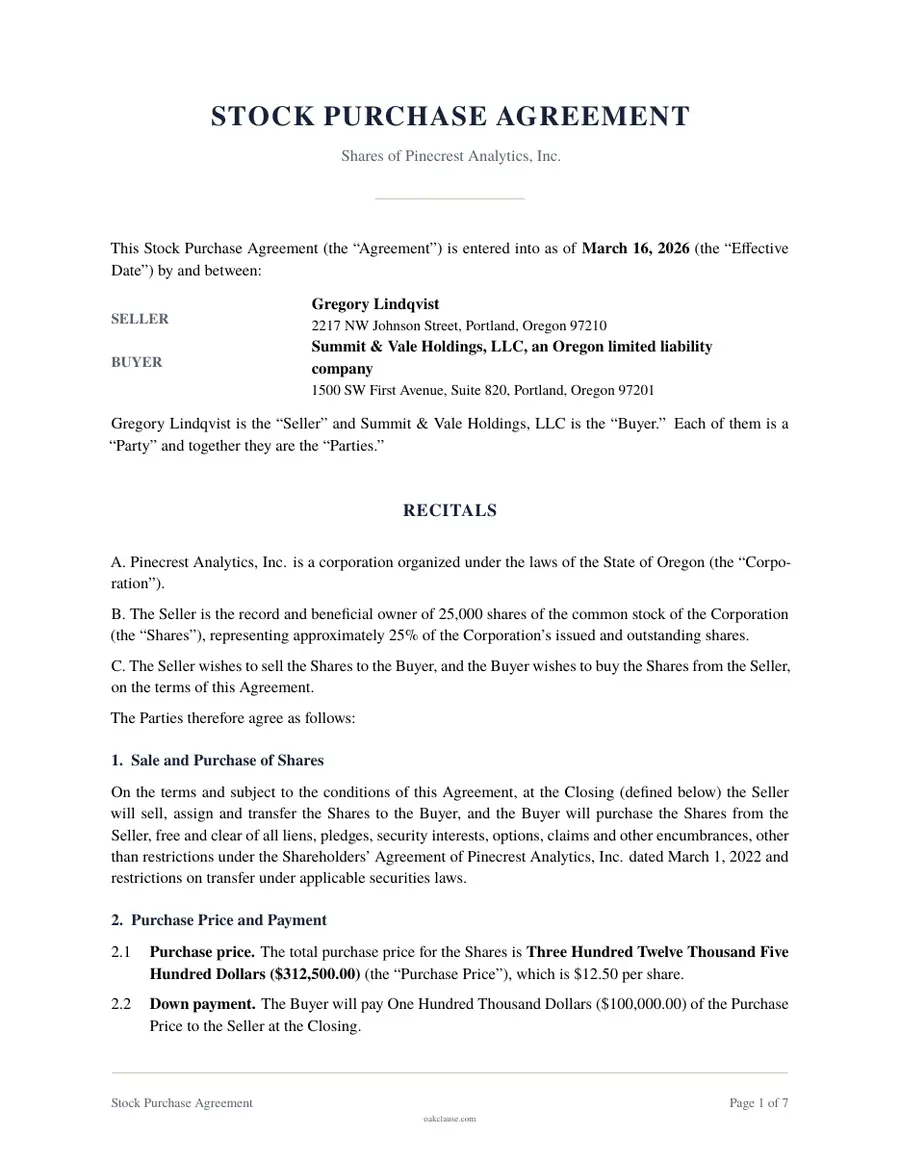
What is a Stock Purchase Agreement?
A stock purchase agreement is a contract in which a shareholder agrees to sell existing shares of a corporation to a buyer for an agreed price. It identifies the corporation, the number and class of shares, the price and how it will be paid, and what each side must deliver when the sale closes.
Because the buyer is stepping into the seller's shoes as an owner, the agreement also contains promises, called representations and warranties, about the shares and the parties. The seller typically confirms it owns the shares free of liens and has the right to sell them; the buyer typically confirms it is buying for investment and understands the shares are not registered with securities regulators and may be hard to resell.
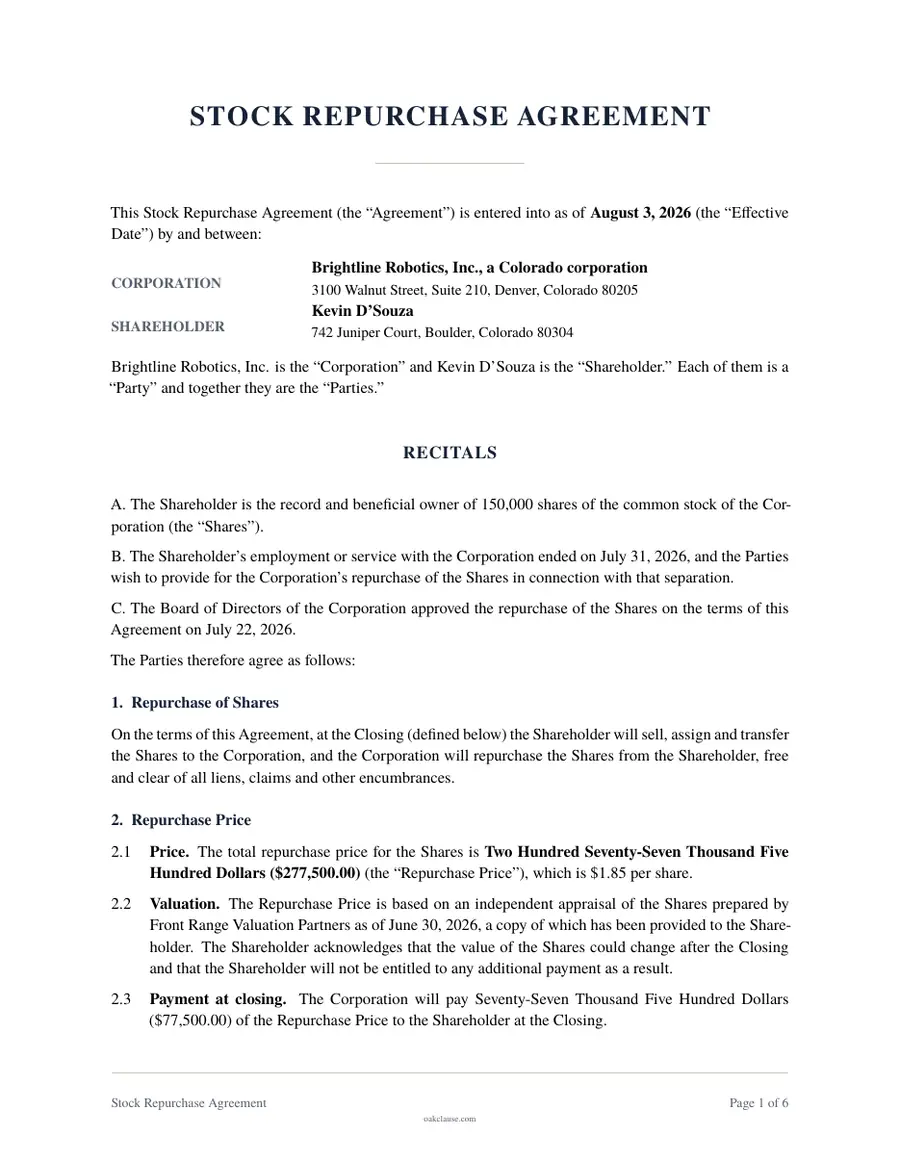
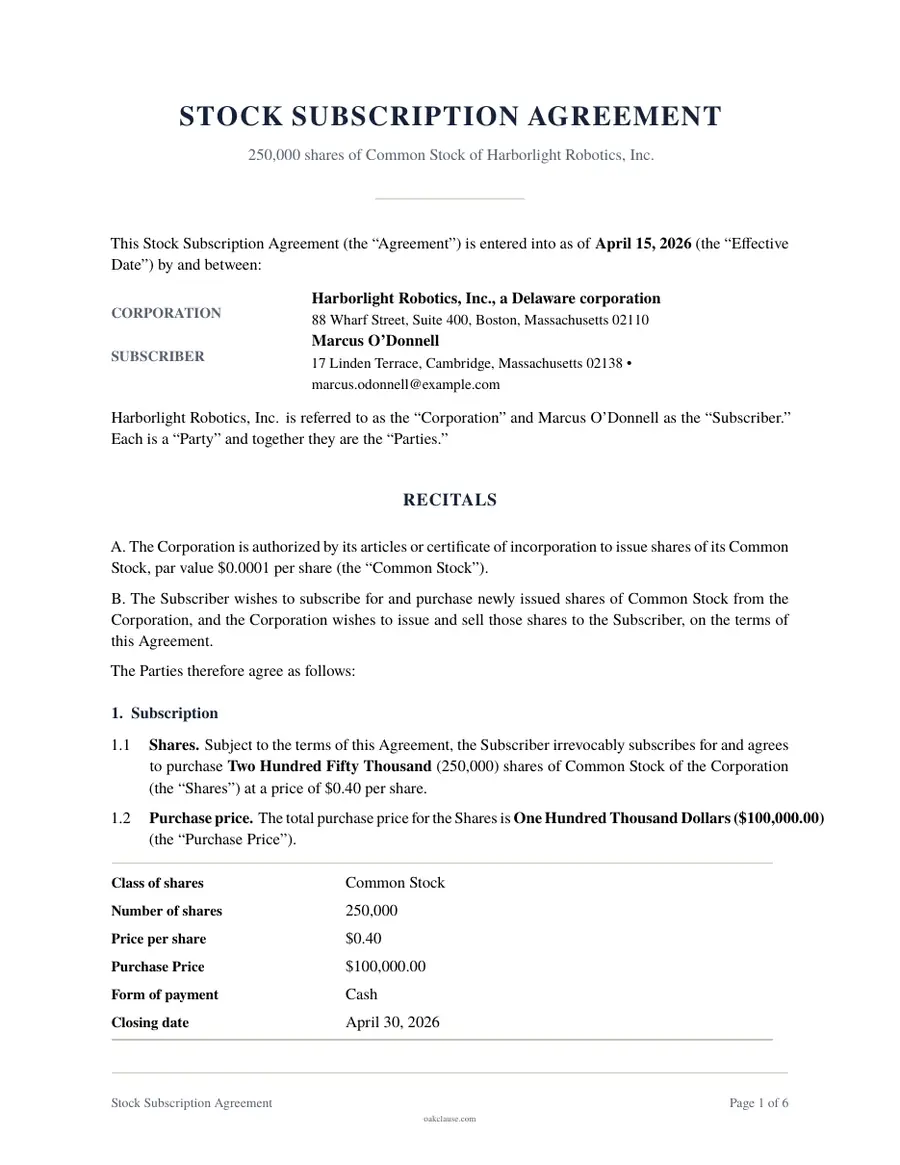
This agreement covers a sale of existing shares between a shareholder and a buyer. It is different from a stock subscription agreement, where the corporation itself issues new shares, and from a stock repurchase agreement, where the corporation buys shares back. Larger acquisitions of a whole company usually involve due diligence, disclosure schedules and negotiated indemnities that call for an attorney's help.
When to use it
- A founder or shareholder is selling some or all of their shares to a new investor or a co-owner.
- One owner of a small corporation is buying out another owner's shares.
- A family member is buying shares in a family business from a relative.
- An employee or manager is buying into the company by purchasing shares from an existing owner.
- You agreed on a share sale informally and want the price, payment and closing terms documented.
What is included
- Seller, buyer and corporation details
- Number, class and certificate details of the shares sold
- Purchase price with lump-sum, deposit or installment payment
- Closing date, closing deliveries and conditions to closing
- Seller and buyer representations and warranties
- Securities law investment representations and restrictive legend
- Optional indemnification, non-competition and confidentiality
- Optional joinder to an existing shareholders' agreement
- Governing law, dispute resolution and general provisions
- Signature blocks, corporation acknowledgment and spousal consent
How to make your Stock Purchase Agreement
Answer the questions
Tell us about the parties and the terms you want. Most documents take about 5 to 20 minutes.
Review the preview
Check the draft as you go and change any answer. The document updates instantly.
Download, sign and keep a copy
Download a print-ready PDF, sign it with the other parties, and give everyone a copy.
Frequently asked questions
What is the difference between a stock purchase and an asset purchase?
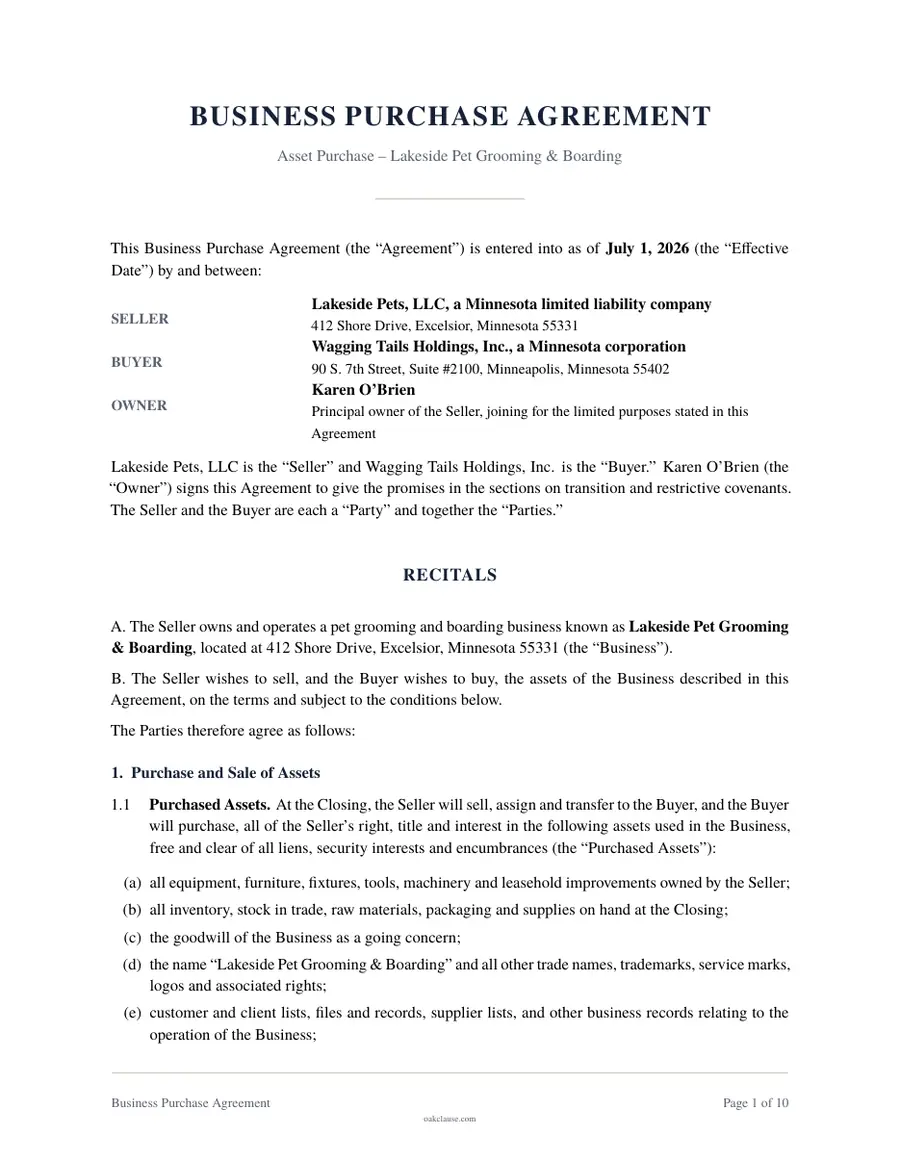
In a stock purchase, the buyer acquires shares of the corporation, and the corporation continues to own its assets and owe its liabilities. In an asset purchase, the buyer buys specific assets from the business and generally takes on only the liabilities it agrees to assume.
Does the corporation need to approve a sale of shares?
Often it does. The bylaws, articles or a shareholders' agreement may require board approval, give the corporation or other shareholders a right of first refusal, or restrict transfers entirely. Check those documents before signing; this agreement lets you make those approvals a condition to closing.
Do privately sold shares have to be registered with the SEC?
Private resales of shares are often exempt from federal and state registration, but whether an exemption applies depends on the facts. This agreement includes standard investment representations and a restrictive legend. Securities rules are technical, so consider speaking with an attorney if you are unsure.
How is the price of shares in a private company determined?
The buyer and seller negotiate it. Common approaches include book value, a multiple of earnings, a professional appraisal or a formula in an existing shareholders' agreement. The agreed price per share and total price are stated in the agreement.
Can the buyer pay for the shares over time?
Yes. This agreement lets the buyer pay a down payment at closing and the rest under a promissory note with interest. The seller may want the note secured, for example by a pledge of the purchased shares.
What happens at closing?
At closing, the seller delivers the share certificates endorsed for transfer, or a stock power for uncertificated shares, and the buyer pays the price. The corporation then records the buyer as the new owner in its stock ledger.
Why would a seller's spouse need to sign?
In community property states, and in some other situations, a spouse may have a legal interest in shares held in the other spouse's name. A spousal consent helps confirm that the spouse agrees to the sale and will not later claim an interest in the shares.
Are there tax consequences to selling stock?
Usually. A seller typically recognizes a capital gain or loss measured against their tax basis in the shares. Tax treatment depends on individual circumstances, so the parties often consult a tax professional.