Shareholder Agreement
Agree in writing how your corporation is run, who can buy or sell shares, and what happens when an owner leaves, dies or wants out.
Includes 30 days of edits
- 5 to 20 minutes
- Print-ready PDF
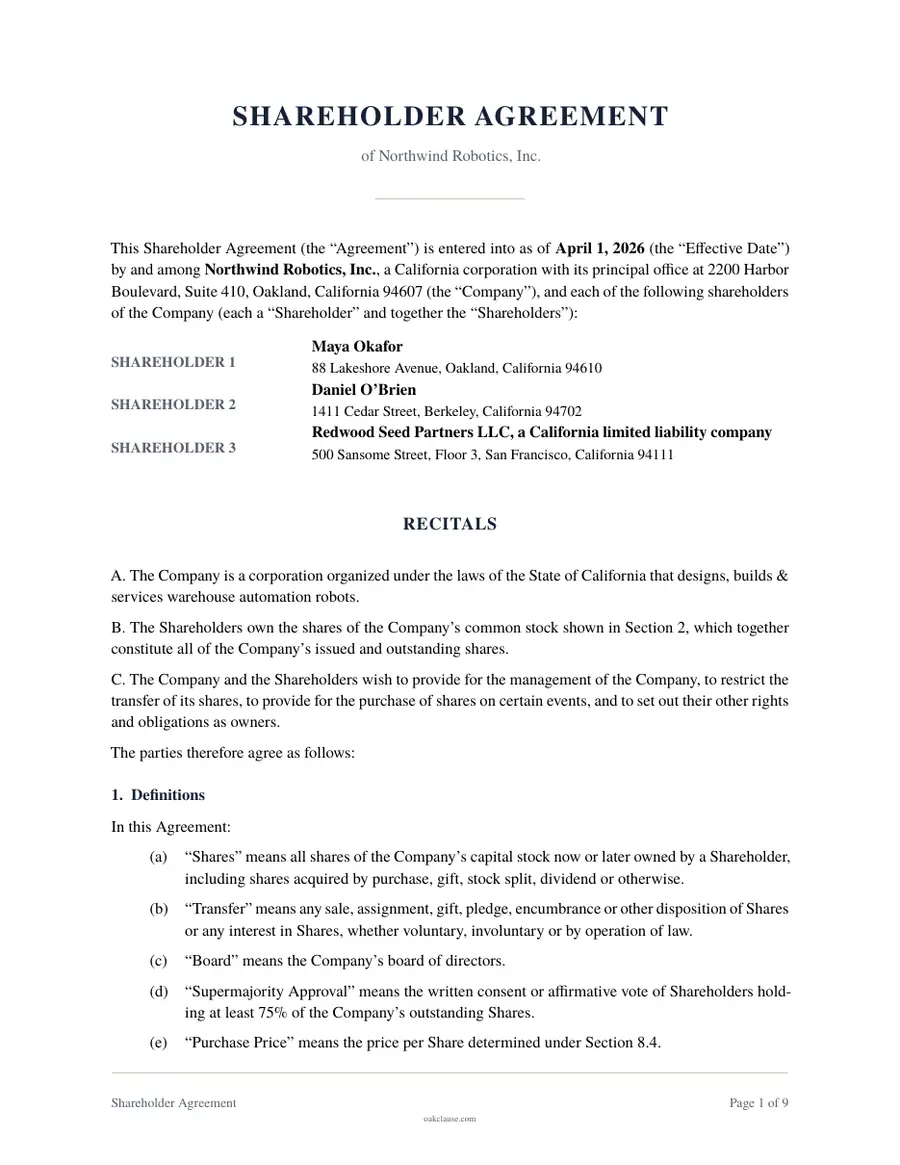
What is a Shareholder Agreement?
A shareholder agreement is a private contract among the owners of a corporation, and usually the corporation itself, that sets the ground rules for their relationship. It works alongside the articles of incorporation and bylaws, filling in the owner-level questions those documents tend to leave open.
The core of most shareholder agreements is control over who can become an owner. Transfer restrictions, a right of first refusal, and tag-along and drag-along rights keep shares from ending up with strangers or competitors and make sure everyone is treated fairly when the company is sold.
The agreement also plans for change. Buyout provisions explain what happens to an owner's shares after death, disability, divorce, bankruptcy or departure from the business, including how the shares are valued and how the price is paid. Settling these points while everyone gets along is far easier than negotiating them in the middle of a dispute.
When to use it
- You are forming a corporation with one or more co-founders and want to set the rules from day one.
- An investor, partner or key employee is acquiring shares in an existing closely held corporation.
- You want to stop shares from being sold or passed to people the other owners have not approved.
- You want a clear plan for buying out an owner who dies, becomes disabled or leaves the company.
- Important decisions, such as selling the business or taking on major debt, should need more than a simple majority.
- Your corporation has elected S corporation status and you want to protect that election.
What is included
- Share ownership table with automatically calculated percentages
- Board size and how directors are elected or designated
- Major decisions that require a supermajority of shareholders
- Transfer restrictions, permitted transfers and right of first refusal
- Tag-along, drag-along and preemptive rights
- Buyout triggers, valuation method and payment terms
- Distributions, information rights and S corporation protections
- Confidentiality, optional non-competition and non-solicitation
- Deadlock procedure, dispute resolution and governing law
- Signature blocks for the company and every shareholder, plus optional spousal consent
How to make your Shareholder Agreement
Answer the questions
Tell us about the parties and the terms you want. Most documents take about 5 to 20 minutes.
Review the preview
Check the draft as you go and change any answer. The document updates instantly.
Download, sign and keep a copy
Download a print-ready PDF, sign it with the other parties, and give everyone a copy.
Frequently asked questions
What is the difference between a shareholder agreement and bylaws?
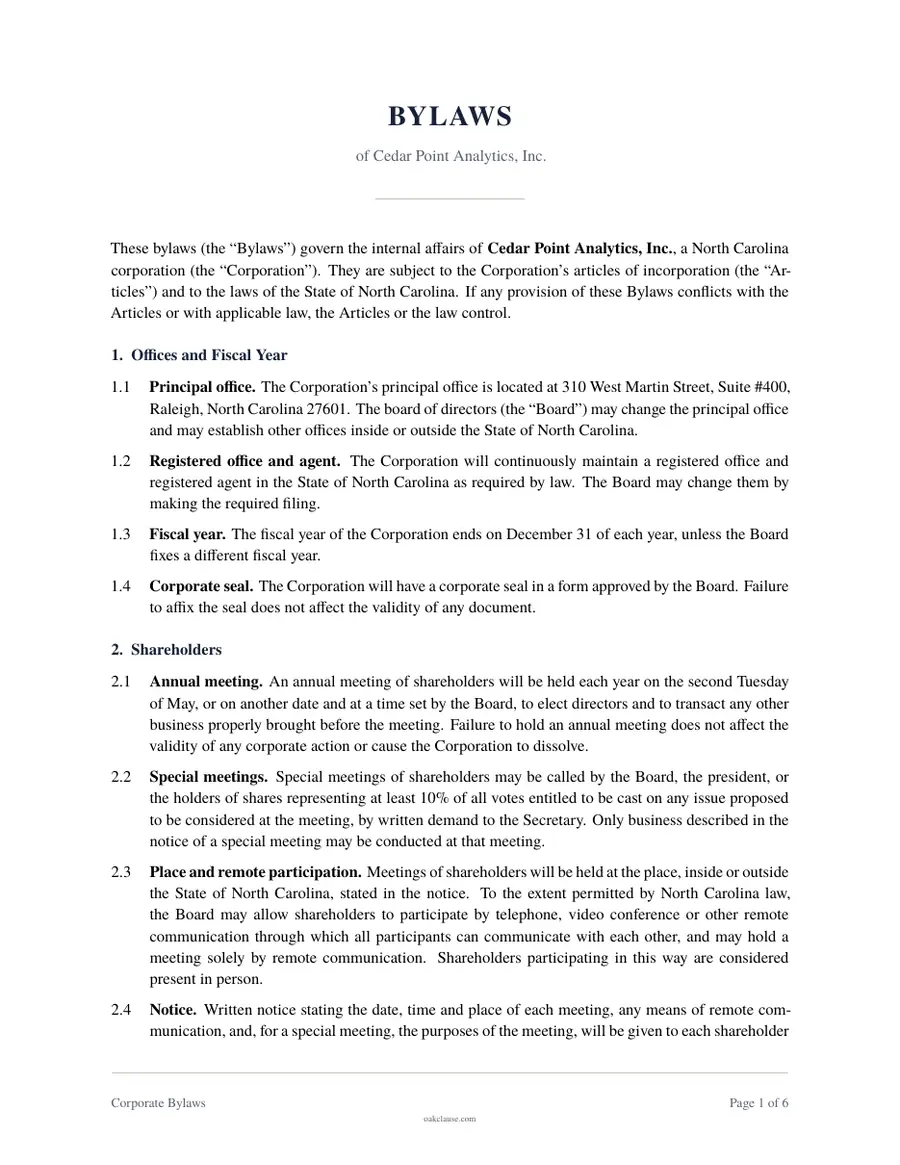
Bylaws are the corporation's internal operating rules, covering things like how meetings are called and how officers are appointed. A shareholder agreement is a contract among the owners that deals with their personal rights, such as who may buy shares, how a departing owner is bought out and which decisions need extra approval. Most closely held corporations benefit from having both.
Does every shareholder have to sign?
The agreement binds only the people who sign it, so it works best when every shareholder signs. New shareholders are usually required to sign a joinder agreeing to be bound before they receive shares, which this agreement provides for.
What is a right of first refusal?
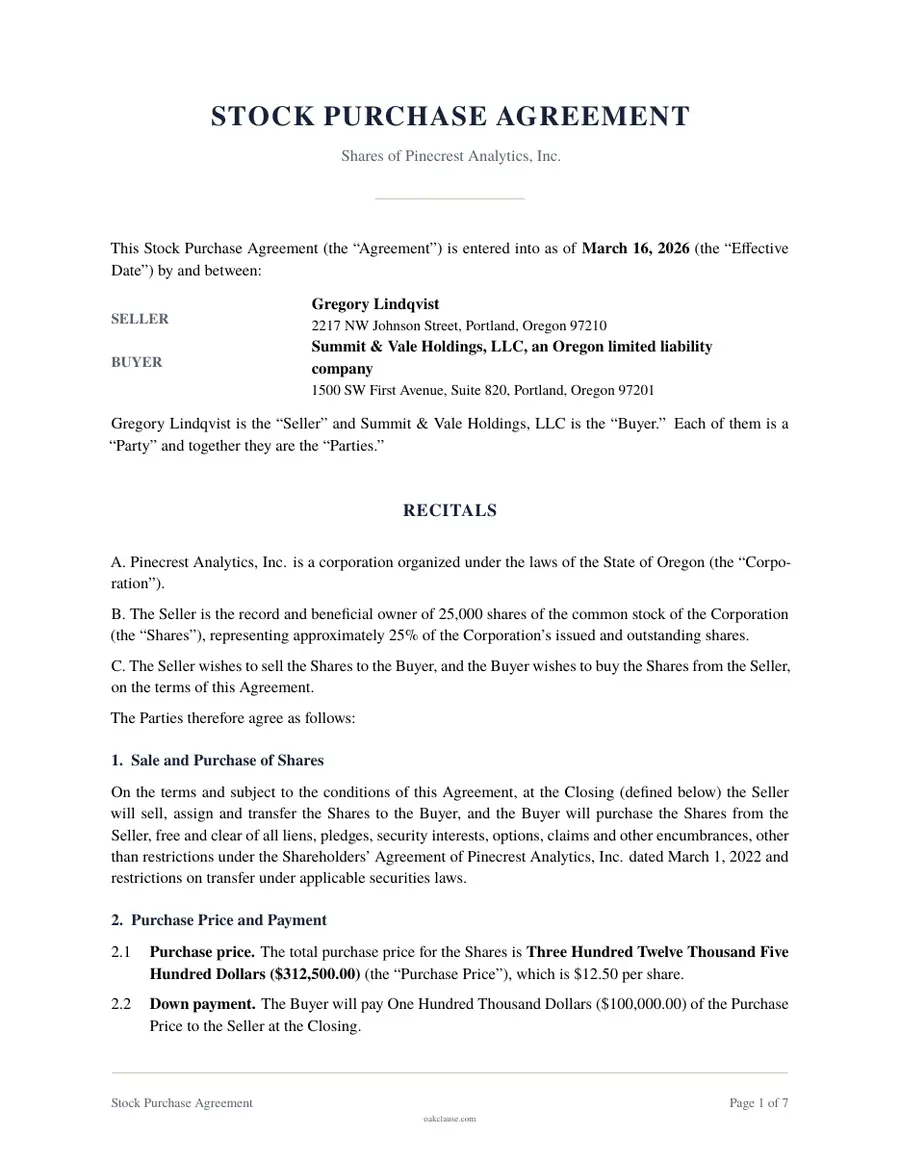
It means that a shareholder who receives an offer to buy their shares must first offer those shares to the company, and then to the other shareholders, on the same terms. Only if they decline can the shares be sold to the outside buyer. It keeps ownership within the existing group whenever the group wants it to stay there.
What are tag-along and drag-along rights?
Tag-along rights let minority shareholders join a sale by majority holders on the same terms, so they are not left behind with a new controlling owner. Drag-along rights let holders of a large majority require everyone else to join an approved sale of the whole company, so a small minority cannot block a deal.
How are shares valued in a buyout?
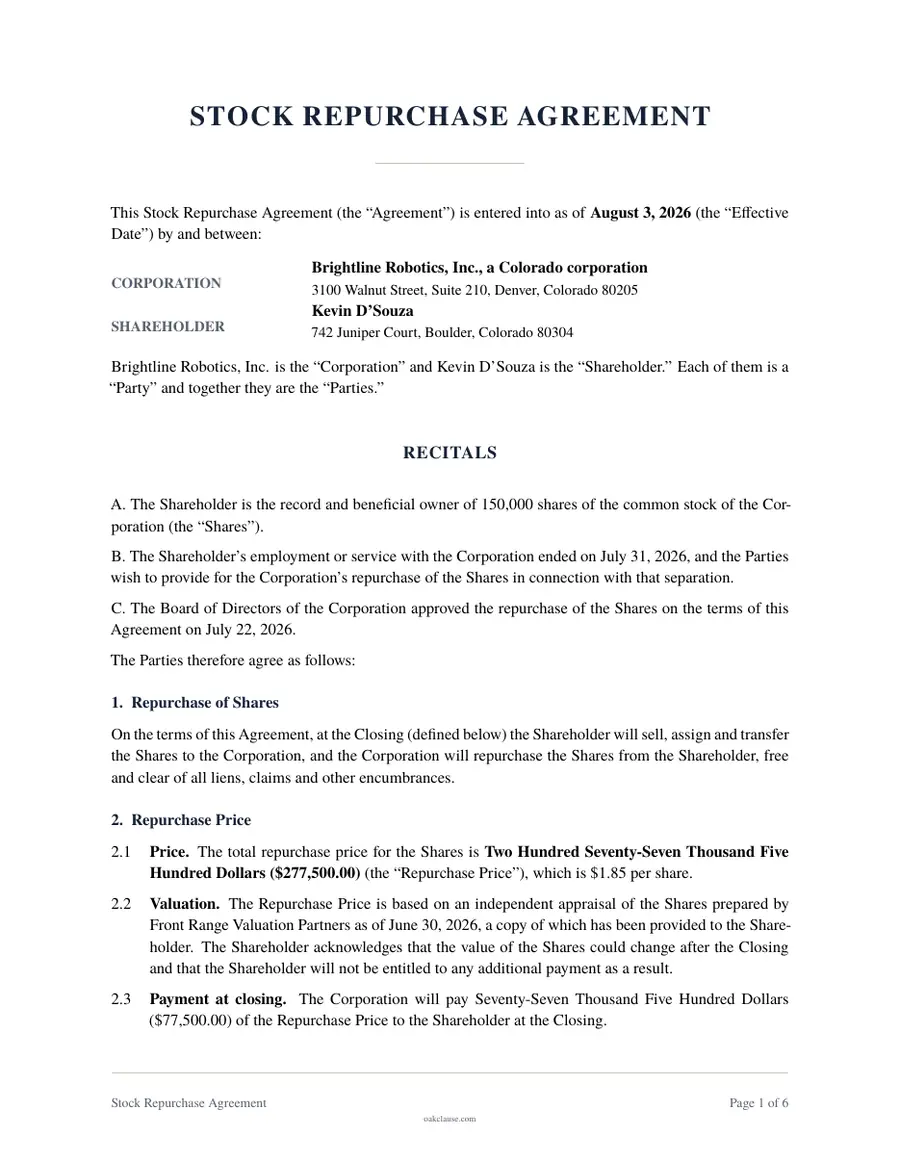
This agreement lets you choose a value the shareholders agree on and update each year, an independent appraisal, or book value from the company's financial statements. Agreed values are simple but must be kept current; appraisals are usually the most accurate but cost more and take longer.
Why would a spouse need to sign a shareholder agreement?
In some states, particularly community property states, a spouse may have an ownership interest in shares acquired during the marriage. A spousal consent confirms that the spouse agrees to be bound by the transfer and buyout terms, which helps avoid disputes after a divorce or death.
Can a shareholder agreement include a non-compete?
It can, but states treat non-competes very differently. Some enforce reasonable restrictions tied to the sale or ownership of a business, while others restrict or ban them. The non-compete in this agreement applies only to the extent the governing state's law allows.
Does a shareholder agreement need to be filed with the state?
No. A shareholder agreement is a private contract and is not filed with the secretary of state. Keep the signed original with the corporate records, and many companies also note the transfer restrictions on their share certificates or ledger.