Corporate Bylaws
Give your corporation a clear rulebook for shareholder meetings, the board of directors, officers, shares and records, tailored to the choices you make.
Includes 30 days of edits
- 5 to 20 minutes
- Print-ready PDF
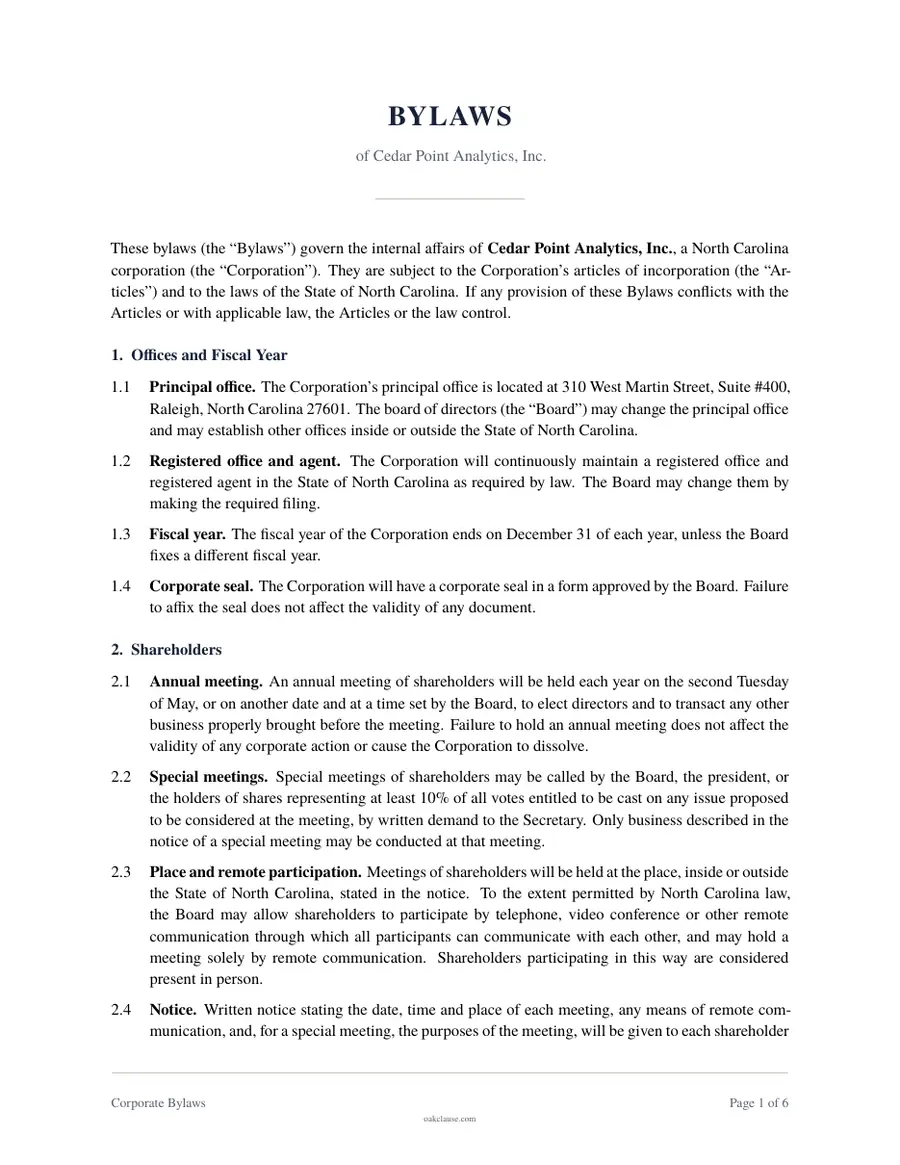
What is a Corporate Bylaws?
Corporate bylaws are the internal operating rules of a corporation. They explain how shareholders meet and vote, how many directors the corporation has and how they are elected, which officers run the business day to day, and how the corporation handles its shares, records and finances.
State corporation law supplies default rules for many of these questions, and the articles of incorporation can override some of them. Bylaws fill in the details and adapt the defaults to the way the owners actually want to run the business, within the limits the law allows. When bylaws conflict with the articles of incorporation or with state law, the articles and the law generally control.
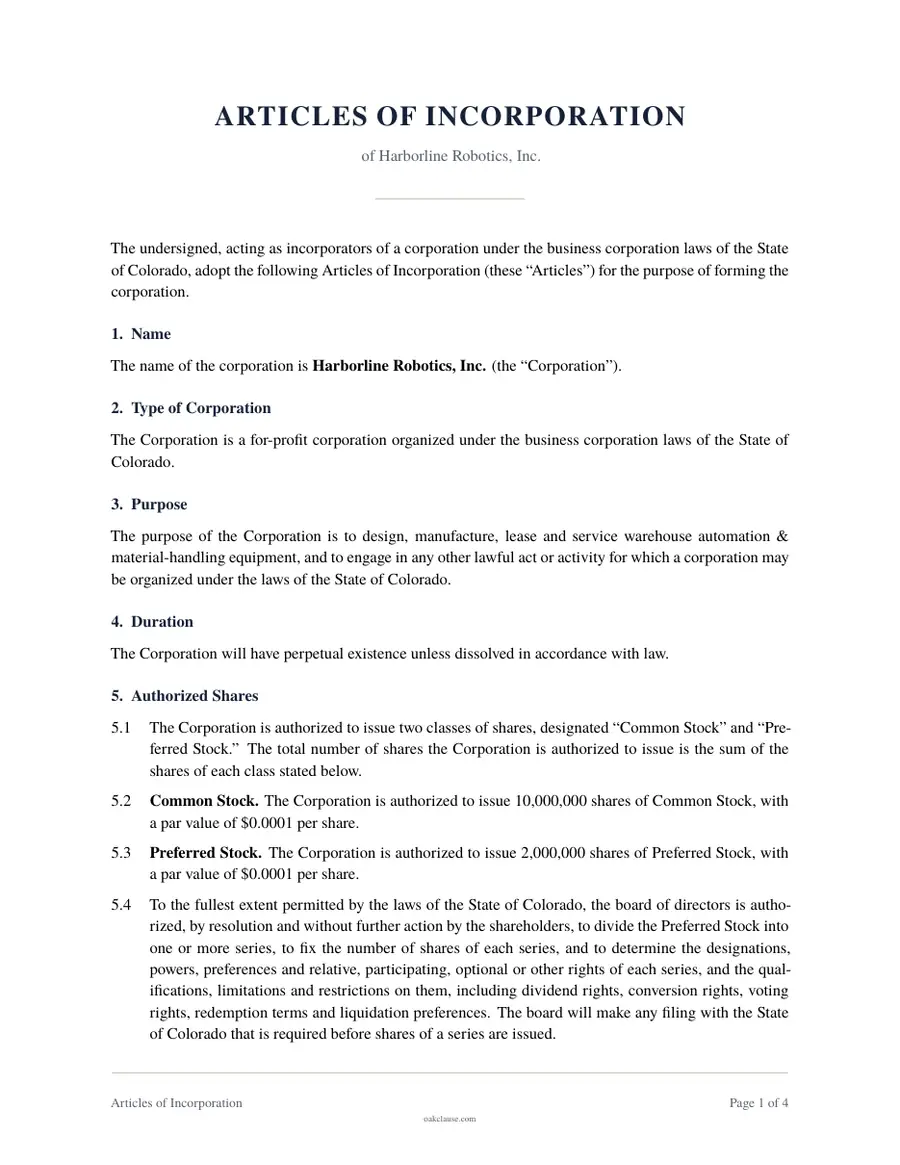
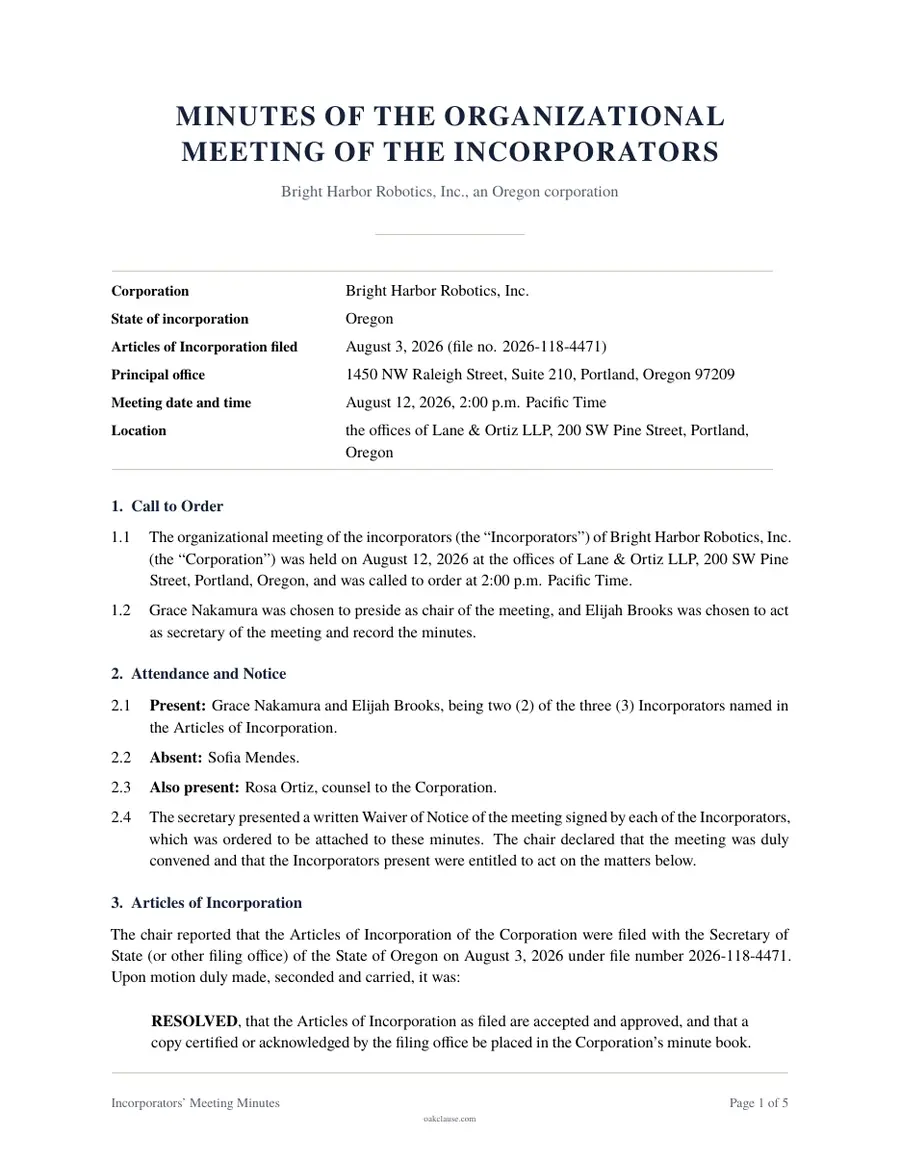
Bylaws are usually adopted by the incorporators or the first board of directors at the corporation's organizational meeting and are kept with the corporate records rather than filed with the state. Banks, investors and courts often ask to see them, and following them consistently helps show that the corporation is a separate entity from its owners.
When to use it
- You have just filed articles of incorporation and need bylaws to adopt at the organizational meeting.
- Your corporation has been operating informally and you want written rules that reflect how it is really run.
- You are bringing in new shareholders or directors and want clear voting, quorum and meeting procedures.
- A bank, investor or lender has asked for a copy of your corporation's bylaws.
- You want to replace outdated bylaws with an updated, restated version.
What is included
- Offices, registered agent and fiscal year
- Annual and special shareholder meetings, notice, quorum, proxies and voting
- Shareholder action by written consent and remote participation
- Number, term, election, removal and vacancies of directors
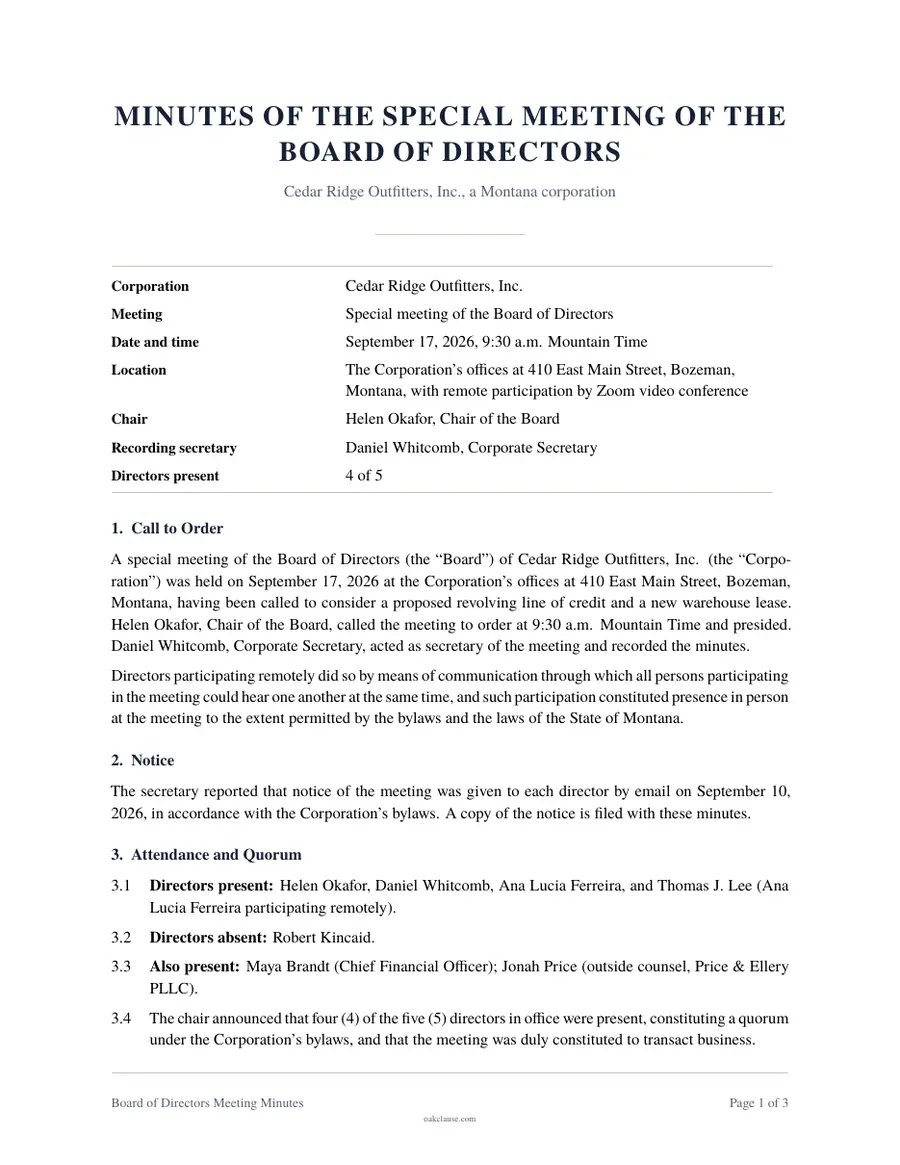
- Board meetings, quorum, written consent and committees
- Officers, their duties, appointment and removal
- Share certificates or uncertificated shares and optional right of first refusal
- Dividends, books, records and shareholder inspection
- Indemnification of directors and officers and insurance
- Amendment procedure and secretary's certificate of adoption
How to make your Corporate Bylaws
Answer the questions
Tell us about the parties and the terms you want. Most documents take about 5 to 20 minutes.
Review the preview
Check the draft as you go and change any answer. The document updates instantly.
Download, sign and keep a copy
Download a print-ready PDF, sign it with the other parties, and give everyone a copy.
Frequently asked questions
Are corporate bylaws required by law?
Most state corporation statutes expect a corporation to adopt bylaws, and even where they are not strictly required, operating without them leaves you relying entirely on default rules. Bylaws also help show banks, investors and courts that the corporation follows formal procedures.
Do bylaws need to be filed with the state?
Generally no. Bylaws are an internal document kept with the corporation's minute book and records. The articles of incorporation are the document filed with the state.
Who adopts the bylaws?
The initial bylaws are usually adopted by the incorporators or the first board of directors at the organizational meeting, depending on state law and the articles of incorporation. Later changes are made by the board, the shareholders or both, as the bylaws and articles provide.
What is the difference between bylaws and a shareholder agreement?
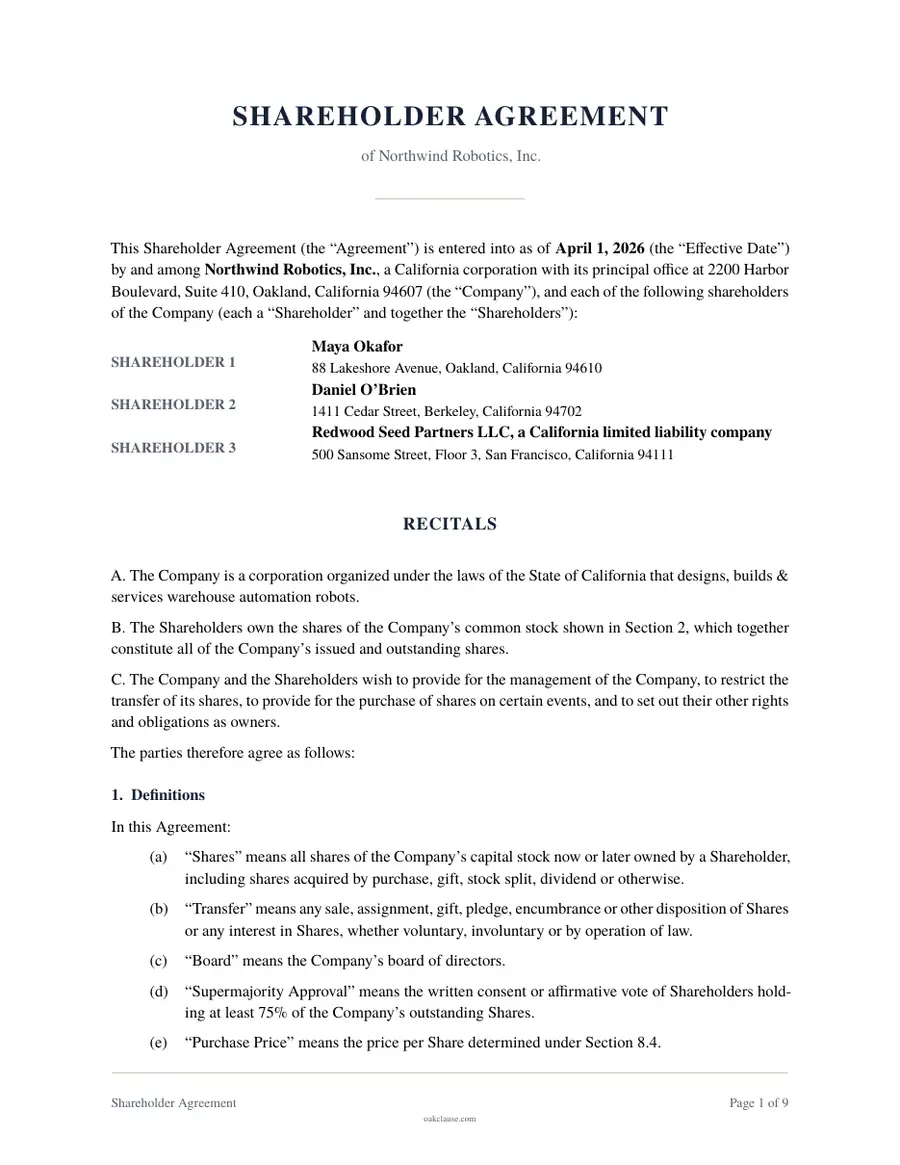
Bylaws set the corporation's general governance rules and bind the corporation, its directors and officers. A shareholder agreement is a contract among some or all shareholders that can add rights such as buy-sell terms, drag-along and tag-along rights, or board seat guarantees. Many closely held corporations use both.
What is a quorum?
A quorum is the minimum number of shares, or of directors, that must be present for a meeting to conduct business. A common default is a majority. Setting the quorum too high can make it hard to hold valid meetings; setting it too low lets a small group act for everyone.
Can one person be the only director and hold every officer position?
Many states allow a corporation to have a single director and allow one person to hold several or all officer positions. A few states have restrictions, for example on the same person serving as both president and secretary. Check your state's corporation law.
What is a right of first refusal on shares?
It is a restriction that requires a shareholder who wants to sell shares to a third party to offer them first to the corporation, and sometimes to the other shareholders, on the same terms. It helps keep ownership of a small corporation within the existing group.
How do I amend corporate bylaws?
Follow the amendment section of the bylaws themselves, which usually lets the board, the shareholders or both adopt changes by a stated vote. Record the change in a resolution or minutes and keep the updated bylaws with the corporate records. Some changes may also require amending the articles of incorporation.