Stock Subscription Agreement
Put an investor's commitment to buy newly issued shares in writing.
Includes 30 days of edits
- 5 to 20 minutes
- Print-ready PDF
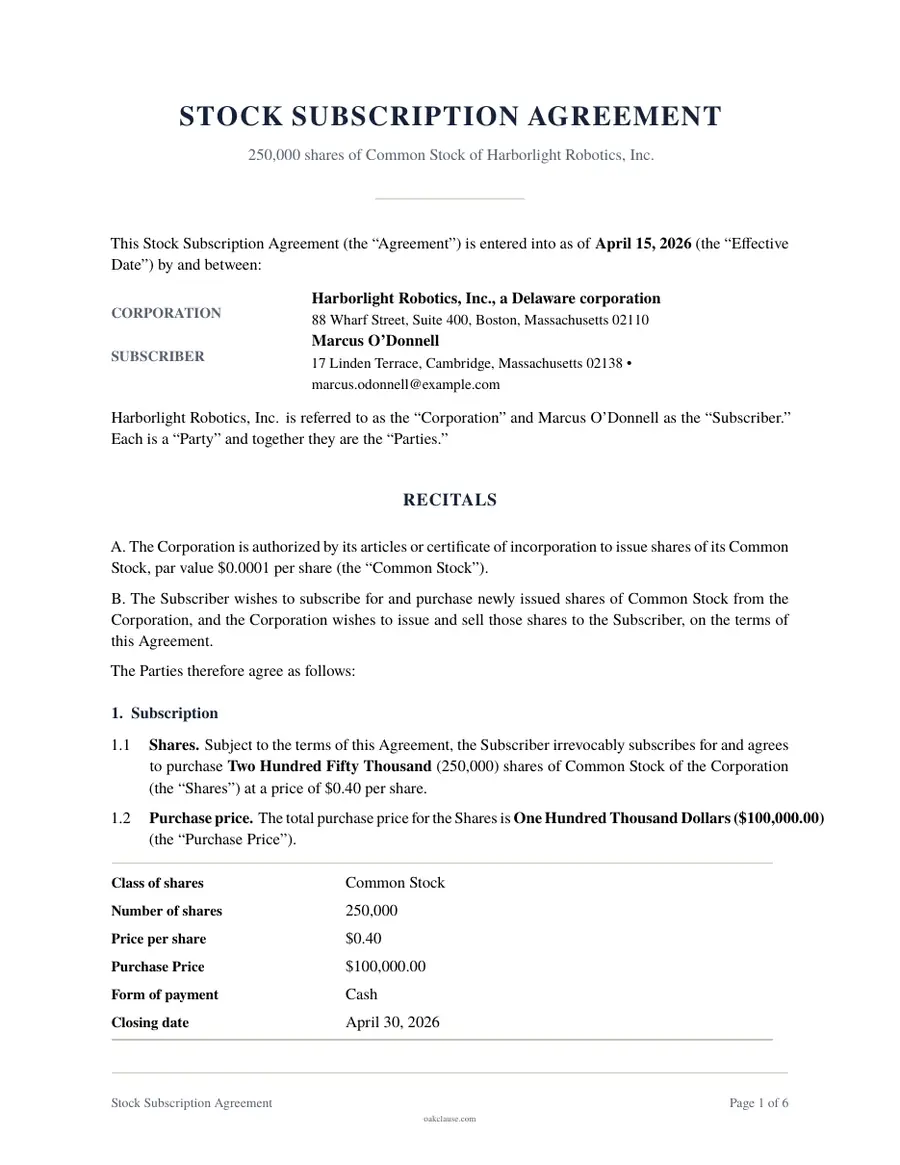
What is a Stock Subscription Agreement?
A stock subscription agreement is a contract in which a person or business (the subscriber) agrees to buy a specific number of new shares directly from a corporation at an agreed price, and the corporation agrees to issue those shares once it accepts the subscription and receives payment. It is the standard paper trail for founders taking their initial shares, early investors buying in, and companies raising money in a private placement.
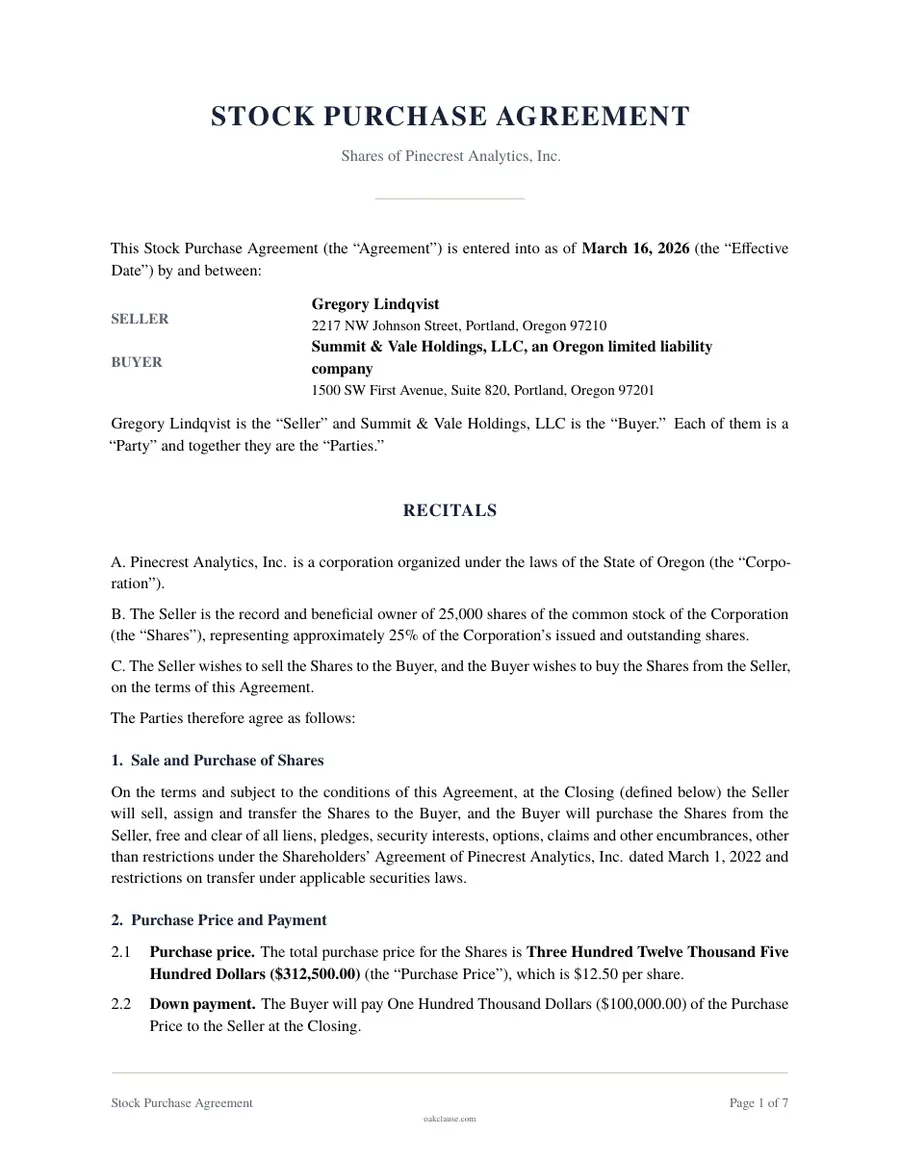
Unlike a stock purchase agreement, which usually covers the sale of existing shares from one owner to another, a subscription agreement deals with shares the corporation creates and issues itself. That is why it focuses on the corporation's authority to issue the shares, what the subscriber pays and when, and the promises the subscriber makes so the company can rely on an exemption from securities registration.
Because privately issued shares are not registered with the Securities and Exchange Commission, the agreement records the subscriber's investment intent, accredited investor status where relevant, and acknowledgment that the shares are restricted and hard to resell. A complete, signed subscription agreement helps the corporation keep accurate stock records and gives both sides a reference point if questions come up later.
When to use it
- Founders are buying their initial shares when a new corporation is formed.
- An angel investor, friend or family member is investing cash in exchange for newly issued stock.
- A shareholder is contributing property, equipment or intellectual property to the corporation for shares.
- The corporation is issuing shares to someone in exchange for past services, with or without vesting.
- A company is running a small private offering and needs a consistent agreement for each investor.
What is included
- Corporation and subscriber details, including business subscribers
- Class, series, number of shares and price per share
- Payment by cash, property, services or promissory note
- Payment timing, including installment schedules
- Acceptance, closing and issuance of certificated or book-entry shares
- Subscriber investment representations and accredited investor status
- Restricted securities legend and transfer restrictions
- Optional vesting, repurchase right, right of first refusal and lock-up
- Corporation representations on authority and valid issuance
- Governing law, notices, general provisions and optional spousal consent
How to make your Stock Subscription Agreement
Answer the questions
Tell us about the parties and the terms you want. Most documents take about 5 to 20 minutes.
Review the preview
Check the draft as you go and change any answer. The document updates instantly.
Download, sign and keep a copy
Download a print-ready PDF, sign it with the other parties, and give everyone a copy.
Frequently asked questions
What is the difference between a stock subscription agreement and a stock purchase agreement?
A subscription agreement is used when a corporation issues brand-new shares directly to a buyer. A stock purchase agreement is typically used when an existing shareholder sells shares they already own to someone else, or when a buyer acquires a company by purchasing its stock.
Do founders need a subscription agreement for their own shares?
It is common and good practice. A founder's subscription agreement documents what the founder paid or contributed for the shares, which helps establish that the shares were validly issued and gives the corporation clean records for future investors, lenders and tax filings.
What does accredited investor mean?
An accredited investor is a person or entity that meets financial or professional tests set by the SEC in Rule 501(a) of Regulation D, such as meeting income or net worth thresholds or being a director or executive officer of the issuer. Many private offering exemptions depend on whether investors are accredited, so the agreement asks the subscriber to state their status.
Can someone pay for shares with property or services instead of cash?
Often, yes. Corporations frequently issue shares for property, intellectual property or services already performed. State corporate law decides what forms of payment are allowed and how the board must value them, so the agreement records the consideration and states that the board has determined its value.
What is a Section 83(b) election?
When shares are subject to vesting, federal tax law generally treats the shares as received when they vest. A Section 83(b) election lets the recipient choose to be taxed when the shares are issued instead. It must be filed with the IRS within 30 days after the shares are issued, and missing that window cannot be fixed later, so many people speak with a tax adviser right away.
Does a subscription agreement need to be notarized?
No. A stock subscription agreement is generally valid when signed by the subscriber and accepted by the corporation. The corporation's board usually approves the issuance by resolution or written consent, which should be kept with the agreement in the corporate records.
Can the subscriber resell the shares right away?
Usually not. Privately issued shares are restricted securities that cannot be resold unless they are registered or an exemption applies, and the agreement may add contractual limits such as a right of first refusal. The share certificate or book-entry record carries a legend describing these restrictions.
Is a subscription agreement enough to comply with securities laws?
It is an important piece, but not the whole picture. Depending on the offering, the corporation may need to make federal and state notice filings, provide disclosures to investors, or follow other rules. For anything beyond a simple founder or friends-and-family issuance, many companies involve a securities attorney.