Production Agreement
Commission a video, film, photo shoot or audio project with the scope, budget, schedule and ownership of the finished work agreed in writing from day one.
Includes 30 days of edits
- 5 to 20 minutes
- Print-ready PDF
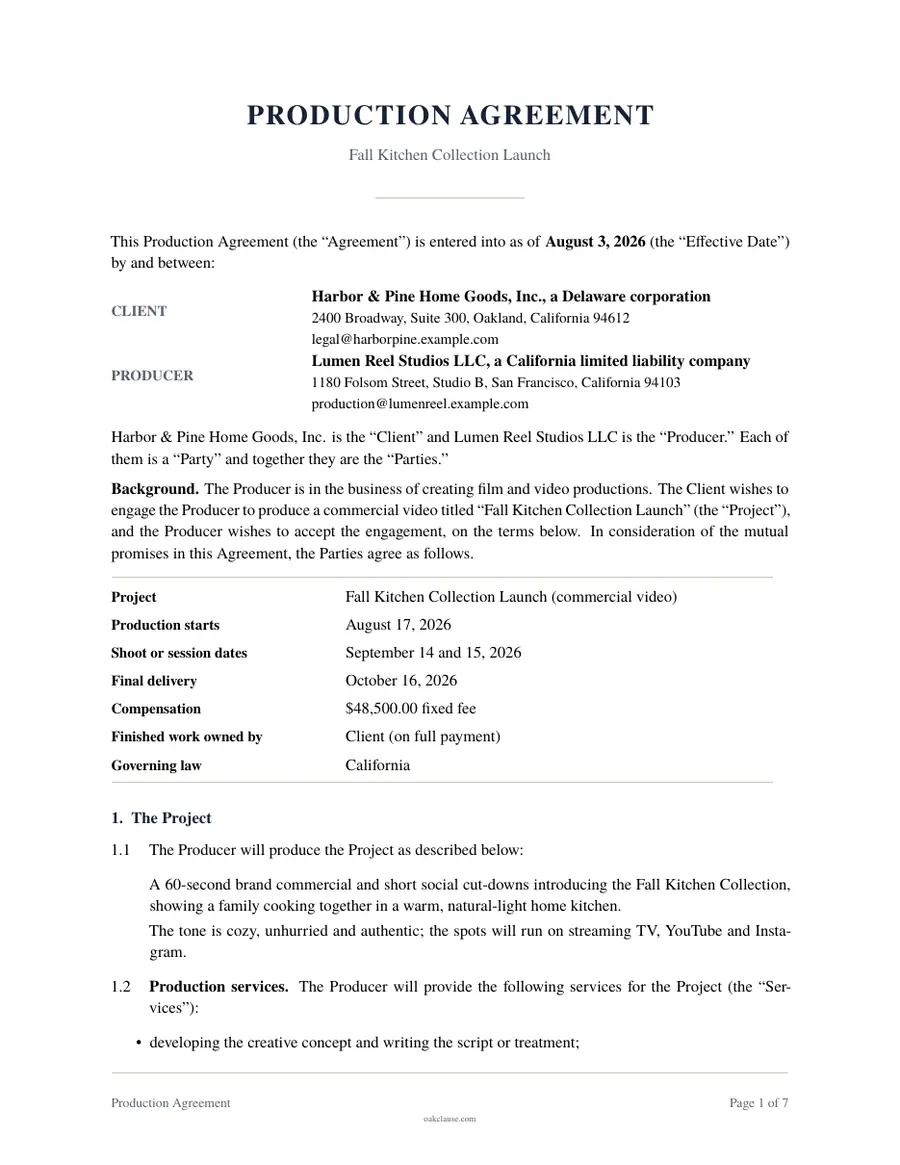
What is a Production Agreement?
A production agreement is a contract between a client and a production company, studio or freelance producer who will create a creative project for the client, such as a commercial, corporate video, short film, documentary, music video, photo shoot, podcast or audio recording.
Production work moves through stages, from pre-production and shooting or recording to editing and delivery, and costs can grow quickly if the scope is vague. A written agreement sets out exactly what will be delivered and in what format, the production schedule, the budget and how it is paid, and how many rounds of revisions are included.
Just as important, it decides who owns the finished work and the raw footage or session files, who obtains releases from people and locations that appear on screen, who licenses music, whether the producer may show the work in its reel, and what happens if the project is cancelled partway through.
When to use it
- A business is hiring a production company to make a commercial, brand film or training video.
- You are a freelance videographer, photographer or producer taking on a client project.
- An artist or label is commissioning a music video or a recorded audio project.
- A nonprofit or agency is producing a documentary or campaign film with an outside crew.
- You need clarity on who owns the final cut, the raw footage and the right to reuse the work.
What is included
- Project description, production services and deliverables with formats
- Production schedule with shoot dates, locations and final delivery date
- Fixed fee with payment milestones, day rate or cost-plus budget
- Budget overage approvals and expense handling
- Review rounds, revisions and acceptance of deliverables
- Ownership of the finished work and raw footage, or a license
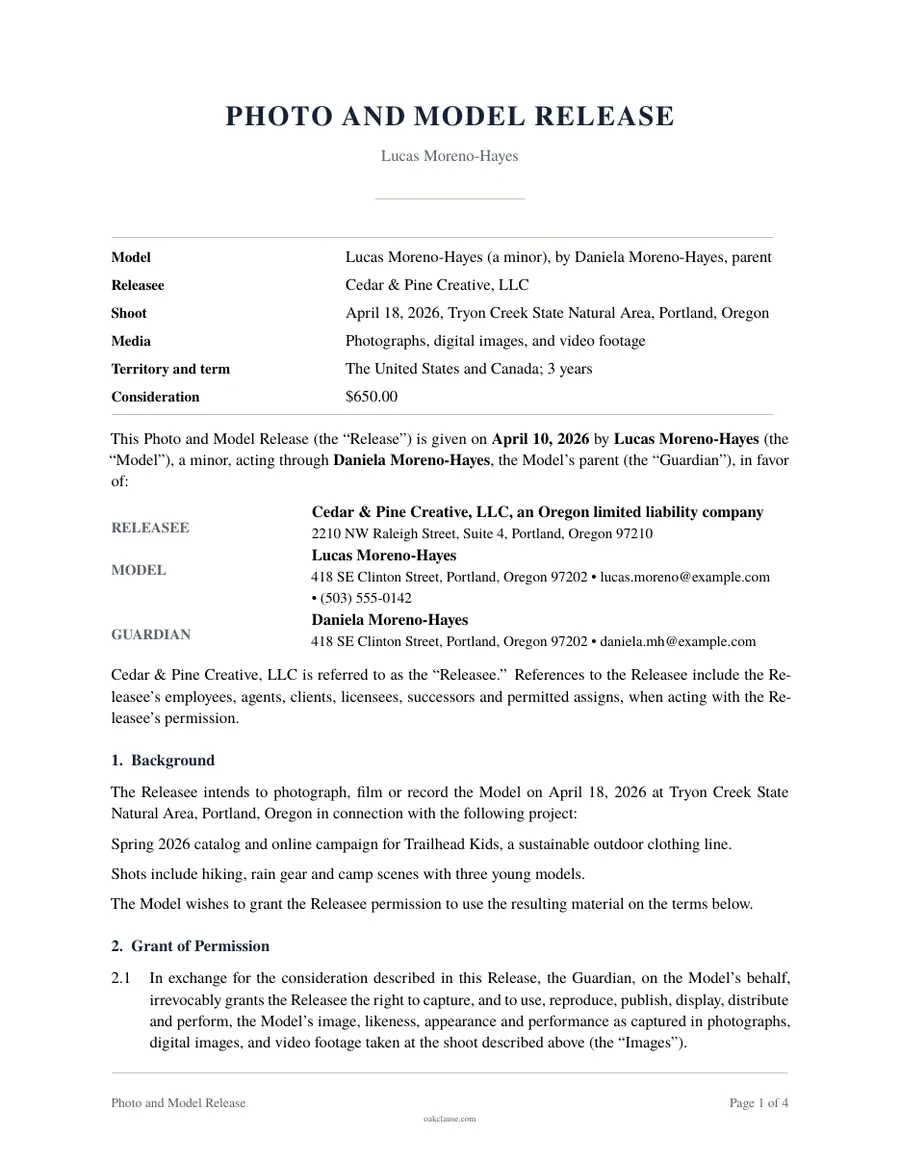
- Talent, location and music clearances and releases
- Producer credit and portfolio rights
- Insurance, cancellation fee, confidentiality and liability limits
- Governing law and dispute resolution
How to make your Production Agreement
Answer the questions
Tell us about the parties and the terms you want. Most documents take about 5 to 20 minutes.
Review the preview
Check the draft as you go and change any answer. The document updates instantly.
Download, sign and keep a copy
Download a print-ready PDF, sign it with the other parties, and give everyone a copy.
Frequently asked questions
Who owns a video when you hire a production company?
Under federal copyright law, the creator usually owns the work unless a written agreement transfers it or the work qualifies as a work made for hire. This agreement lets you choose whether the client owns the finished work after paying in full, or the producer keeps ownership and grants the client a license.
Does the client get the raw footage?
Not automatically. Many producers keep raw footage and project files and deliver only the finished edit. This agreement lets you decide whether raw footage is delivered to the client and whether an extra fee applies.
What is a kill fee in a production contract?
A kill fee is what the client pays if it cancels the project partway through. This agreement provides that the client pays for work completed and non-cancellable costs already committed, plus an optional percentage of the remaining fee.
Who is responsible for talent and location releases?
Usually the producer obtains written releases from people who appear on camera and from property owners where filming takes place, because the producer is on set. This agreement lets the parties allocate that responsibility and the related music licensing.
How are revisions handled in a video production?
The agreement sets a number of included revision rounds and a review period for each draft. Changes beyond that, or changes that depart from the approved script, are billed separately so the budget stays predictable.
Should a production agreement be fixed fee or day rate?
A fixed fee suits projects with a well-defined scope. A day rate suits shoots where the number of days is uncertain. Cost-plus budgets, where the client pays actual costs plus a production fee, are common for larger productions. This agreement supports all three.
Does the producer need insurance?
Many clients and locations require the producer to carry general liability insurance, and larger shoots often need equipment and production insurance too. This agreement can require the producer to maintain insurance and provide a certificate on request.
Does a production agreement need to be notarized?
No. A production agreement is valid when both parties sign it, and electronic signatures are generally accepted. Notarization is not required for this type of contract.