Licensing Agreement
Let another person or business use your brand, creative work, invention or know-how for a fee, while you keep ownership and control over how it is used.
Includes 30 days of edits
- 5 to 20 minutes
- Print-ready PDF
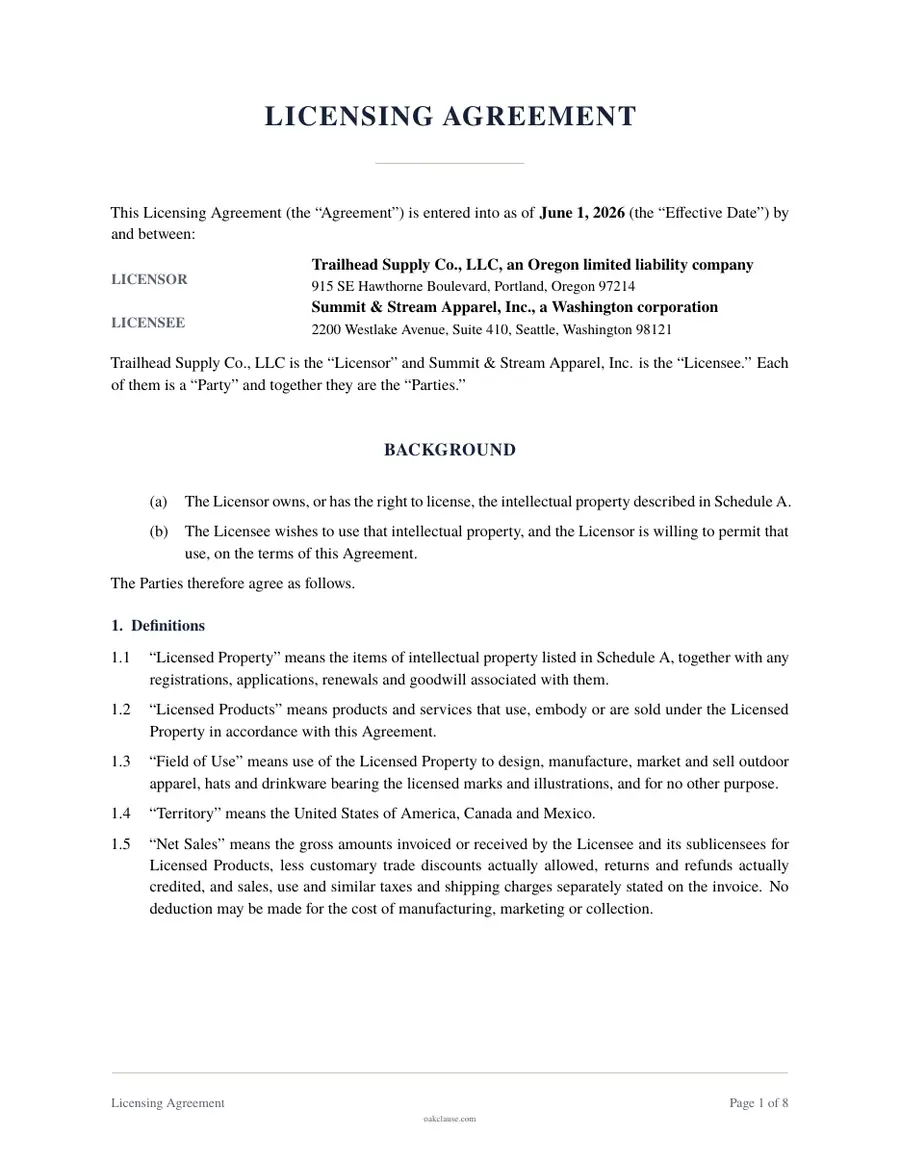
What is a Licensing Agreement?
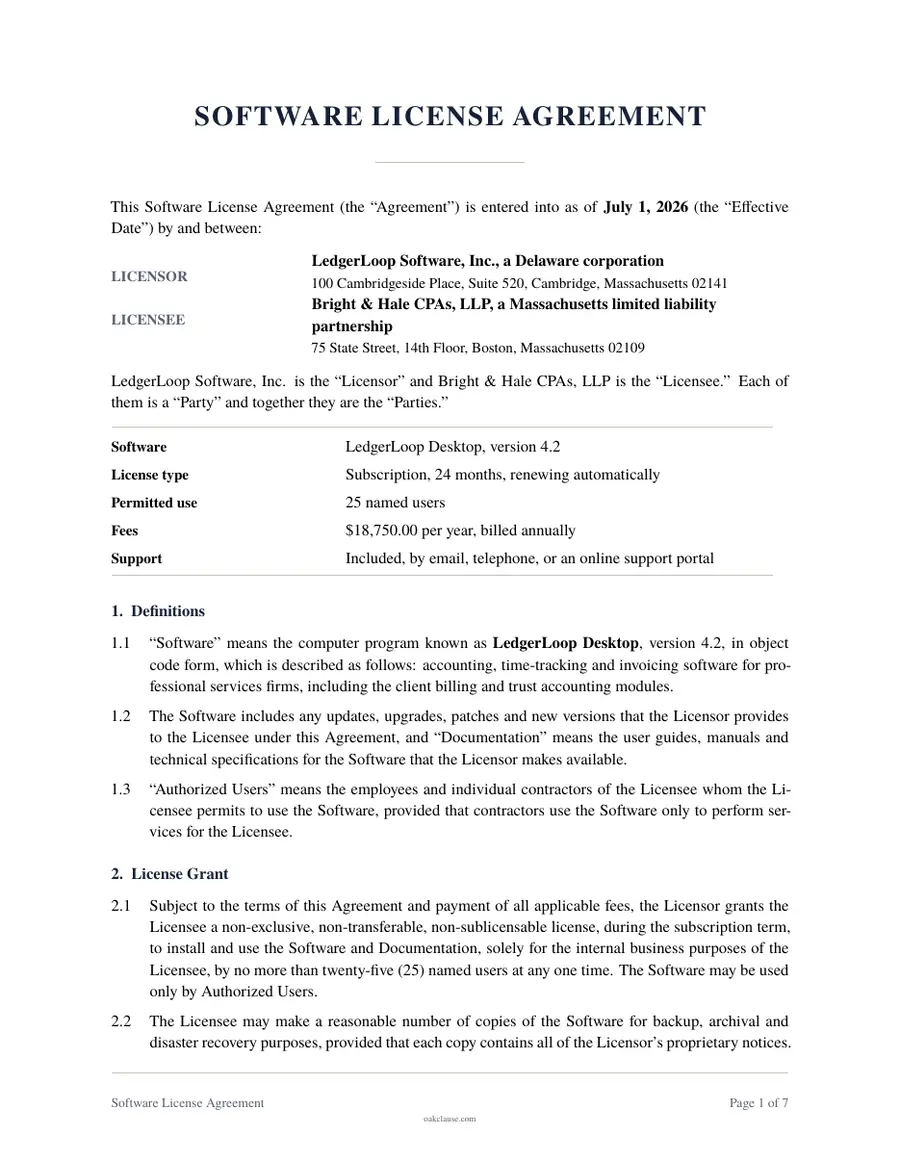
A licensing agreement is a contract in which the owner of intellectual property (the licensor) gives another party (the licensee) permission to use that property in defined ways, usually in exchange for an upfront fee, ongoing royalties or both. Unlike a sale or assignment, the licensor keeps ownership and gets the property back when the license ends.
Licenses are used for almost every kind of intellectual property: trademarks and logos placed on merchandise, characters and artwork printed on products, patented technology built into another company's devices, recipes and processes used by a manufacturer, and photographs or music used in advertising. The agreement sets the boundaries: what may be used, for which products or purposes, where, for how long, and whether anyone else may receive the same rights.
A clear license protects both sides. The licensor gets defined income, quality control over products bearing its name and the right to inspect the licensee's sales records. The licensee gets certainty that it may invest in making and selling products without being accused of infringement.
When to use it
- You want a manufacturer or retailer to put your brand, logo or artwork on its products.
- A company wants to use your patented invention or proprietary process in its own products.
- You are allowing a business to use your photographs, illustrations, music or written content.
- You want to expand into a new region or market through a local partner without selling your IP.
- You are the licensee and want written proof of your right to use someone else's intellectual property.
What is included
- Schedule of licensed trademarks, copyrights, patents or know-how
- Field of use, territory and exclusive or non-exclusive grant
- Sublicensing rules and reservation of the licensor's rights
- Upfront fee, royalty rate and minimum annual royalty
- Royalty reports, payment schedule and audit rights
- Quality control and product approval for brand licenses
- Ownership of improvements and enforcement against infringers
- Warranties, indemnities, liability limits and insurance
- Term, renewal, termination and post-termination sell-off period
- Governing law, dispute resolution and general provisions
How to make your Licensing Agreement
Answer the questions
Tell us about the parties and the terms you want. Most documents take about 5 to 20 minutes.
Review the preview
Check the draft as you go and change any answer. The document updates instantly.
Download, sign and keep a copy
Download a print-ready PDF, sign it with the other parties, and give everyone a copy.
Frequently asked questions
What is the difference between a license and an assignment?
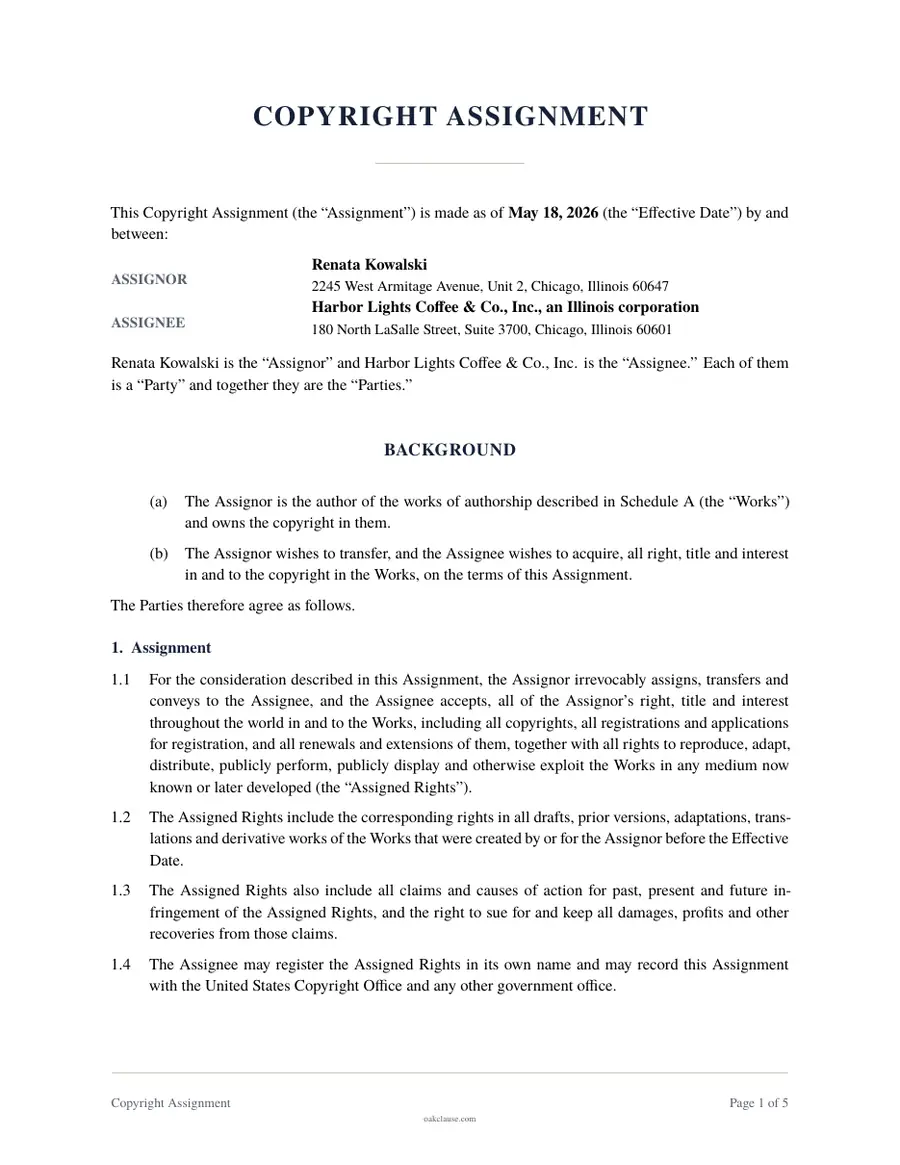
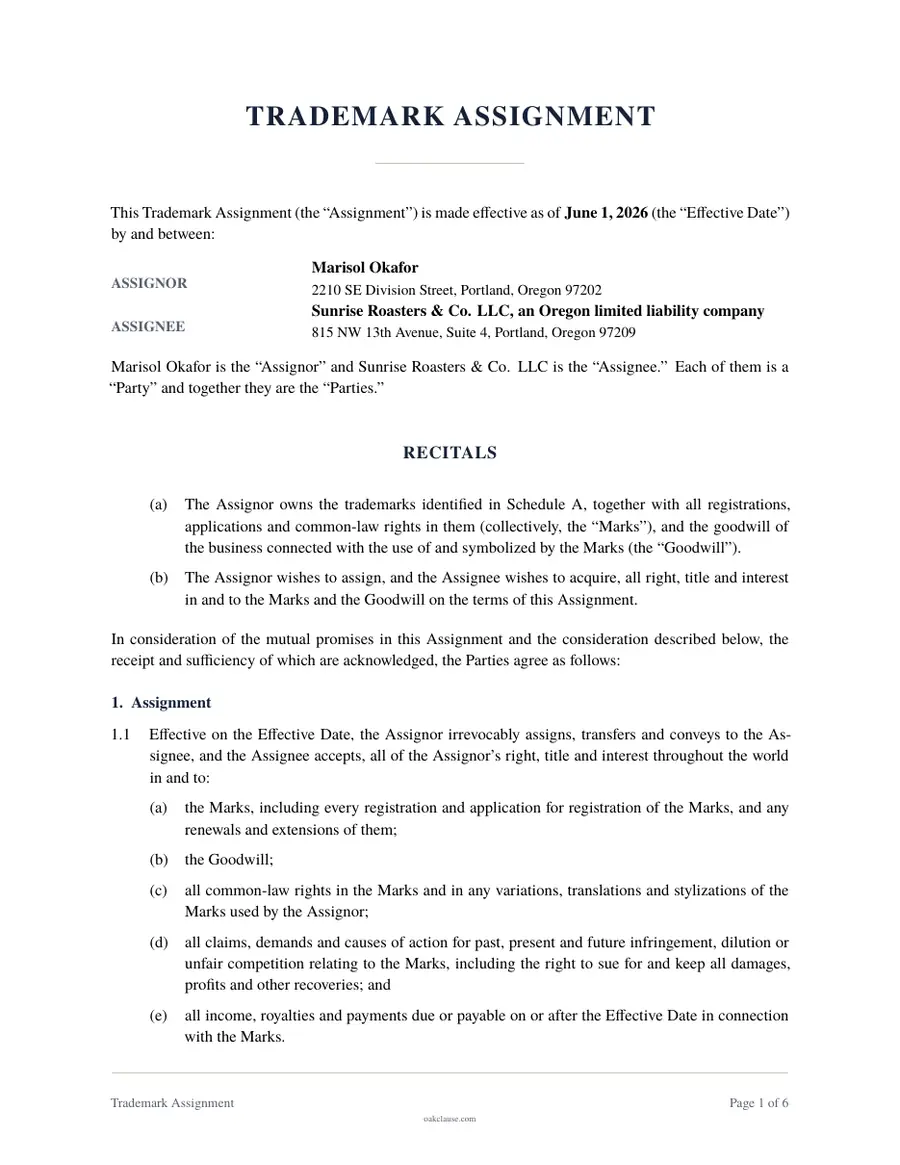
A license gives permission to use intellectual property while the owner keeps it. An assignment transfers ownership permanently. If you want to keep your IP and earn income from it, a license is usually the right structure.
What does an exclusive license mean?
Under an exclusive license, the licensee is the only party allowed to use the property within the agreed field and territory, and the licensor promises not to use it there either. A sole license lets the licensor keep using the property itself but not license anyone else. A non-exclusive license lets the licensor grant the same rights to others.
How are royalties usually calculated?
Most licenses use a percentage of the licensee's net sales of licensed products, paid quarterly with a written report. Some add an upfront fee or a minimum annual royalty so the licensor earns a baseline amount even if sales are slow. Rates vary widely by industry and type of property.
Why does a trademark license need quality control?
A trademark tells customers that products come from a consistent source. If an owner lets others use its mark without any control over quality, it risks weakening or even losing its trademark rights. Quality standards and approval of samples help preserve the mark.
Can the licensee let someone else use the property?
Only if the agreement allows it. This form lets you prohibit sublicensing, allow it only with the licensor's written consent, or allow it freely, with the licensee remaining responsible for its sublicensees.
What happens to unsold products when the license ends?
Many licenses give the licensee a short sell-off period to sell remaining inventory, subject to paying royalties as usual. After that, the licensee must stop all use. You can set the sell-off period or choose not to have one.
Does a licensing agreement need to be registered or notarized?
Generally no. A license is valid when signed by both parties. Some owners choose to record licenses of registered patents or copyrights with the relevant federal office, and some foreign countries require recordal, but notarization is not usually needed in the United States.
What happens to royalties when a licensed patent expires?
Under US Supreme Court decisions, a licensor cannot collect royalties for using a patent after it expires. This agreement stops royalties on patent rights once no valid patent claim covers the product. If the license also covers trademarks, copyrights or know-how, the royalty steps down to a reduced rate for those remaining rights instead of ending.
Could a licensing agreement count as a franchise?
It can. If the licensee operates a business under the licensor's trademark, the licensor exercises significant control or assistance, and the licensee pays a required fee, federal and state franchise rules may apply. If your deal looks like that, an attorney can review whether franchise disclosure rules apply.