Copyright Assignment
Transfer ownership of a book, design, photo, song, software or other creative work in writing, with the works, payment and rights clearly spelled out.
Includes 30 days of edits
- 5 to 20 minutes
- Print-ready PDF
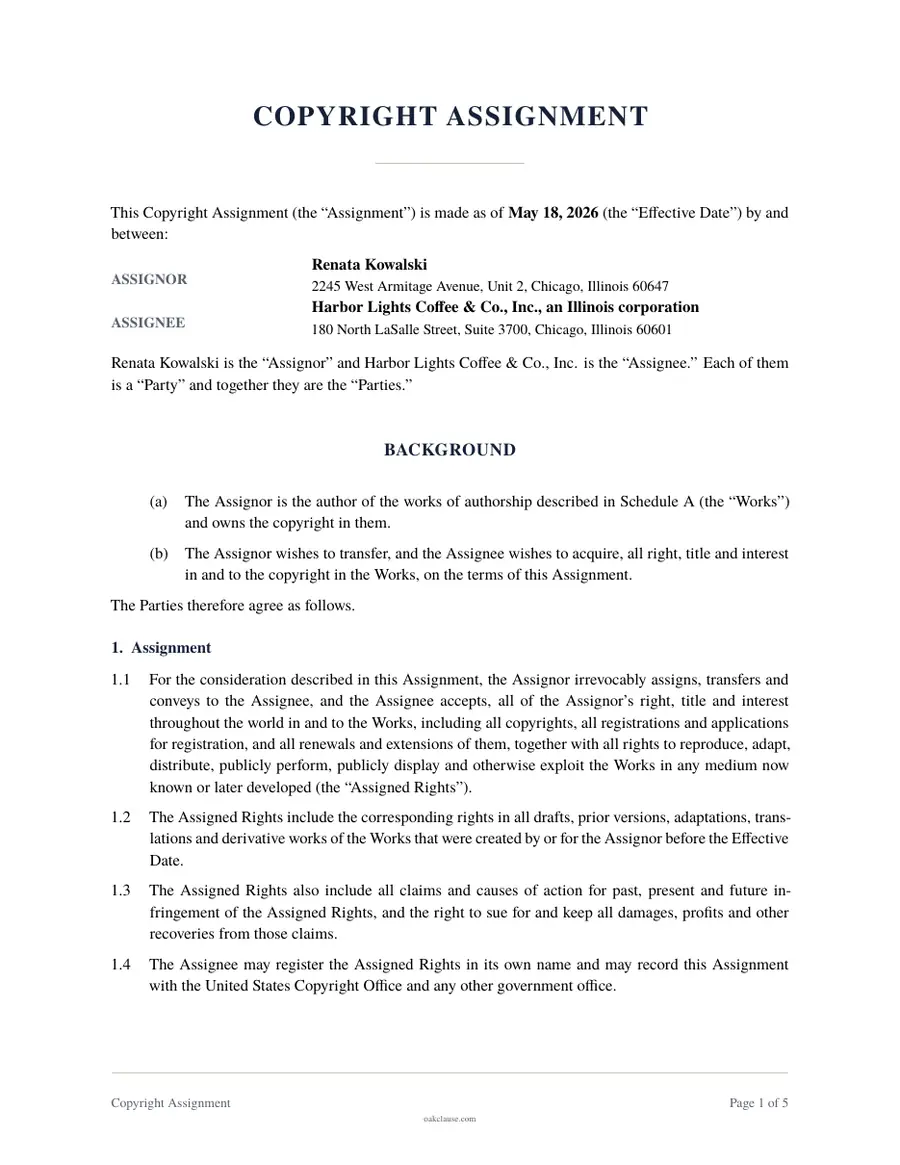
What is a Copyright Assignment?
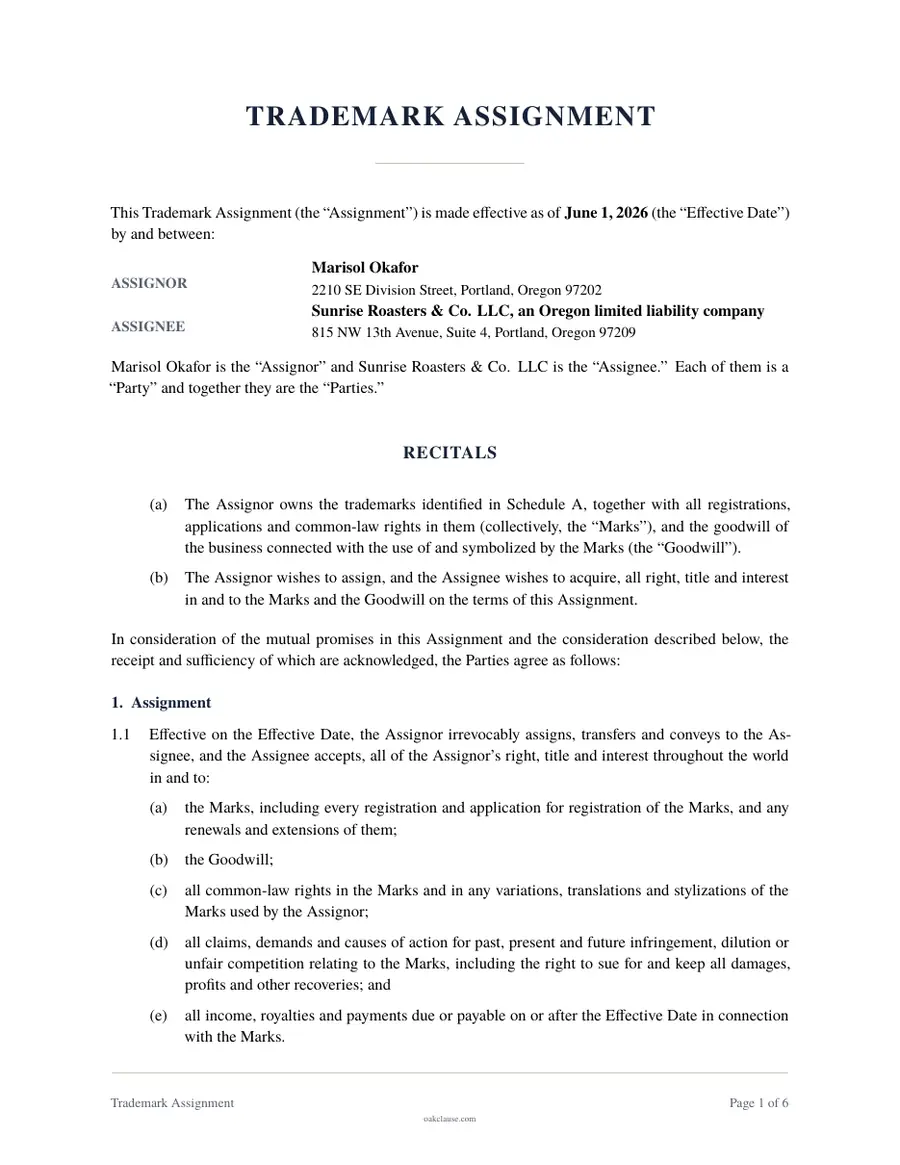
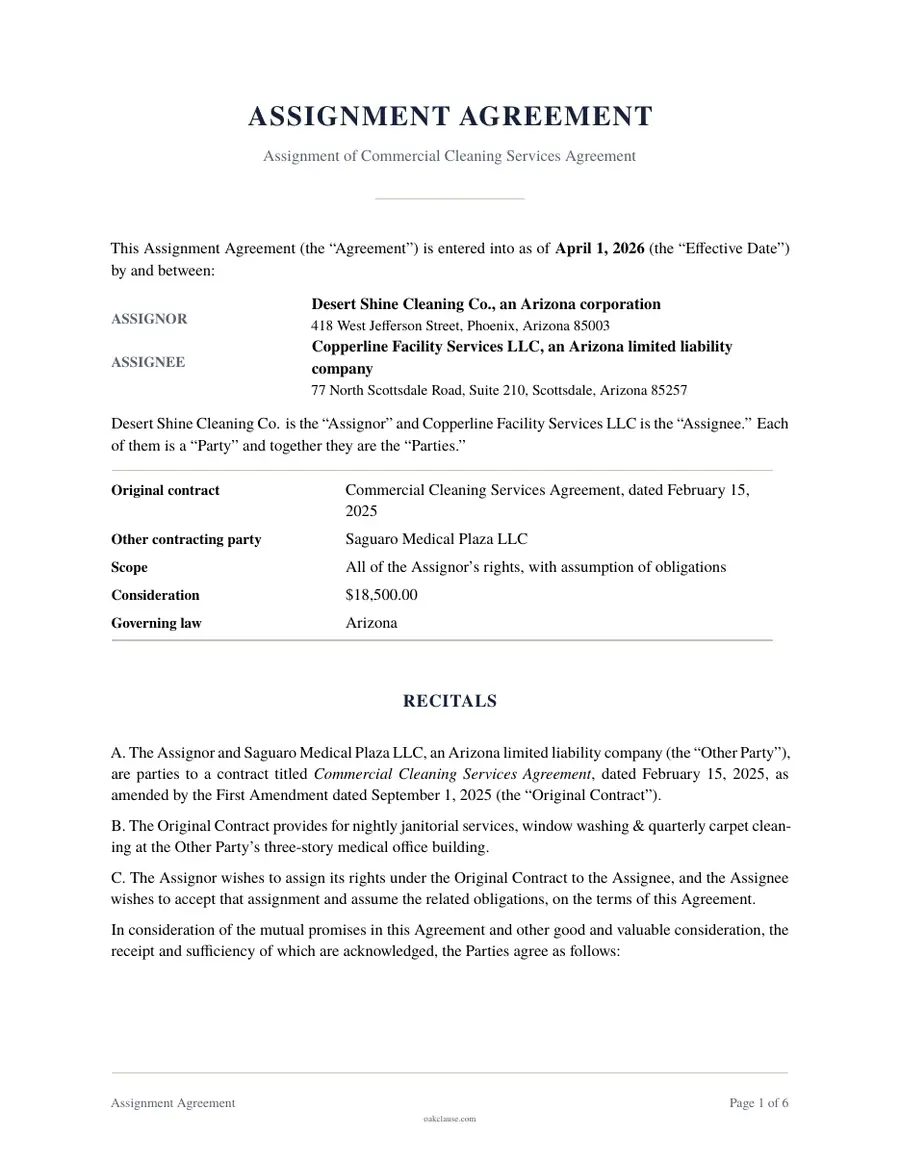
A copyright assignment is a written agreement in which the current owner of a copyright (the assignor) transfers ownership to someone else (the assignee). After the transfer, the assignee owns the copyright and can reproduce, sell, adapt and license the work, and can enforce the copyright against infringers.
Federal copyright law says a transfer of copyright ownership is not valid unless it is in writing and signed by the owner, so a handshake or an invoice is usually not enough. That makes a signed assignment essential whenever a freelancer, contractor or outside creator produces work that a business wants to own outright, or when a creator sells a finished work.
A complete assignment identifies each work, states whether all rights or only some are transferred, sets the price or other payment, and includes promises that the assignor actually owns what it is selling. It often also waives moral rights, lets the assignee sign follow-up paperwork if the assignor cannot be reached, and can be notarized and recorded with the U.S. Copyright Office.
When to use it
- A freelancer, designer or developer created work for you and you want to own the copyright outright.
- You are buying the rights to a book, photograph, song, illustration, video or software.
- A founder created code, a logo or content before forming a company and wants to move it into the business.
- Work was created without a written work-for-hire agreement and ownership needs to be fixed in writing.
- You are selling a creative work you made and want a clean record of the sale.
What is included
- Identification of each work, with optional registration numbers
- Transfer of all rights, or only the rights you list
- Right to sue for past infringement
- Lump-sum, royalty or nominal consideration
- Optional moral rights waiver and license back to the creator
- Ownership and non-infringement warranties, with optional indemnity
- Further assurances and limited power of attorney
- Delivery of source files and original materials
- Governing law, dispute resolution and general provisions
- Signature blocks and optional notary acknowledgment
How to make your Copyright Assignment
Answer the questions
Tell us about the parties and the terms you want. Most documents take about 5 to 20 minutes.
Review the preview
Check the draft as you go and change any answer. The document updates instantly.
Download, sign and keep a copy
Download a print-ready PDF, sign it with the other parties, and give everyone a copy.
Frequently asked questions
Does a copyright assignment have to be in writing?
Yes. Under federal copyright law, a transfer of copyright ownership must be in writing and signed by the owner of the rights being transferred, or by the owner's authorized agent. An oral agreement does not transfer ownership.
What is the difference between a copyright assignment and a license?
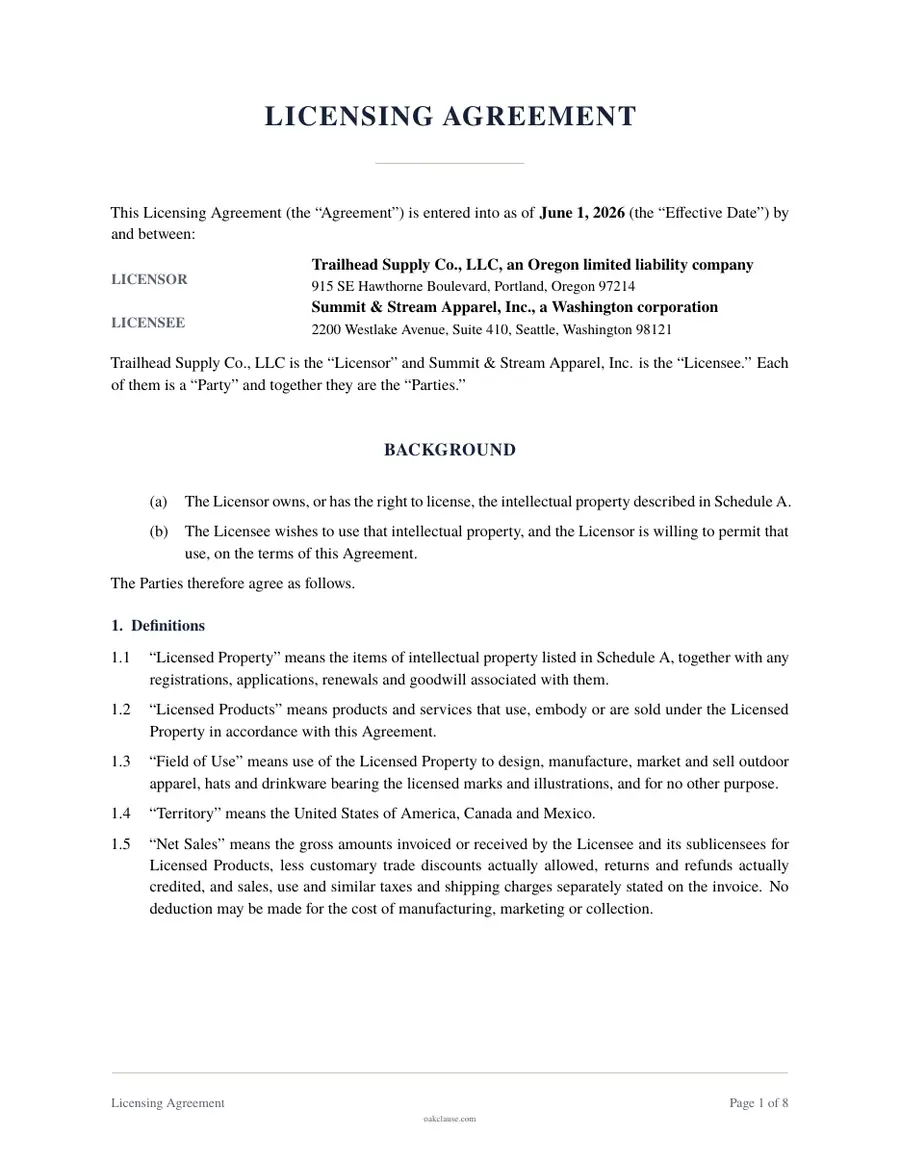
An assignment transfers ownership, so the original owner no longer holds the rights. A license gives permission to use the work while the owner keeps ownership. If you only need to use a work, a licensing agreement may be a better fit.
What is the difference between an assignment and a work made for hire?
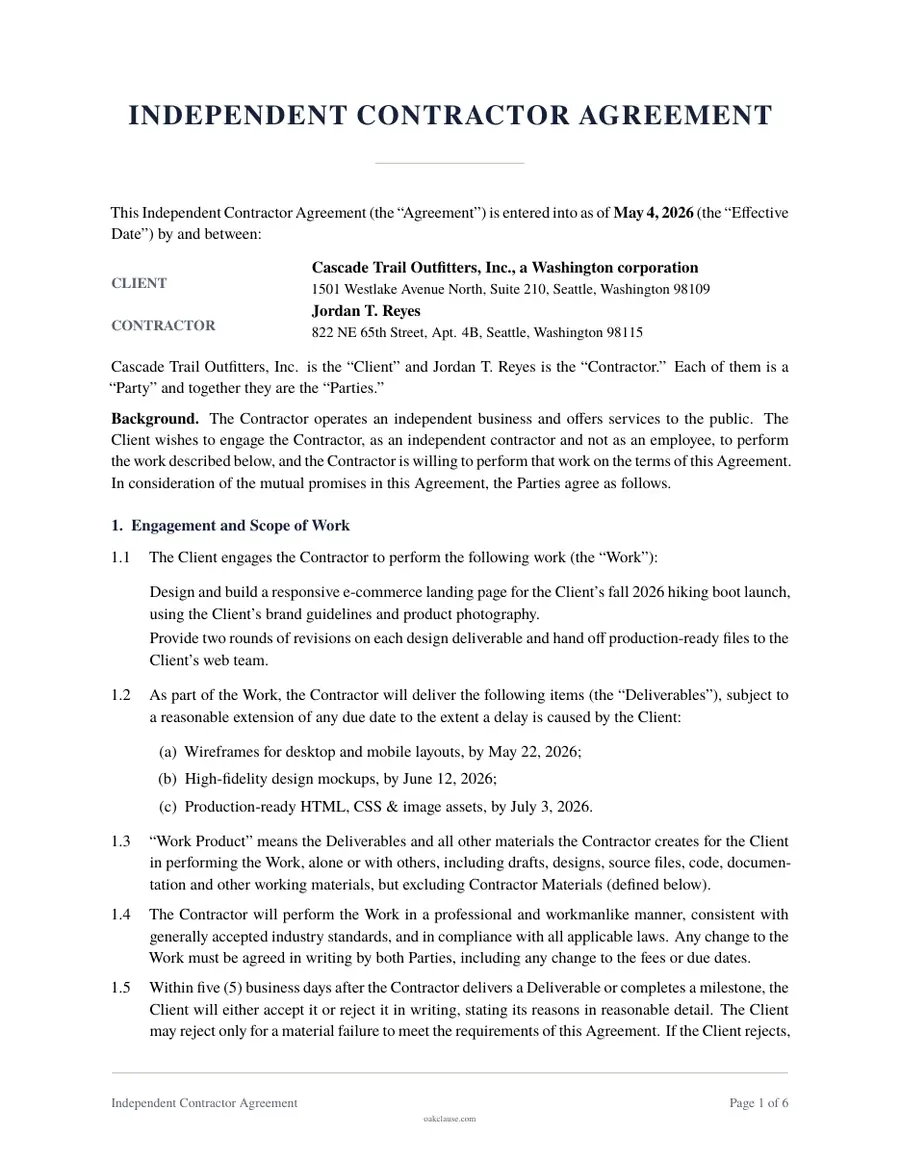
A work made for hire is owned by the employer or commissioning party from the moment it is created, but only for employees acting within their job or for certain categories of commissioned work with a signed agreement. An assignment transfers ownership after creation and works for any type of work, which is why many contracts use both.
Do I need to register the copyright before assigning it?
No. Copyright exists automatically once a work is fixed in a tangible form, and unregistered works can be assigned. If the work is registered, including the registration number makes the assignment easier to match to the public record.
Should a copyright assignment be notarized?
Notarization is not required for the transfer to be valid. A notary acknowledgment is useful evidence that the assignor really signed it, which can help if the assignment is ever challenged or recorded with the Copyright Office.
Should I record the assignment with the U.S. Copyright Office?
Recording is optional but gives public notice of the transfer and can help protect the assignee if the assignor later tries to transfer the same rights to someone else. The Copyright Office charges a fee to record documents.
What are moral rights?
Moral rights are an author's rights to be credited and to object to distortion of the work. In the United States they apply mainly to certain works of visual art. A waiver lets the assignee modify, adapt or publish the work without crediting the author, to the extent the law allows.
Can the author ever get the copyright back?
Federal law gives individual authors, and in some cases their heirs, a right to terminate many transfers during a window that begins 35 years after the transfer. This right generally cannot be waived by contract and does not apply to works made for hire. An attorney can explain how it may affect a particular deal.