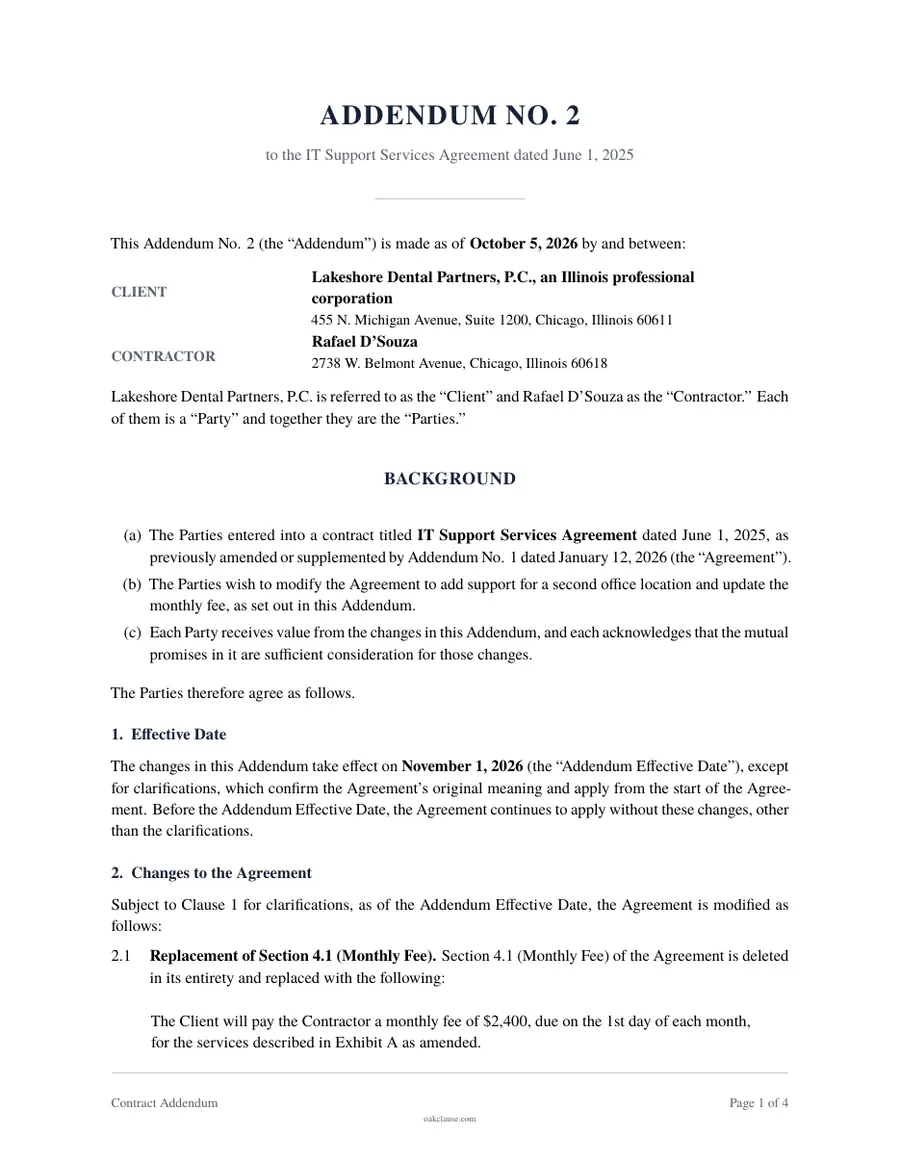
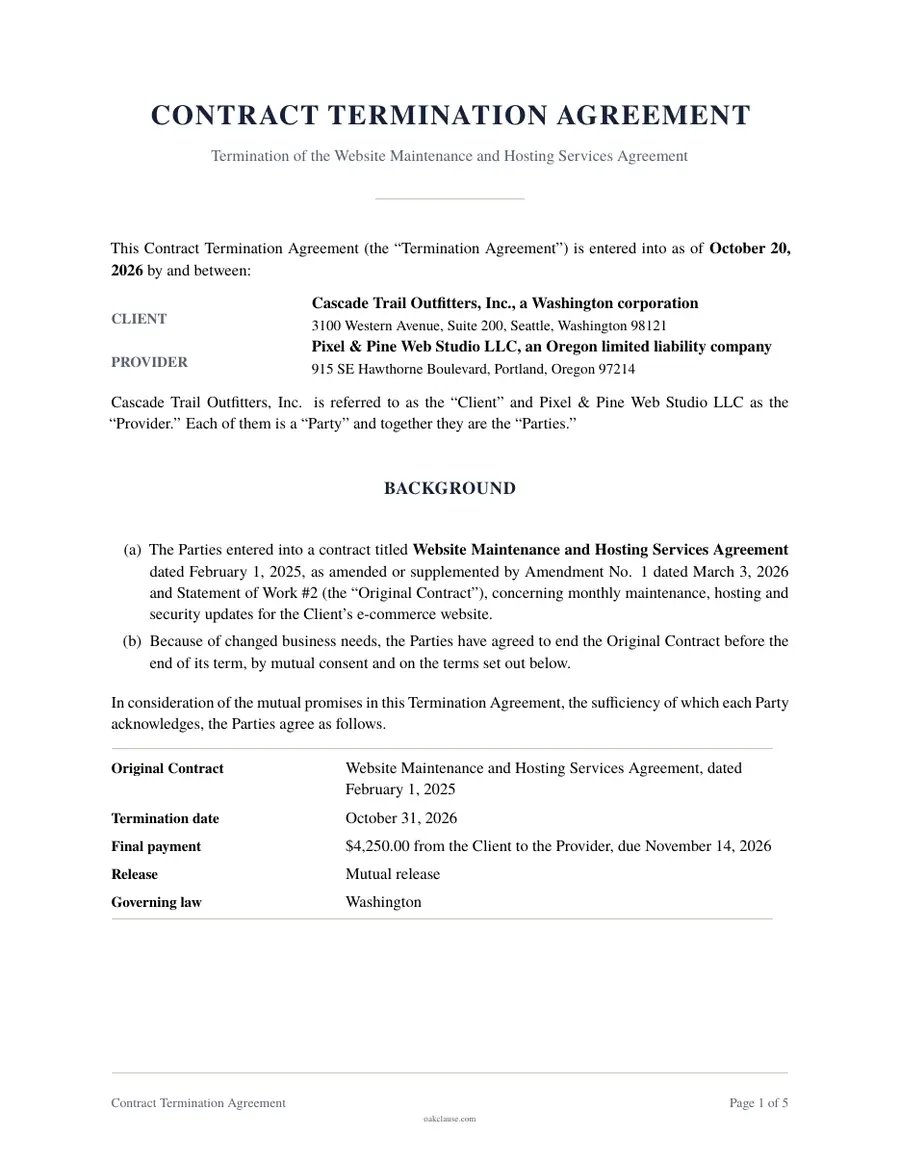
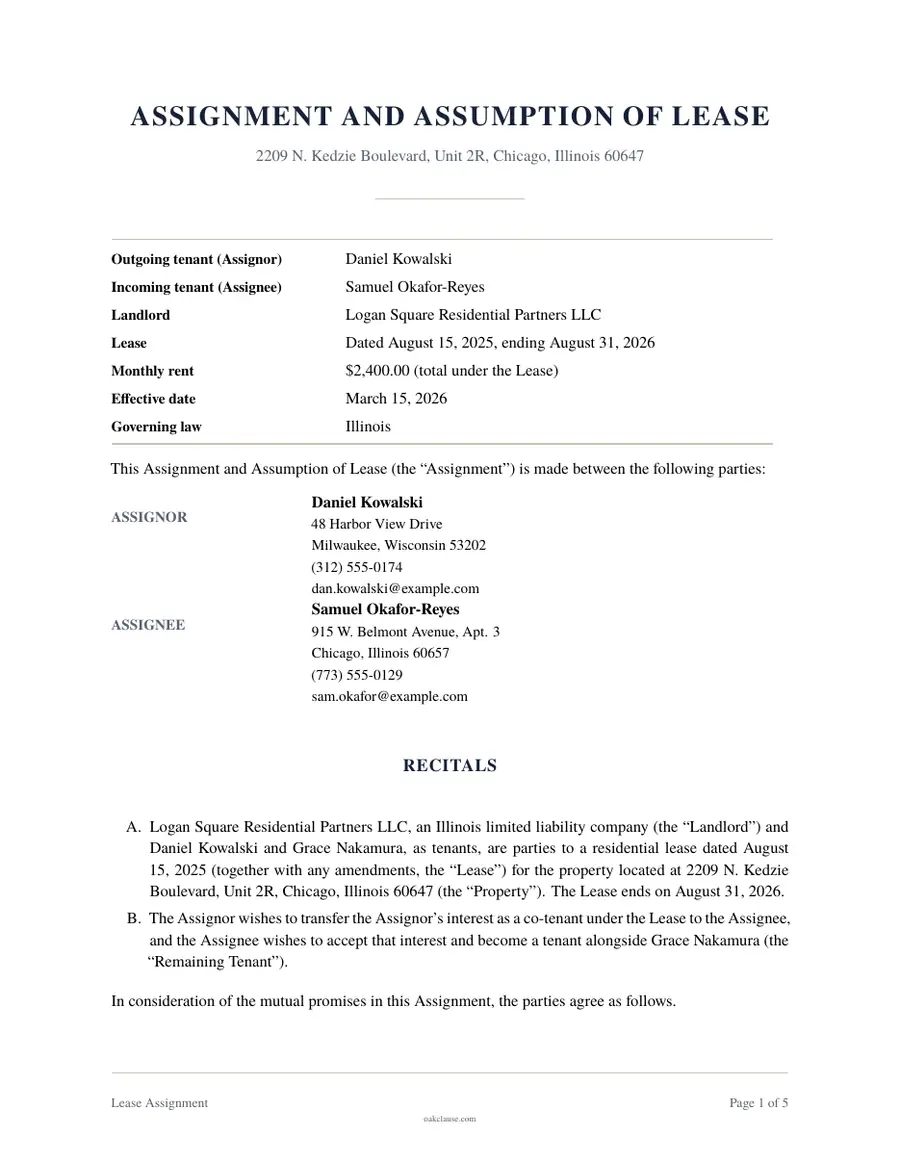
Assignment Agreement
Hand over your rights, and if you choose your duties, under an existing contract to another person or business with a clear written assignment that records exactly what moves and when.
Includes 30 days of edits
- 5 to 20 minutes
- Print-ready PDF
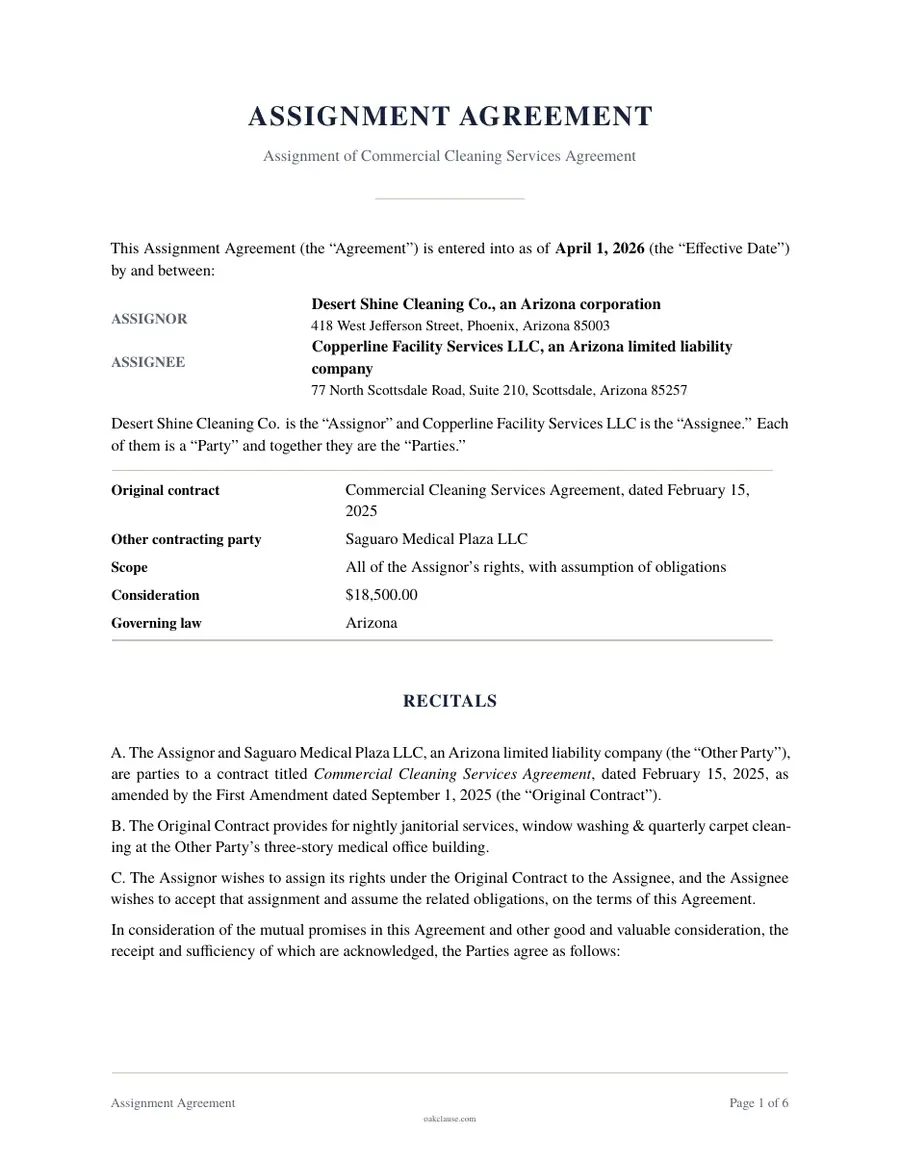
What is an Assignment Agreement?
An assignment agreement is a contract in which one party (the assignor) transfers its rights under an existing contract to someone else (the assignee). It is often paired with a delegation of duties, so the assignee also takes over the work, payments or other obligations the assignor owed under the original contract.
Assignments are common when a business is sold, when a contractor hands a job to another firm, when a buyer passes a purchase contract to an investor, or when someone wants to collect payments owed under a contract without staying involved. The agreement identifies the original contract, describes what is being transferred, records any price paid for the transfer and sets out the promises each side makes about the contract.
Many contracts limit assignment or require the other original party to agree first. Even with consent, the assignor usually stays responsible for the original obligations unless the other party expressly releases it. This document lets you add a consent and release section for the other party to sign, so everyone's position is recorded in one place.
When to use it
- You are selling a business or a business line and need to move customer, supplier or service contracts to the buyer.
- You signed a contract you can no longer perform and another person or company has agreed to step in.
- You want to transfer the right to receive payments under a contract in exchange for a lump sum.
- You are a real estate buyer passing your purchase contract to another buyer, where the contract allows it.
- A related company is taking over contracts as part of an internal reorganization.
What is included
- Identification of the original contract, its date and the other contracting party
- Full or partial assignment of rights, with a description of anything excluded
- Optional assumption of obligations by the assignee from the effective date
- Consideration paid for the assignment and when it is due
- Assignor's promises about the contract, its authority and prior transfers
- Indemnification for losses before and after the effective date
- Consent of the other contracting party, with an optional release of the assignor
- Governing law, dispute resolution and general provisions
- Signature blocks for individuals or business signers, with an optional notary acknowledgment
How to make your Assignment Agreement
Answer the questions
Tell us about the parties and the terms you want. Most documents take about 5 to 20 minutes.
Review the preview
Check the draft as you go and change any answer. The document updates instantly.
Download, sign and keep a copy
Download a print-ready PDF, sign it with the other parties, and give everyone a copy.
Frequently asked questions
What is the difference between an assignment and a delegation?
An assignment transfers rights, such as the right to be paid or to receive goods. A delegation transfers duties, such as the obligation to perform work. This agreement can transfer rights only, or rights together with the assignee's assumption of the related obligations.
Do I need the other party's permission to assign a contract?
It depends on the contract and the law that governs it. Many contracts say they cannot be assigned without written consent, and some kinds of contracts, such as those for personal services, generally cannot be assigned without consent at all. Read the assignment clause in the original contract before you sign anything.
Am I off the hook once I assign a contract?
Usually not. As a general rule, the original party remains responsible to the other contracting party if the assignee fails to perform, unless that party agrees to release it. This document includes an optional release the other party can sign, which works much like a novation.
What is a novation?
A novation replaces one party to a contract with a new party, with everyone's agreement, and releases the departing party from future obligations. An assignment with a signed consent and release from the other party achieves a similar result.
Can I assign only part of a contract?
Yes, where the contract and the law allow it. You can describe the specific rights being transferred, such as the right to payments after a certain date, and the rest stays with the assignor.
Does an assignment agreement need to be notarized?
Most contract assignments are valid without a notary. Notarization can still be useful as proof of signing, and it may be needed if the assignment will be recorded with a government office, for example when it relates to real estate.
Should I attach the original contract?
It is good practice. Attaching a copy of the original contract, or at least delivering one to the assignee, avoids later disagreement about what was transferred. This agreement includes a promise that the assignor has provided a true copy.
Is this the right document for intellectual property?
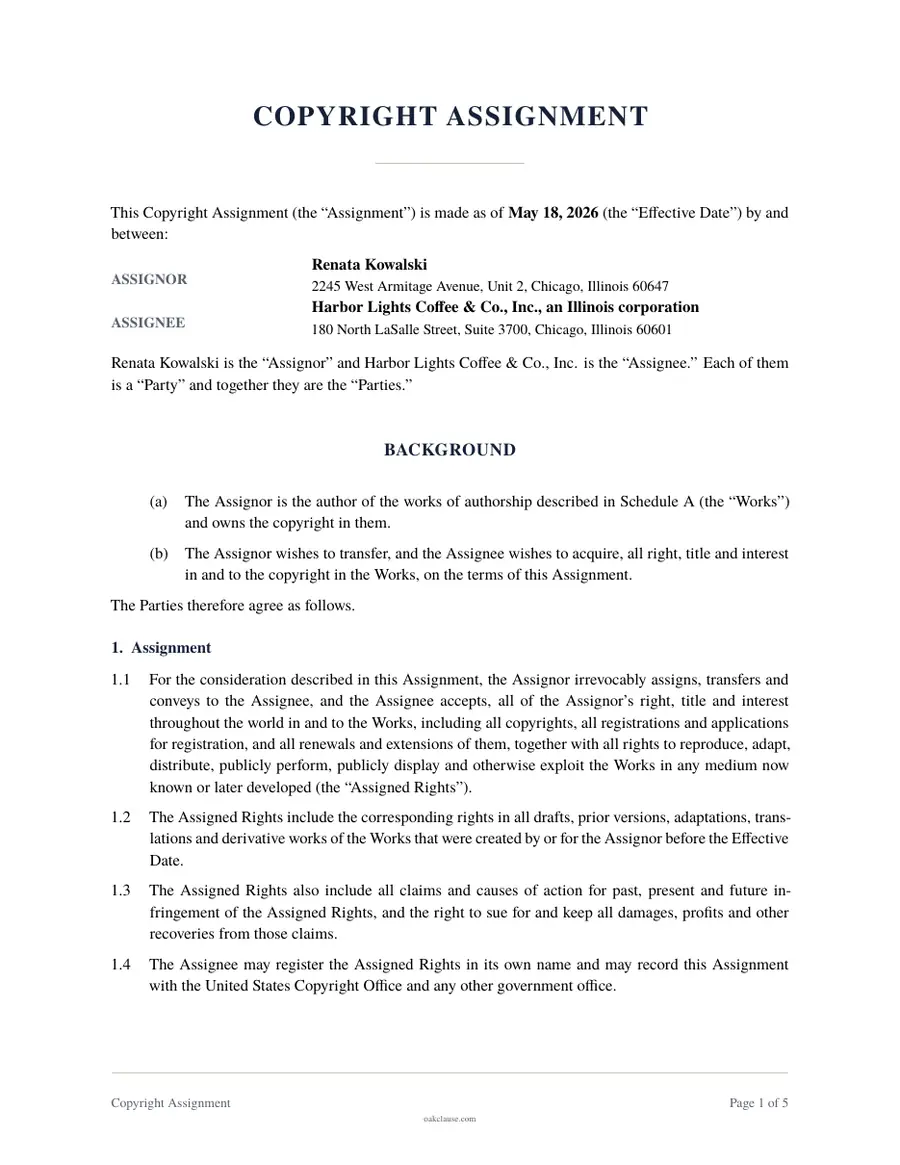
For transferring ownership of a copyright or trademark itself, a dedicated copyright assignment or trademark assignment is usually a better fit. This agreement is designed for transferring rights and duties under an existing contract.