Photo and Model Release
Get clear, written permission to photograph or film someone and use their image, likeness and voice.
Includes 30 days of edits
- 5 to 20 minutes
- Print-ready PDF
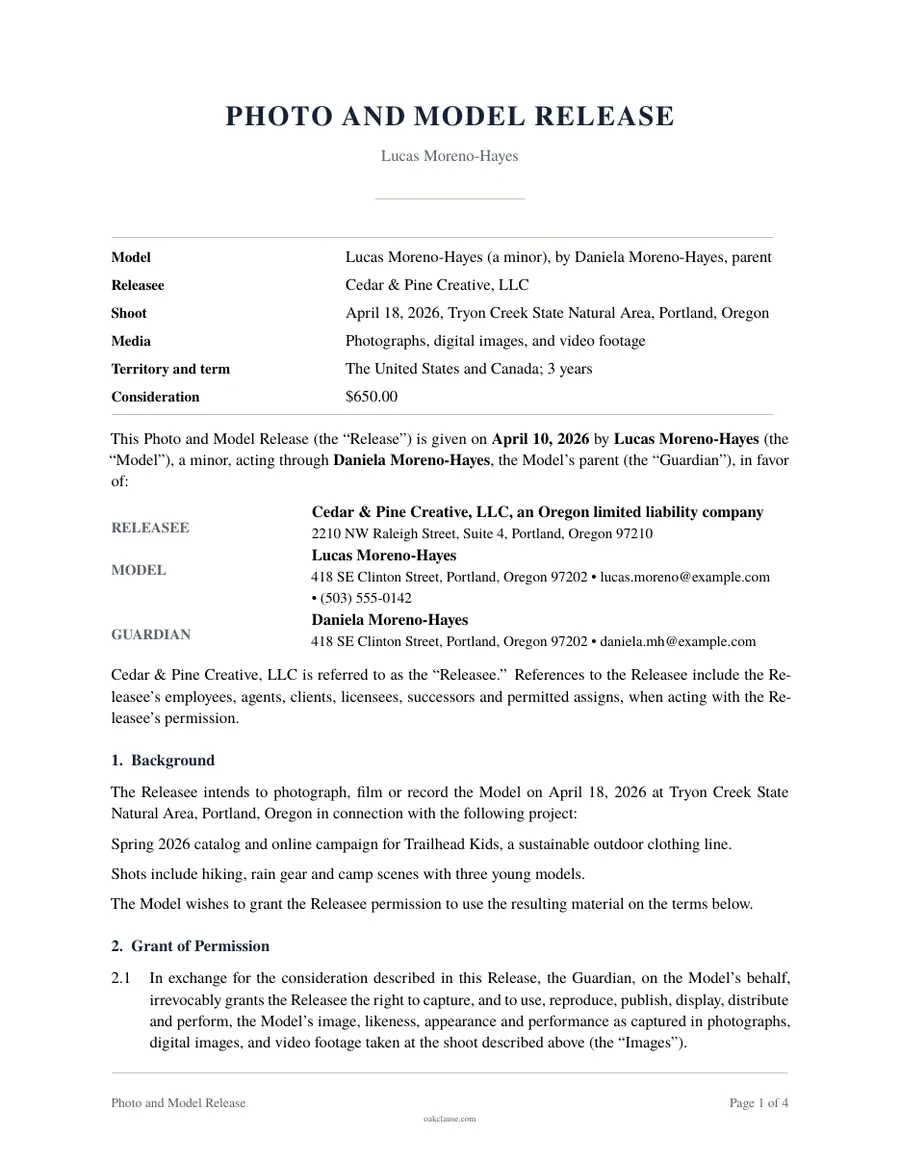
What is a Photo and Model Release?
A photo and model release is a short agreement in which a person (the model) gives a photographer, filmmaker, brand or organization permission to capture and use their image. Beyond photographs, a release can cover video footage, audio recordings of the person's voice, and their name or biographical details used alongside the images.
Most states recognize a right of publicity or a right of privacy that lets people control commercial use of their identity. A signed release is the usual way to show that the person agreed to be photographed and agreed to the specific uses you have in mind, such as advertising, a website, social media or stock licensing. Agencies, publishers and stock platforms often refuse to accept images of recognizable people without one.
This release lets you choose the media covered, the permitted uses, the territory and duration, whether images may be edited or combined, how the model is paid and credited, and whether the model may review images before publication. It also includes a parent or guardian consent section when the model is a minor.
When to use it
- You are hiring a model, actor or influencer for a photo shoot, video or commercial.
- You are photographing customers, employees or event attendees for marketing materials.
- You plan to sell or license images of recognizable people through a stock agency.
- You are a photographer building a portfolio and want permission to show your work publicly.
- You are filming interviews or testimonials and need permission to use a person's voice and words.
- You want to photograph a child and need a parent or guardian's written consent.
What is included
- Names and contact details of the model and the photographer or company
- Date, location and description of the shoot
- Media covered: photographs, video, audio and digital images
- Permitted uses, territory and duration of the release
- Editing, retouching and composite image permissions
- Use of the model's name and biographical information
- Payment or other consideration and photo credit
- Ownership of the images and right to license or assign
- Waiver of claims, with optional sensitive-use limits and review rights
- Parent or guardian consent for minors and signature blocks
How to make your Model Release
Answer the questions
Tell us about the parties and the terms you want. Most documents take about 5 to 20 minutes.
Review the preview
Check the draft as you go and change any answer. The document updates instantly.
Download, sign and keep a copy
Download a print-ready PDF, sign it with the other parties, and give everyone a copy.
Frequently asked questions
Do I always need a model release to photograph someone?
Not always. Many states allow photographs of people in public places to be used for news, commentary or art without permission. A release becomes important when an image of a recognizable person will be used commercially, such as in advertising, product packaging or stock licensing, because that is where right-of-publicity claims usually arise.
What is the difference between a photo release and a model release?
In practice the terms are used interchangeably. Both are written permissions from the person who appears in the image. Some people use photo release for casual or event photography and model release for professional shoots, but the legal function is the same.
Does the model have to be paid for the release to be valid?
A contract is generally stronger when the model receives something of value, such as a fee, free photos or products. This release lets you record payment, non-cash consideration, or state that the model is signing without payment. Whether an unpaid release is enforceable can depend on the state and the circumstances.
Can a minor sign a model release?
Minors generally cannot enter binding contracts on their own, so a parent or legal guardian should sign on the child's behalf. Some states have additional rules for child performers, such as work permits or court approval of certain contracts, so check local requirements for paid work involving children.
Can the model cancel the release later?
The release states that it is irrevocable, which means the model cannot withdraw permission for images already taken under it. That is standard because the photographer or company may have already invested in using the images. The parties can always agree in writing to change or end the release.
Who owns the photos after the release is signed?
A model release is about permission to use the person's likeness, not about copyright. Copyright in a photo normally belongs to the photographer or their employer. This release confirms that the model does not claim ownership of the images, and lets you decide whether the photographer may license or transfer the rights to others.
Should I limit how the images can be used?
That is a business choice. A broad release covering all media worldwide forever gives the most flexibility, while a narrower release may make a model more comfortable signing. You can also add a sensitive-use limit, which prevents the images from being used in a way that suggests the model endorses or is connected to subjects like politics, health conditions or adult content.
Does a model release need to be notarized or witnessed?
Model releases usually do not need to be notarized. Some photographers and agencies like to have a witness sign, especially for stock submissions, and you can add a witness line to this release.