Influencer Agreement
Agree on the posts, the payment and the fine print before a brand partnership goes live.
Includes 30 days of edits
- 5 to 20 minutes
- Print-ready PDF
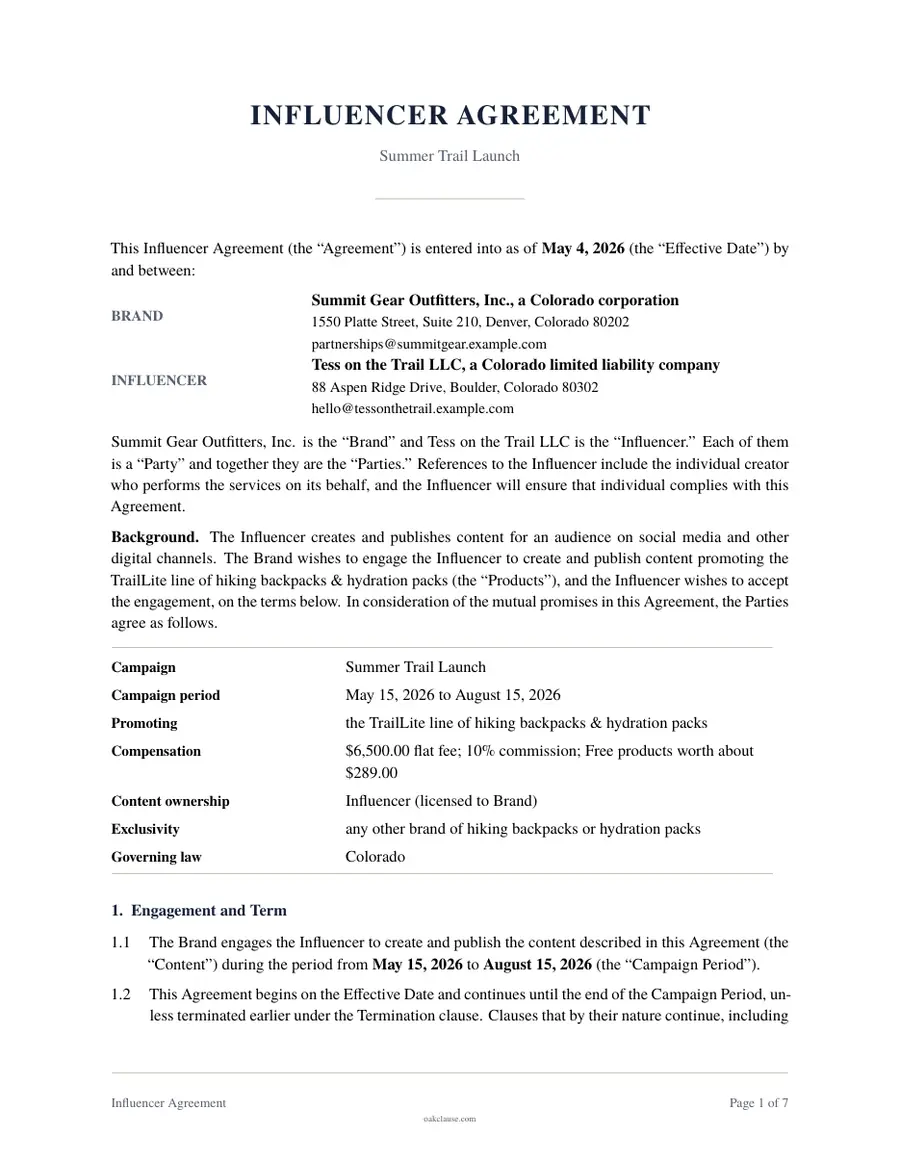
What is an Influencer Agreement?
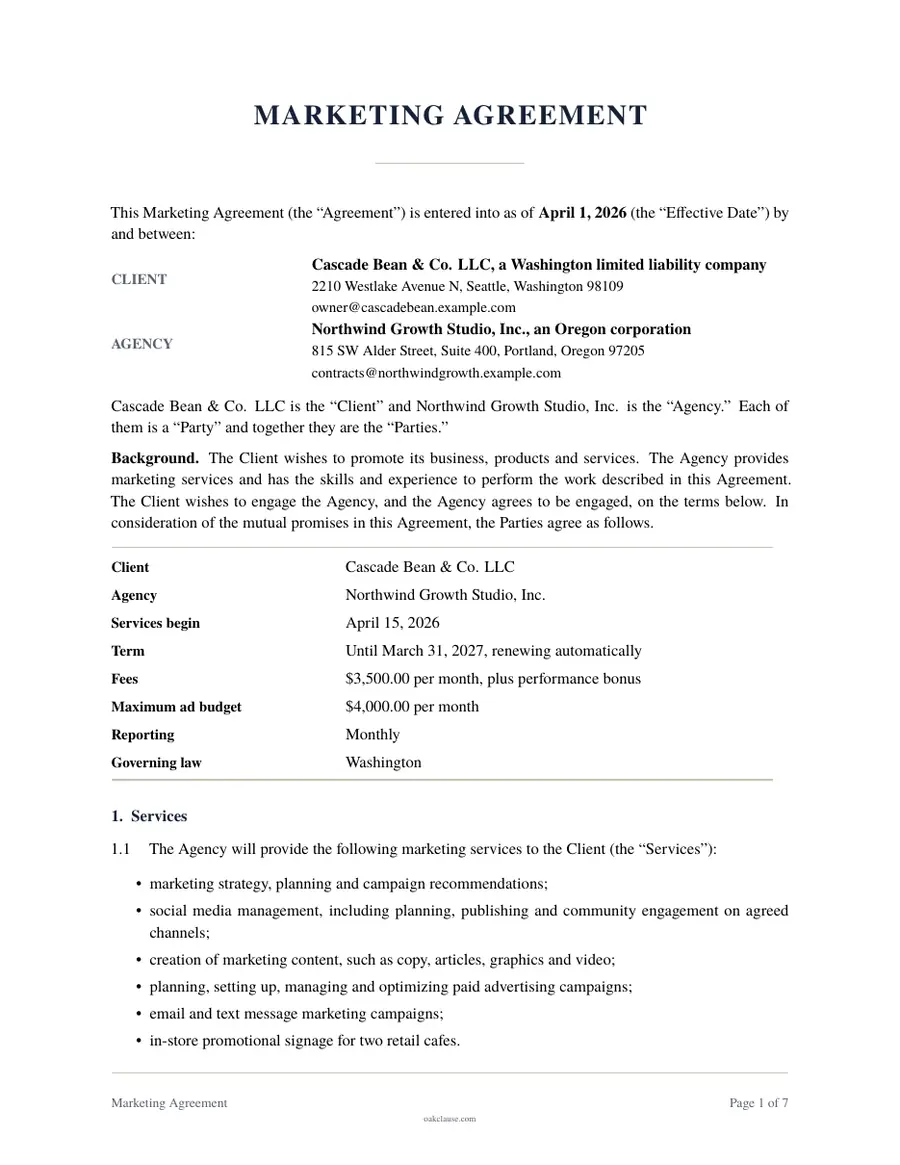
An influencer agreement is a contract between a brand and a content creator who promotes the brand's products or services to their audience. It may also be called a sponsorship agreement, brand ambassador agreement or creator partnership agreement.
The agreement turns a loose arrangement into clear commitments: how many posts, on which platforms, by what dates, what they must include, and whether the brand reviews them first. It also sets the creator's compensation, whether that is a flat fee, commission on sales, free products or a mix.
Two topics deserve special attention. First, sponsored content must be clearly disclosed, and both brands and creators can face scrutiny from the Federal Trade Commission if it is not. Second, the agreement decides who owns the content and how long, where and how the brand may reuse it, for example in paid ads run through the creator's account.
When to use it
- A brand is paying a creator, or sending free products, in exchange for social media posts, videos or reviews.
- You are a creator and want written terms before you accept a sponsorship or ambassador role.
- A brand wants to reuse a creator's content in its own ads, website or email campaigns.
- You want to require clear sponsorship disclosures and set rules on what the content can and cannot say.
- A brand wants the creator to avoid promoting competing products for a period of time.
What is included
- Campaign description and a deliverables schedule by platform
- Content guidelines, prohibited content and brand review process
- FTC-style sponsorship disclosure requirements
- Flat fee, commission, free product or combined compensation
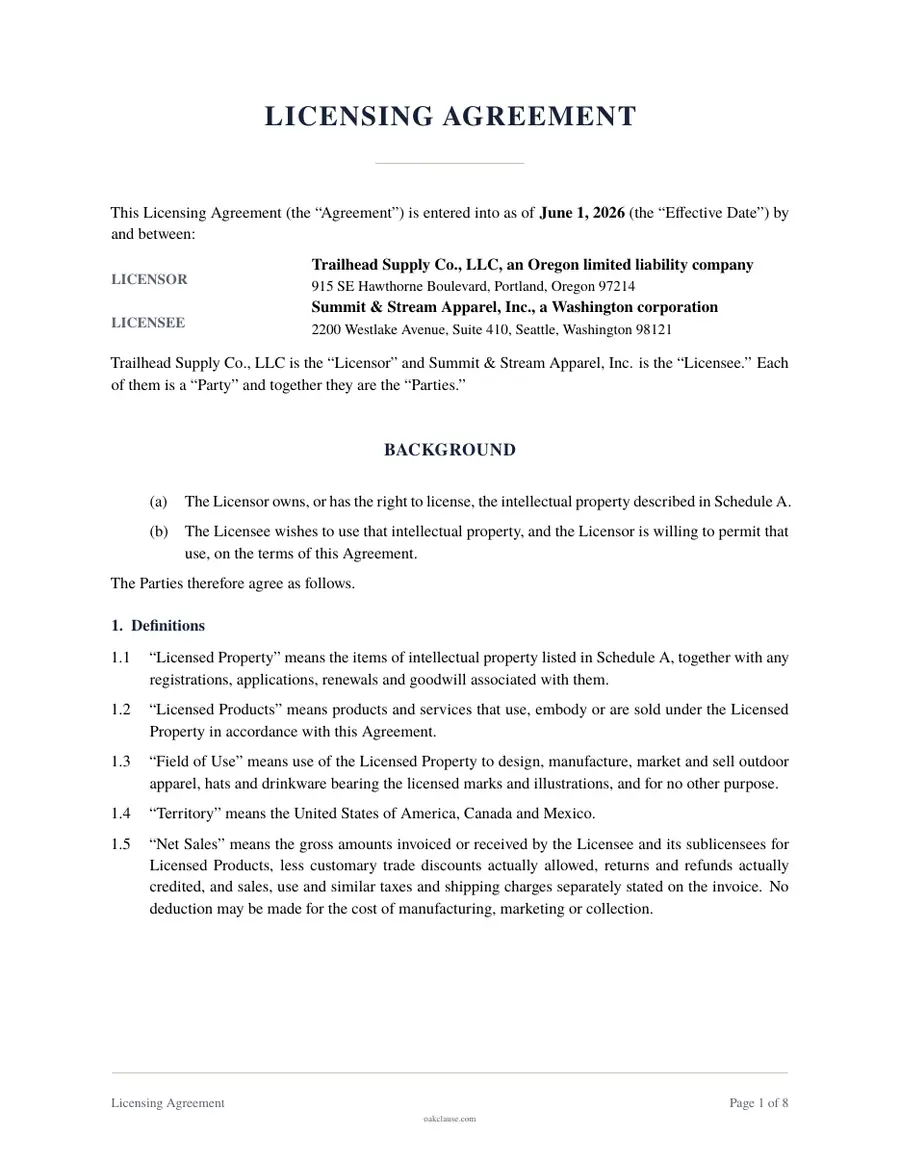
- Content ownership and the brand's usage rights and duration
- Optional paid amplification through the creator's account
- Optional exclusivity and conduct (morals) clause
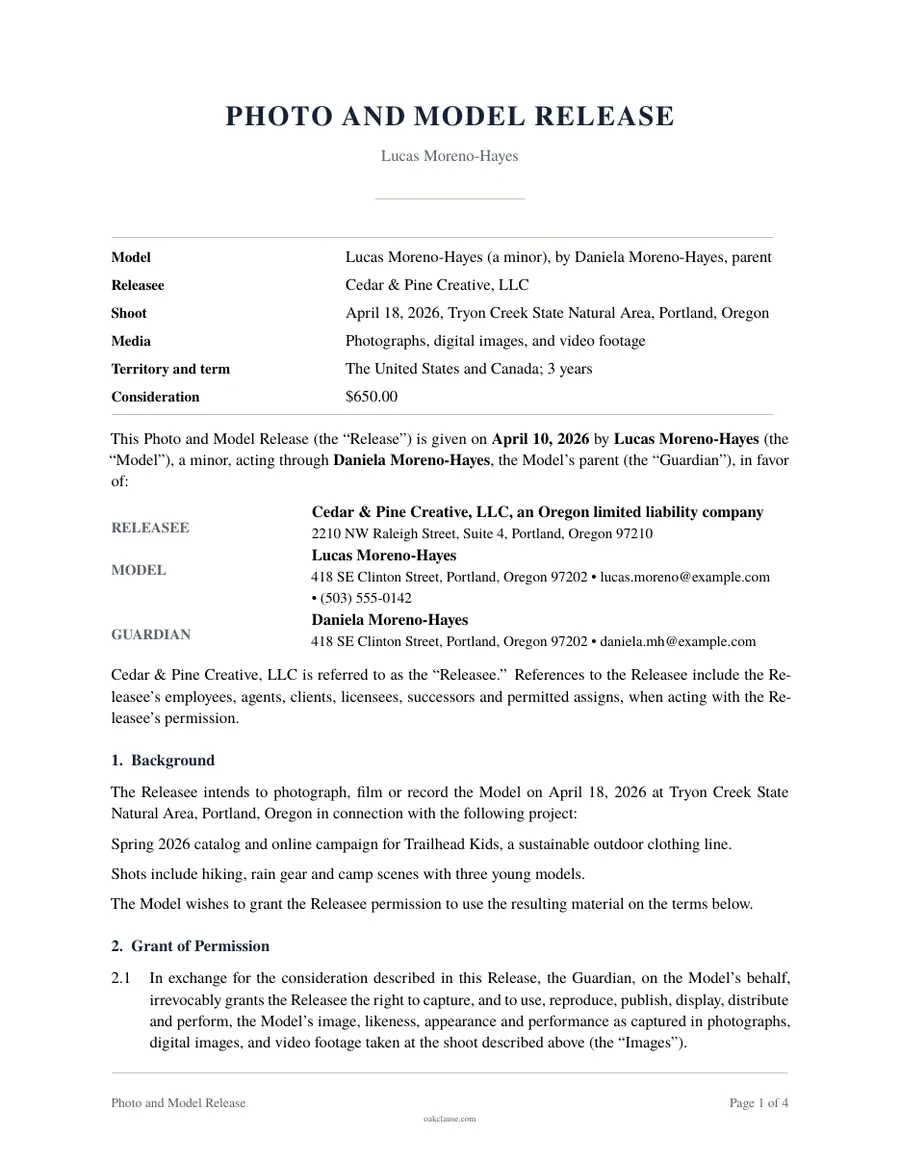
- Parent or guardian consent for creators who are minors
- Term, termination, confidentiality and governing law
How to make your Influencer Agreement
Answer the questions
Tell us about the parties and the terms you want. Most documents take about 5 to 20 minutes.
Review the preview
Check the draft as you go and change any answer. The document updates instantly.
Download, sign and keep a copy
Download a print-ready PDF, sign it with the other parties, and give everyone a copy.
Frequently asked questions
Do influencers have to disclose sponsored posts?
Yes. Under the Federal Trade Commission's Endorsement Guides, a material connection between a creator and a brand, such as payment or free products, must be disclosed clearly and conspicuously in the content itself. Labels such as #ad or a platform's paid partnership tool are common ways to do this.
What are usage rights in an influencer agreement?
Usage rights decide whether and how the brand may reuse the creator's content beyond the original post, for example on the brand's own social accounts, website, email or in paid advertising. Broader and longer usage usually commands a higher fee.
What is whitelisting or paid amplification?
It means the brand runs paid ads using the creator's handle and content, so the ad appears to come from the creator's account. It requires the creator to grant ad-platform access and is usually priced separately and limited in time.
Who owns the content an influencer creates?
Often the creator keeps ownership and grants the brand a license to use the content. Some brands require full ownership instead, which is typically more expensive. This agreement lets you choose either model.
Can a brand approve posts before they go live?
Yes, if the agreement says so. This agreement lets the brand require drafts a set number of days before posting, review them within a set time and request a limited number of revisions, while leaving the creator's honest opinion intact.
What is a morals clause?
A morals or conduct clause lets the brand end the partnership if the creator engages in conduct that brings them into public disrepute or conflicts with the brand's values. It protects the brand's reputation but should be drafted fairly.
Can a minor sign an influencer agreement?
A minor is anyone under the age of majority, which is 18 in most states but higher in a few. Contracts with minors can often be cancelled by the minor in many states, so brands typically require a parent or guardian to sign as well. Some states also require court approval or that part of a minor's earnings be set aside. Check the rules in the relevant state.
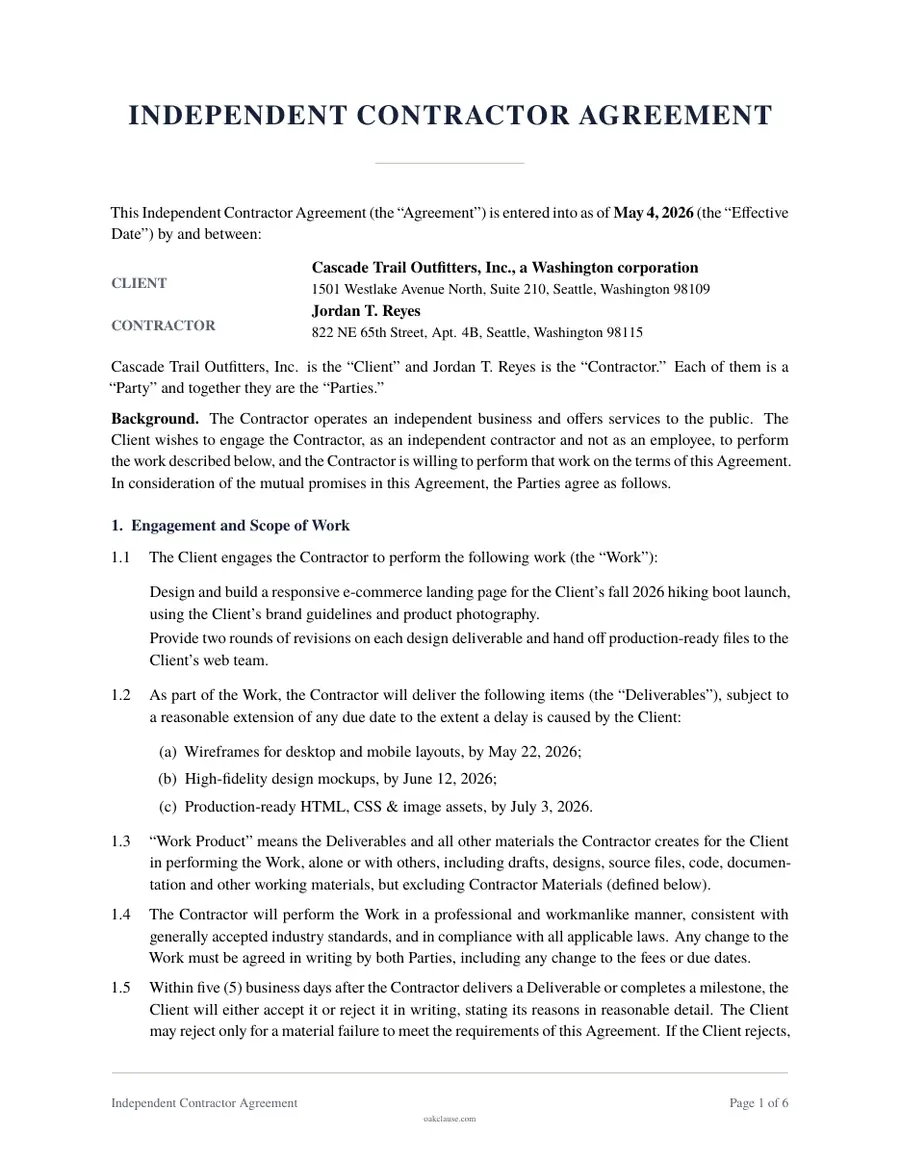
Does an influencer pay taxes on free products?
Free products received in exchange for promotion are generally treated as income for federal tax purposes, just like cash payments. Creators are independent contractors responsible for their own taxes. A tax professional can explain how this applies to a specific situation.