Marketing Agreement
Put a marketing engagement in writing before the first campaign goes live.
Includes 30 days of edits
- 5 to 20 minutes
- Print-ready PDF
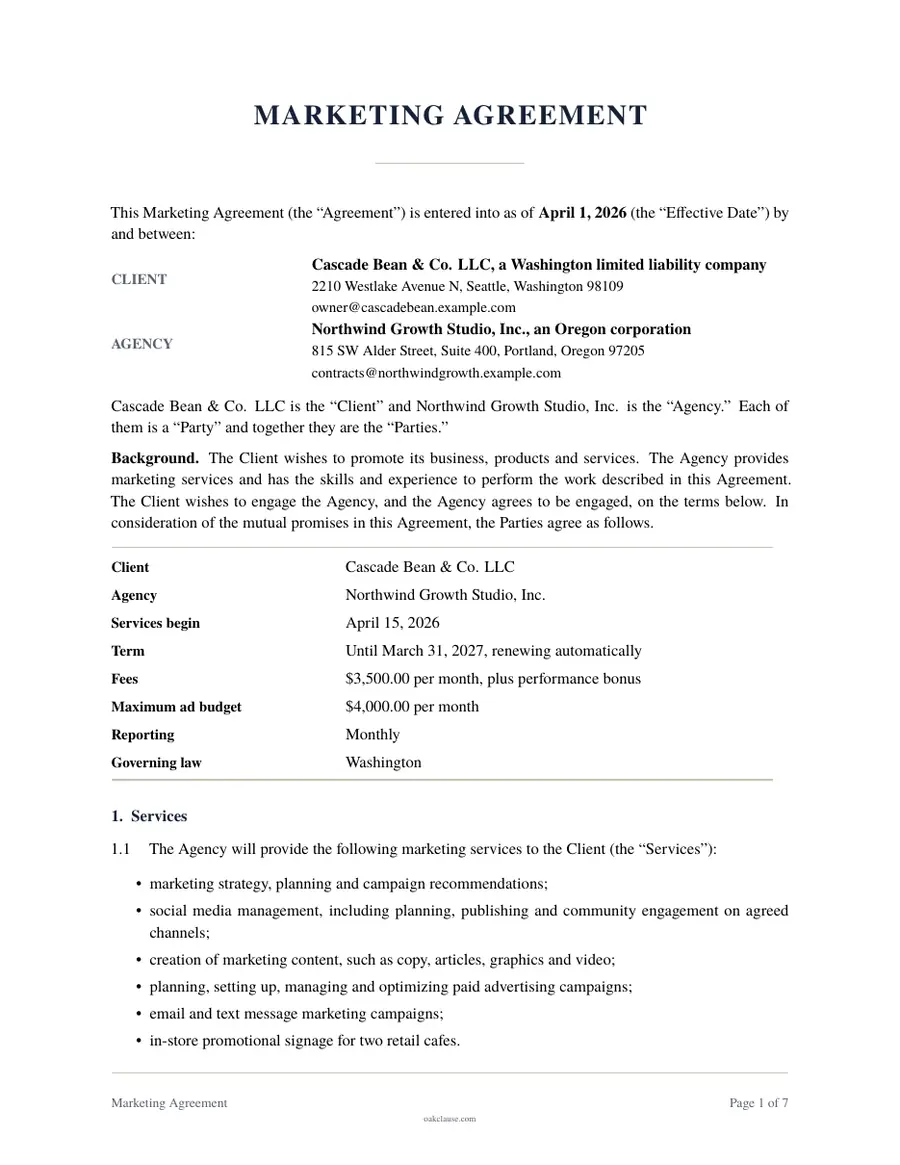
What is a Marketing Agreement?
A marketing agreement is a contract between a business and the agency, consultant or freelancer it hires to promote its products or services. It records what marketing work will be done, when it will be delivered, how much it costs and how results will be reported.
Marketing engagements often involve moving parts that a generic service contract does not address well: advertising budgets spent on third-party platforms, rounds of creative review, campaign performance metrics, and the question of who owns logos, copy, videos and ad accounts once the relationship ends. Settling those points at the start avoids the most common disputes.
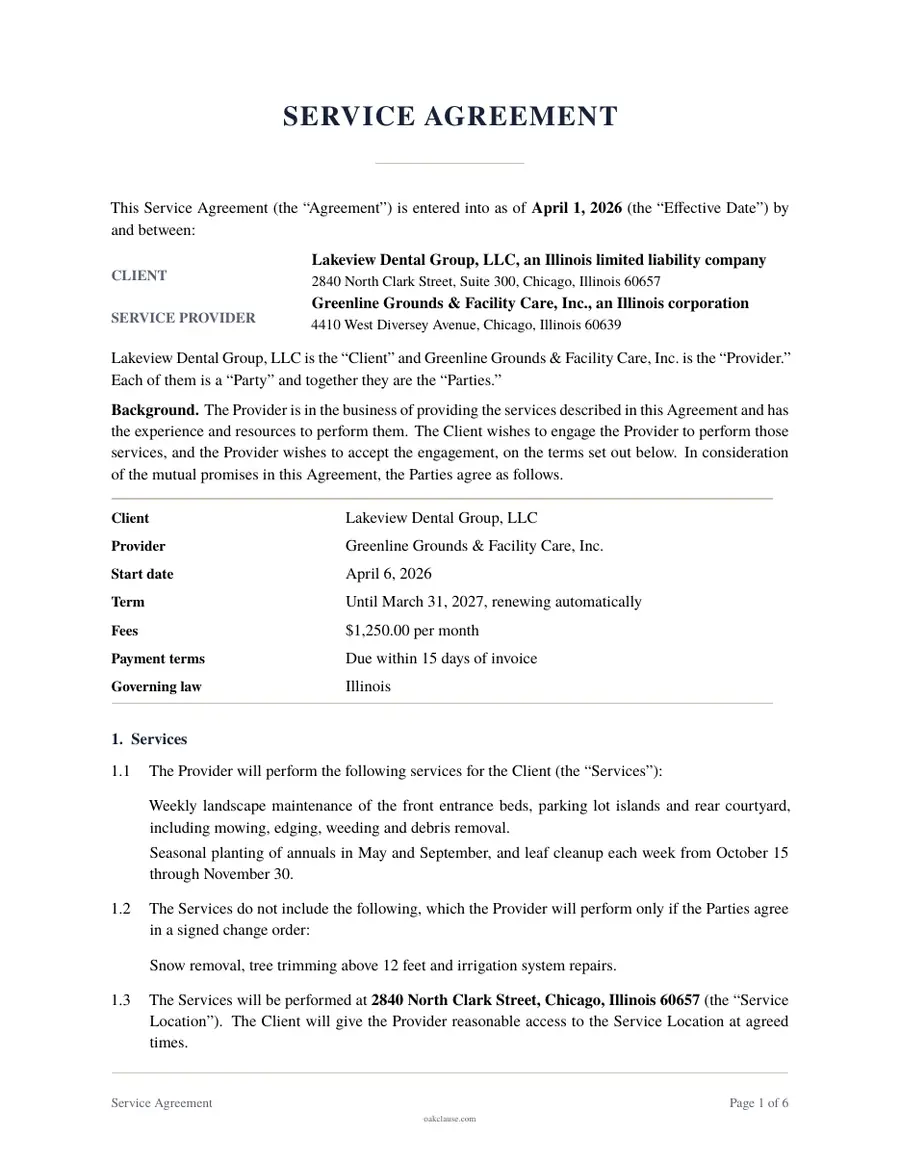
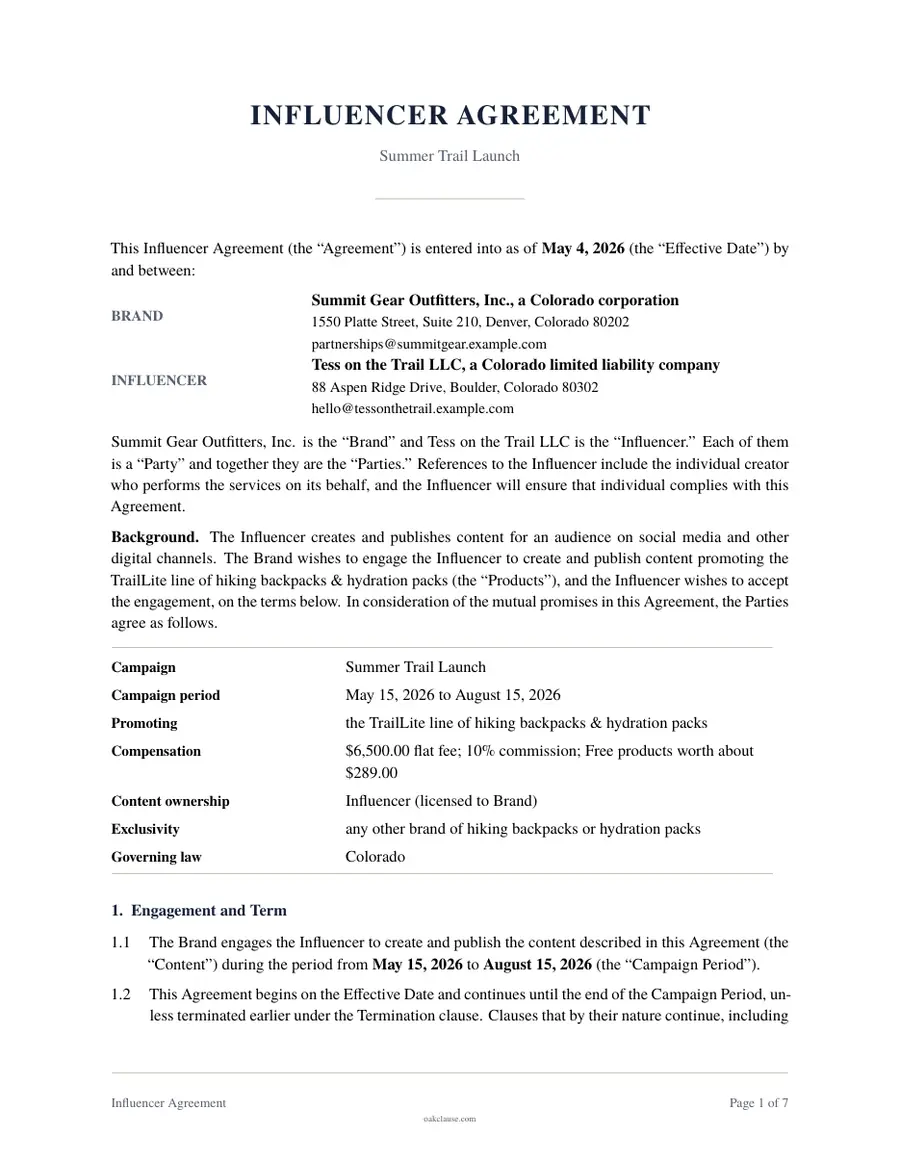
This agreement covers the scope of services and deliverables, retainer, project or hourly fees, optional performance bonuses, handling of ad spend, approvals, ownership of creative work, confidentiality, compliance with advertising laws, termination and the governing state's law.
When to use it
- You are hiring a marketing agency to run social media, paid ads, SEO or email campaigns for your business.
- You are a freelance marketer or consultant taking on a new client and want clear terms on scope and payment.
- You want to set a monthly retainer and define exactly what it covers.
- An agency will manage your advertising budget on platforms such as search engines or social networks.
- You need to make sure your business owns the logos, copy, designs and content created for it.
What is included
- Scope of marketing services and a list of deliverables
- Retainer, project or hourly fees and payment terms
- Optional performance bonus tied to agreed goals
- Advertising budget and ad-platform payment arrangements
- Reporting schedule and key performance indicators
- Review, revision and approval process for creative work
- Ownership of creative work and portfolio rights
- Compliance with advertising, endorsement and anti-spam laws
- Confidentiality, non-solicitation and optional exclusivity
- Term, termination, liability limits and governing law
How to make your Marketing Agreement
Answer the questions
Tell us about the parties and the terms you want. Most documents take about 5 to 20 minutes.
Review the preview
Check the draft as you go and change any answer. The document updates instantly.
Download, sign and keep a copy
Download a print-ready PDF, sign it with the other parties, and give everyone a copy.
Frequently asked questions
What is the difference between a marketing agreement and a service agreement?
A marketing agreement is a specialized service agreement. It adds terms that matter for marketing work, such as ad spend, campaign reporting, creative approvals, ownership of creative assets and compliance with advertising and endorsement rules.
Should I pay a monthly retainer or a project fee?
Retainers suit ongoing work such as social media management or SEO, where the effort continues month to month. Project fees suit defined work with a clear end, such as a website launch campaign or a brand refresh. Hourly billing is common for open-ended advisory work.
Who should pay the advertising platforms directly?
Many businesses prefer to pay ad platforms directly from their own accounts so they keep control of the spend and the account history. Others let the agency pay and reimburse it, sometimes with a management markup. This agreement supports both approaches.
Who owns the creative work an agency produces?
It depends on the contract. Without a written agreement, the creator may keep the copyright in many situations. This agreement lets you choose whether ownership transfers to the client on payment or the agency keeps ownership and grants the client a license.
Can a marketing agency guarantee results?
Most agencies avoid guaranteeing specific sales, rankings or follower numbers because results depend on factors outside their control. This agreement states that results are not guaranteed, but you can reward strong performance with an optional bonus.
Do marketing campaigns have to follow any laws?
Yes. Advertising must not be deceptive, endorsements and sponsored content must be disclosed under Federal Trade Commission guidance, and email and text marketing are subject to federal laws such as the CAN-SPAM Act and the Telephone Consumer Protection Act, along with state rules.
How can a marketing agreement be ended early?
This agreement lets either party end it with written notice after a period you choose, or sooner if the other party breaches and does not fix the problem in time. The client pays for work performed up to the termination date.
Does a marketing agreement need to be notarized?
No. A marketing agreement is valid once both parties sign it. Electronic signatures are generally accepted for business contracts under federal and state e-signature laws.