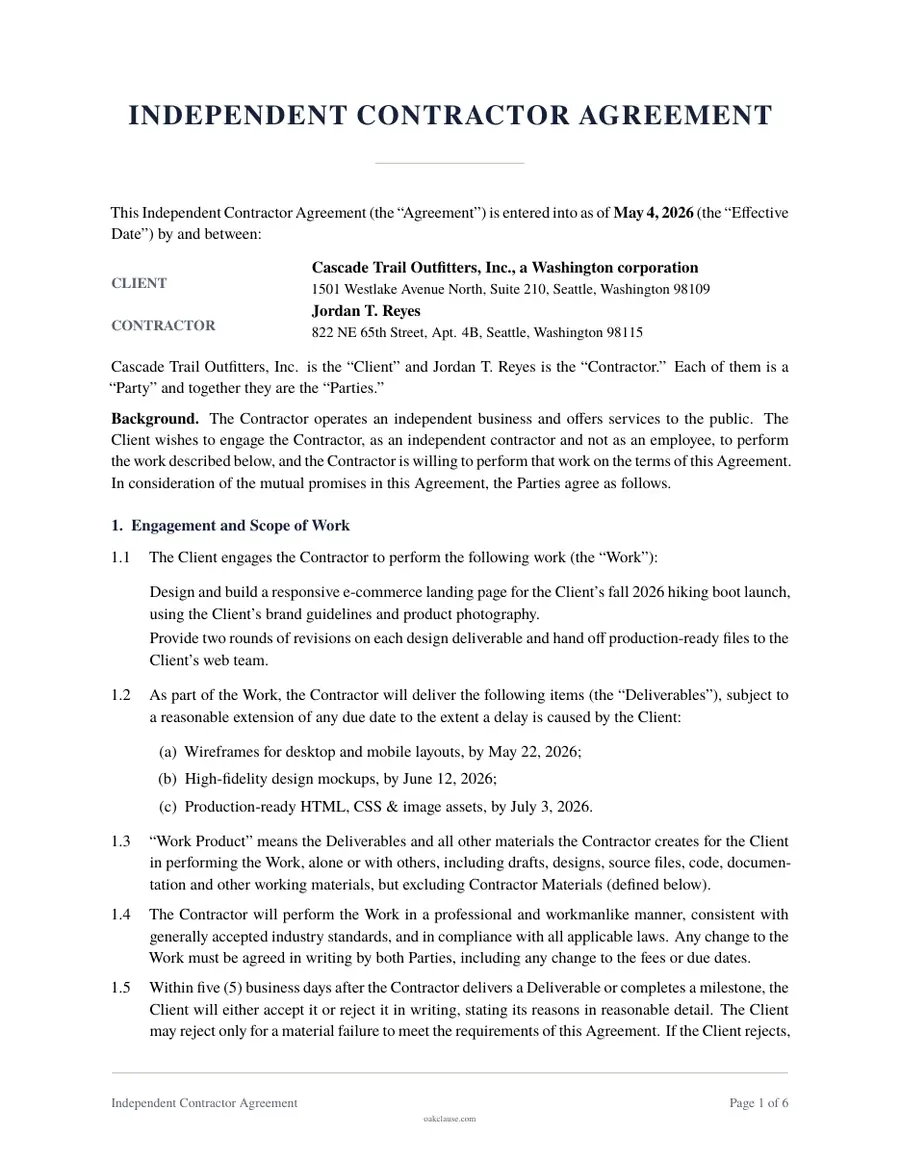
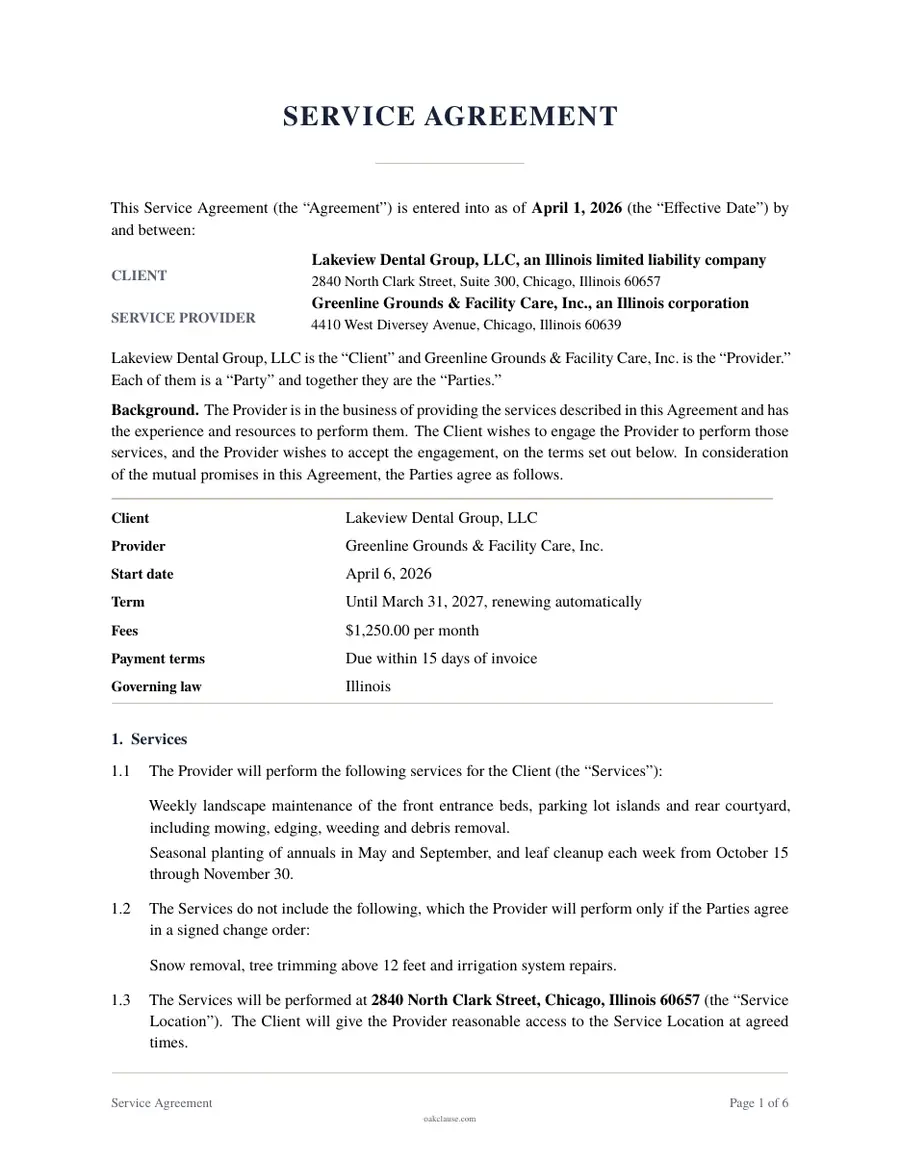
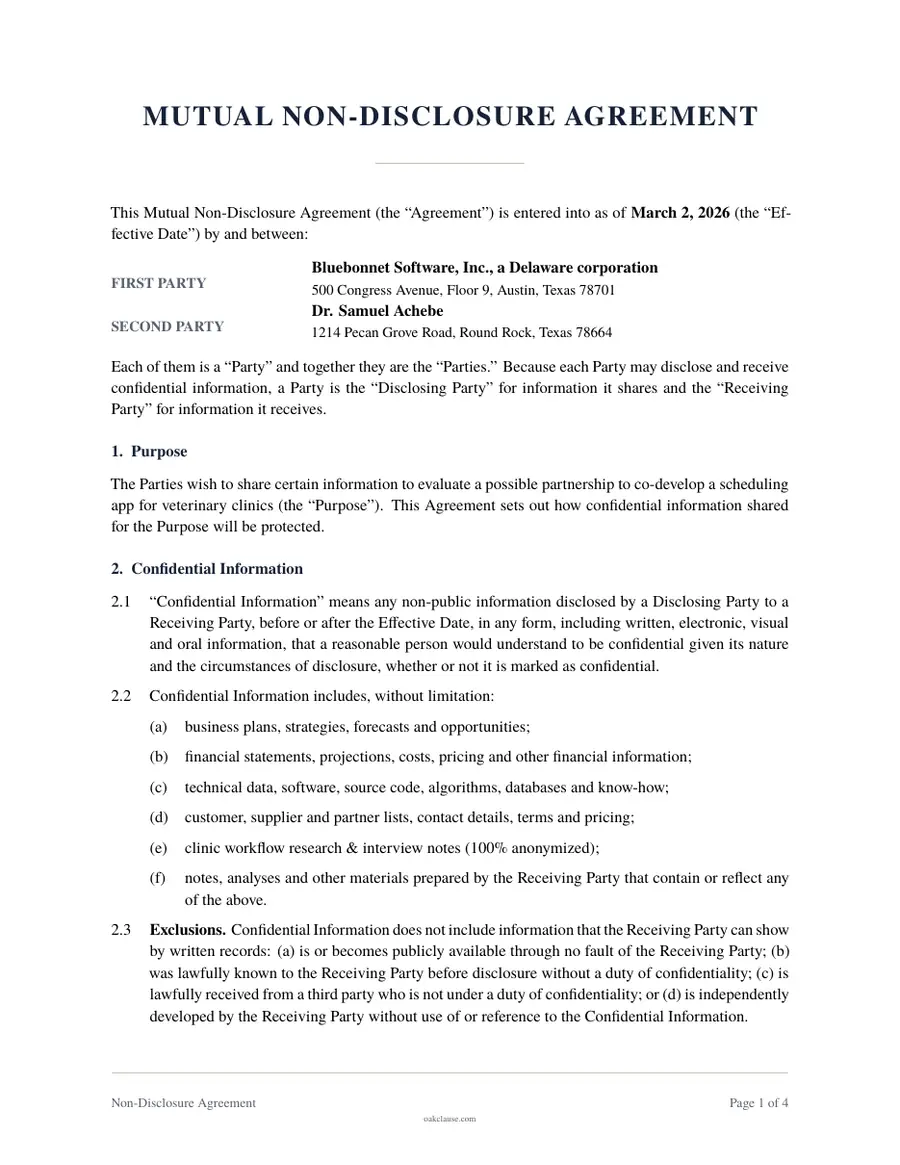
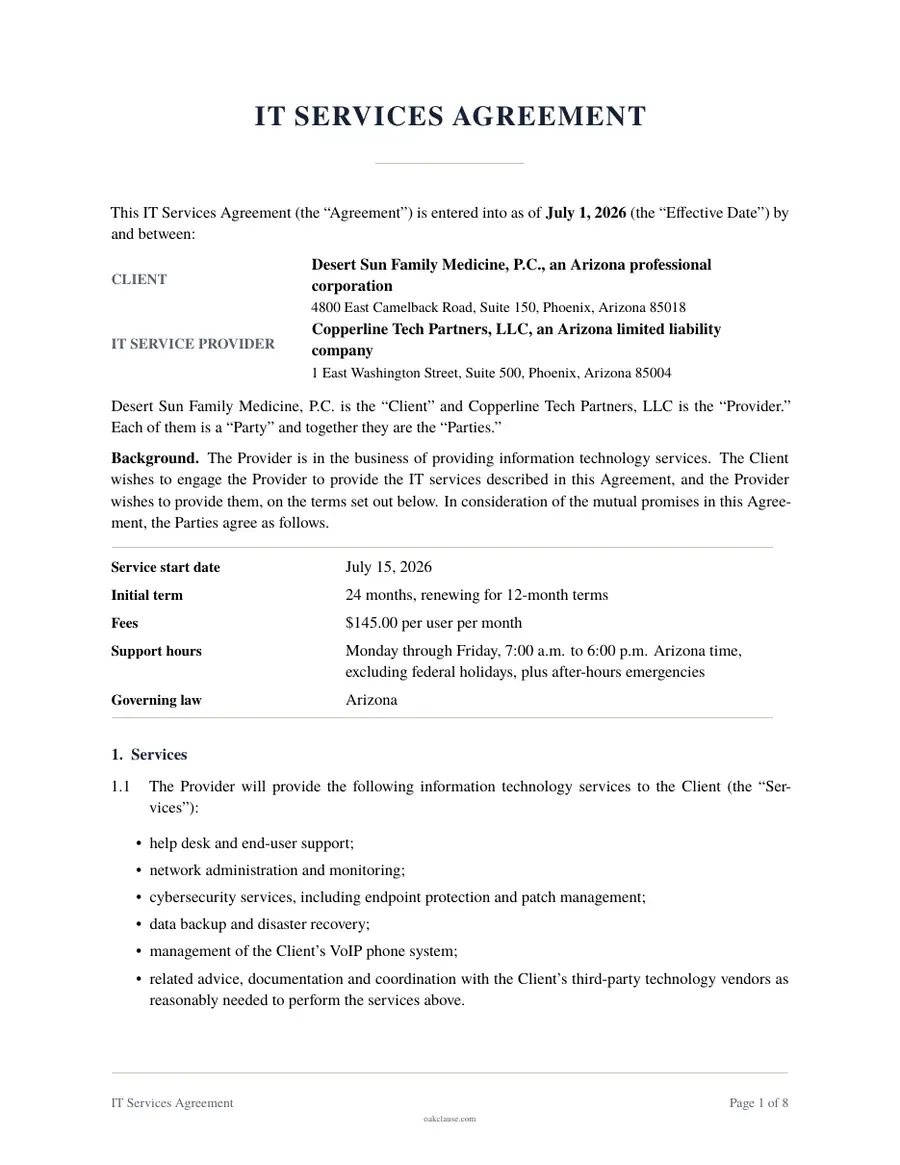
Consulting Agreement
Set clear expectations for an advisory engagement, from the scope of the advice and the fee structure to confidentiality and ownership of reports.
Includes 30 days of edits
- 5 to 20 minutes
- Print-ready PDF
What is a Consulting Agreement?
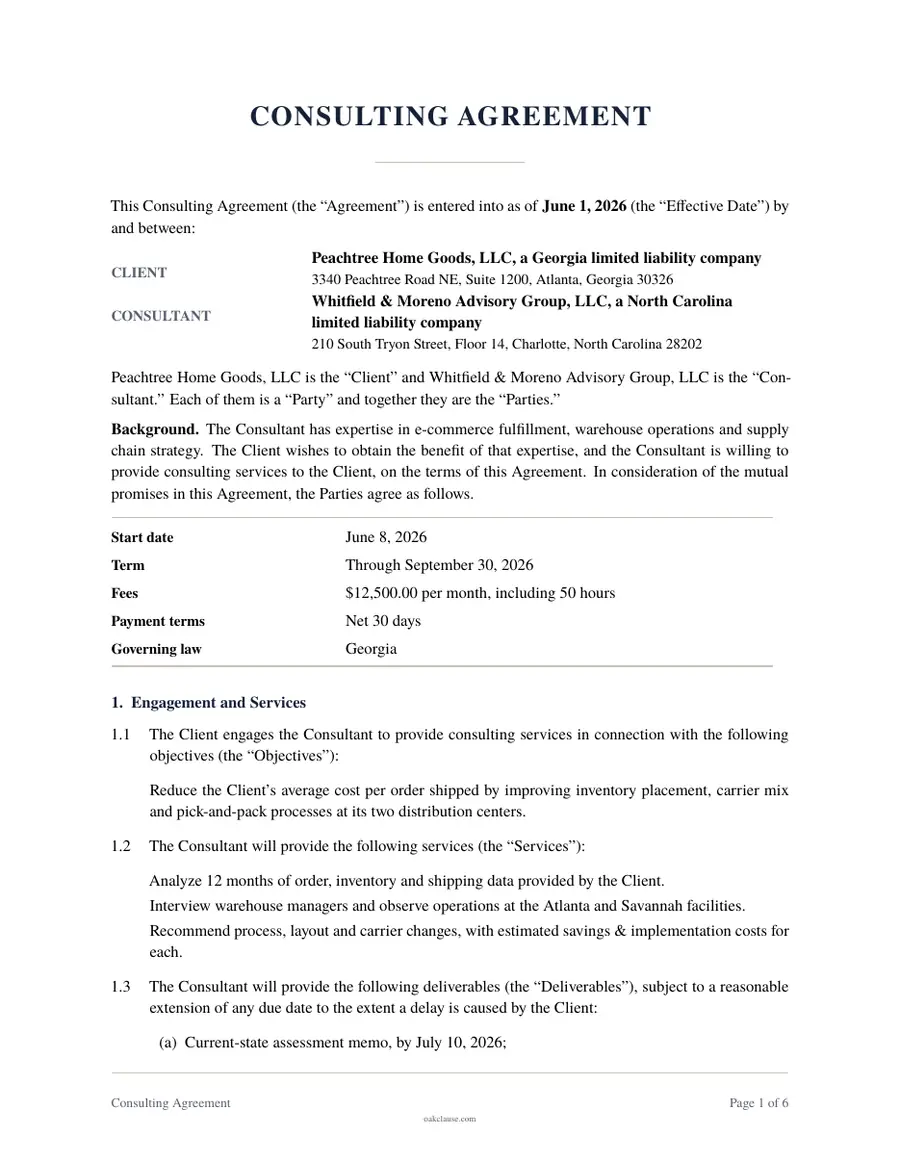
A consulting agreement is a contract between a client and a consultant who provides expert advice or specialized professional services. Consultants are typically engaged for their knowledge in a field such as strategy, finance, operations, marketing, technology, human resources or regulatory matters.
Unlike a general service contract, a consulting agreement is built around access to expertise. It usually describes the objectives of the engagement, how the consultant will report findings, how fees are calculated (by the hour, by the day, by project or through a monthly retainer) and how expenses such as travel are handled.
Consultants often see sensitive information, so confidentiality is central. The agreement also deals with who owns reports and recommendations, potential conflicts of interest when the consultant advises other businesses, the fact that advice does not guarantee results, and how the engagement can be ended.
When to use it
- You are bringing in an outside expert to advise on strategy, operations, finance, marketing or another business area.
- You are a consultant and want a standard agreement to send to new clients.
- You are engaging a former employee or executive to provide advice on a part-time or retainer basis.
- You want a monthly retainer with a set number of included hours and an agreed rate for extra time.
- You need to protect confidential information shared during an advisory engagement.
What is included
- Engagement objectives, services and deliverables
- Named key personnel for consulting firms
- Status meetings and written reporting options
- Hourly, daily, project or retainer fees with overage rates
- Travel and expense reimbursement rules
- Ownership of reports with the consultant's retained know-how
- Confidentiality and conflict of interest provisions
- No guarantee of results and limitation of liability
- Optional non-solicitation and insurance requirements
- Termination, governing law and dispute resolution
How to make your Consulting Agreement
Answer the questions
Tell us about the parties and the terms you want. Most documents take about 5 to 20 minutes.
Review the preview
Check the draft as you go and change any answer. The document updates instantly.
Download, sign and keep a copy
Download a print-ready PDF, sign it with the other parties, and give everyone a copy.
Frequently asked questions
What is the difference between a consultant and an independent contractor?
Legally, most consultants are independent contractors. The difference is mainly practical: a consultant is hired for advice and expertise, while an independent contractor agreement often covers hands-on production work. This agreement treats the consultant as an independent contractor responsible for their own taxes.
How do consultants usually charge?
Common structures are hourly rates, daily rates, a fixed fee for a defined project, or a monthly retainer that buys a set amount of availability. Retainers often include a number of hours, with extra hours billed at an agreed rate. This agreement supports all of these options.
Who owns the consultant's reports and recommendations?
With this agreement, the client can own the reports and other deliverables once they are paid for, while the consultant keeps the general knowledge, methods and frameworks they used. You can also choose to let the consultant keep ownership and give the client a license.
Can a consultant work for my competitors?
Consultants usually serve many clients, and a total ban may be unenforceable or look like an employment relationship. This agreement requires the consultant to disclose conflicts of interest and never use your confidential information for others, which protects you without an overly broad restriction.
Is a consultant liable if their advice does not work?
Consultants are generally responsible for providing their services with reasonable professional care, but they cannot guarantee business outcomes. This agreement states that clearly and lets you cap the consultant's liability, except for serious misconduct and confidentiality breaches.
Should a consulting agreement include an NDA?
Confidentiality terms are built into this agreement, so a separate NDA is usually unnecessary for the engagement itself. Some clients sign a standalone NDA during early discussions before the consulting agreement is finalized.
How can a consulting agreement be terminated?
Either party can end it by giving the notice period you choose, and either can terminate after a breach that is not fixed in time. The client pays for services provided up to the termination date, and any prepaid retainer for unused future periods is handled as the agreement describes.