West Virginia Articles of Incorporation
Draft the charter that brings your corporation into existence, covering its name, authorized shares, registered agent and incorporators, ready to adapt to your state's filing requirements.
Includes 30 days of edits
- 5 to 20 minutes
- Print-ready PDF
- Tailored to West Virginia
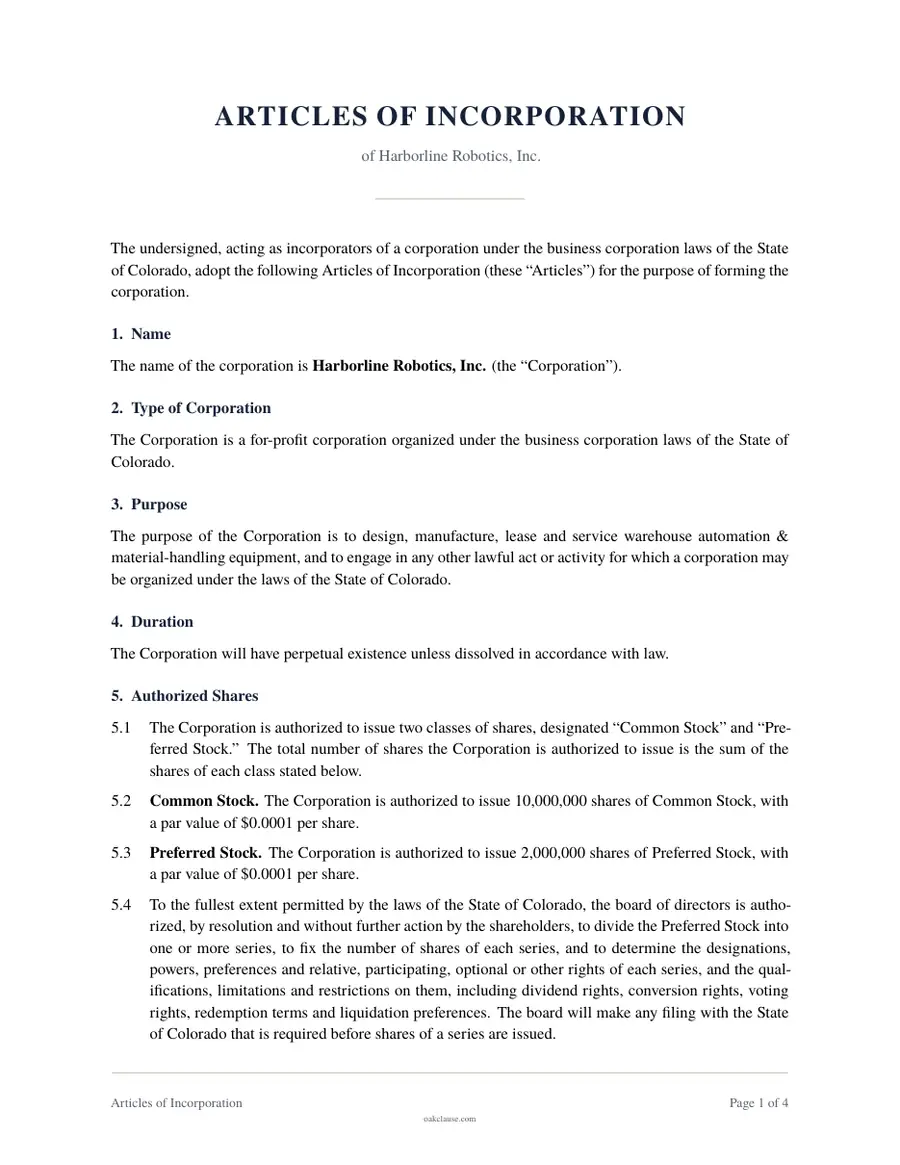
Articles of Incorporation rules in West Virginia
Every state has its own business corporation statute and its own filing office, and the required contents of articles of incorporation differ from state to state. Some states insist on their own fill-in form or a cover sheet, some require initial directors to be named, some require the registered agent to sign a consent, and the filing fee and any publication requirement vary. States also differ on what words a corporate name must include, whether par value matters for fees or taxes, and which optional provisions, such as limits on director liability, are permitted. This document uses the state you select for the governing law and defers to that state's requirements; compare it with your state filing office's current form before you file.
When you create this document for West Virginia, the questionnaire uses West Virginia as the governing law and adds wording that defers to West Virginia requirements where they apply. Laws change, so confirm current rules with official West Virginia sources or a local attorney for anything critical.
What is an Articles of Incorporation?
Articles of incorporation are the founding document of a corporation. When they are accepted for filing by the state's business filing office, usually the Secretary of State, the corporation legally exists as a separate entity that can own property, sign contracts and limit its owners' personal liability. Some states call the document a certificate of incorporation or a corporate charter.
The articles record the basic facts the public and the state need to know: the corporation's name, its purpose, how many shares it may issue, who its registered agent is, and who formed it. Optional provisions can limit directors' personal liability, require the corporation to indemnify its directors and officers, or set rules about preemptive rights and cumulative voting.
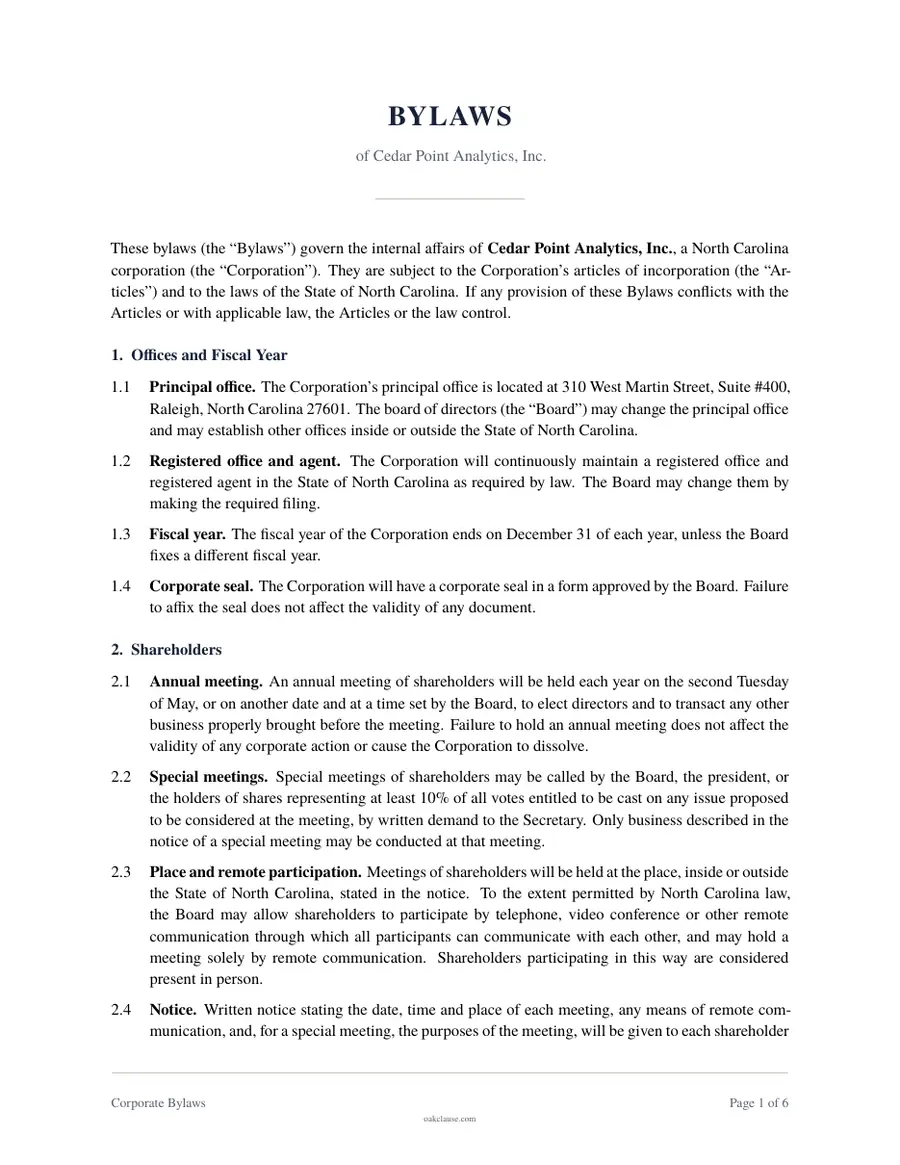
Articles are deliberately short. The detailed rules for running the corporation, such as how meetings are called and how officers are appointed, belong in the bylaws, which are adopted after the articles are filed and are not usually filed with the state.
When to use it
- You are forming a new for-profit corporation and need the document that is filed with the state.
- You want to set the number and classes of shares the corporation is allowed to issue from the start.
- You are forming a professional corporation for licensed professionals such as doctors, lawyers or accountants.
- You are forming a benefit corporation that will pursue a stated public benefit alongside profit.
- You want a clean draft to review with co-founders or an attorney before completing your state's filing form.
What is included
- Corporate name and type of corporation
- General or specific business purpose
- Authorized common shares, par value and optional preferred stock
- Registered agent and registered office
- Principal office and mailing address
- Names and addresses of incorporators and initial directors
- Limitation of director liability and indemnification
- Preemptive rights, cumulative voting and bylaw amendment powers
- Optional delayed effective date and additional provisions
- Incorporator signatures and registered agent acceptance
How to make your Articles of Incorporation
Answer the questions
Tell us about the parties and the terms you want. Most documents take about 5 to 20 minutes.
Review the preview
Check the draft as you go and change any answer. The document updates instantly.
Download, sign and keep a copy
Download a print-ready PDF, sign it with the other parties, and give everyone a copy.
Articles of Incorporation in another state
Back to the general articles of incorporation page51 states shown
- ALAlabama
- AKAlaska
- AZArizona
- ARArkansas
- CACalifornia
- COColorado
- CTConnecticut
- DEDelaware
- DCDistrict of Columbia
- FLFlorida
- GAGeorgia
- HIHawaii
- IDIdaho
- ILIllinois
- INIndiana
- IAIowa
- KSKansas
- KYKentucky
- LALouisiana
- MEMaine
- MDMaryland
- MAMassachusetts
- MIMichigan
- MNMinnesota
- MSMississippi
- MOMissouri
- MTMontana
- NENebraska
- NVNevada
- NHNew Hampshire
- NJNew Jersey
- NMNew Mexico
- NYNew York
- NCNorth Carolina
- NDNorth Dakota
- OHOhio
- OKOklahoma
- OROregon
- PAPennsylvania
- RIRhode Island
- SCSouth Carolina
- SDSouth Dakota
- TNTennessee
- TXTexas
- UTUtah
- VTVermont
- VAVirginia
- WAWashington
- WVWest Virginia
- WIWisconsin
- WYWyoming
Frequently asked questions
What is the difference between articles of incorporation and bylaws?
Articles of incorporation create the corporation and are filed with the state, so they are a public record. Bylaws are the internal rulebook for how the corporation is run, covering meetings, voting, directors and officers. Bylaws are adopted by the board or shareholders and usually kept with the corporate records rather than filed.
Where do I file articles of incorporation?
Articles are filed with the business filing office of the state where you are incorporating, which in most states is the Secretary of State. Many states accept online filings. You pay a filing fee set by the state, and some states charge extra for expedited processing.
Who can be an incorporator?
An incorporator is the person who signs and files the articles. In most states any adult can act as an incorporator, and the incorporator does not have to become a shareholder, director or officer. Some states allow a business entity to act as incorporator.
What is a registered agent and do I need one?
A registered agent is the person or company designated to receive lawsuits and official state notices on the corporation's behalf. Every state requires a corporation to keep a registered agent with a physical address in the state. You can serve as your own agent if you have an in-state address, or hire a commercial registered agent service.
How many shares should a new corporation authorize?
There is no single right number. Many small corporations authorize more shares than they plan to issue so they have room for future investors or employee equity without amending the articles. In some states the number of authorized shares and their par value affect filing fees or franchise taxes, so check your state's fee schedule.
What does par value mean?
Par value is a nominal minimum price assigned to each share, often a fraction of a cent. It usually has little to do with what the shares are worth, but it can affect how the corporation records capital and, in some states, the fees or taxes it pays. Many states also allow shares without par value.
Can I change my articles of incorporation later?
Yes. Articles can be changed by filing articles of amendment, or restated articles, with the same state office. Most amendments must be approved by the board of directors and then by the shareholders, following the procedure in your state's corporation law.
Do articles of incorporation need to be notarized?
Most states do not require notarization; the incorporator's signature is enough. A few states have extra formalities, and some require the registered agent to sign a consent to the appointment. Check the instructions published by your state's filing office.
Is filing articles all I need to do to start a corporation?
Filing creates the corporation, but there is more to do. Corporations typically adopt bylaws, hold an organizational meeting, issue shares, obtain a federal employer identification number, and register for state taxes and any business licenses that apply.
More West Virginia documents
Other documents people prepare for West Virginia, each with the state’s rules where we have checked them.
All West Virginia documents and rules