Director or Officer Consent to Act
Get a clear, signed record that a person has agreed to serve on your board or as an officer of your corporation, along with the confirmations a company usually wants from a new appointee.
Includes 30 days of edits
- 5 to 20 minutes
- Print-ready PDF
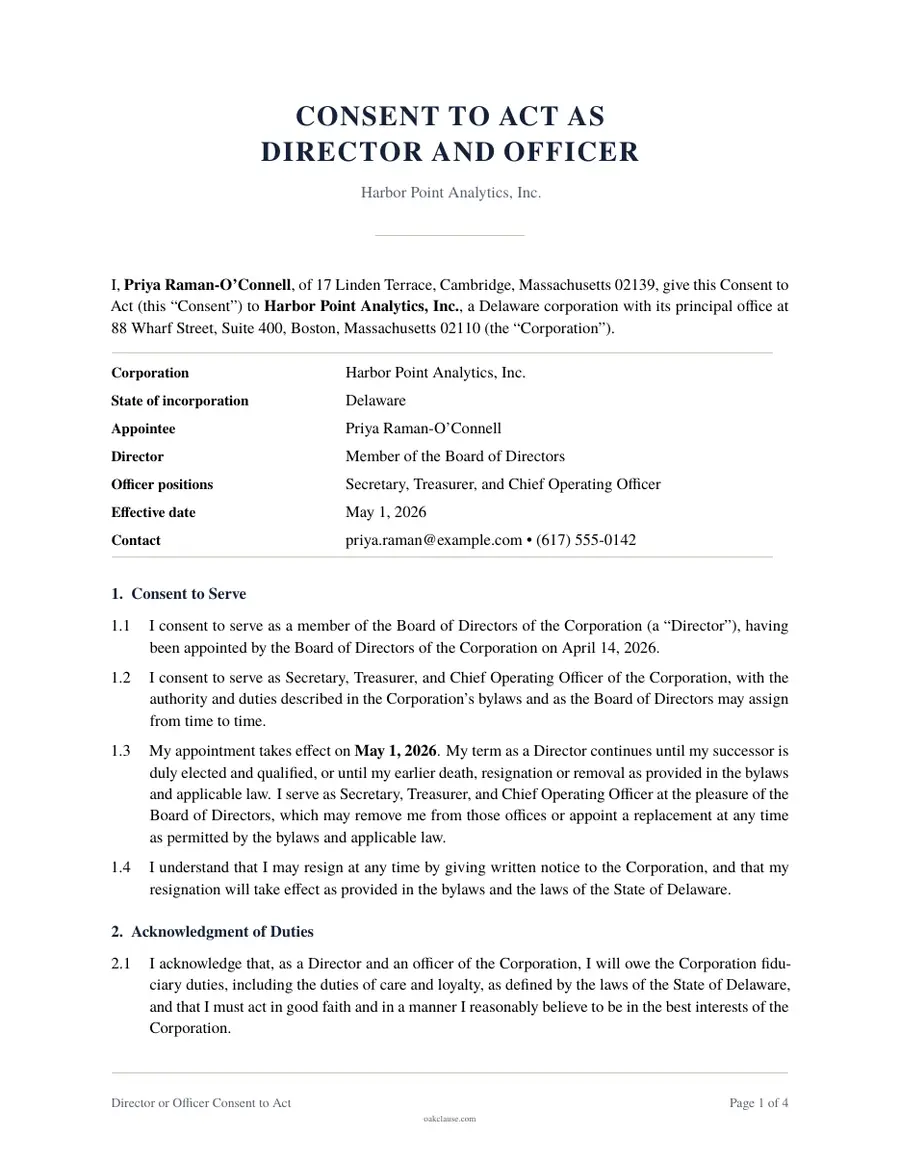
What is a Director or Officer Consent to Act?
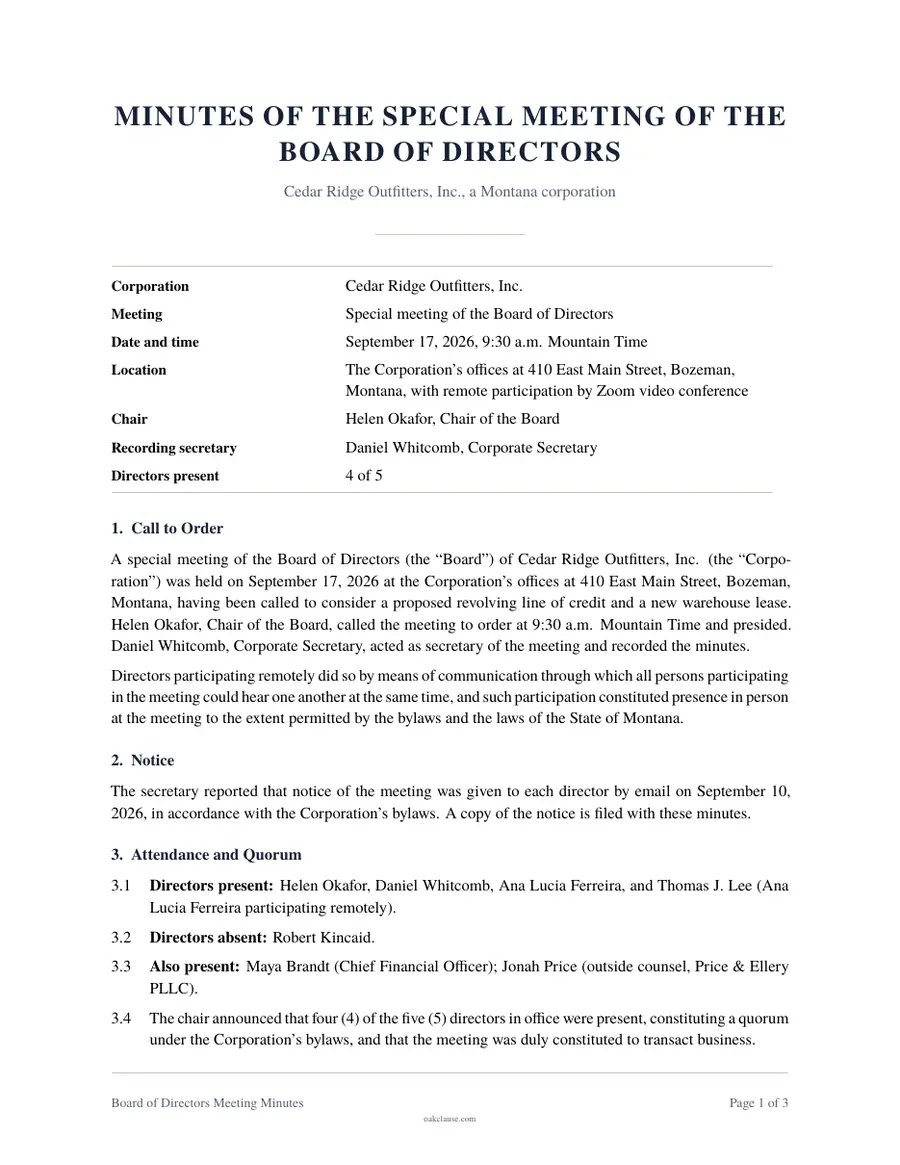
A consent to act is a short written statement in which a person confirms that they agree to be appointed or elected as a director, an officer, or both, of a particular corporation. It is signed by the appointee and kept with the company's corporate records, usually next to the resolution or minutes that made the appointment.
Corporate law generally treats directors and officers as fiduciaries, so companies like to have proof that a new appointee knowingly accepted the role and its duties. The consent also gives the corporation a dated record of when the appointment took effect, how long it is expected to last, and the contact details the company will use for board notices.
Beyond the basic acceptance, this form can capture useful confirmations from the appointee: that they are not barred from serving, that they have disclosed any conflicts of interest, that they agree to keep board information confidential, how they will be compensated, and whether they agree to receive notices electronically and to be named in public filings.
When to use it
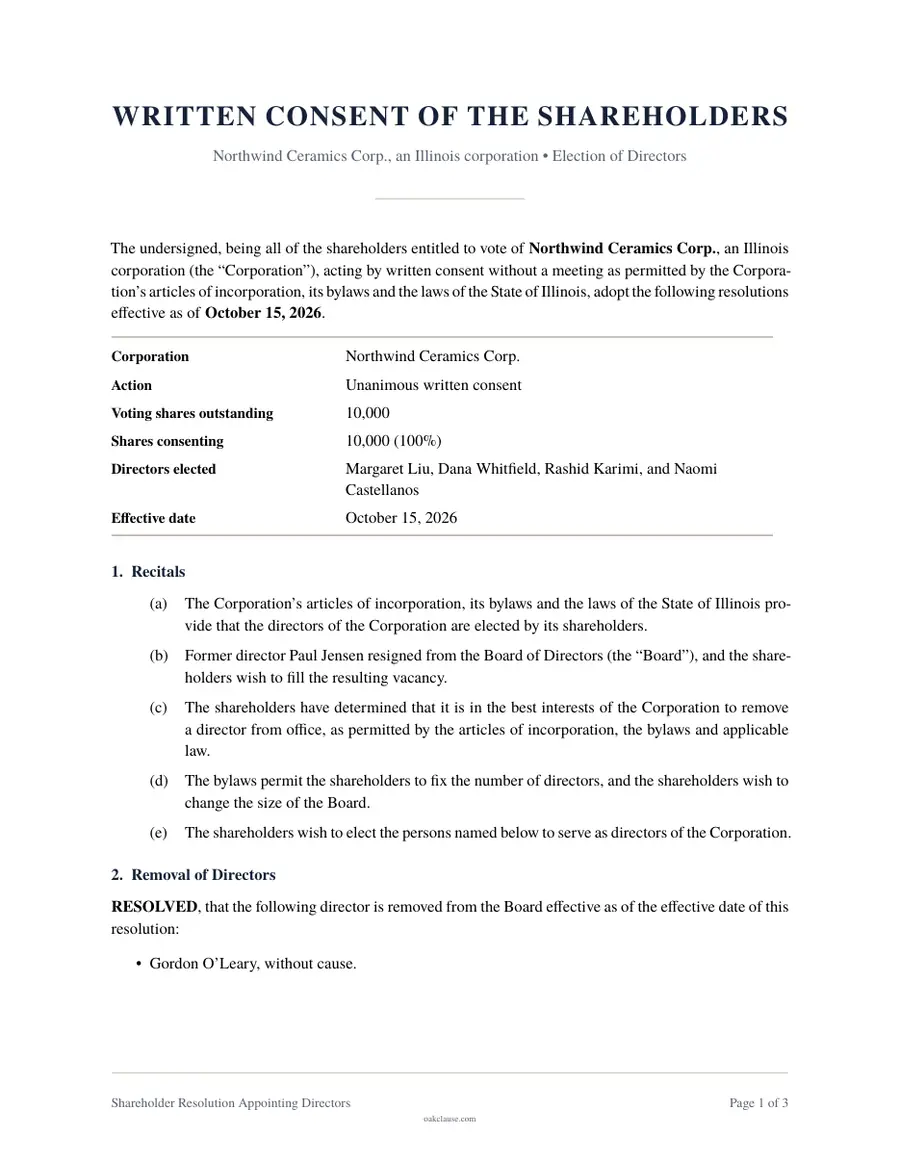
- Shareholders or the board have elected a new director and you want written confirmation that the person accepts.
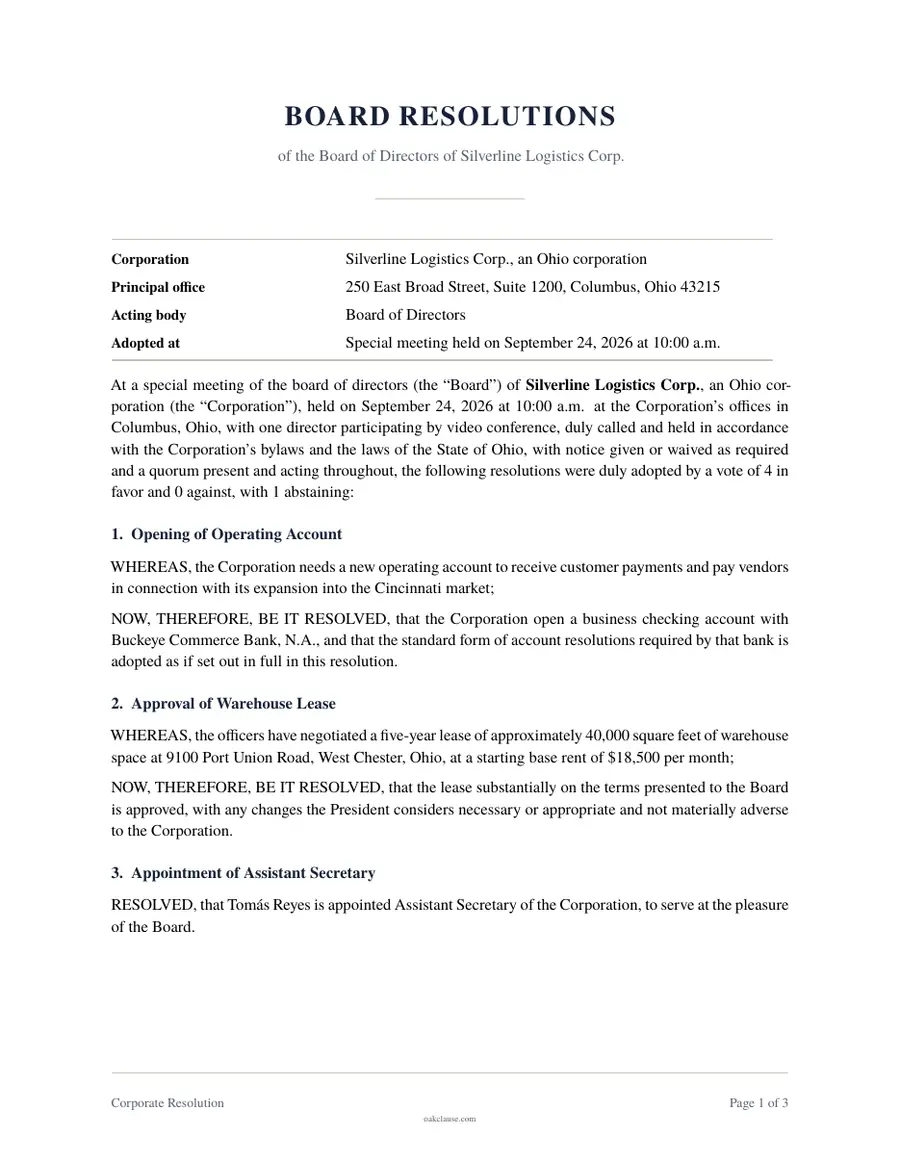
- The board has appointed a president, secretary, treasurer or other officer and needs the appointee's acceptance on file.
- You are forming a new corporation and want each initial director to confirm their consent before the organizational meeting.
- A bank, investor, auditor or due diligence reviewer has asked for evidence that your directors and officers formally accepted their positions.
- An existing director is taking on an additional officer role and you want the new position documented.
What is included
- Identification of the corporation and its state of incorporation
- Acceptance of a director role, officer titles, or both
- Effective date and expected term of service
- Acknowledgment of fiduciary duties and the governing documents
- Eligibility statement and conflict-of-interest disclosure
- Compensation arrangement and confidentiality undertaking
- Consent to electronic notices and to being named in public filings
- Optional acceptance by the corporation and notary acknowledgment
How to make your Director Consent
Answer the questions
Tell us about the parties and the terms you want. Most documents take about 5 to 20 minutes.
Review the preview
Check the draft as you go and change any answer. The document updates instantly.
Download, sign and keep a copy
Download a print-ready PDF, sign it with the other parties, and give everyone a copy.
Frequently asked questions
Is a written consent to act legally required?
Requirements differ by state and by the company's own bylaws. Many states do not require a separate written consent for a director or officer, but some filings, regulators, lenders or investors ask for one, and having it on file is a simple way to prove the person accepted the appointment.
Who signs a director or officer consent?
The person being appointed signs it. Optionally, an authorized representative of the corporation, often the corporate secretary or the board chair, can countersign to confirm the company received and accepted the consent.
Can one person be both a director and an officer?
Yes. In most corporations it is common for the same person to sit on the board and hold one or more officer roles, especially in smaller or closely held companies. This form lets the appointee accept both roles in a single document.
Does the consent itself appoint the person?
No. The appointment is made by the body that has authority under the company's bylaws and state law, usually the shareholders for directors and the board for officers. The consent records the appointee's agreement to serve and should be kept alongside that resolution or set of minutes.
Does this document need to be notarized?
Usually not. A consent to act is typically valid once signed. Some companies choose to notarize it, or are asked to by a foreign registry or financial institution, so the form includes an optional notary acknowledgment.
What is a conflict of interest disclosure?
It is a statement in which the appointee identifies any outside interests, such as ownership in a competitor or a business that deals with the corporation, that could affect their judgment. Disclosing these at the start helps the board manage them properly.
How long does a director or officer serve?
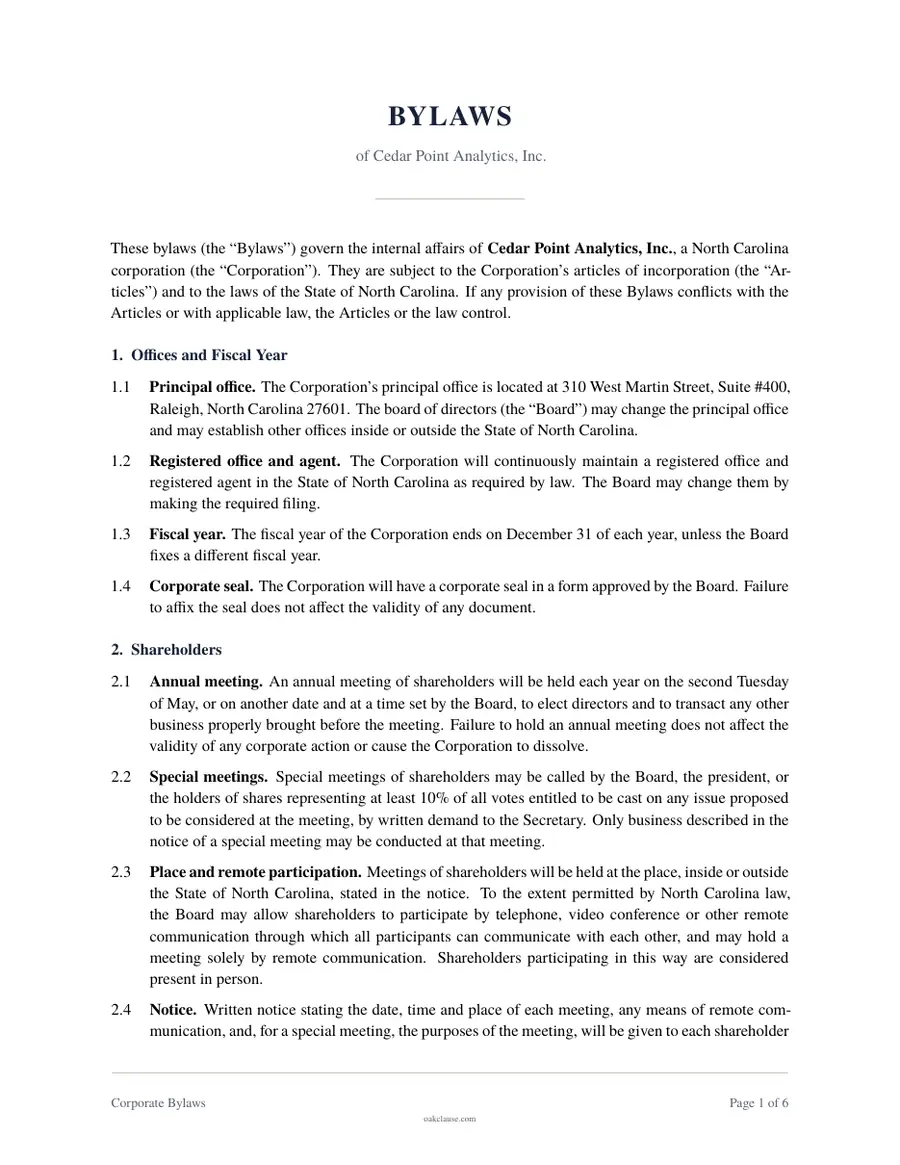
Terms are set by the articles of incorporation, the bylaws and the appointing resolution. Directors often serve until the next annual shareholders' meeting and until a successor is elected, while officers usually serve at the pleasure of the board. The consent records the term that was intended.
Can the appointee resign later?
Generally, yes. Directors and officers can usually resign by giving written notice to the corporation, and the consent states this expressly. The bylaws or state law may set out when a resignation takes effect.