Shareholder Resolution Appointing Directors
Document your shareholders' decision to elect new directors, re-elect current ones or replace board members, whether the vote happened at a meeting or by written consent.
Includes 30 days of edits
- 5 to 20 minutes
- Print-ready PDF
What is a Shareholder Resolution Appointing Directors?
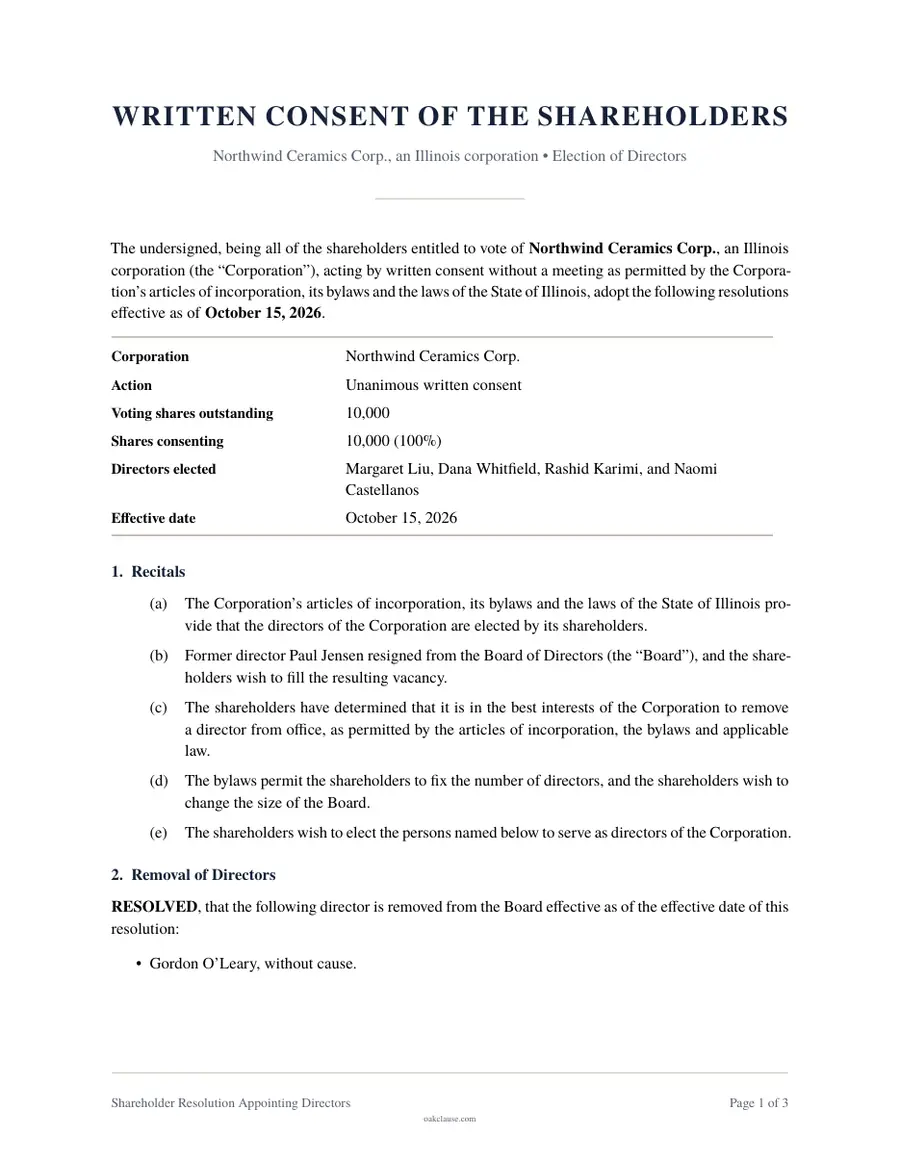
A shareholder resolution appointing directors is the formal record of the shareholders' decision about who sits on a corporation's board. In most corporations, electing directors is one of the core powers reserved to the shareholders, so a clear written resolution is the proof that each director holds office properly.
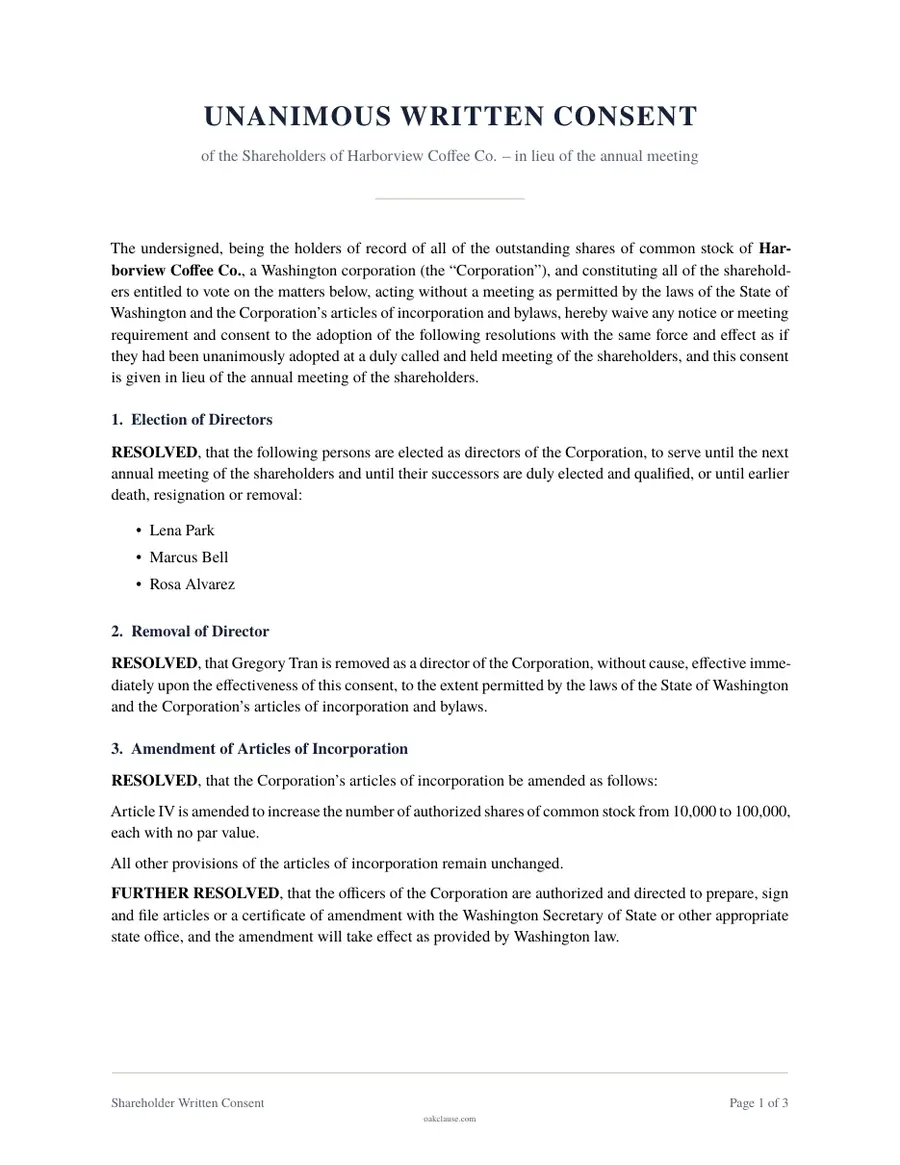
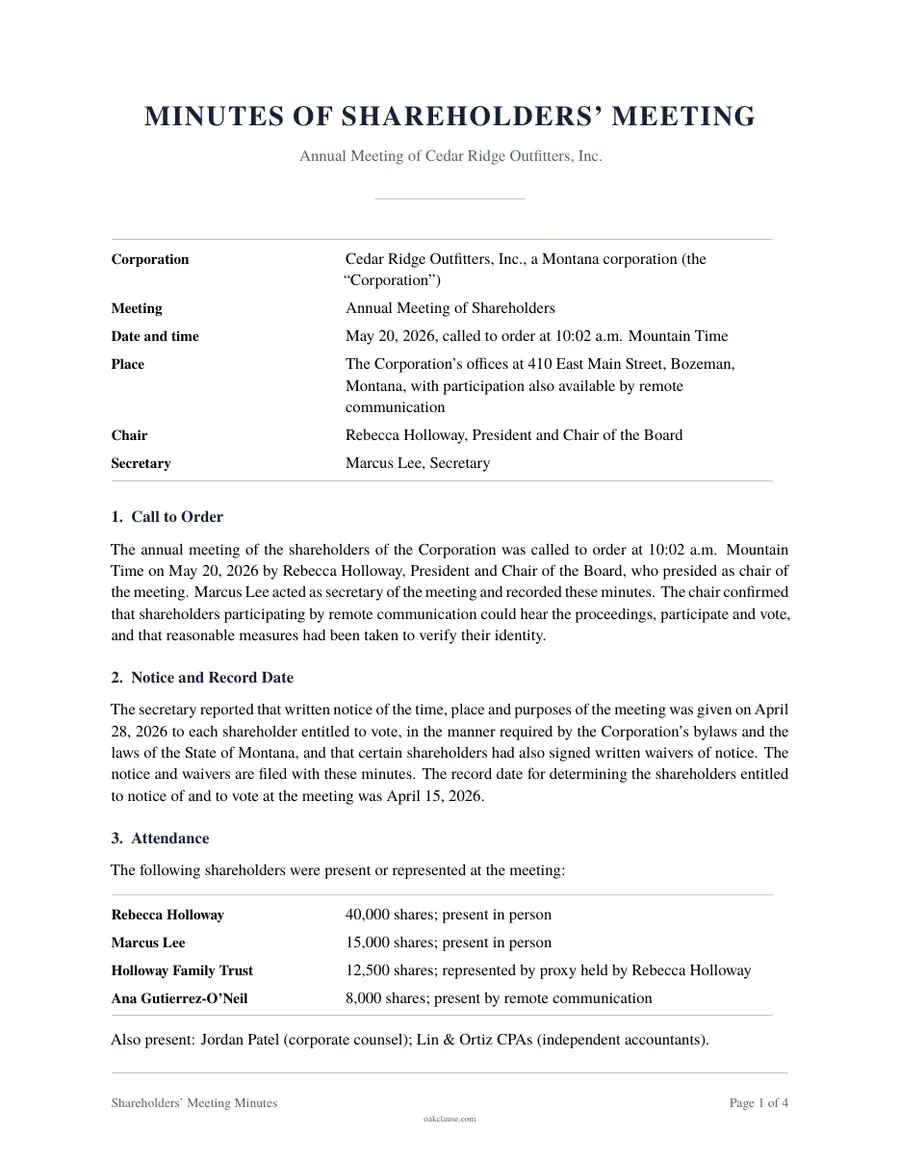
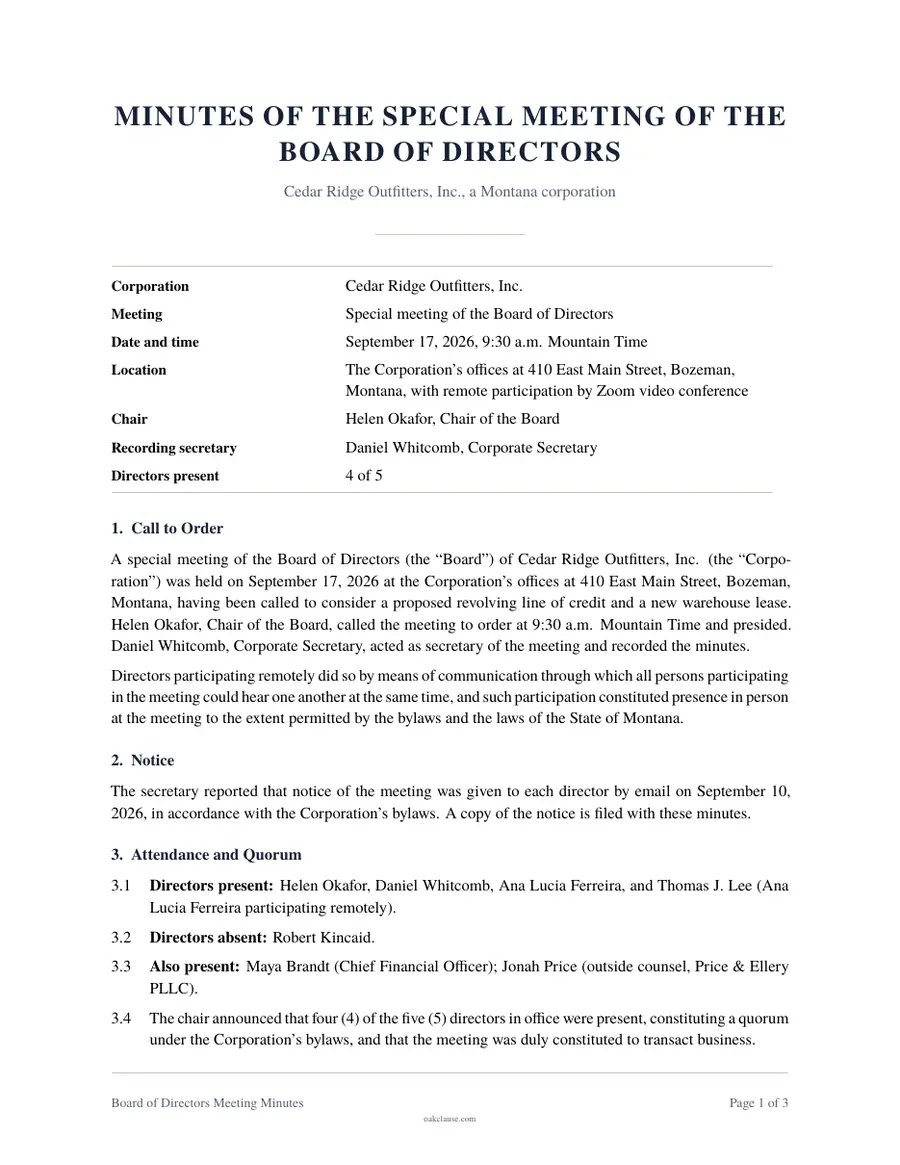
Shareholders can usually act in one of two ways. They can vote at an annual or special meeting, in which case the resolution records the meeting, the quorum and the votes cast. Or, where the articles, bylaws and state law allow, they can sign a written consent without meeting at all. This document supports both approaches.
Besides naming the directors and their terms, the resolution can record the removal of existing directors, a change in the size of the board, the effective date of the changes and an instruction to the officers to update the corporation's records and public filings. Newly elected directors can sign an acceptance on the same document.
When to use it
- The shareholders are electing or re-electing the board at the annual meeting.
- A director has resigned, died or been removed and the shareholders are filling the vacancy.
- The shareholders want to add seats to the board, or reduce its size, and fill the new positions.
- A closely held corporation wants to elect directors by written consent instead of holding a meeting.
- A new investor has the right to a board seat and the shareholders need to formally appoint that person.
What is included
- Corporation details and recitals explaining the shareholders' authority
- Action at a meeting or by written consent, unanimous or less than unanimous
- Election of each director with term and reason for the appointment
- Optional removal of existing directors
- Optional change in the number of directors
- Vote tally or list of consenting shareholders and their shares
- Authorization for officers to update records and filings
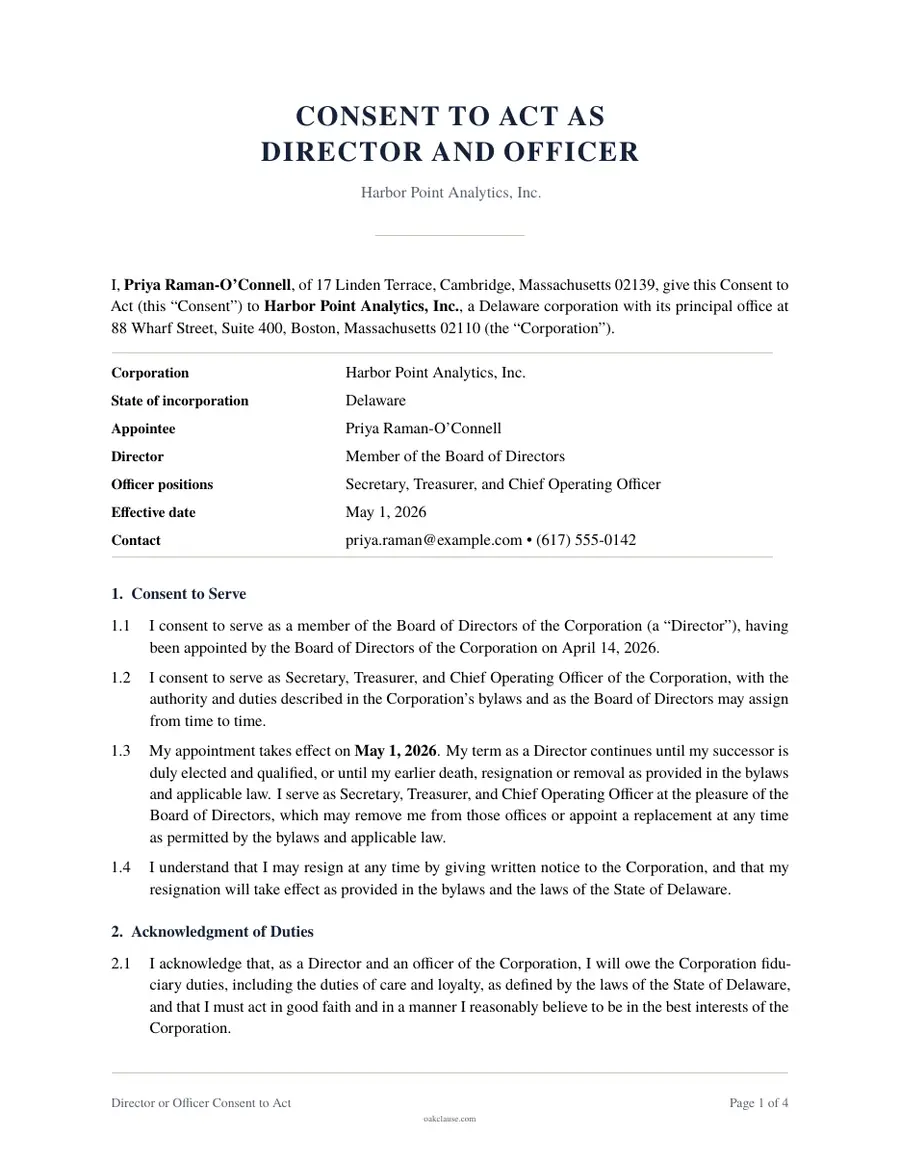
- Shareholder signatures, secretary certification and director acceptance
How to make your Appoint Directors
Answer the questions
Tell us about the parties and the terms you want. Most documents take about 5 to 20 minutes.
Review the preview
Check the draft as you go and change any answer. The document updates instantly.
Download, sign and keep a copy
Download a print-ready PDF, sign it with the other parties, and give everyone a copy.
Frequently asked questions
Who has the power to appoint directors?
In most corporations the shareholders elect the directors. The articles of incorporation and bylaws, and sometimes a shareholder agreement, set out exactly how. Many bylaws also let the remaining directors fill a vacancy on the board until the next shareholder election.
Can shareholders elect directors without holding a meeting?
Often, yes. Most states allow shareholders to act by unanimous written consent. Some states, and some articles of incorporation, also allow action by the written consent of shareholders holding the number of votes that would be needed at a meeting, usually with prompt notice to those who did not sign. Check your state's rules and your articles.
What is the difference between electing and appointing a director?
In everyday usage the words are often interchangeable. Technically, shareholders elect directors by voting, while a board may appoint someone to fill a vacancy. This document records a decision made by the shareholders, whichever word your company uses.
Can shareholders remove a director?
Generally, shareholders can remove directors, sometimes only for cause, depending on the articles, bylaws and state law. Special rules may apply when the board is classified or the corporation uses cumulative voting. This form lets you record a removal alongside the election of a replacement.
What is cumulative voting?
Cumulative voting lets each shareholder multiply their votes by the number of director seats being filled and spread those votes among candidates or give them all to one. It helps minority shareholders win board representation. Whether it applies depends on your state law and articles of incorporation.
Do I need to file this resolution with the state?
Usually not. The resolution is kept in the corporate minute book. However, many states require corporations to report their current directors in an annual report or statement of information, so you may need to update that filing.
Should new directors sign anything?
It is good practice for each new director to confirm in writing that they accept the position. This document includes an optional acceptance section, or you can use a separate director consent to act.
How long do directors serve?
Directors commonly serve until the next annual shareholders' meeting and until their successors are elected, but some corporations stagger terms over several years. The bylaws control, and the resolution records the term intended for each director.