Shareholder Written Consent
Approve corporate decisions on paper instead of calling a meeting.
Includes 30 days of edits
- 5 to 20 minutes
- Print-ready PDF
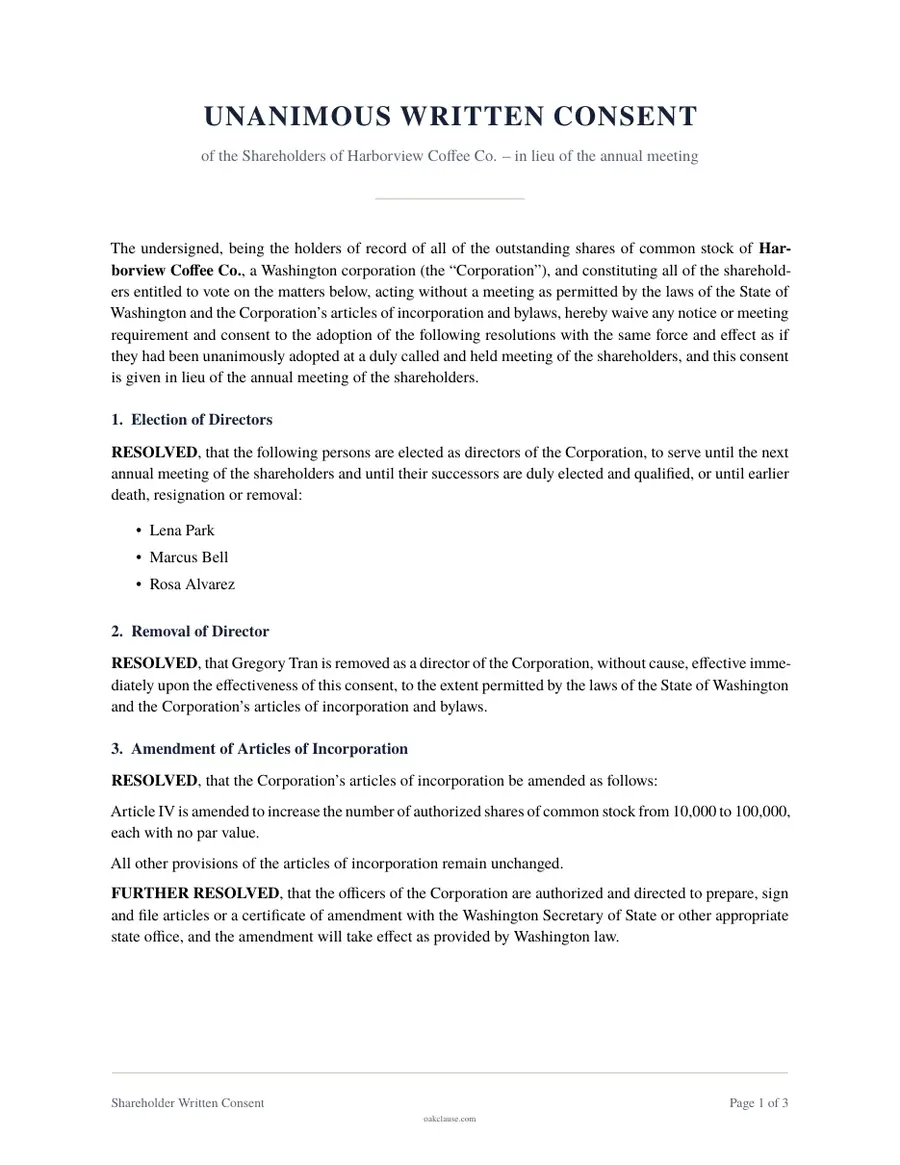
What is a Shareholder Written Consent?
A shareholder written consent, sometimes called an action by written consent or consent in lieu of a meeting, is a document in which a corporation's shareholders approve one or more resolutions by signing them rather than voting at a formal shareholders' meeting.
State corporation laws generally allow shareholders to act without a meeting if the action is approved in writing. Unanimous written consent, signed by every shareholder entitled to vote, is permitted almost everywhere. Some states also let shareholders act by less than unanimous consent, usually requiring the same number of votes that would be needed at a meeting, if the articles of incorporation allow it and the shareholders who did not sign are notified.
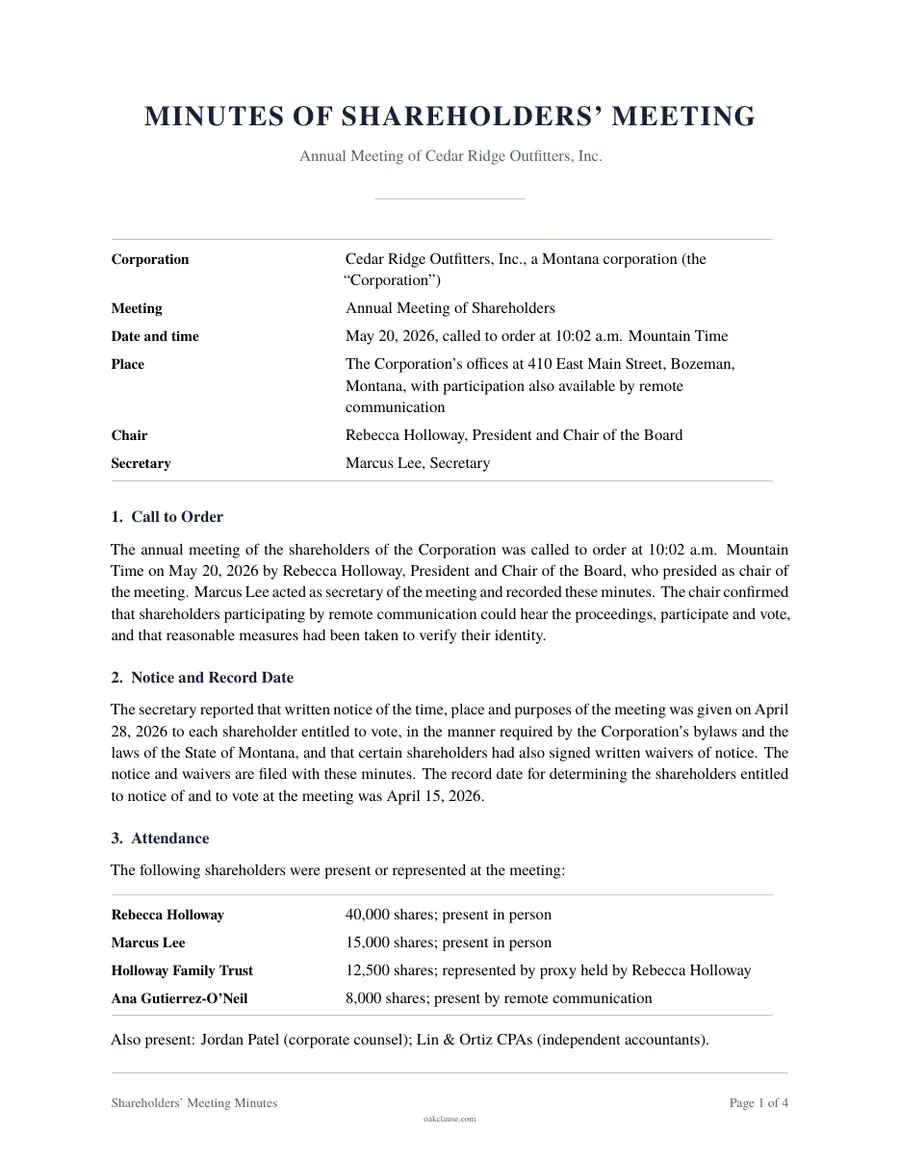
Once signed, the consent is kept with the corporation's minutes and has the same effect as a vote taken at a properly called meeting. It is the standard way small and closely held corporations handle annual elections, approve major transactions and keep their records in order.
When to use it
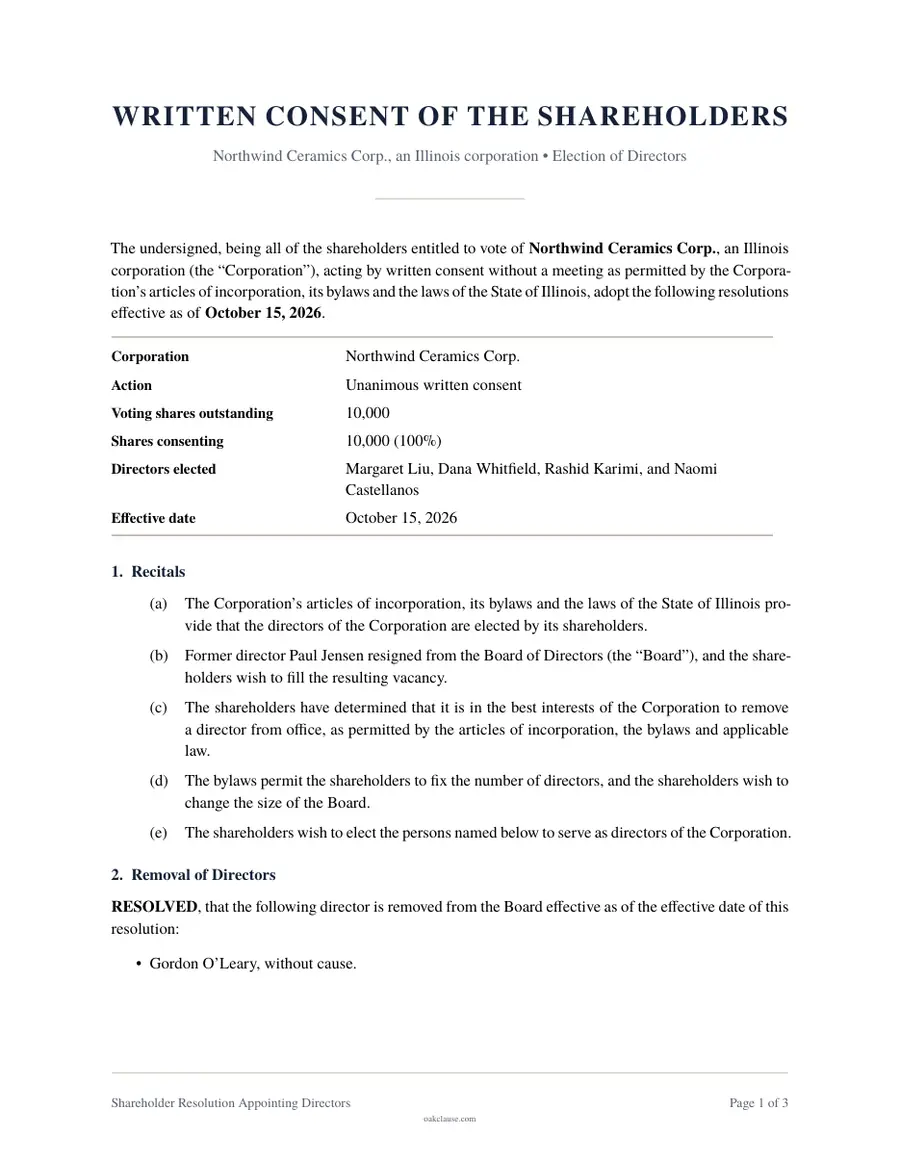
- Your shareholders need to elect or remove directors and holding a meeting would be impractical.
- You want to approve an amendment to the articles of incorporation or a sale of the business.
- Your corporation is replacing its annual shareholders' meeting with a written action.
- Shareholders need to consent to an S corporation election or ratify past actions of the board.
- A lender, buyer or investor has asked for evidence that the shareholders approved a transaction.
What is included
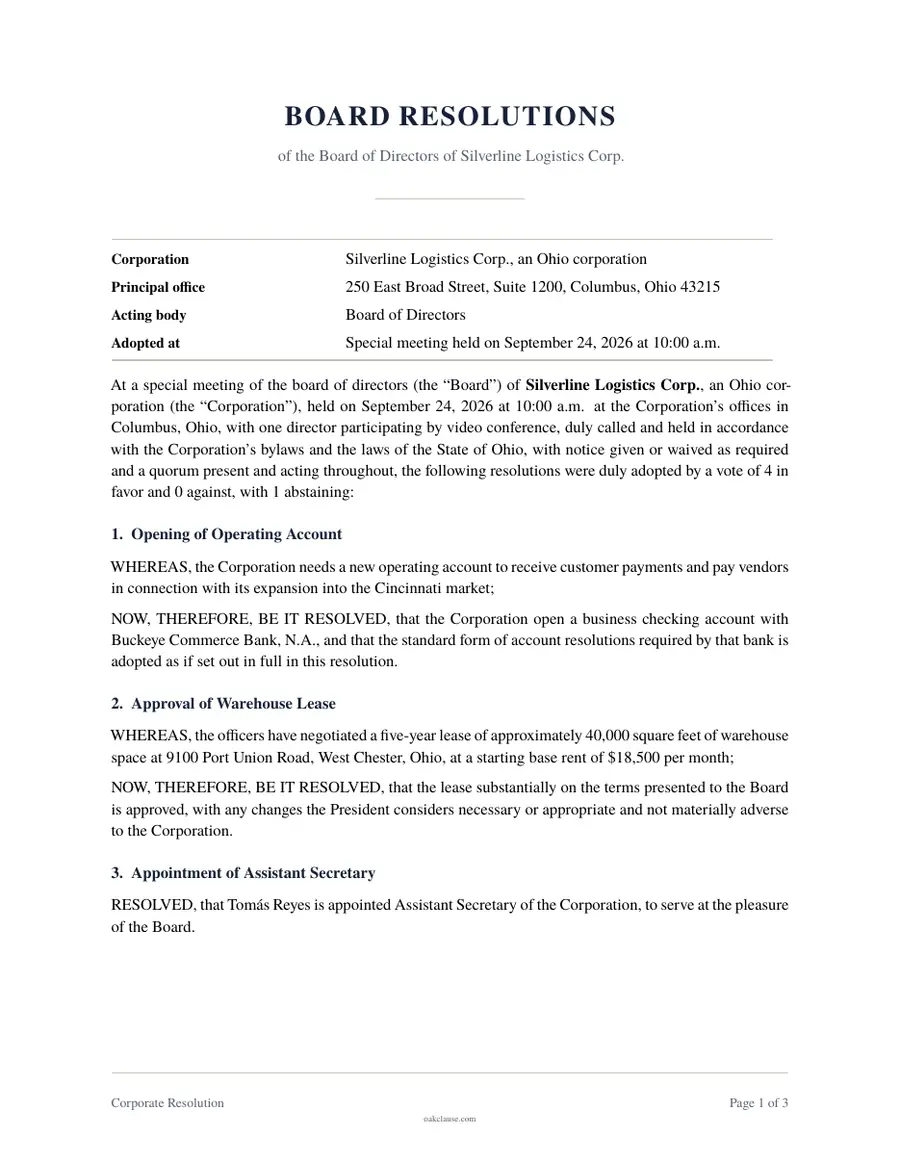
- Unanimous or majority consent wording
- Shareholder signature blocks showing shares held
- Election and removal of directors
- Approval of amendments, sales, mergers and dissolution
- S corporation election consent
- Ratification of prior acts of directors and officers
- Your own custom resolutions with optional recitals
- General authorization for officers to carry out the resolutions
- Effective date, counterparts and electronic signature terms
- Optional secretary's certificate
How to make your Shareholder Consent
Answer the questions
Tell us about the parties and the terms you want. Most documents take about 5 to 20 minutes.
Review the preview
Check the draft as you go and change any answer. The document updates instantly.
Download, sign and keep a copy
Download a print-ready PDF, sign it with the other parties, and give everyone a copy.
Frequently asked questions
When can shareholders act by written consent instead of meeting?
Most state corporation laws allow shareholders to act without a meeting by signing a written consent. Unanimous consent is widely permitted. Acting with fewer than all shareholders is allowed in many states only if the articles of incorporation permit it, so check your articles, bylaws and state law before using a majority consent.
What is the difference between unanimous and majority written consent?
A unanimous consent is signed by every shareholder entitled to vote on the matter. A majority (or less than unanimous) consent is signed by shareholders holding at least the number of votes that would be needed to approve the action at a meeting where all shares were present. Majority consents usually come with a duty to promptly notify shareholders who did not sign.
Is a shareholder written consent the same as a board resolution?
No. Directors and shareholders make different decisions. The board handles management matters such as appointing officers and approving contracts, while shareholders vote on matters reserved to them, like electing directors, amending the articles or approving a sale of the company. Many corporations use a separate board consent for board decisions.
Can a written consent replace the annual shareholders' meeting?
In many states, shareholders can elect directors by written consent instead of holding an annual meeting, although some states limit this to unanimous consent. This document includes an option to state that it is given in lieu of the annual meeting.
Do all shareholders have to sign on the same day?
No. Shareholders can sign separate copies (counterparts) at different times, and many states accept electronic signatures. The consent usually becomes effective when the last required signature is received, although state law may limit how long the signature window can stay open.
Does a written consent need to be notarized or filed?
A shareholder consent is an internal corporate record and does not need to be notarized. Keep it with the corporation's minute book. If the consent approves something that must be filed, such as an amendment to the articles, the filing itself goes to the secretary of state separately.
Why does the S corporation option mention every shareholder?
The IRS requires every shareholder to consent to a corporation's S corporation election on the election form. Recording that consent in a written consent helps document the shareholders' agreement, but the signatures on the IRS form are still required.