When you buy or sell something valuable in a private sale, such as a car, a trailer, a piece of equipment or a horse, the handshake is not the end of the transaction. A bill of sale records that ownership changed hands, on what date, for what price and on what terms. It is a short document, but it protects both people in ways that often only become clear when something goes wrong.
What a bill of sale is
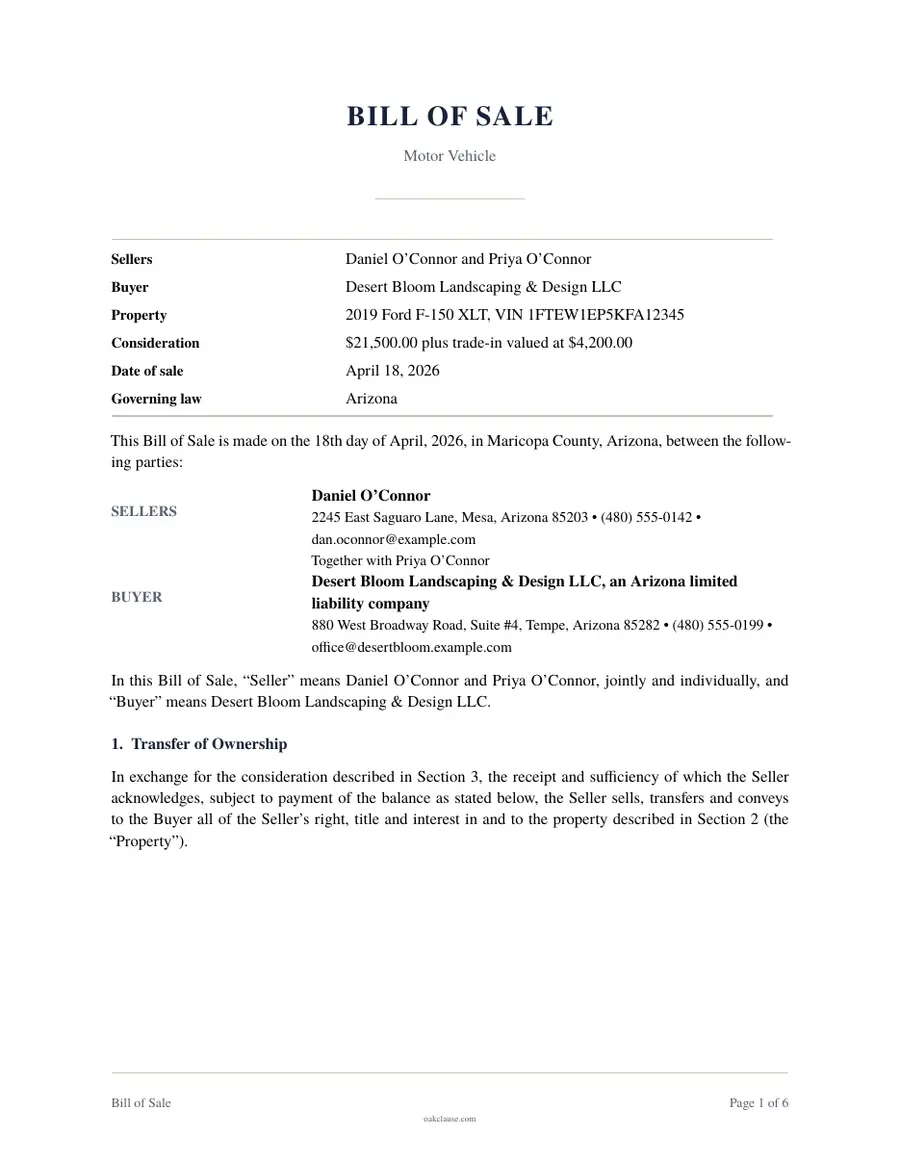
A bill of sale is a written record that the seller has transferred ownership of personal property to the buyer. Personal property means movable items, as opposed to land and buildings, which are transferred by deed. A bill of sale is usually signed when the item and payment are exchanged.
For some items, particularly vehicles and boats, the state also issues a certificate of title. The title is the official record of ownership, and transferring it through the state agency is required. A bill of sale complements the title by documenting the terms of the sale. In some states, and for some items such as untitled trailers or older vehicles, the motor vehicle agency may ask for a bill of sale to register or retitle the item.
How it protects the seller
For a seller, the most important protection is proof of the date and time the item left their hands. If the buyer gets a parking ticket, causes an accident, abandons the vehicle or fails to transfer the title, the seller can show they no longer owned it. Many states also let or require sellers to file a notice of sale or release of liability with the motor vehicle agency; the bill of sale provides the information needed.
- Records when responsibility for the item passed to the buyer
- Documents the condition disclosures made and any as-is terms
- Shows the price was paid in full, or how any balance is owed
- Helps with tax records if the sale produces a gain
How it protects the buyer
For a buyer, a bill of sale is evidence of ownership and of what the seller promised. If the seller later claims the item was only borrowed, or a third party disputes ownership, the buyer has a signed record. It also typically includes the seller's statement that they own the item and have the right to sell it, free of liens and claims.
- Proves the purchase and the price paid
- Records the seller's statement of ownership and lack of liens
- Captures identifying details such as the VIN or serial number
- Documents any warranties or condition statements the seller made
- Supports registration, insurance and sales or use tax filings
What to include
A clear bill of sale typically covers the following.
- Names, addresses and contact details of seller and buyer
- Date of the sale and, if relevant, the time of delivery
- Detailed description of the item: make, model, year, color and any serial number or VIN
- For vehicles, the odometer reading
- Purchase price and payment method
- Whether the item is sold as-is or with any warranty
- The seller's statement that they own the item and it is free of liens
- Any items included in the sale, such as accessories or spare parts
- Signatures of both parties, and notarization if your state requires it
As-is sales and warranties
Most private sales are made as-is, meaning the buyer accepts the item in its current condition, faults included. Saying so clearly in the bill of sale reduces the risk of later disputes about condition. As-is language generally does not protect a seller who lies about a known defect or the item's history, however, since fraud and misrepresentation claims can still apply.
If the seller makes promises, such as that a new engine was installed or that an item works, those statements can be enforceable. Write any promises down precisely so both sides know exactly what was said.
Special points for vehicles
Federal law requires the seller to disclose the odometer reading when ownership of most vehicles is transferred, with exemptions for older vehicles and certain heavy vehicles. The disclosure is often made on the title itself. Do not knowingly misstate the mileage.
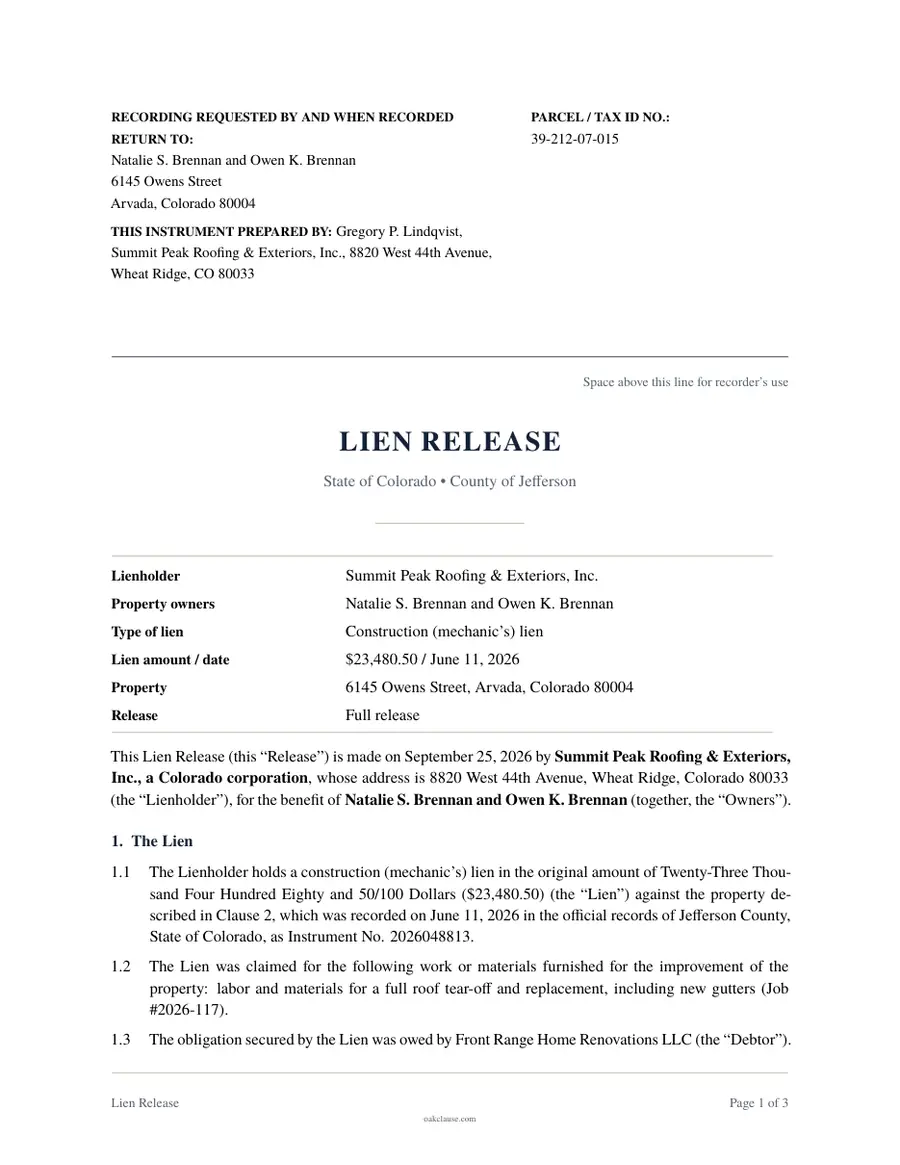
Before paying, a buyer should check the title for any listed lienholder. If there is one, the loan needs to be paid off and the lien released before the title can be transferred cleanly. A vehicle history report can reveal past accidents, flood damage or title branding. Buyers should also confirm the VIN on the vehicle matches the title and the bill of sale.
Rules on license plates, temporary permits, emissions testing and how quickly a buyer must transfer the title differ by state, so check with your state's motor vehicle agency.
Payments and safety
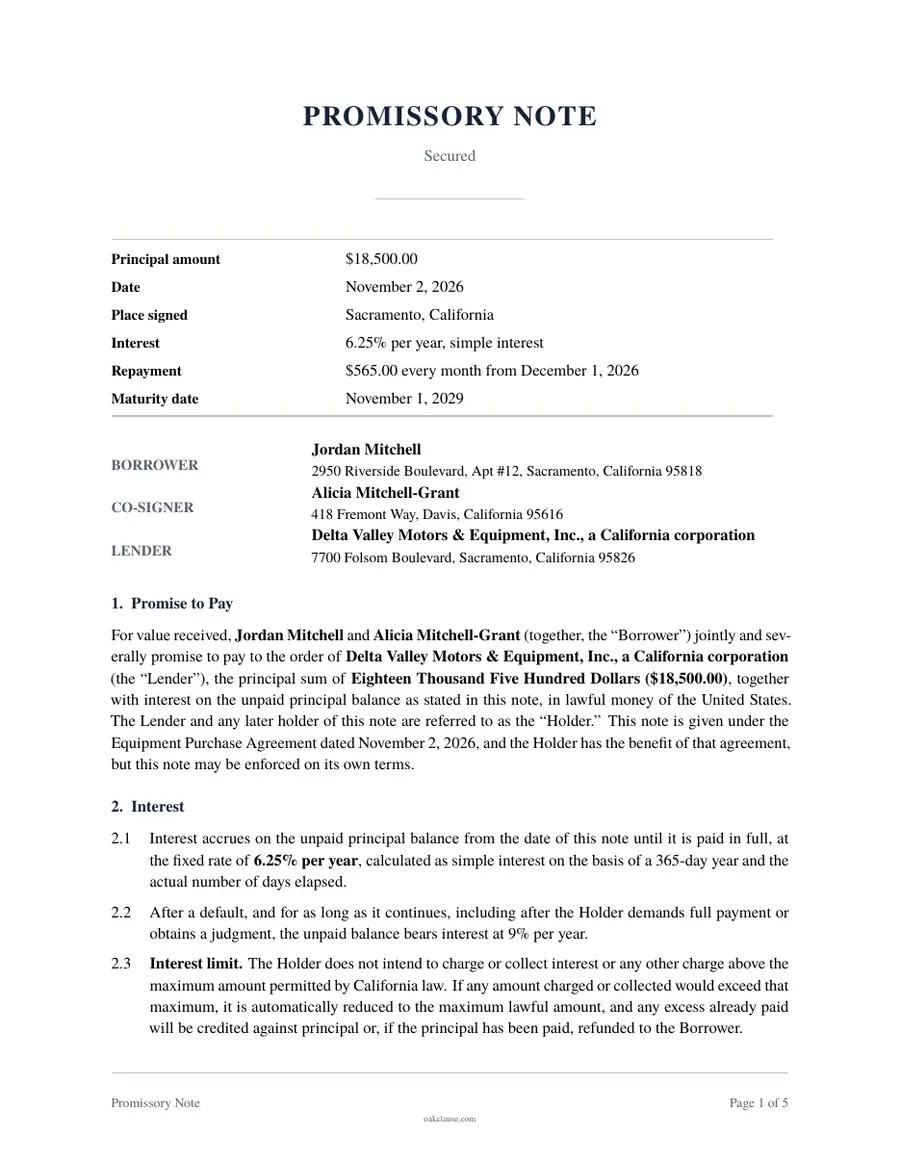
Payment scams are common in private sales. Sellers should be cautious with personal checks and overpayment schemes, and many prefer cash counted at a bank or a cashier's check verified directly with the issuing bank. If the buyer will pay in installments, the bill of sale should refer to a separate promissory note and say whether the seller keeps a security interest until payment is complete. Meeting in a public place, or at a bank, is a sensible precaution for both sides.
Bill of sale or sales agreement?
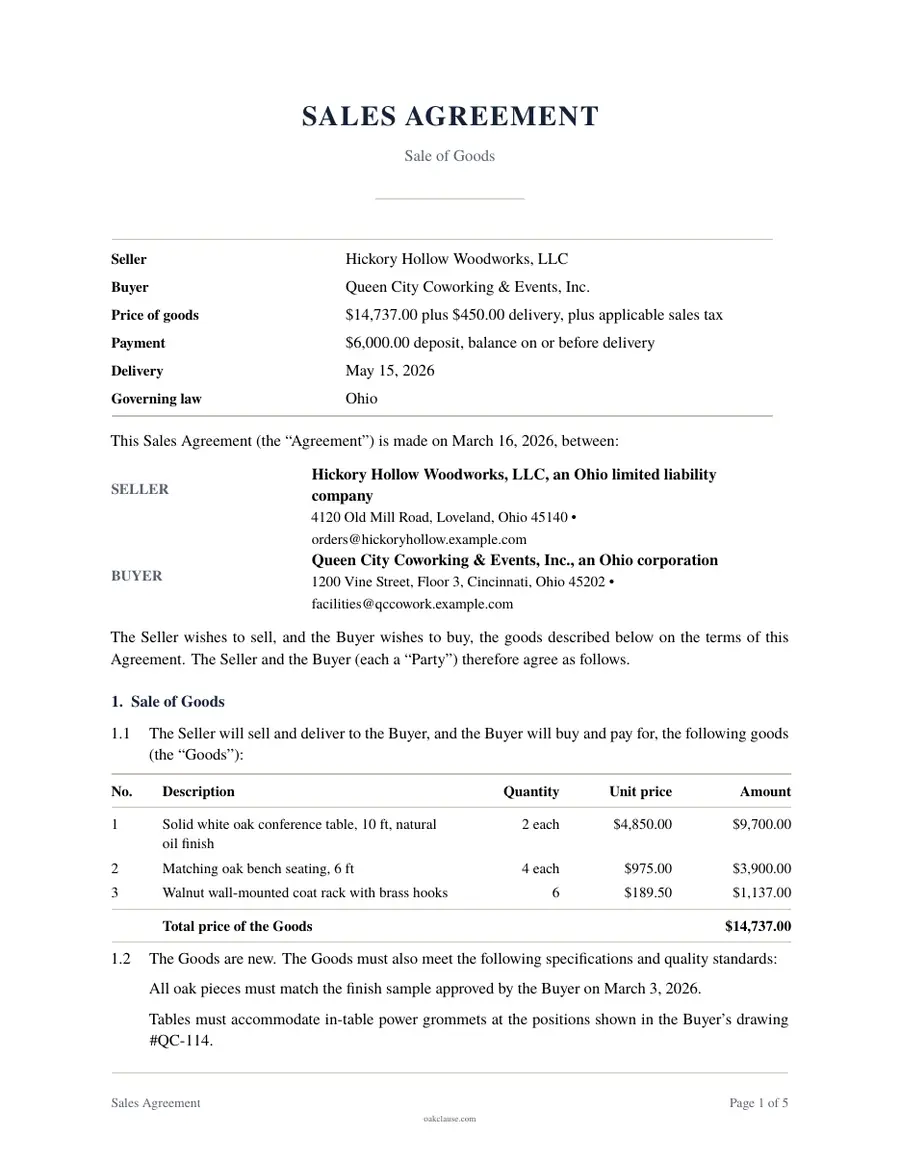
A bill of sale records a completed transfer. A sales agreement is often used earlier, when the parties agree to a sale that will happen later, for example when goods must be manufactured, delivered or inspected first, or when payment will be made over time. Business sales of goods are also governed by each state's version of the Uniform Commercial Code, which supplies default rules on matters such as warranties, delivery and risk of loss.
After the sale
Both sides have a few final tasks.
- Sign over and deliver the title, if the item has one
- Seller: remove license plates where required, cancel insurance and file any notice of sale
- Buyer: register and insure the item and pay any sales or use tax
- Both: keep a signed copy of the bill of sale with your records