A promissory note is a written promise by one person to pay a specific amount of money to another, either on demand or on a set schedule. It is one of the simplest financial documents, but leaving out a key term can make a loan hard to collect or lead to an awkward dispute between friends or family. Here is what a complete note usually covers and why each term matters.
Promissory note or loan agreement?
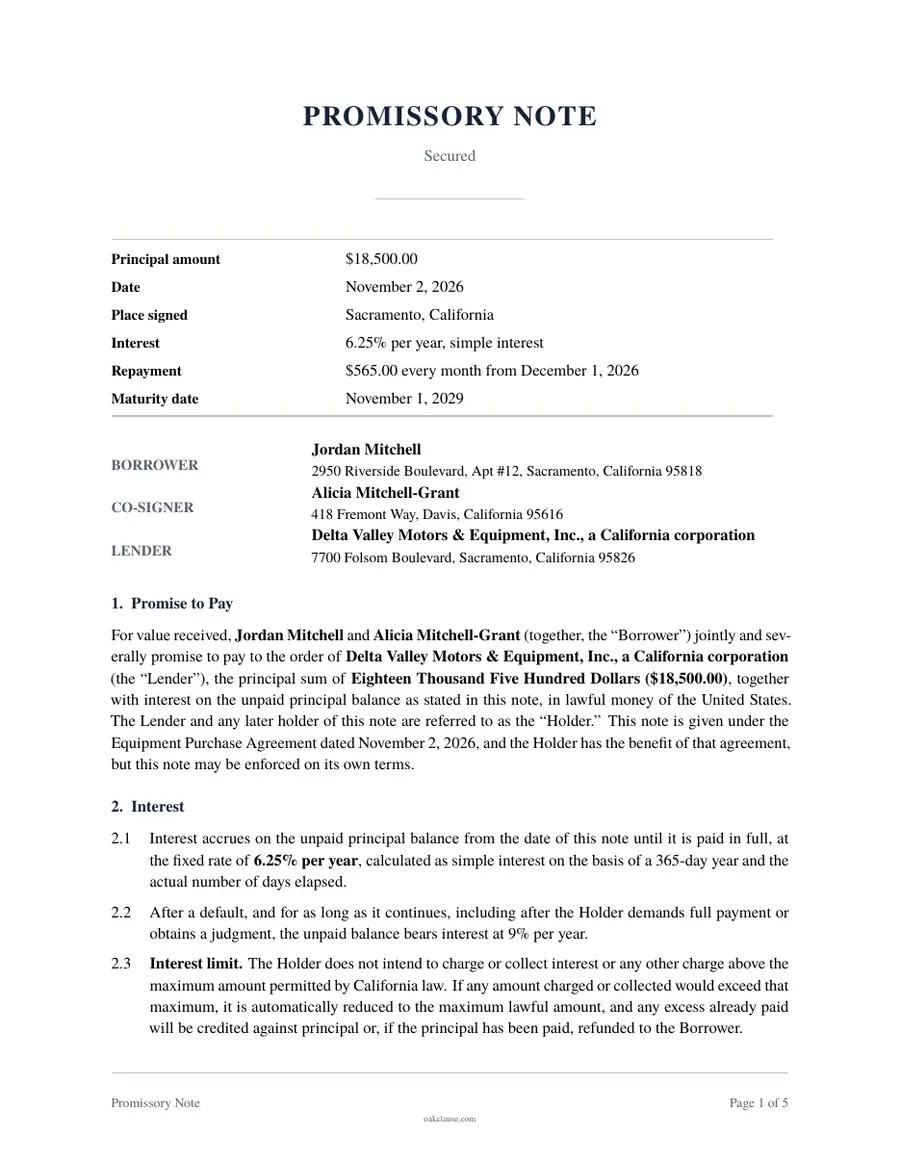
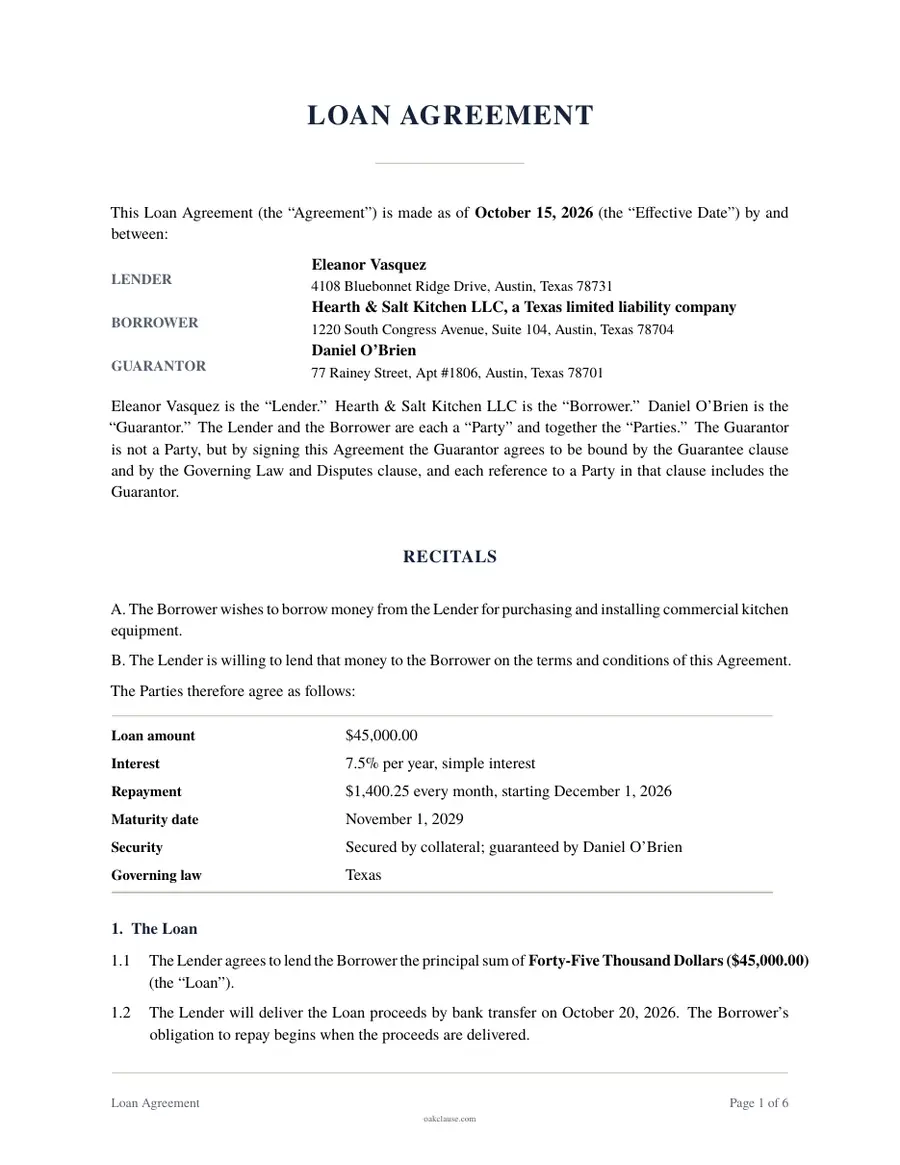
Both documents record a loan. A promissory note is typically shorter and focuses on the borrower's promise to repay. It is often used for personal loans, loans between family members and straightforward business loans. A loan agreement is usually longer and adds obligations for both sides, such as conditions the borrower must meet before receiving funds, reporting duties or detailed covenants. For larger or more complex loans, lenders often use both: a loan agreement setting out the deal and a note as the borrower's formal promise to pay.
The parties and the amount
Identify the borrower and lender by full legal name and address. If a business is borrowing, use its exact registered name and have an authorized officer or member sign on its behalf. If more than one person is borrowing, consider stating that they are jointly and severally liable, meaning the lender can collect the full amount from any of them.
State the principal, the amount borrowed, in both numbers and words. Note the date the funds were or will be delivered, since interest usually runs from that date.
Interest
Say whether the loan carries interest and, if so, the annual rate and how it is calculated: simple or compound, fixed or variable, and the date it starts to accrue. If the rate is variable, identify the index it follows and how often it adjusts.
Every state has usury laws that cap the interest rate on certain loans, and the limits and exceptions differ significantly. Charging more than the legal maximum can lead to penalties or make the interest uncollectible, so check your state's rules before setting a rate.
For loans between family members, tax rules also matter. The IRS publishes minimum interest rates, called applicable federal rates. A significant loan made at a lower rate, or interest-free, may cause the lender to be treated as receiving interest income anyway or as making a gift. A tax professional can explain how these rules apply to your loan.
Repayment terms
The repayment section is the heart of the note. It should leave no doubt about when and how money is due.
- Installment payments: the amount, frequency and due date of each payment, often supported by an amortization schedule
- Lump sum: a single payment of principal and interest on a maturity date
- Interest-only with a balloon: regular interest payments with the principal due at the end
- On demand: the lender may require repayment at any time, often after a stated notice period
- Where and how payments are made, such as bank transfer or check
- How each payment is applied, typically to fees, then interest, then principal
Prepayment and late payments
Say whether the borrower can pay off the loan early without penalty. Most personal notes allow prepayment freely, which borrowers appreciate. If early payment is allowed, state whether it reduces future payments or shortens the term.
A late fee clause sets a grace period and a fee for payments made after it. Late fees must be reasonable, and some states limit them. Some notes also provide for a higher default interest rate after a missed payment, which may be subject to usury limits.
Default and acceleration
Define what counts as a default. Typical events include missing a payment beyond the grace period, bankruptcy or insolvency, giving false information to obtain the loan, or selling collateral without permission.
An acceleration clause lets the lender declare the entire remaining balance immediately due after a default, rather than suing for each missed payment as it comes due. Many notes require the lender to give written notice and a short cure period before accelerating. The note can also provide that the borrower pays reasonable collection costs and attorneys' fees if the lender must enforce it, where state law allows.
Secured or unsecured
An unsecured note relies only on the borrower's promise. A secured note gives the lender rights in specific property, called collateral, that can be claimed if the borrower defaults. Common collateral includes a vehicle, equipment or real estate.
Describing the collateral in the note is a start, but protecting the lender's rights usually requires more. For personal property, that often means a security agreement and, for full protection, a public filing with the state. For real estate, it means a mortgage or deed of trust recorded in the county land records. A vehicle lien is generally noted on the title. Once the loan is paid, the lender should release the lien.
Guarantors and co-signers
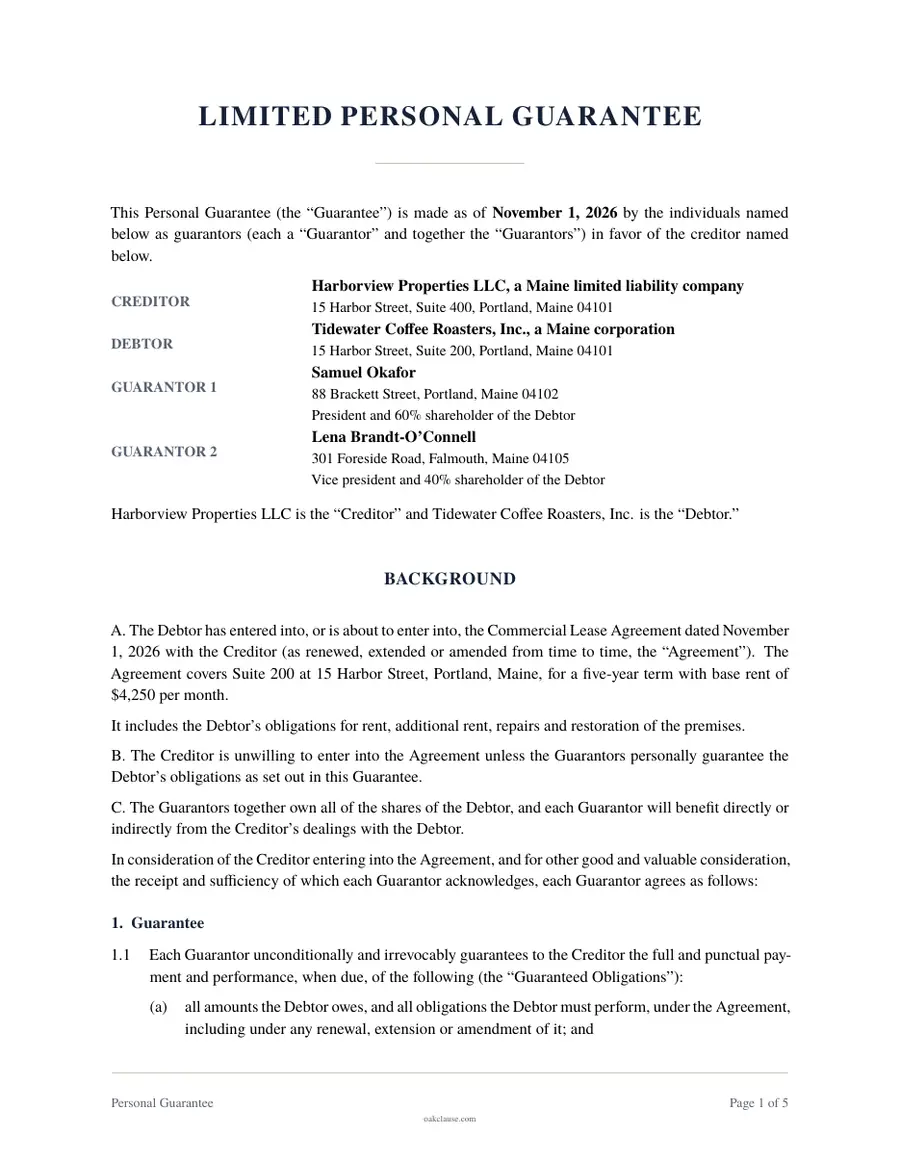
If the borrower's credit is limited, the lender may ask a third person to guarantee the loan. A guarantor promises to pay if the borrower does not. Guarantees are usually documented in a separate personal guarantee that refers to the note and should clearly state whether the lender must pursue the borrower first.
Signing and keeping records
The borrower must sign the note; many lenders also sign to show agreement to its terms. Notarization is not generally required for an ordinary promissory note, but it can help prove the signature is genuine, and documents securing real estate usually must be notarized to be recorded. The lender normally keeps the original note.
Keep a running record of every payment, with dates and amounts, and give the borrower receipts on request. When the loan is paid in full, return the original note marked paid or provide a written release, and release any collateral.
Promissory note checklist
A complete promissory note will usually address:
- Names and addresses of borrower, lender and any co-borrower
- Principal amount and date of the loan
- Interest rate, calculation method and accrual date
- Payment schedule, method and maturity date
- Prepayment rights
- Late fees and grace period
- Events of default, notice, cure and acceleration
- Collateral and how the security interest is documented
- Collection costs and governing state law
- Signatures, date and any guarantee