Parents usually make decisions for their children in person. But children spend plenty of time with other adults: grandparents during the summer, a friend's family on a road trip, a school group abroad. A short written consent lets those caregivers act when you cannot be reached and reassures doctors, airlines and border officers that the child is traveling with your permission.
Why written consent helps
In the US, parents generally have the legal authority to consent to medical treatment for their minor children. A doctor or hospital treating a child for something other than an emergency will usually want consent from a parent or legal guardian. Emergency care to prevent serious harm is generally provided without waiting for consent, but a sprained ankle, a fever or a dental problem might not qualify.
Travel works similarly. There is no single federal form for traveling with a child who is not your own, but airlines, other countries' immigration officers and even US officials may ask questions when a minor travels without both parents. A signed letter is one of the simplest ways to answer them.
Three common types of consent
Choose the document based on how long the arrangement lasts and how much authority the other adult needs.
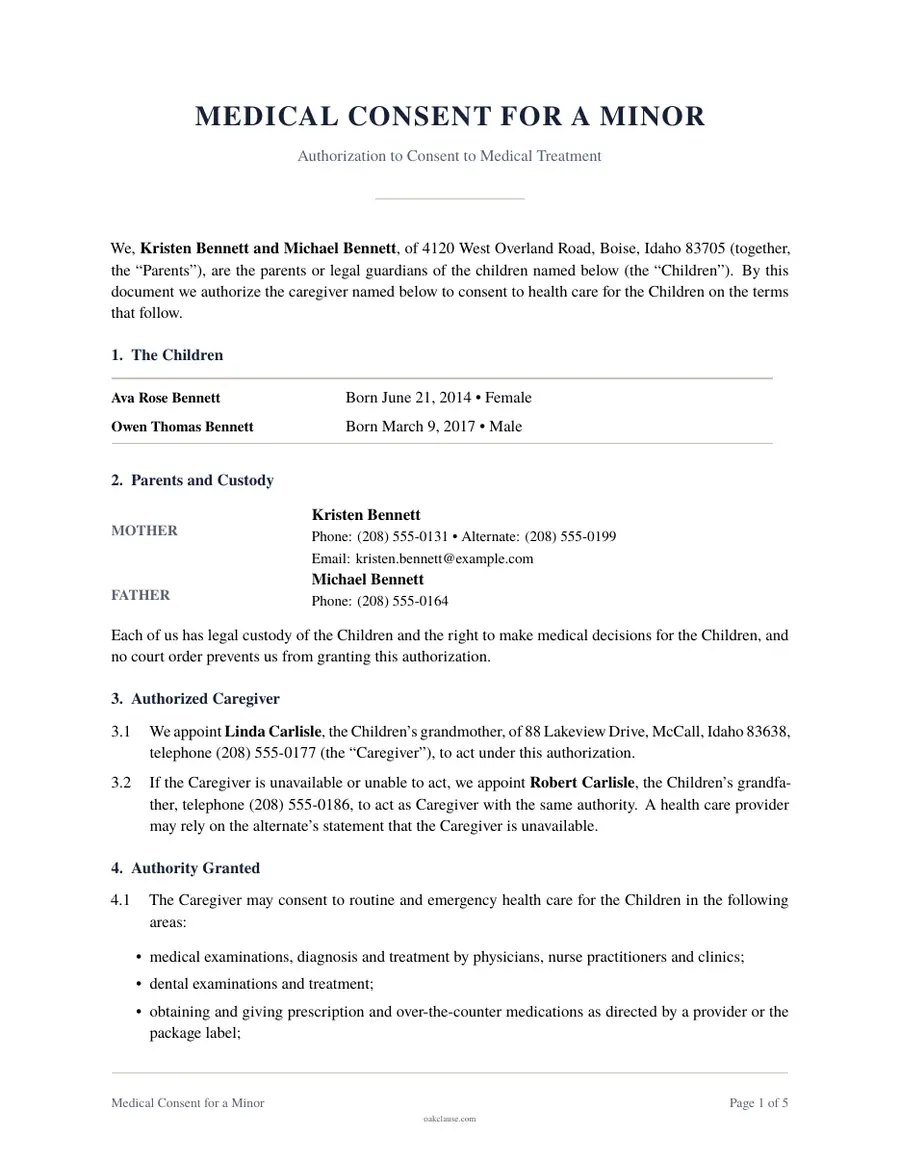
- Medical consent for a minor: authorizes a named adult to seek and approve medical or dental treatment for your child during a set period, such as a school trip or a summer with relatives
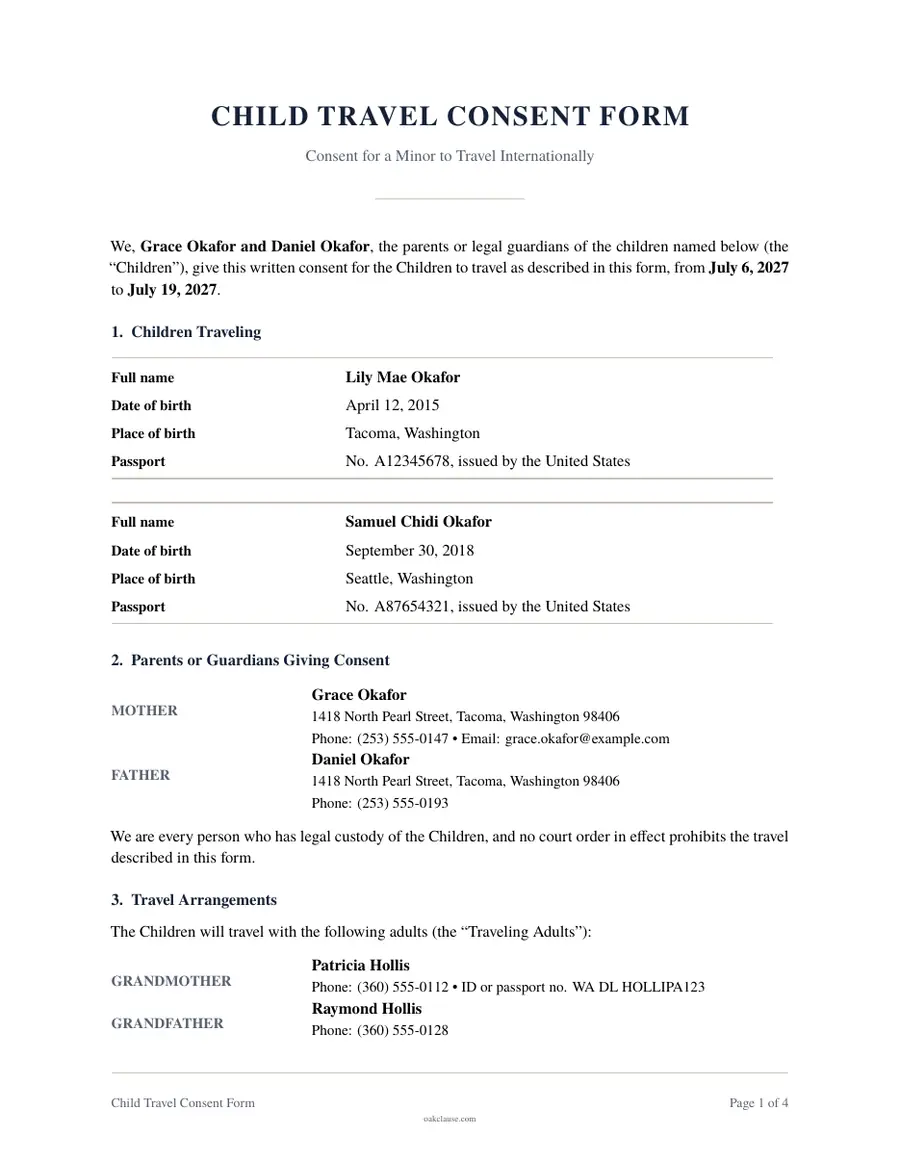
- Child travel consent: confirms that you allow your child to travel with a named adult, or alone, to a stated destination on stated dates
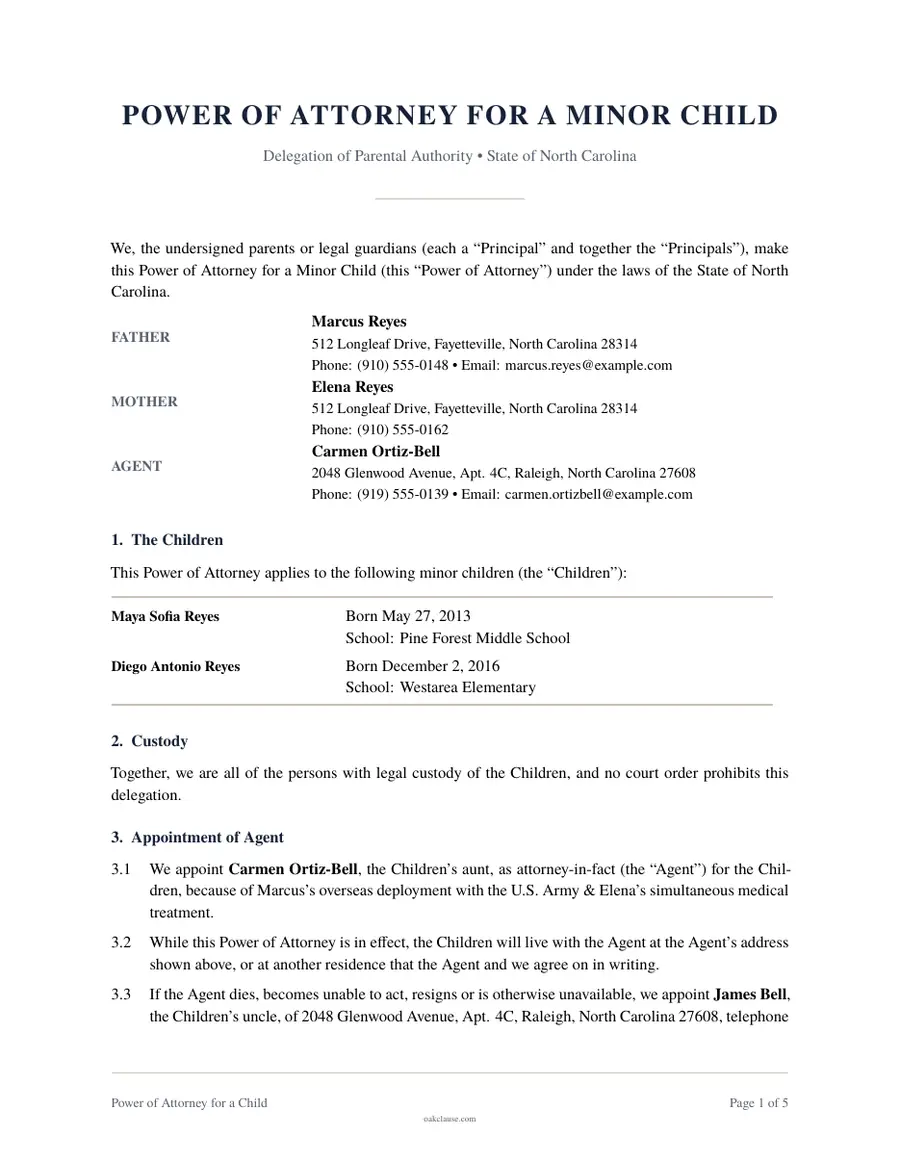
- Power of attorney for a child: delegates broader parental authority, which can include school enrollment, medical decisions and day-to-day care, often used for longer absences such as military deployment or a hospital stay
What a medical consent should include
Health care providers want to see quickly who the child is, who the caregiver is and what they are allowed to approve. A clear, one- or two-page form usually works best.
- Child's full name and date of birth
- Parents' or guardians' names, addresses and phone numbers
- Caregiver's name, relationship to the child and contact details
- The dates the consent is valid
- The scope of authority: routine care only, emergency treatment, or broader decisions
- Any limits, such as no elective procedures without contacting a parent
- Allergies, medications, chronic conditions and immunization status
- Health insurance details and a copy of the insurance card
- The child's regular doctor and dentist
- Signature of one or both parents, with the date
What a travel consent should include
A travel consent should let anyone reading it confirm the trip details at a glance. Attach a copy of the consenting parent's photo ID so the signature can be compared.
- Child's full name, date of birth and passport number for international trips
- Names and contact details of both parents, including the non-traveling parent
- Name and passport or ID number of the accompanying adult
- Destination, travel dates and flight or itinerary details
- Where the child will stay during the trip
- A statement that the parent consents to the travel
- Signatures of the non-traveling parent or parents, ideally notarized
Do both parents need to sign?
When parents share legal custody, having both sign avoids any question about whether the consent is valid. For international travel, many countries and airlines specifically look for consent from any parent who is not traveling. If one parent has sole legal custody, carry a copy of the custody order instead of, or in addition to, a consent letter. If a parent has died, a copy of the death certificate can answer questions.
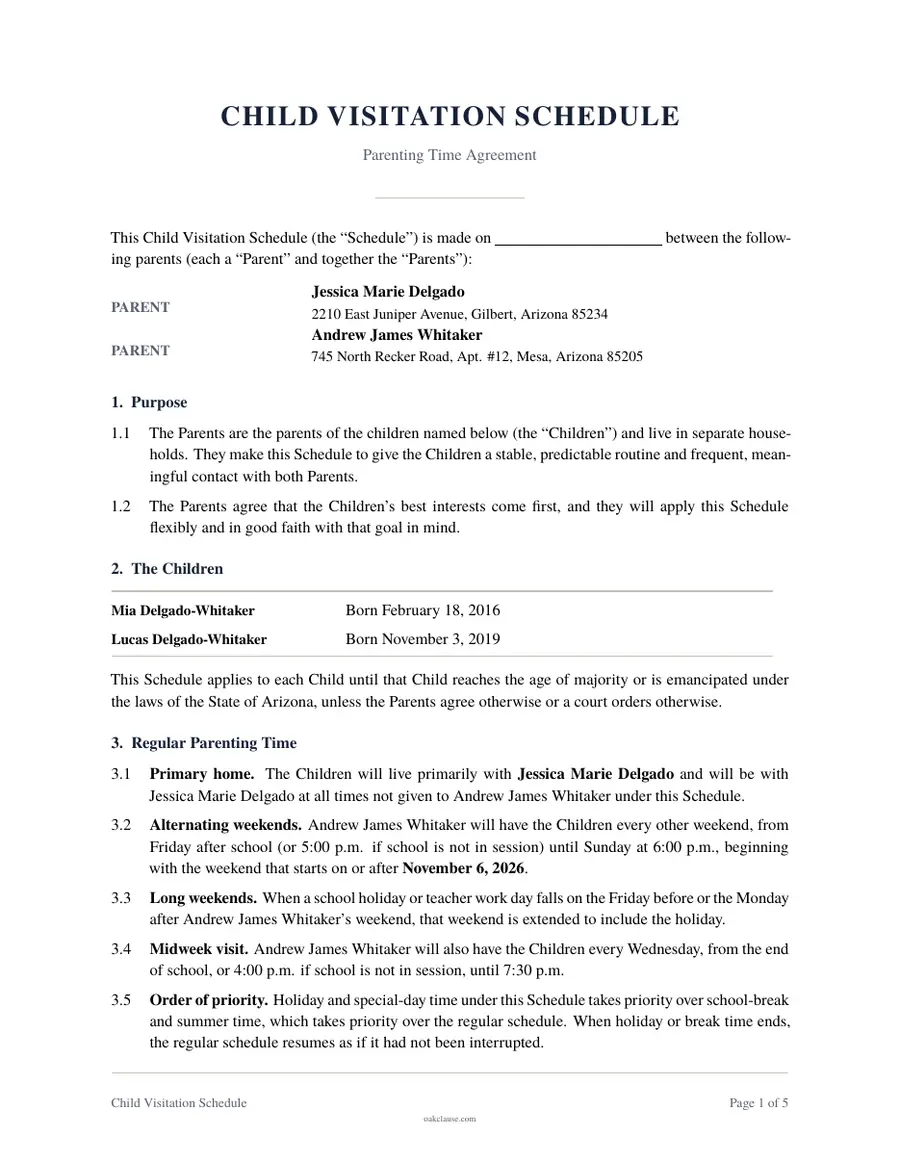
Check any existing custody order before signing. Some orders require notice to, or agreement from, the other parent before a child travels out of state or abroad.
Notarization and copies
Most consent forms are not legally required to be notarized, but notarization makes them more persuasive, particularly abroad. Some countries require it for minors entering or leaving without both parents, and some states require a power of attorney for a child to be notarized. Notarizing is usually inexpensive and quick, so it is often worth doing.
Give the caregiver the original or a certified copy, keep a copy yourself and store a photo on your phone. If the child has a serious medical condition, include a letter from the child's doctor with treatment instructions.
How long consent should last
Match the dates to the actual need. A short, defined period is easier for providers to rely on and limits the authority you are giving away. Some states cap how long a power of attorney for a child can last before it must be renewed, and many limit the powers that can be delegated, for example by excluding consent to marriage or adoption. You can usually revoke a consent or power of attorney at any time by notifying the caregiver in writing and retrieving the document.
When a consent form is not enough
A consent letter or power of attorney does not transfer custody, and it does not make the caregiver a legal guardian. If a child will live with another adult indefinitely, or if parents are unable to make decisions for a long period, a court-appointed guardianship or a formal custody arrangement may be more appropriate. Schools, government agencies and some hospitals may also require their own forms in addition to yours.
Quick checklist
Before your child leaves with another adult, make sure you have:
- Picked the right document: medical consent, travel consent or power of attorney
- Listed exact dates, destinations and caregiver details
- Included medical information and insurance details
- Collected signatures from the right parent or parents
- Considered notarization, especially for travel abroad
- Given copies to the caregiver and kept one yourself