Child Visitation Schedule
Agree in writing when your children spend time with each parent, from ordinary weeks to holidays, school breaks and summer, so everyone knows what to expect.
Includes 30 days of edits
- 5 to 20 minutes
- Print-ready PDF
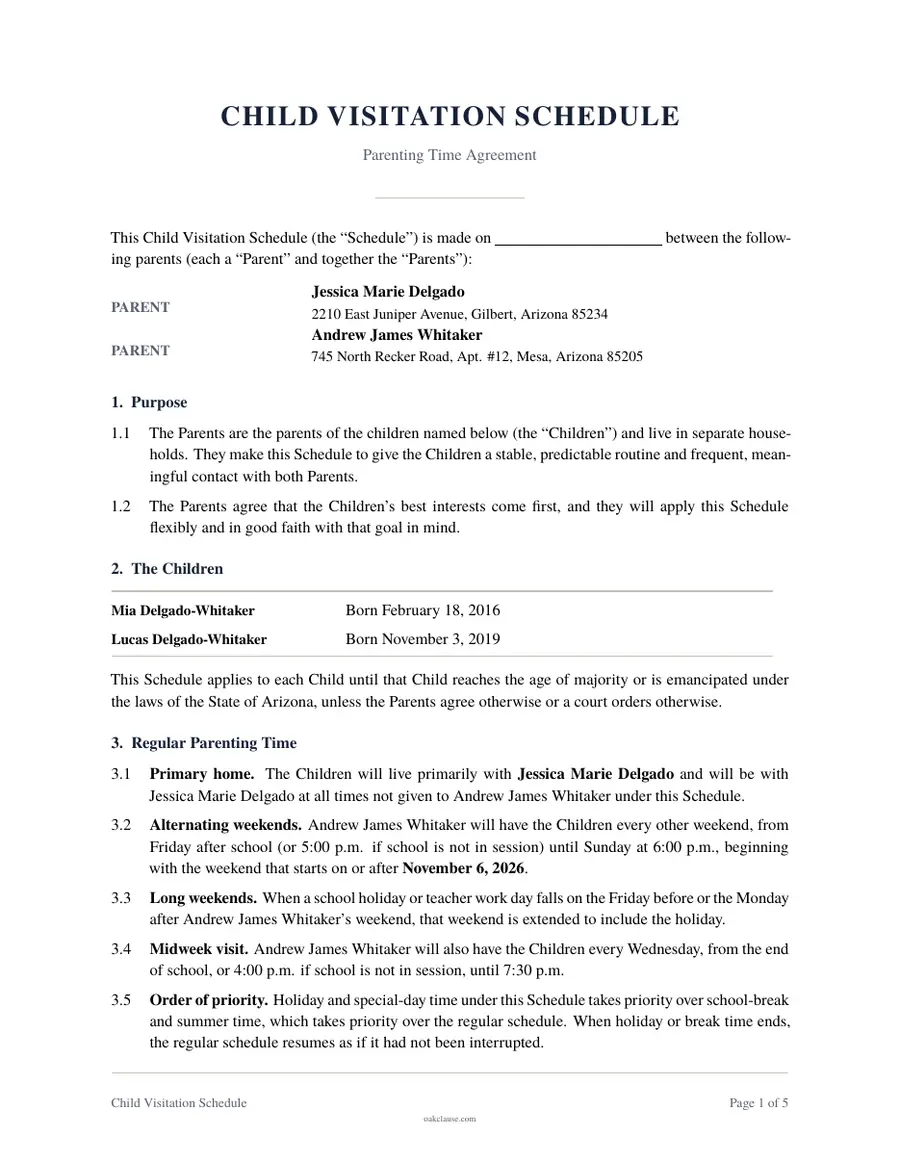
What is a Child Visitation Schedule?
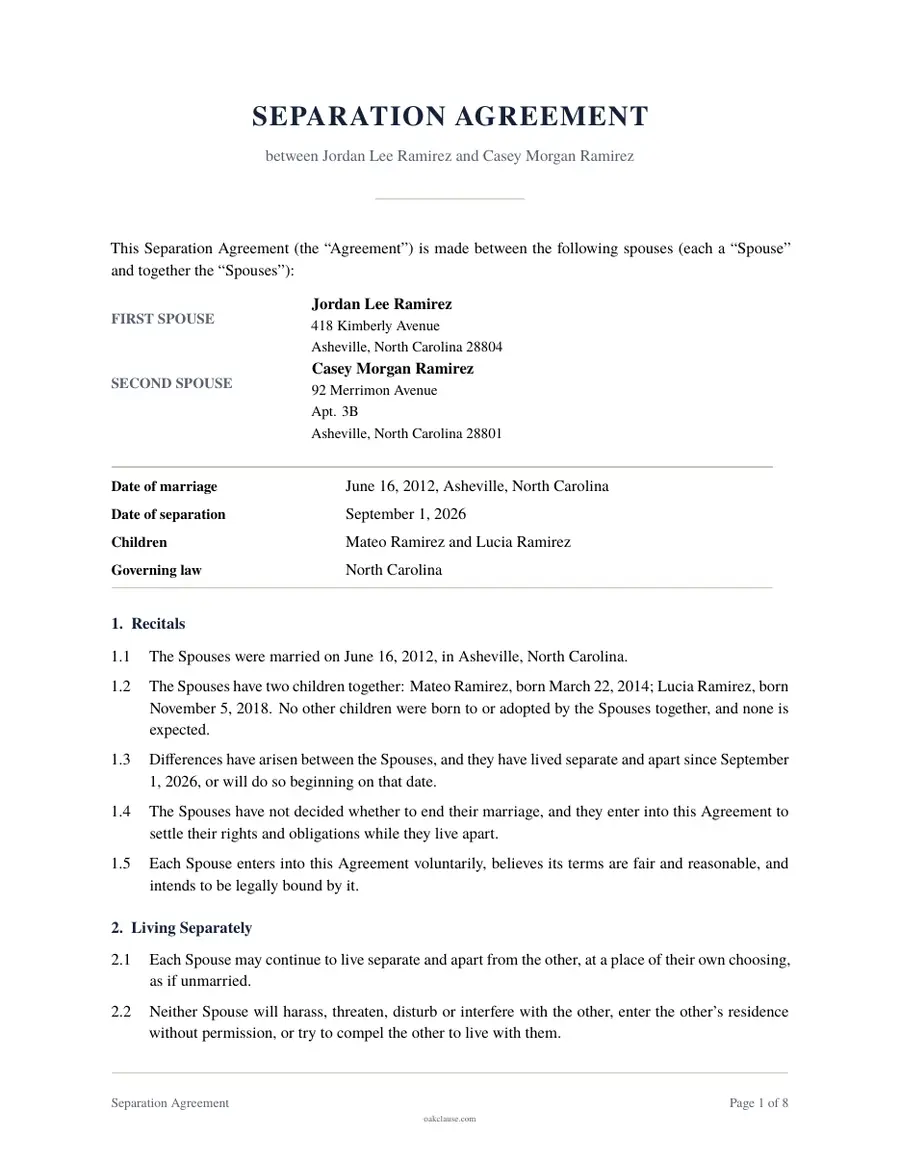
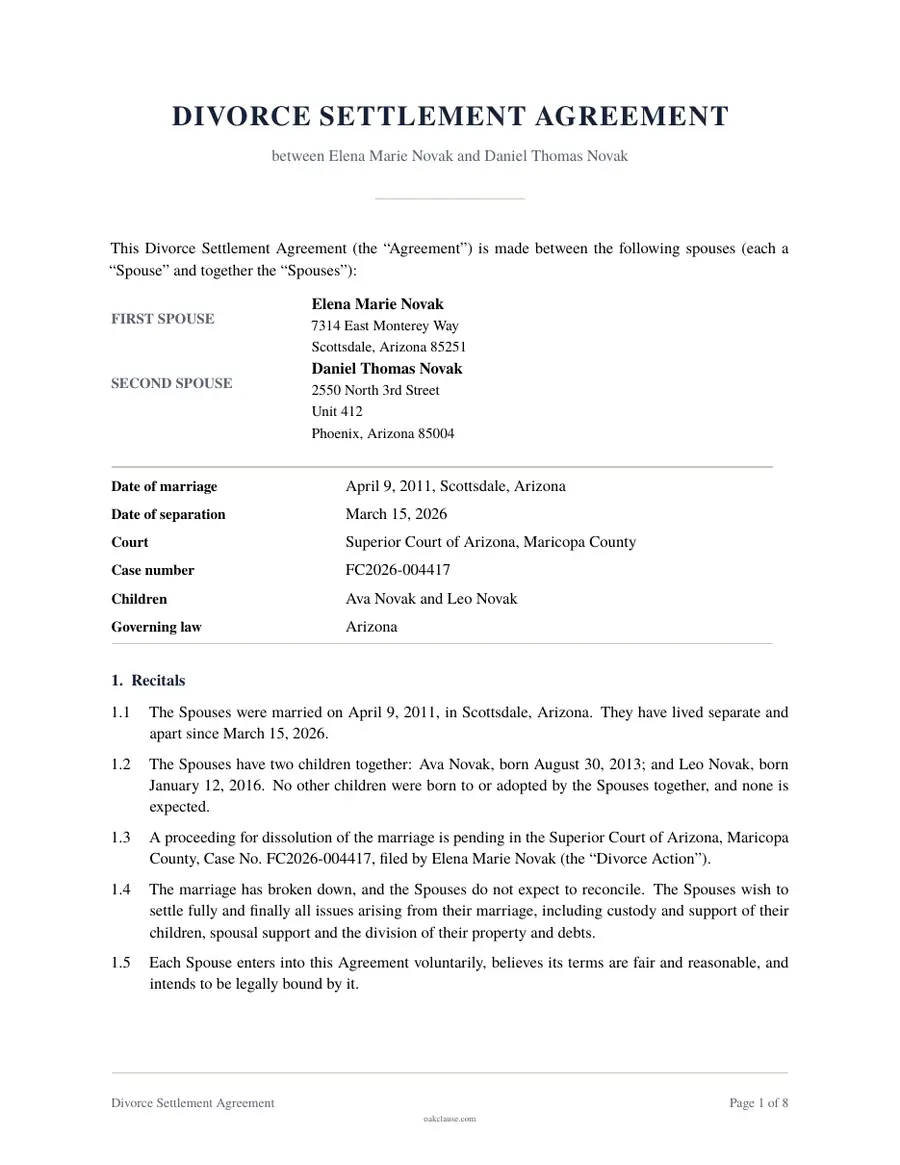
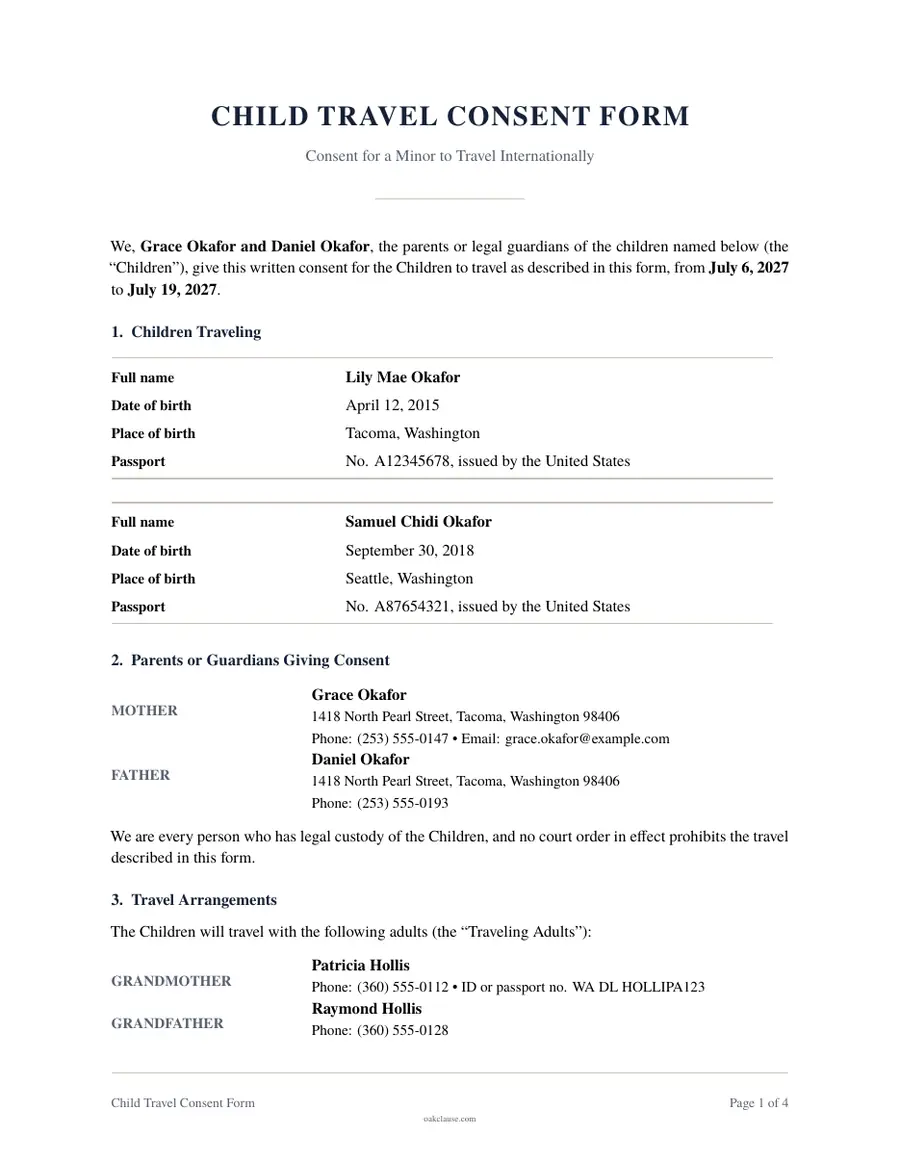
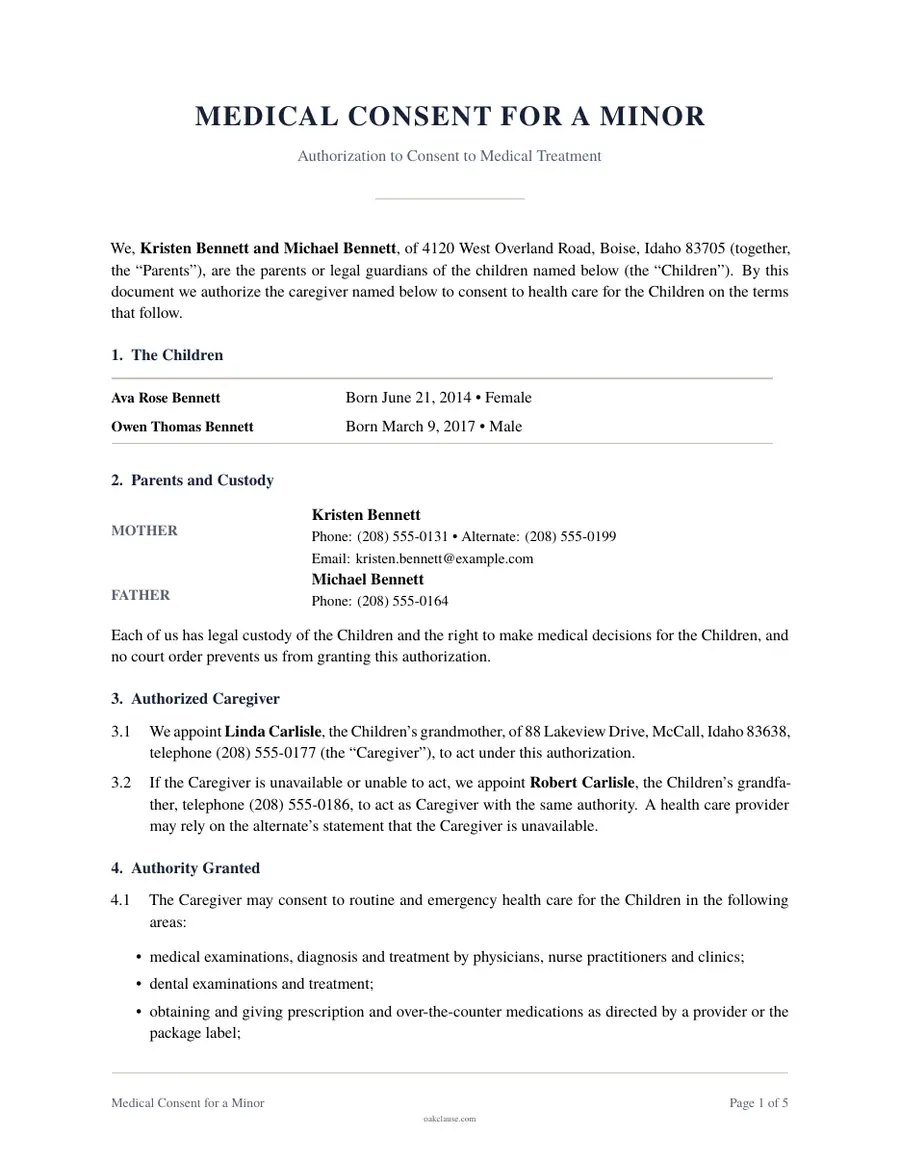
A child visitation schedule, also called a parenting time schedule, is a written agreement between parents who live apart that sets out when the children are with each parent. It covers the regular weekly routine, holidays and special days, school breaks, summer vacation, and how exchanges happen.
A clear schedule reduces arguments, helps children settle into a predictable routine, and gives both parents something specific to point to when plans change. Parents can use it on their own, attach it to a separation or divorce agreement, or submit it to a family court for approval as part of a parenting plan.
This document is built around common schedule patterns, such as alternating weekends or equal-time rotations, and lets you add your own holiday list, vacation rules, exchange logistics, phone contact and travel notice terms. A court is not bound by a private agreement and always decides based on the children's best interests, so if there is a court case, the schedule usually needs a judge's approval to become an enforceable order.
When to use it
- You and the other parent are separating and want to agree on a parenting time routine.
- You need a detailed schedule to attach to a parenting plan, separation agreement or divorce settlement.
- Your current schedule keeps causing disputes over holidays, summer or exchange times.
- A move, a new school year or a change in work hours means the old routine no longer works.
- You want a written record of an informal arrangement before asking a court to approve it.
What is included
- Parents, children and any existing court case
- Regular schedule: alternating weekends, 2-2-3, week-on/week-off or a custom pattern
- Holiday and special-day rotation table
- Mother's Day, Father's Day and birthday options
- Winter break, spring break and summer vacation rules
- Exchange location, transportation and grace period
- Phone and video contact with the other parent
- Travel notice and right of first refusal
- Make-up time, schedule changes and dispute resolution
- Signatures with an optional notary acknowledgment
How to make your Visitation Schedule
Answer the questions
Tell us about the parties and the terms you want. Most documents take about 5 to 20 minutes.
Review the preview
Check the draft as you go and change any answer. The document updates instantly.
Download, sign and keep a copy
Download a print-ready PDF, sign it with the other parties, and give everyone a copy.
Frequently asked questions
Is a visitation schedule legally binding?
Between the parents, a signed schedule is a written agreement that shows what both of you intended. To be enforceable by a court like any other custody order, it generally has to be approved by a judge and made part of a court order or judgment. Until then, courts treat it as strong evidence of the parents' arrangement but are not bound by it.
What is the difference between custody and visitation?
Legal custody is about who makes major decisions for a child, such as education and health care. Physical custody and visitation, often called parenting time, are about where the child lives and when the child is with each parent. This document focuses on the time schedule; decision-making is usually covered in a broader parenting plan or settlement agreement.
Which schedule is best for my children?
There is no single right answer. Alternating weekends with a midweek visit is common when one parent provides the main home. Equal-time schedules such as 2-2-3 or week-on/week-off work best when parents live close together and communicate well. Younger children often do better with shorter, more frequent visits. A family law attorney or mediator can help you think through your situation.
How do holidays work with the regular schedule?
In this document, holiday and special-day time takes priority over the regular weekly schedule, and school breaks and summer vacation sit in between. After a holiday ends, the regular schedule picks up where it would have been. Alternating holidays between even and odd years is a common way to keep things fair over time.
Can we change the schedule later?
Yes. Parents can agree to occasional swaps informally, and this document says written changes signed by both parents control. If the schedule has been approved by a court, a lasting change usually needs to go back to the court as a modification, even if both parents agree.
What is a right of first refusal?
It is a promise that if one parent cannot care for the children during their parenting time for longer than a set number of hours, they will first offer that time to the other parent before using a babysitter or relative. It can increase time with both parents but works best when parents live near each other.
Do I need to file this with the court?
Only if you want it to become an enforceable order or if you are already in a custody or divorce case. Many courts have their own parenting plan forms and filing requirements, so check with the clerk of the family court in the county where the children live, or ask a family law attorney.
What if the other parent does not follow the schedule?
Keep a calm, factual record of missed or late exchanges. If the schedule is part of a court order, you may be able to ask the court to enforce it. If it is only a private agreement, mediation is often the fastest next step, and you can ask a court to make the schedule an order.