When parents separate, the arrangements for their children are usually the most important part of any written agreement. Spelling out custody, parenting time and financial support in clear terms reduces conflict and gives children stability. This article explains the common terms, how courts approach them, and what a thorough agreement tends to include.
Children's terms are different from the rest of the agreement
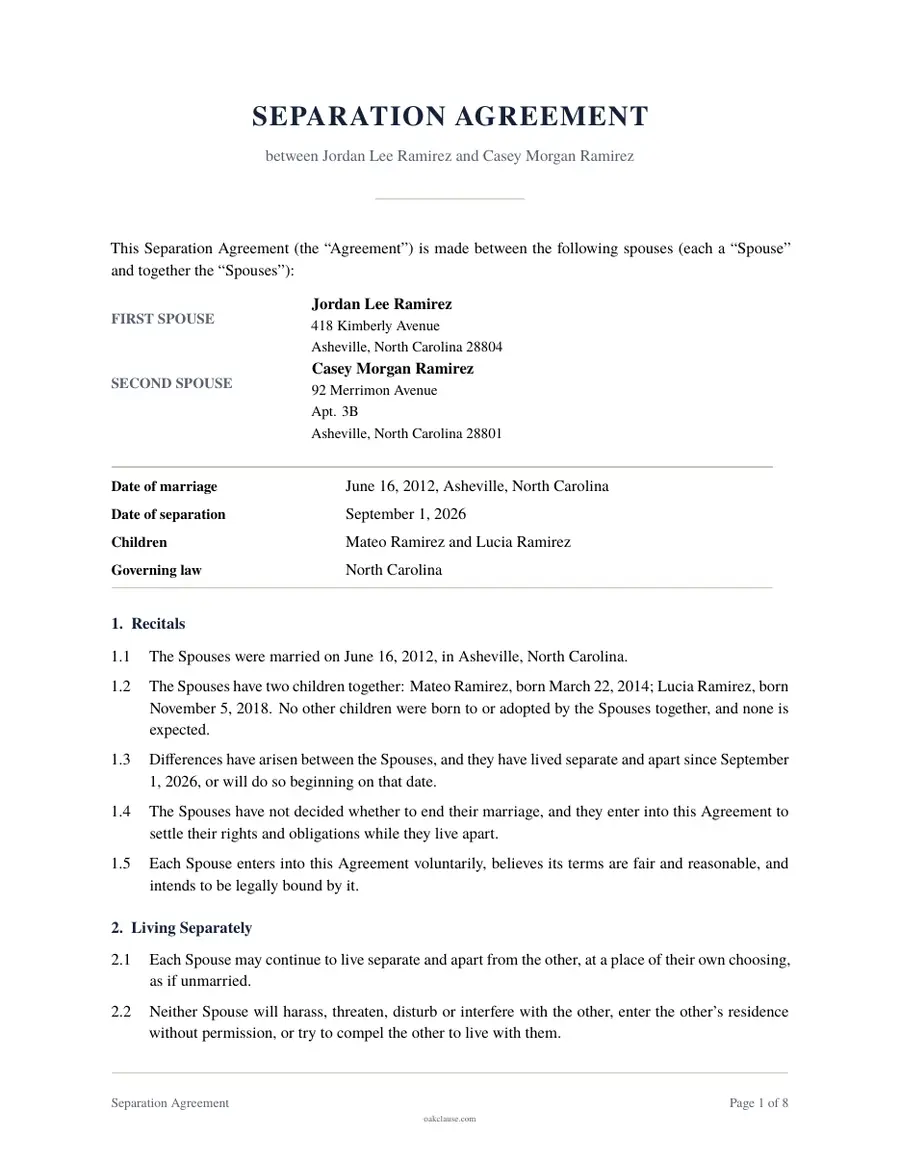
Separating spouses have wide freedom to divide property and debts however they choose. Arrangements for children are treated differently. Courts have a continuing duty to protect children's interests, so custody, parenting time and support terms are generally reviewed against the best interests of the child standard and remain open to modification later if circumstances change.
Two practical consequences follow. First, parents usually cannot bargain away a child's right to support, for example by trading a lower support amount for a bigger share of the house. Second, even a carefully negotiated parenting plan can be revisited by a court if it stops working for the child. Writing the agreement with that in mind makes it more likely to be approved and to last.
Legal custody and physical custody
Most states distinguish between two kinds of custody, though the exact labels vary. Some states have replaced the word custody with terms such as parental responsibility or decision-making and parenting time.
- Legal custody (decision-making): the authority to make major decisions about the child's education, non-emergency health care and religious upbringing
- Physical custody (parenting time): where the child lives day to day and the schedule for time with each parent
- Joint arrangements: both parents share decision-making, time or both, though not necessarily equally
- Sole arrangements: one parent holds the decision-making authority or primary residence, often with the other parent having scheduled time
Building a workable parenting schedule
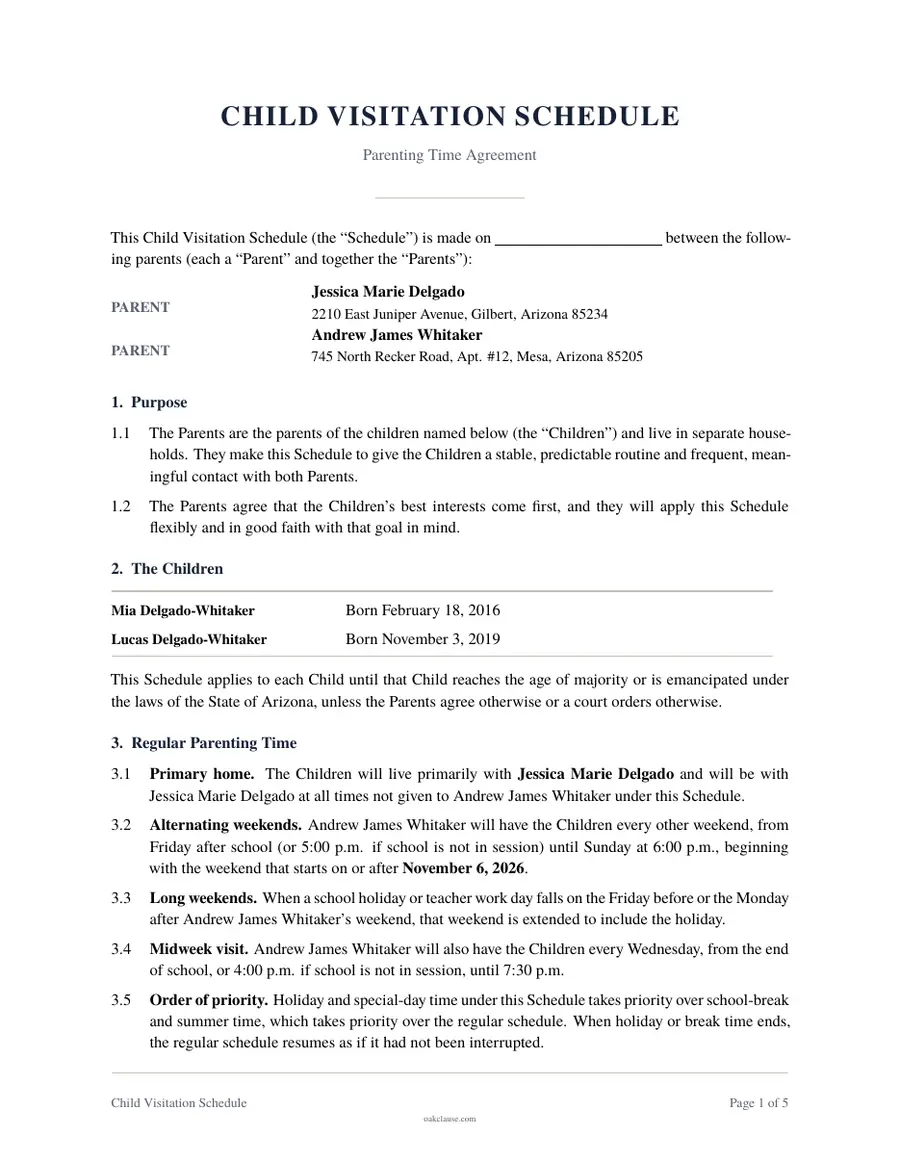
A good schedule is specific enough to prevent arguments and flexible enough to adapt as children grow. Vague phrases such as reasonable visitation tend to work only while parents get along. Common patterns include alternating weeks, a 2-2-3 rotation for younger children, or school weeks with one parent and alternating weekends with the other.
Beyond the regular schedule, think through the times of year that most often cause disputes.
- Holidays and school breaks, including how they alternate between years
- Birthdays, Mother's Day and Father's Day
- Summer vacation, with deadlines for choosing dates
- Pick-up and drop-off locations, times and who handles transport
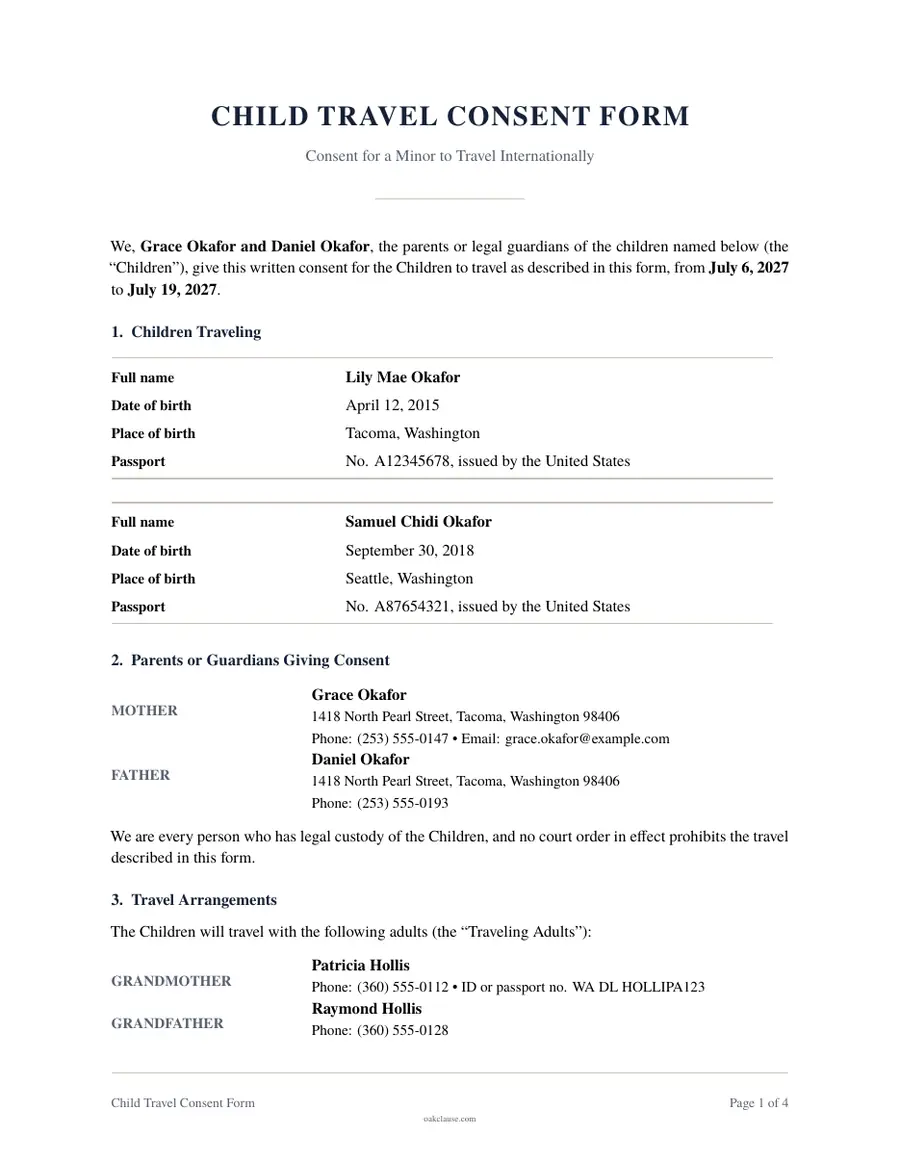
- Travel out of state or abroad, including notice and consent requirements
- Phone and video contact while the child is with the other parent
- What happens if a parent cannot use their scheduled time
Decision-making and communication
If decision-making is shared, describe how decisions will actually get made. Some agreements give one parent the final say in a particular area after good-faith consultation, such as education, to avoid deadlock. Others require mediation before either parent goes to court.
Address day-to-day communication as well: how parents will share school and medical information, whether they will use a co-parenting app, and expectations about speaking respectfully about each other in front of the children. Both parents typically keep the right to access school and medical records unless a court orders otherwise.
Relocation
A move by one parent can make a parenting schedule impossible. Many states have laws requiring advance written notice before a parent moves a child a significant distance, and some give the other parent the right to object. Your agreement can set a notice period and a process, such as negotiation and mediation, for handling a proposed move, though state law will still apply.
How child support is calculated
Every state has child support guidelines, and courts generally must use them. Most states use an income shares model, which estimates what the parents would have spent on the child if they lived together and divides that amount in proportion to their incomes. Some states use a percentage of the paying parent's income. The number of overnights each parent has often affects the result.
Parents can sometimes agree to an amount that differs from the guideline figure, but courts usually require a written explanation of why the deviation serves the child. Running the numbers through your state's official guideline calculator before negotiating is a sensible starting point.
Costs beyond basic support
Guideline support is designed to cover ordinary living costs. Many of the expenses that cause disagreements fall outside it, so it helps to address them directly and state how each will be split, often in proportion to income.
- Health insurance for the child and which parent provides it
- Uninsured medical, dental, vision and therapy costs
- Work-related child care
- Extracurricular activities, camps and lessons
- School tuition, supplies, trips and technology
- College or other post-secondary costs, which many states do not require but parents may agree to
- Who claims the child for federal and state tax purposes, and in which years
- Life insurance to secure support if a paying parent dies
Payment logistics and changes
State when support starts, the payment date and the method. In many states, payments can be routed through the state disbursement unit, which keeps an official payment record and may be required in some cases. Agree on how often parents will exchange income information and whether support will be reviewed periodically.
Support and custody can later be modified, usually only by a court and generally only when there has been a substantial change in circumstances, such as a significant income change, a new schedule or a child's changing needs. Informal side agreements to change support are risky because the court order typically remains enforceable as written until it is formally changed.
Getting the terms approved
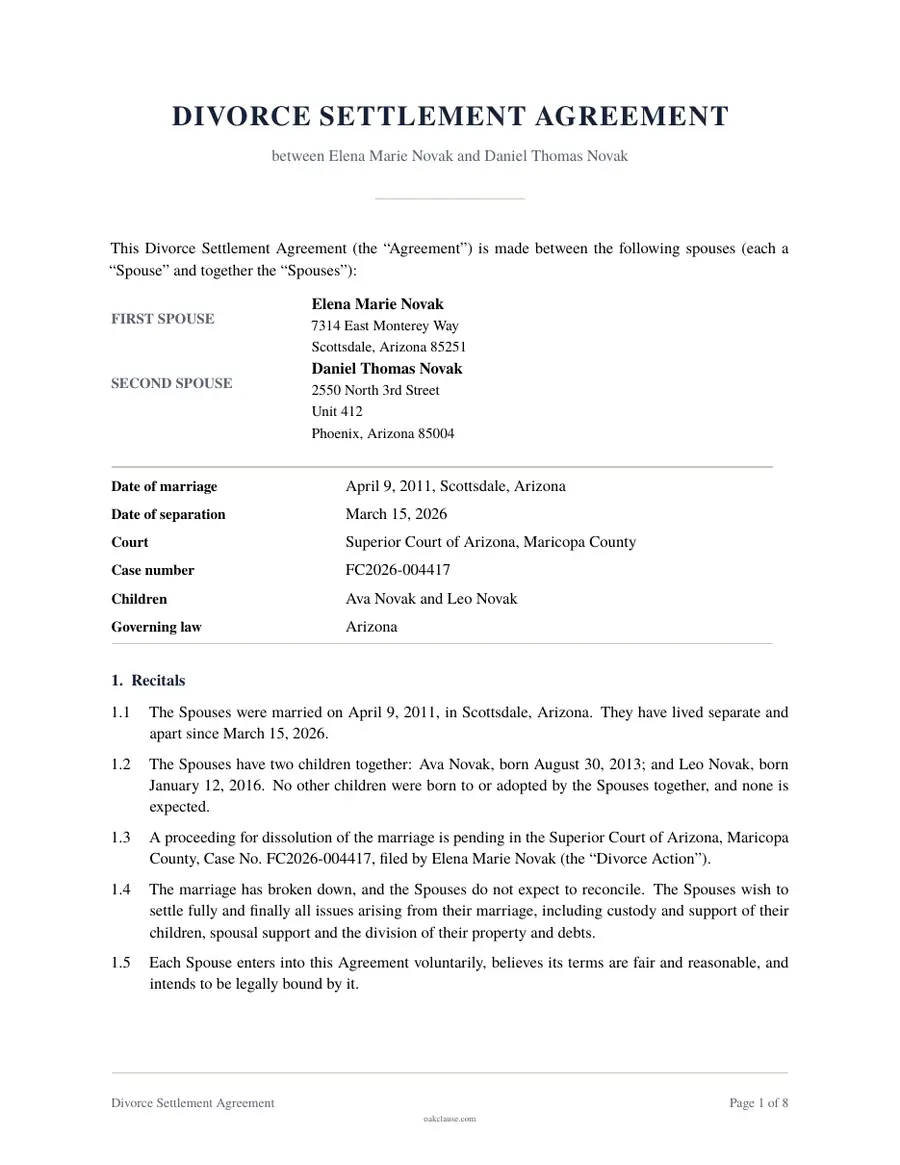
A separation agreement is often incorporated into a court order, either in a legal separation or divorce proceeding or in a separate custody and support case. Once approved, the children's terms become enforceable through the court. Procedures vary by state, and some require parenting classes or a specific parenting plan form.
Checklist for the children's section
Before signing, check that your agreement covers:
- Legal custody or decision-making, and how disagreements are resolved
- A detailed regular schedule plus holidays, vacations and special days
- Exchanges, transport and communication between the child and each parent
- Travel and relocation rules
- Child support amount, start date, method and how it was calculated
- Health insurance, extra expenses and tax arrangements
- A process for reviewing and updating the arrangements