Washington Short-Term Rental Agreement
Put a vacation or short-stay booking in writing.
Includes 30 days of edits
- 5 to 20 minutes
- Print-ready PDF
- Tailored to Washington
Short-Term Rental rules in Washington
Short-term rentals sit where landlord-tenant law, lodging law and local zoning meet, and each state draws those lines differently. States differ on when a short stay is treated as a hotel-style occupancy rather than a tenancy, how security deposits must be handled and returned, which lodging and sales taxes apply, and what a host may do if a guest stays past check-out. Cities and counties frequently add permit or registration requirements, occupancy limits, parking rules and quiet-hour ordinances. This agreement uses the selected state for governing law and defers to state and local law on taxes, deposits and the removal of guests, so check your local rules and any homeowners association restrictions before you rent.
When you create this document for Washington, the questionnaire uses Washington as the governing law and adds wording that defers to Washington requirements where they apply. Laws change, so confirm current rules with official Washington sources or a local attorney for anything critical.
What is a Short-Term Rental Agreement?
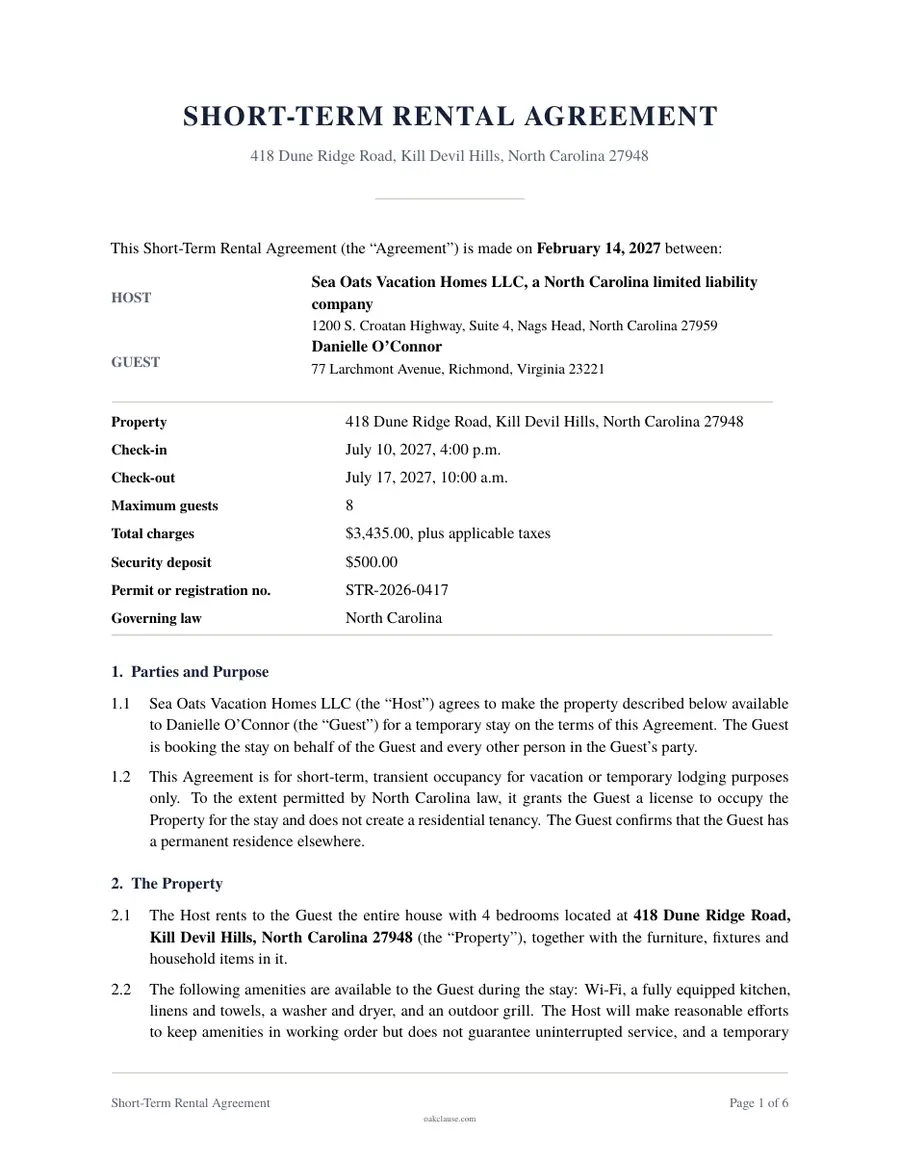
A short-term rental agreement is a contract between a host who owns or controls a home and a guest who will stay there for a limited time, usually a few nights to a few weeks. It covers the stay dates, check-in and check-out times, the total price and when it is paid, any security deposit, the cancellation policy, and the rules guests must follow while they are there.
Booking platforms have their own terms, but those terms are written for the platform, not for your property. A direct agreement lets a host spell out the details that matter for a particular home, such as how many people may stay overnight, whether events or pets are allowed, who can use the pool, and what happens if the guest damages something or does not leave on time. Guests benefit too, because the price, the refund rules and the condition of the home are agreed in advance.
Short-term rentals are regulated by states, counties and cities, and the rules change often. Many places require a permit or registration number, collect lodging or occupancy taxes, or limit how many guests and vehicles a home can hold. This agreement asks for the property's state and defers to state and local law on taxes, deposits and removal of guests who overstay.
When to use it
- You rent out a vacation home, cabin, condo or apartment for stays of a few nights or weeks.
- You take direct bookings outside a platform and want written terms with each guest.
- You rent a room or guest suite in the home where you live to short-stay visitors.
- You want a platform booking backed by property-specific house rules and a damage deposit.
- You are a guest and want the host's promises about the home and refunds in writing.
What is included
- Host, local contact, primary guest and every other overnight guest
- Property address, type, maximum occupancy, amenities and parking
- Check-in and check-out dates, times and key access
- Rental fee, cleaning fee, other charges and lodging taxes
- Payment schedule and accepted payment methods
- Security deposit and its return after check-out
- Cancellation and refund policy
- House rules on pets, smoking, events, quiet hours and vehicles
- Pool or hot tub safety, damage, liability and host entry
- Permit or registration number and signature blocks
How to make your Short-Term Rental
Answer the questions
Tell us about the parties and the terms you want. Most documents take about 5 to 20 minutes.
Review the preview
Check the draft as you go and change any answer. The document updates instantly.
Download, sign and keep a copy
Download a print-ready PDF, sign it with the other parties, and give everyone a copy.
Short-Term Rental in another state
Back to the general short-term rental page51 states shown
- ALAlabama
- AKAlaska
- AZArizona
- ARArkansas
- CACalifornia
- COColorado
- CTConnecticut
- DEDelaware
- DCDistrict of Columbia
- FLFlorida
- GAGeorgia
- HIHawaii
- IDIdaho
- ILIllinois
- INIndiana
- IAIowa
- KSKansas
- KYKentucky
- LALouisiana
- MEMaine
- MDMaryland
- MAMassachusetts
- MIMichigan
- MNMinnesota
- MSMississippi
- MOMissouri
- MTMontana
- NENebraska
- NVNevada
- NHNew Hampshire
- NJNew Jersey
- NMNew Mexico
- NYNew York
- NCNorth Carolina
- NDNorth Dakota
- OHOhio
- OKOklahoma
- OROregon
- PAPennsylvania
- RIRhode Island
- SCSouth Carolina
- SDSouth Dakota
- TNTennessee
- TXTexas
- UTUtah
- VTVermont
- VAVirginia
- WAWashington
- WVWest Virginia
- WIWisconsin
- WYWyoming
Frequently asked questions
Is a short-term rental agreement the same as a lease?
Not usually. A lease gives a tenant the right to live in a home for months or years and comes with tenant protections under state law. A short-term rental agreement covers a temporary stay, often less than a month, and many states treat it more like a lodging arrangement. Where the line falls depends on the state and sometimes on the length of the stay.
Do I need a permit to rent my home short term?
Many cities and counties require hosts to register, obtain a permit or display a license number, and some ban short-term rentals in certain neighborhoods. Homeowners associations and condo boards can also restrict them. Check with your local government and association before listing the property.
Who pays the lodging or occupancy tax?
Guests usually bear the tax, but the host or the booking platform is often responsible for collecting it and sending it to the state or local tax agency. Rates and filing rules vary widely. The agreement lets you say whether taxes are included in the price, added on top, or collected by a platform.
Can I charge a security deposit for a short stay?
Generally yes. The agreement records the amount and requires it to be returned after check-out, less documented charges for damage, missing items or unpaid fees. Some states have rules about how and when deposits must be returned, and the agreement defers to those rules.
What cancellation policy should a host offer?
That is a business choice. Common approaches are a full refund if the guest cancels a set number of days before check-in, a partial refund closer to arrival, or a non-refundable booking at a lower price. Whatever you choose, state it clearly so guests know the rule before they pay.
What happens if a guest will not leave at check-out?
The agreement requires guests to leave by the check-out time and allows the host to charge for extra time. If a guest still refuses to leave, the host must follow state and local law. In some states a guest who has stayed long enough may gain tenant rights, which means a court process may be needed. Avoid changing locks or removing belongings on your own.
Should every guest be named in the agreement?
It is a good idea. Naming everyone who will stay overnight helps you enforce the occupancy limit and know who is in the home. The primary guest signs the agreement and is responsible for the conduct of everyone in the group.
Does a short-term rental agreement need to be notarized?
No. A short-term rental agreement is valid when the host and the guest sign it, and electronic signatures are generally accepted. Notarization is not customary for short stays.
More Washington documents
Other documents people prepare for Washington, each with the state’s rules where we have checked them.
All Washington documents and rules