Oklahoma Promissory Note
Put a borrower's promise to repay in writing.
Includes 30 days of edits
- 5 to 20 minutes
- Print-ready PDF
- Tailored to Oklahoma
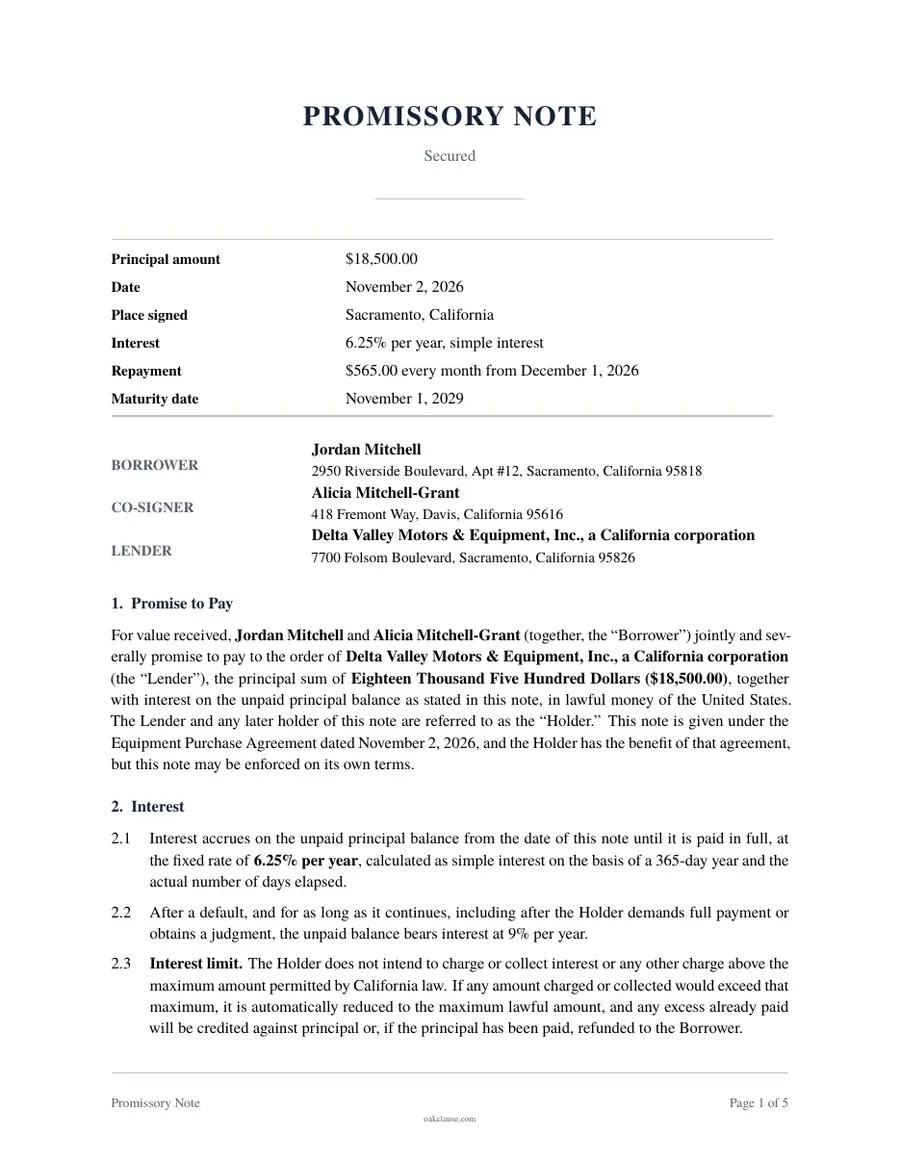
Promissory Note rules in Oklahoma
Promissory notes are governed mostly by state law. The points that differ most are the maximum interest rate a private lender may charge, limits on late charges and prepayment penalties, how long a holder has to sue on an unpaid note, and whether witnesses or notarization add any legal effect. Notes secured by real estate also depend on state rules for mortgages and deeds of trust. This note is governed by the law of the state you select, reduces any interest or charge that would exceed that state's limit, and defers to that state's requirements rather than stating specific numbers. Check your state's usury rules before choosing an interest rate.
When you create this document for Oklahoma, the questionnaire uses Oklahoma as the governing law and adds wording that defers to Oklahoma requirements where they apply. Laws change, so confirm current rules with official Oklahoma sources or a local attorney for anything critical.
What is a Promissory Note?
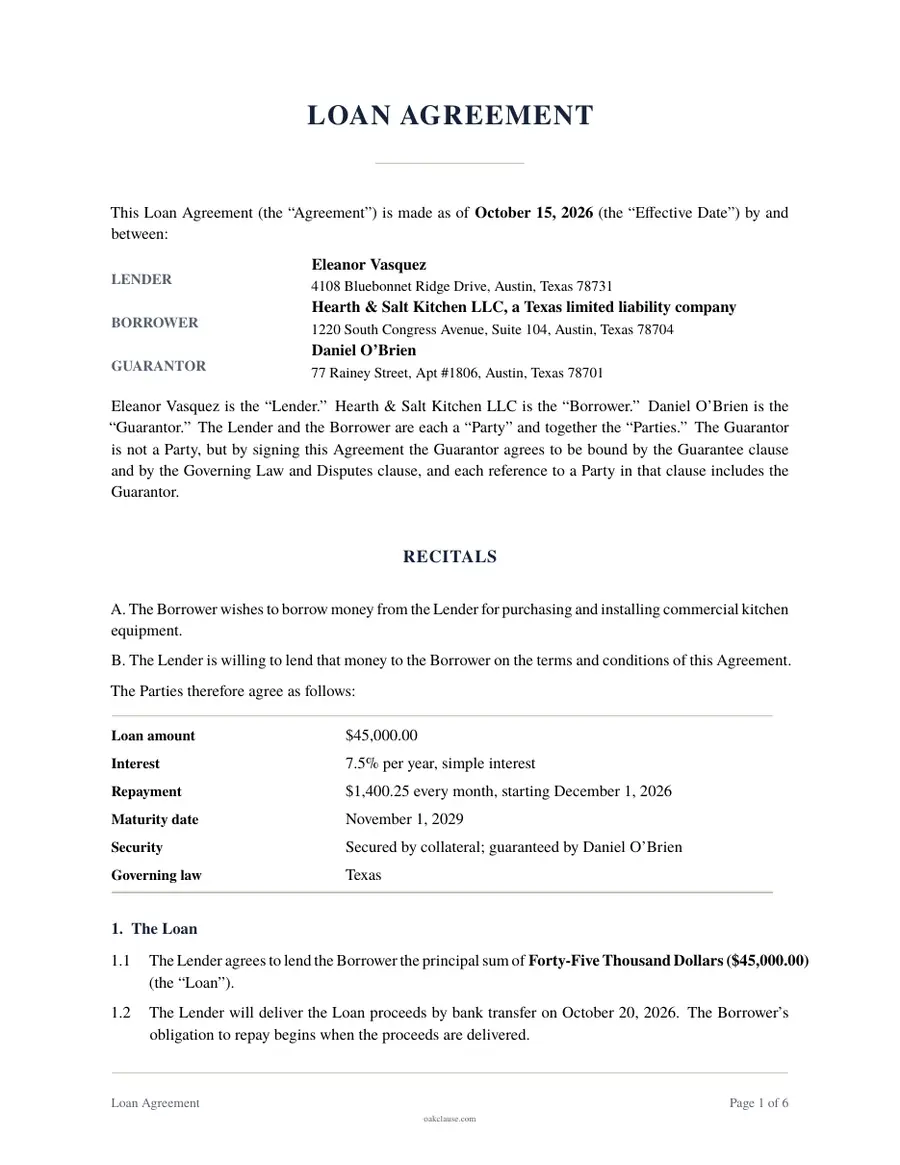
A promissory note is a written, signed promise by one person or business (the borrower, sometimes called the maker) to pay a specific amount of money to another (the lender, or holder). It states how much is owed, whether interest is charged, when and how payments are due, and what happens if the borrower falls behind.
Notes are shorter and simpler than full loan agreements. Only the borrower needs to sign, because the note records the borrower's obligation rather than a set of promises by both sides. That makes notes a common choice for personal loans between friends and family, seller financing, and loans that are already described in a separate agreement.
A clear note gives the lender evidence of the debt and a straightforward way to enforce it, and gives the borrower a fixed record of what is owed and on what terms. Interest limits and some collection rules depend on state law, so the note applies the law of the state you choose and caps any charge at the legal maximum.
When to use it
- You are lending money to a friend or family member and want a simple signed record of the debt.
- You are selling a car, equipment or a business and the buyer will pay part of the price over time.
- You want an IOU with a firm repayment date or a regular installment schedule.
- A separate loan or purchase agreement calls for the borrower to sign a note.
- You want the debt secured by collateral described in a separate security agreement.
What is included
- Borrower, optional co-signer and lender details
- Principal amount written in words and figures
- Fixed interest rate or an interest-free note, with optional default rate
- Installment, interest-only, single payment or on-demand repayment
- Place and method of payment and prepayment rights
- Optional late charge with a grace period
- Optional collateral reference
- Default, acceleration and collection costs
- Waivers, interest limit and governing law
- Borrower signatures with optional witness and notary blocks
How to make your Promissory Note
Answer the questions
Tell us about the parties and the terms you want. Most documents take about 5 to 20 minutes.
Review the preview
Check the draft as you go and change any answer. The document updates instantly.
Download, sign and keep a copy
Download a print-ready PDF, sign it with the other parties, and give everyone a copy.
Promissory Note in another state
Back to the general promissory note page51 states shown
- ALAlabama
- AKAlaska
- AZArizona
- ARArkansas
- CACalifornia
- COColorado
- CTConnecticut
- DEDelaware
- DCDistrict of Columbia
- FLFlorida
- GAGeorgia
- HIHawaii
- IDIdaho
- ILIllinois
- INIndiana
- IAIowa
- KSKansas
- KYKentucky
- LALouisiana
- MEMaine
- MDMaryland
- MAMassachusetts
- MIMichigan
- MNMinnesota
- MSMississippi
- MOMissouri
- MTMontana
- NENebraska
- NVNevada
- NHNew Hampshire
- NJNew Jersey
- NMNew Mexico
- NYNew York
- NCNorth Carolina
- NDNorth Dakota
- OHOhio
- OKOklahoma
- OROregon
- PAPennsylvania
- RIRhode Island
- SCSouth Carolina
- SDSouth Dakota
- TNTennessee
- TXTexas
- UTUtah
- VTVermont
- VAVirginia
- WAWashington
- WVWest Virginia
- WIWisconsin
- WYWyoming
Frequently asked questions
What is a promissory note?
It is a signed promise by a borrower to pay a set amount of money to a lender, either on a fixed date, in installments or when the lender asks. It works as written proof of the debt and its terms.
Is a promissory note legally binding?
Yes, a properly completed and signed note is generally an enforceable contract. To be useful in a dispute, it should clearly state the amount, the parties, the repayment terms and the borrower's signature. Interest that exceeds the state's legal limit may be unenforceable.
Does a promissory note need to be notarized?
Usually not. Most notes are valid with only the borrower's signature. Notarization or witnesses add proof that the borrower really signed, and a note tied to real estate may be accompanied by a mortgage or deed of trust that does need to be notarized for recording.
Does the lender need to sign a promissory note?
No. The note is the borrower's promise, so only the borrower and any co-signer sign it. The lender keeps the original signed note until the debt is paid and then returns it marked paid or gives the borrower a written release.
What is the difference between a secured and an unsecured note?
An unsecured note relies only on the borrower's promise. A secured note is backed by collateral, such as a vehicle or equipment, that the lender can claim if the borrower defaults. The security interest itself is usually created by a separate security agreement, mortgage or deed of trust.
What is a demand note?
A demand note has no fixed repayment date. The borrower must repay when the lender asks, within the notice period stated in the note. Demand notes are common for informal family loans where the timing of repayment is flexible.
Can I charge interest on a loan to a family member?
Yes, as long as the rate is within your state's legal limit. If you charge little or no interest on a large loan, federal tax rules on below-market loans may apply, so it can be worth asking a tax adviser before signing.
What happens when the note is paid off?
The lender should give the borrower a written acknowledgment that the debt is paid in full and return the original note, often marked paid. If the note was secured, the lender should also release the collateral, such as by signing a lien release or a satisfaction of mortgage.
More Oklahoma documents
Other documents people prepare for Oklahoma, each with the state’s rules where we have checked them.
All Oklahoma documents and rules