Debt Settlement Agreement
Resolve an unpaid debt for an agreed amount, paid at once or over time, and get the creditor's release in writing once the settlement is paid.
Includes 30 days of edits
- 5 to 20 minutes
- Print-ready PDF
What is a Debt Settlement Agreement?
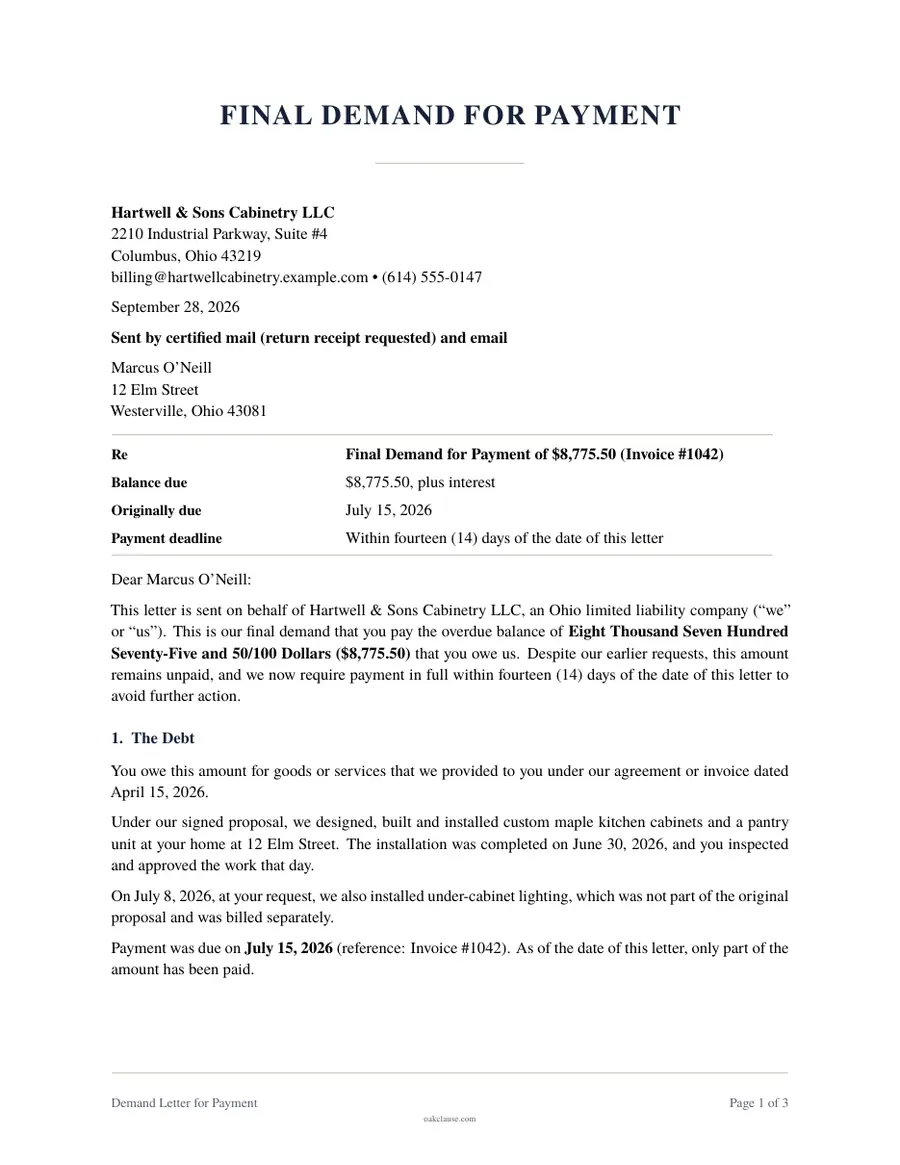
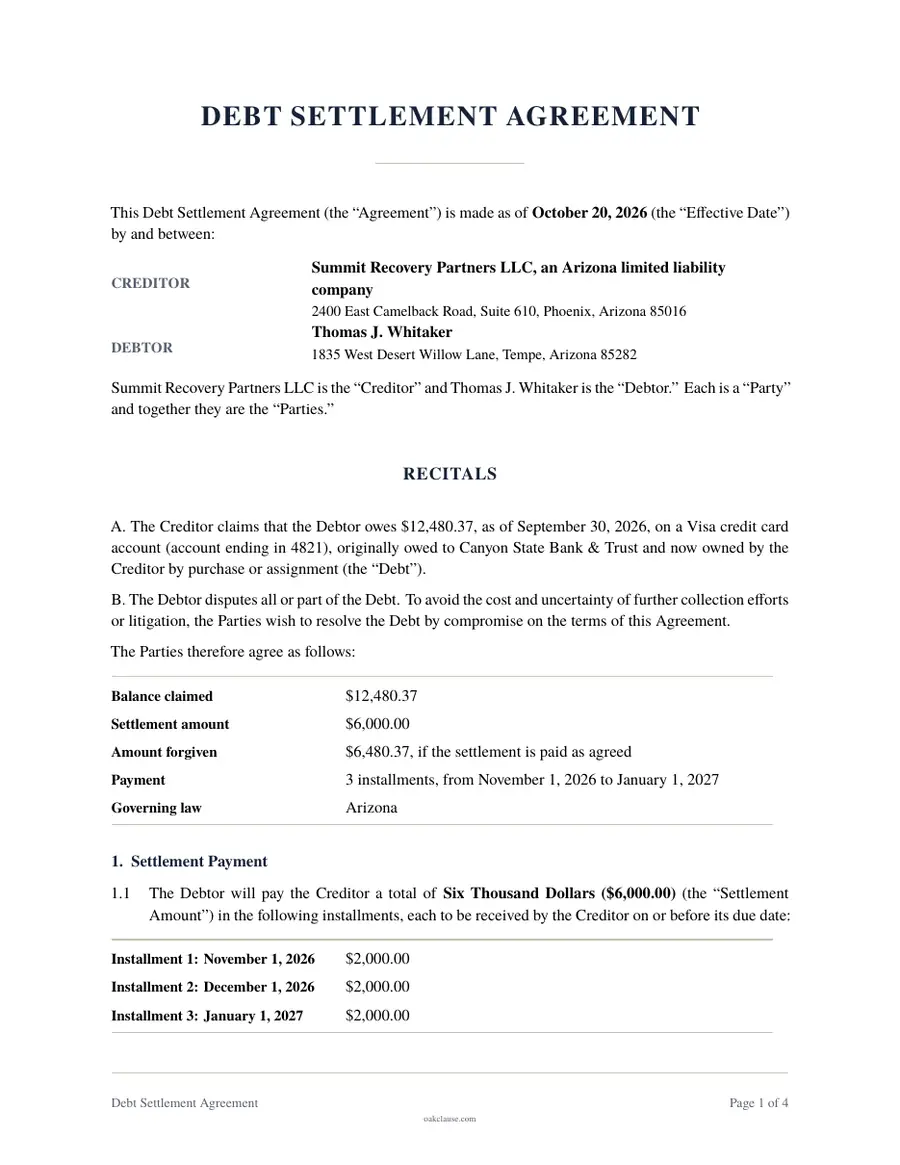
A debt settlement agreement is a contract between a creditor and a debtor to resolve an outstanding debt, usually for less than the full balance. The debtor agrees to pay a set amount, either in one payment or on a payment plan, and the creditor agrees to accept that amount as full satisfaction of the debt and release any further claim once it is paid.
Settling a debt on paper protects both sides. The debtor gets proof that paying the agreed amount ends the obligation, along with the creditor's promises about collection activity, credit reporting and any pending lawsuit. The creditor gets a clear payment commitment and a defined right to act if the debtor does not follow through.
Settlements are common for credit card balances, medical bills, unpaid invoices, personal loans and accounts held by collection agencies. Because the forgiven part of a debt can sometimes count as taxable income, and because collection and credit reporting are regulated, both sides are better served by spelling out exactly what has been agreed.
When to use it
- A creditor has agreed to accept less than the full balance of a past-due account.
- You want to replace a disputed balance with a fixed amount and a payment plan.
- A collection agency or debt buyer has offered a settlement and you want it in writing before paying.
- A business wants to resolve a customer's unpaid invoices without going to court.
- A lawsuit over a debt is pending and the parties have agreed to settle and dismiss it.
What is included
- Creditor and debtor details, including original creditor information
- Description of the debt, account reference and current balance
- Settlement amount and the amount forgiven
- Lump-sum payment or installment schedule
- Payment method and instructions
- Release of the debt once the settlement is paid
- Credit reporting and end of collection activity
- Dismissal of a pending lawsuit
- Default, cure period and reinstatement of the full balance
- Tax notice, confidentiality and governing law
How to make your Debt Settlement
Answer the questions
Tell us about the parties and the terms you want. Most documents take about 5 to 20 minutes.
Review the preview
Check the draft as you go and change any answer. The document updates instantly.
Download, sign and keep a copy
Download a print-ready PDF, sign it with the other parties, and give everyone a copy.
Frequently asked questions
What is a debt settlement agreement?
It is a written contract in which a creditor agrees to accept a specific payment, usually less than the full balance, to resolve a debt. Once the debtor pays as agreed, the creditor releases the rest of the debt and stops collecting it.
Should I get a settlement in writing before paying?
It is generally a good idea. A signed agreement shows that the creditor accepted the amount as full satisfaction of the debt. Without one, a debtor may have trouble proving that a smaller payment settled the account, and the creditor or a later buyer of the debt might try to collect the rest.
Is forgiven debt taxable?
It can be. Canceled debt is often treated as taxable income, and some creditors must report forgiven amounts to the IRS. There are exceptions, for example in some cases of insolvency or bankruptcy. A tax adviser can explain how the rules apply to a particular settlement.
How will a settled debt appear on my credit report?
Creditors that report to credit bureaus often report a settled account as settled for less than the full balance, which may be viewed less favorably than paid in full. The agreement records what the creditor has agreed to report, but credit bureaus decide how information is displayed.
What happens if the debtor misses a settlement payment?
That depends on what the agreement says. Many settlements give the debtor a short period to catch up after notice. If the debtor still does not pay, the creditor may be able to cancel the settlement and pursue the full original balance, minus payments already made, or sue for the unpaid settlement amount.
Can I settle a debt that is already in a lawsuit?
Yes. Many cases settle before trial. The agreement can require the creditor to dismiss the case once the settlement is paid, or to file a dismissal right away. Court procedures for dismissing a case differ by state, so the parties should follow the court's rules.
Can a collection agency settle a debt?
A collection agency or debt buyer can settle a debt it owns or is authorized to collect. The agreement includes a statement that the creditor has the authority to settle and release the debt, which protects the debtor if the original creditor later claims the balance.