Tennessee Loan Agreement
Lend or borrow money on clear written terms.
Includes 30 days of edits
- 5 to 20 minutes
- Print-ready PDF
- Tailored to Tennessee
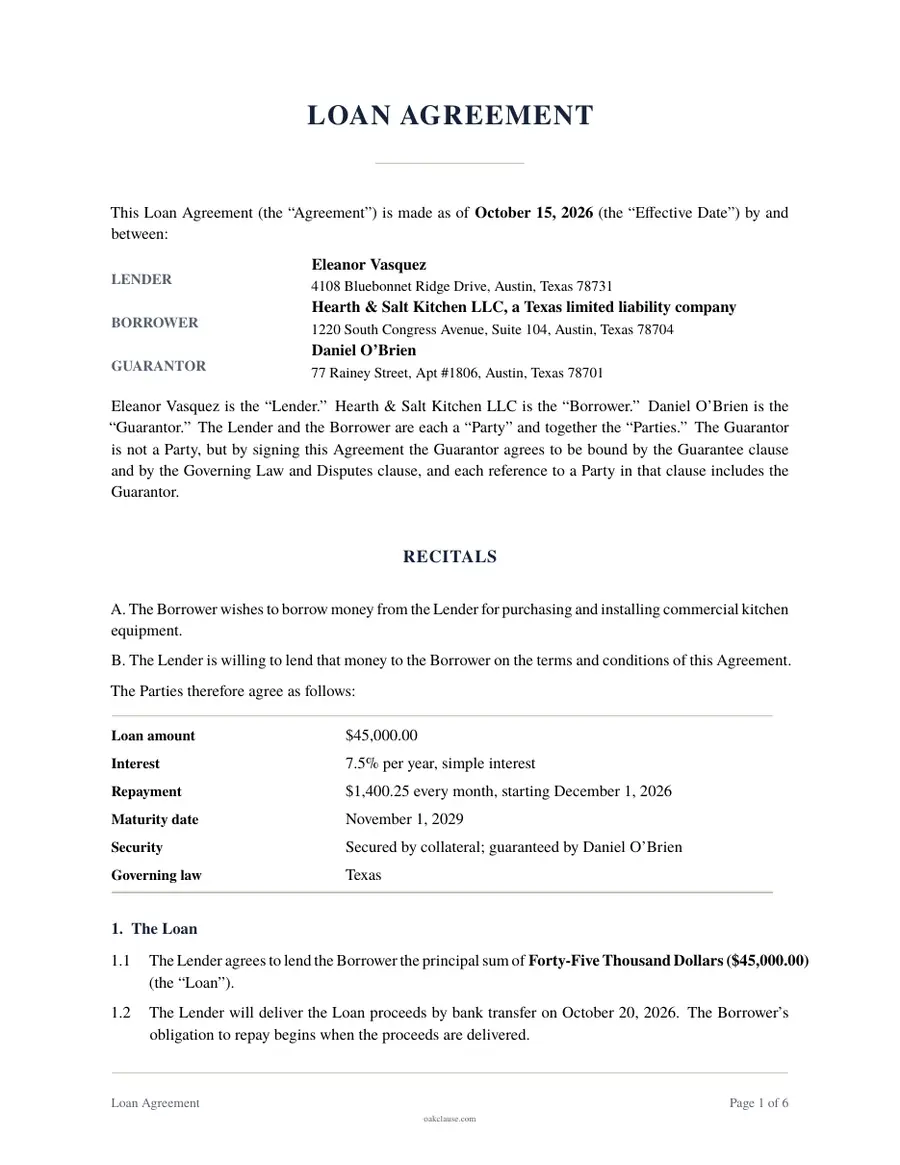
Loan Agreement rules in Tennessee
The main legal point that changes from state to state is the maximum interest a private lender may charge. Every state has its own usury rules, with different limits and exceptions depending on the amount, the type of borrower and whether the lender is licensed. States also regulate late charges, the steps a lender must take to repossess or sell collateral, how a security interest is perfected and how long a lender has to sue on a missed payment. This agreement is governed by the law of the state you select and includes a savings clause that reduces any charge to the maximum that state allows, but it does not set a specific rate limit for you. Check your state's interest rules before choosing a rate, and note that lenders who make loans regularly may need a state license.
When you create this document for Tennessee, the questionnaire uses Tennessee as the governing law and adds wording that defers to Tennessee requirements where they apply. Laws change, so confirm current rules with official Tennessee sources or a local attorney for anything critical.
What is a Loan Agreement?
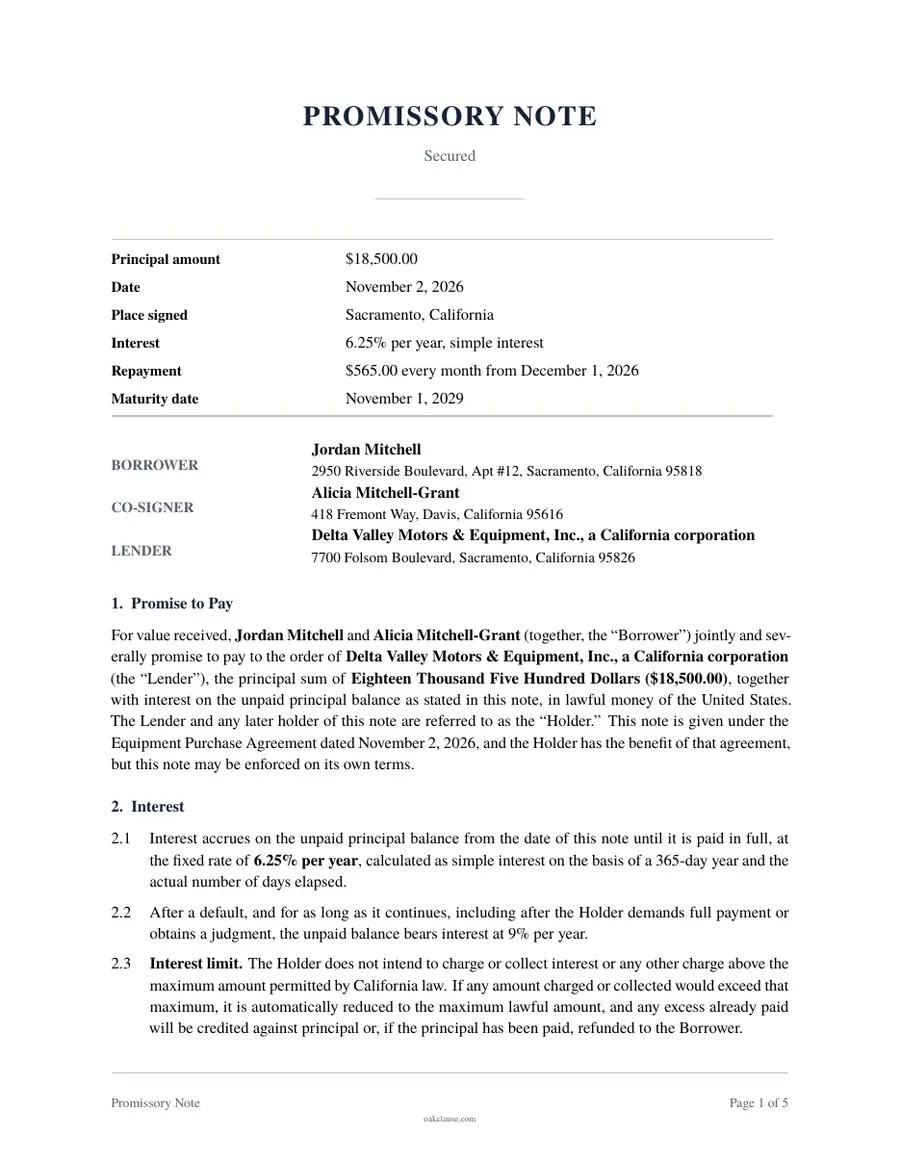
A loan agreement is a contract between a lender, who provides money, and a borrower, who promises to pay it back. It records how much is being lent, whether interest is charged, how and when repayment happens, and what each side can do if the borrower falls behind.
Compared with a short promissory note, a loan agreement is the fuller document. Besides the promise to repay, it can cover the purpose of the loan, collateral, a guarantor, the borrower's promises while the loan is outstanding, the events that count as a default and how disputes will be resolved. Both the lender and the borrower sign it.
Putting a loan in writing helps whether the money is going to a friend, a family member, a small business or a private buyer. It avoids misunderstandings about what was agreed, gives the lender evidence to enforce repayment, and gives the borrower certainty about the payments and the limits on what can be charged. Interest limits and some lending rules are set by each state, so the agreement applies the law of the state you choose.
When to use it
- You are lending money to a friend, relative or acquaintance and want the repayment terms in writing.
- You are borrowing from a private lender and want a clear schedule and a cap on charges.
- A business owner is lending to, or borrowing from, another business or individual.
- You want the loan to be secured by a vehicle, equipment or other property.
- A third person has agreed to guarantee the borrower's repayment.
- You are replacing an informal or verbal loan arrangement with a signed contract.
What is included
- Lender, borrower and optional co-borrower details
- Loan amount, funding date and permitted purpose
- Fixed interest rate or an interest-free loan, with optional default rate
- Installment, interest-only, single payment, demand or custom payment schedule
- Prepayment rights, late charges and application of payments
- Optional collateral and security interest
- Optional guarantor signature and guarantee clause
- Borrower representations and ongoing promises
- Events of default, acceleration and lender remedies
- Governing law, dispute resolution, notices and optional notary acknowledgment
How to make your Loan Agreement
Answer the questions
Tell us about the parties and the terms you want. Most documents take about 5 to 20 minutes.
Review the preview
Check the draft as you go and change any answer. The document updates instantly.
Download, sign and keep a copy
Download a print-ready PDF, sign it with the other parties, and give everyone a copy.
Loan Agreement in another state
Back to the general loan agreement page51 states shown
- ALAlabama
- AKAlaska
- AZArizona
- ARArkansas
- CACalifornia
- COColorado
- CTConnecticut
- DEDelaware
- DCDistrict of Columbia
- FLFlorida
- GAGeorgia
- HIHawaii
- IDIdaho
- ILIllinois
- INIndiana
- IAIowa
- KSKansas
- KYKentucky
- LALouisiana
- MEMaine
- MDMaryland
- MAMassachusetts
- MIMichigan
- MNMinnesota
- MSMississippi
- MOMissouri
- MTMontana
- NENebraska
- NVNevada
- NHNew Hampshire
- NJNew Jersey
- NMNew Mexico
- NYNew York
- NCNorth Carolina
- NDNorth Dakota
- OHOhio
- OKOklahoma
- OROregon
- PAPennsylvania
- RIRhode Island
- SCSouth Carolina
- SDSouth Dakota
- TNTennessee
- TXTexas
- UTUtah
- VTVermont
- VAVirginia
- WAWashington
- WVWest Virginia
- WIWisconsin
- WYWyoming
Frequently asked questions
What is the difference between a loan agreement and a promissory note?
A promissory note is a short, one-sided promise by the borrower to repay. A loan agreement is a two-sided contract signed by both parties that also covers the purpose, collateral, representations, default and dispute resolution. Simple personal loans often use only a note; larger or secured loans usually use a full agreement.
Do I have to charge interest on a personal loan?
No. You can make an interest-free loan. Be aware that the IRS has rules on below-market loans, and large interest-free loans between family members can have tax consequences for the lender. A tax adviser can explain whether those rules apply to your loan.
Is there a maximum interest rate I can charge?
Yes, in most states. Usury laws cap the interest a lender can charge, and the cap and its exceptions differ by state. This agreement includes a clause that automatically reduces any interest or fee to the legal maximum, but it is still important to choose a lawful rate from the start.
Does a loan agreement need to be notarized?
In most cases a loan agreement is valid once both parties sign it, without a notary. Notarizing it adds proof that the signatures are genuine, and it may be needed if collateral such as real estate will be recorded. You can add a notary acknowledgment when you create the document.
What is collateral and should the loan be secured?
Collateral is property the lender can look to if the borrower does not repay, such as a car, equipment or inventory. A secured loan gives the lender more protection. Real estate is normally secured with a separate mortgage or deed of trust, and some collateral requires a filing or title notation to fully protect the lender.
What happens if the borrower misses a payment?
The agreement lets you set a grace period and late charge. If the borrower does not pay within the cure period, the lender can declare a default, demand the full balance immediately and use the remedies the law allows, including going to court or enforcing a security interest.
Can the borrower pay the loan off early?
You decide. The agreement can allow prepayment at any time without penalty, or require the lender's consent. Some states restrict prepayment penalties on certain loans, so many private lenders simply allow early repayment.
What does a guarantor do?
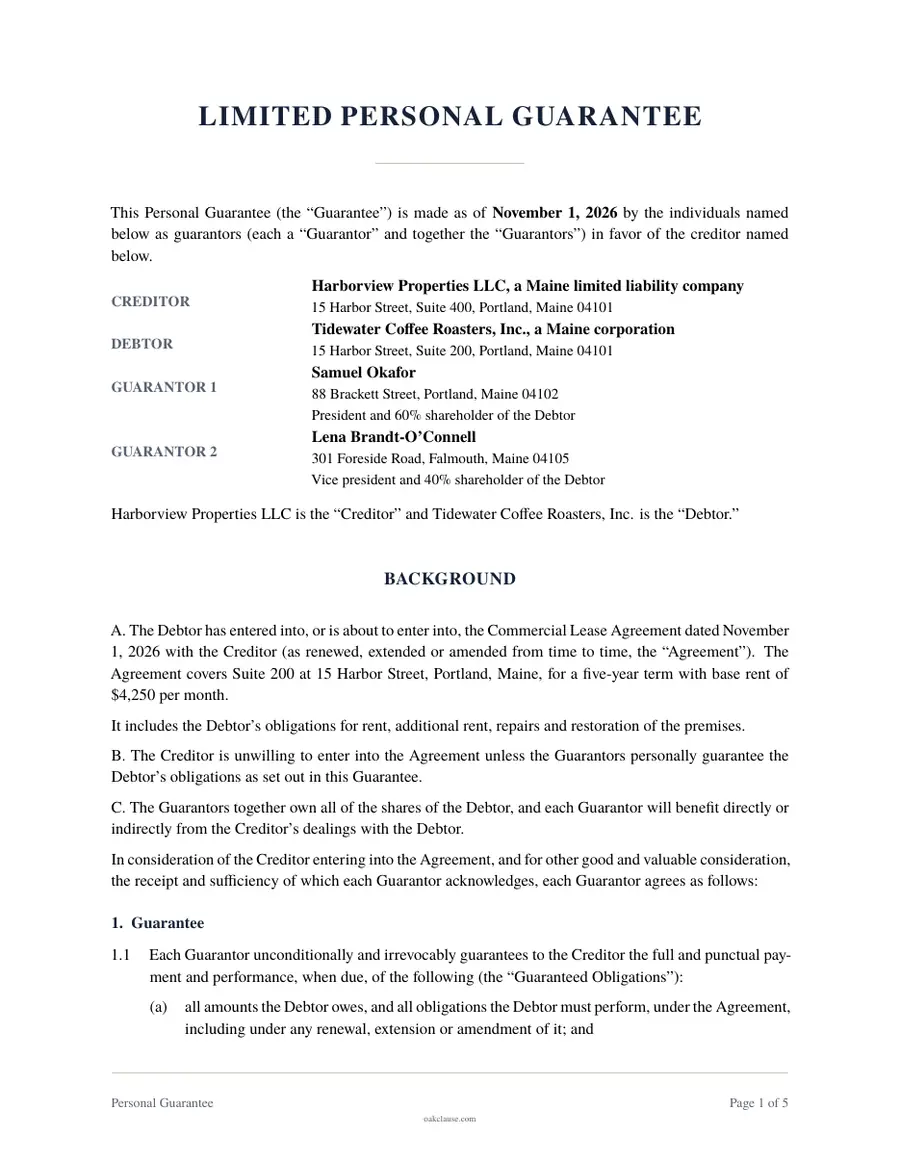
A guarantor is a third person who promises to repay the loan if the borrower does not. By signing the agreement as guarantor, that person becomes responsible for the debt alongside the borrower. For a standalone guarantee with more detail, a separate personal guarantee document can be used.
More Tennessee documents
Other documents people prepare for Tennessee, each with the state’s rules where we have checked them.
All Tennessee documents and rules