Kentucky Separation Agreement
Put your living-apart arrangements in writing.
Includes 30 days of edits
- 5 to 20 minutes
- Print-ready PDF
- Tailored to Kentucky
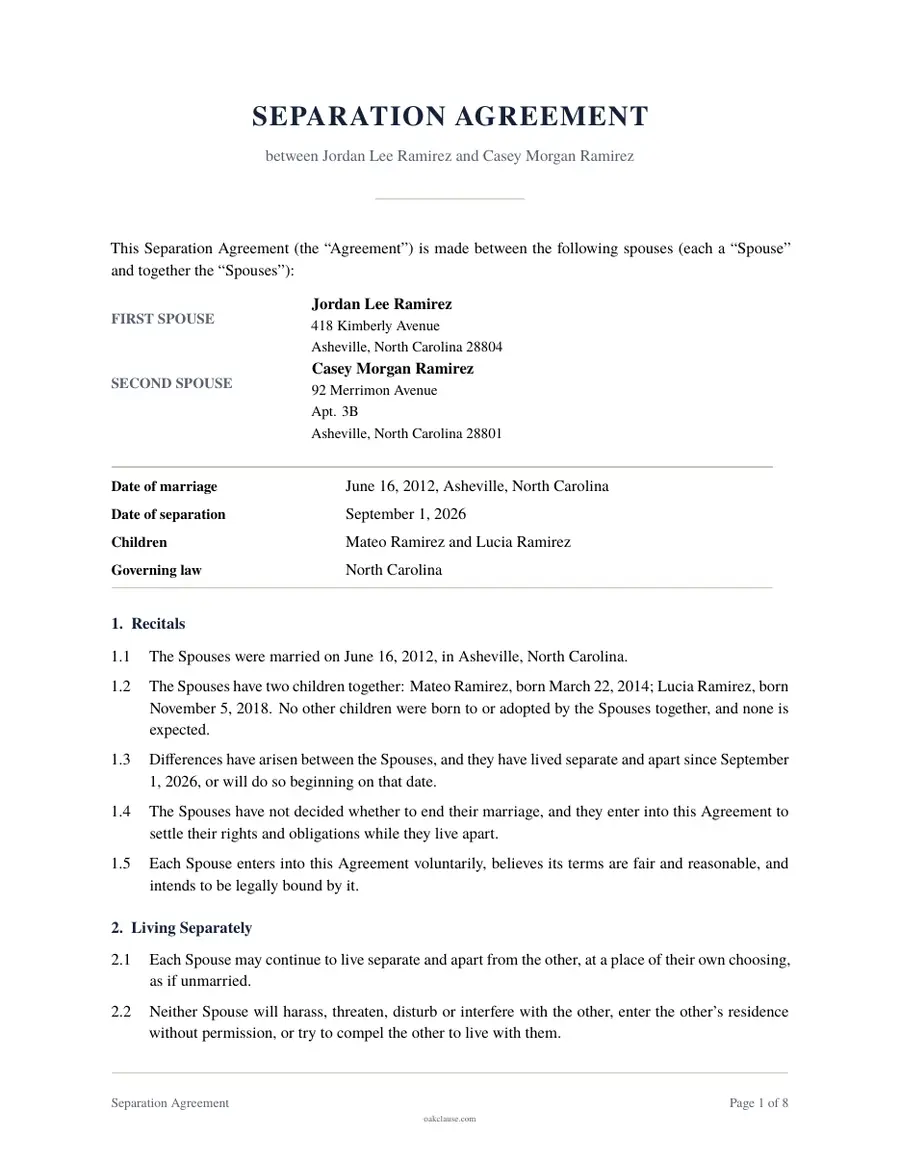
Separation Agreement rules in Kentucky
States differ widely in how they treat separation. Some recognize a formal legal separation granted by a court, some require spouses to live apart for a period before a no-fault divorce, and a few have specific signing formalities for separation agreements, such as acknowledgment before a notary. Child support is calculated under each state's guidelines, and every state lets a court review and change arrangements for children if they are not in the children's best interests. This agreement is governed by the law of the state you select and defers to that state's requirements on support guidelines, custody standards and signing formalities. Check your state's rules, and consider having each spouse consult a family law attorney before signing.
When you create this document for Kentucky, the questionnaire uses Kentucky as the governing law and adds wording that defers to Kentucky requirements where they apply. Laws change, so confirm current rules with official Kentucky sources or a local attorney for anything critical.
What is a Separation Agreement?
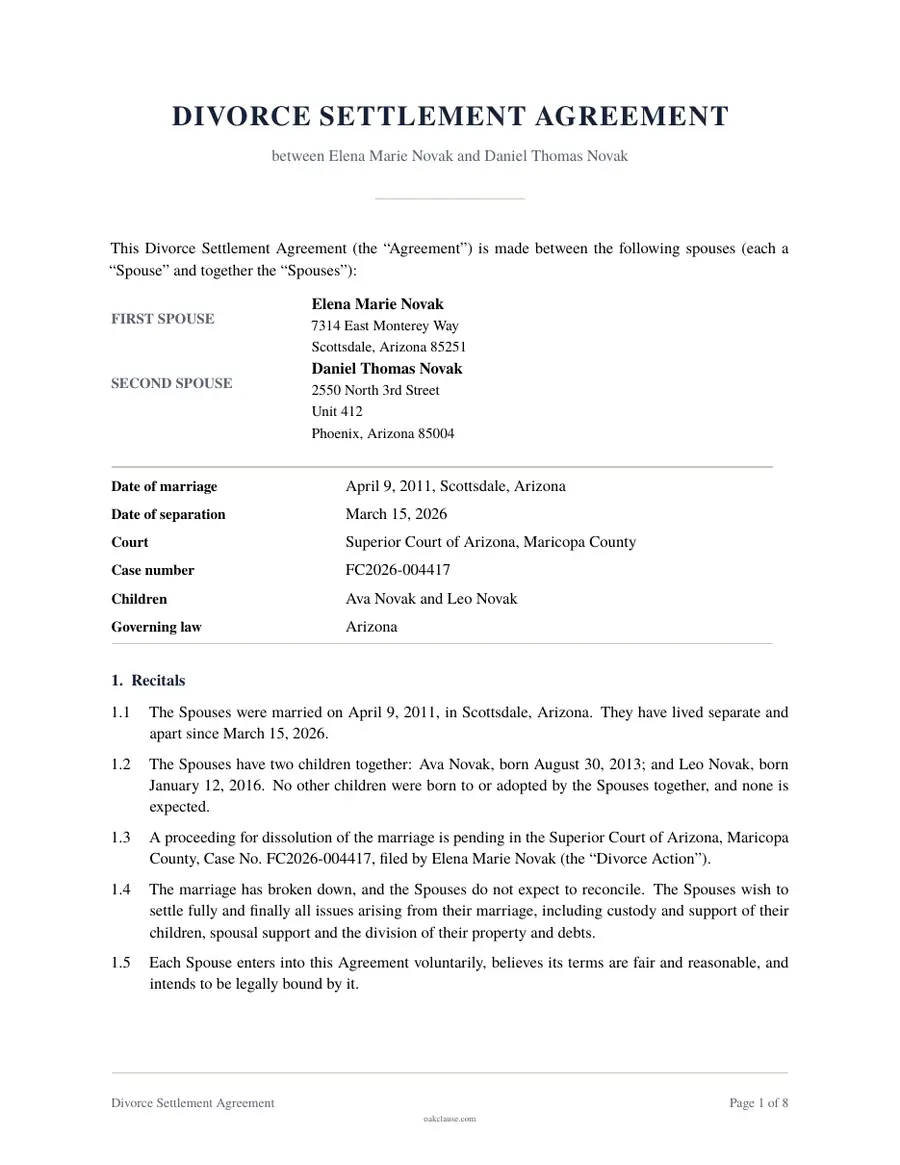
A separation agreement is a written contract between two spouses who have decided to live apart. It records how they will handle the practical and financial side of the separation: where each person lives, how the children will be cared for, who pays which bills, how property and debts are divided, and whether one spouse will support the other.
Some couples use a separation agreement as a cooling-off arrangement while they decide whether to reconcile. Others use it as the first step toward divorce, and later ask the court to adopt the same terms in a divorce judgment. Either way, writing the terms down reduces arguments about who promised what and gives both spouses a clear plan for the months ahead.
Family law is set by each state, and courts keep the final say over arrangements for children. This agreement asks for your state, uses that state's law to govern the agreement, and defers to state rules on custody, child support guidelines and formalities instead of guessing at them.
When to use it
- You and your spouse have separated, or are about to, and want clear ground rules while you live apart.
- You want to agree on parenting time and child support without going to court first.
- One spouse is staying in the family home and you need to decide who pays the mortgage or rent.
- You want to divide bank accounts, vehicles, belongings and debts now rather than leave them in limbo.
- You plan to file for a legal separation or divorce later and want a written starting point for the court.
What is included
- Recitals on the marriage, the separation date and the purpose of the agreement
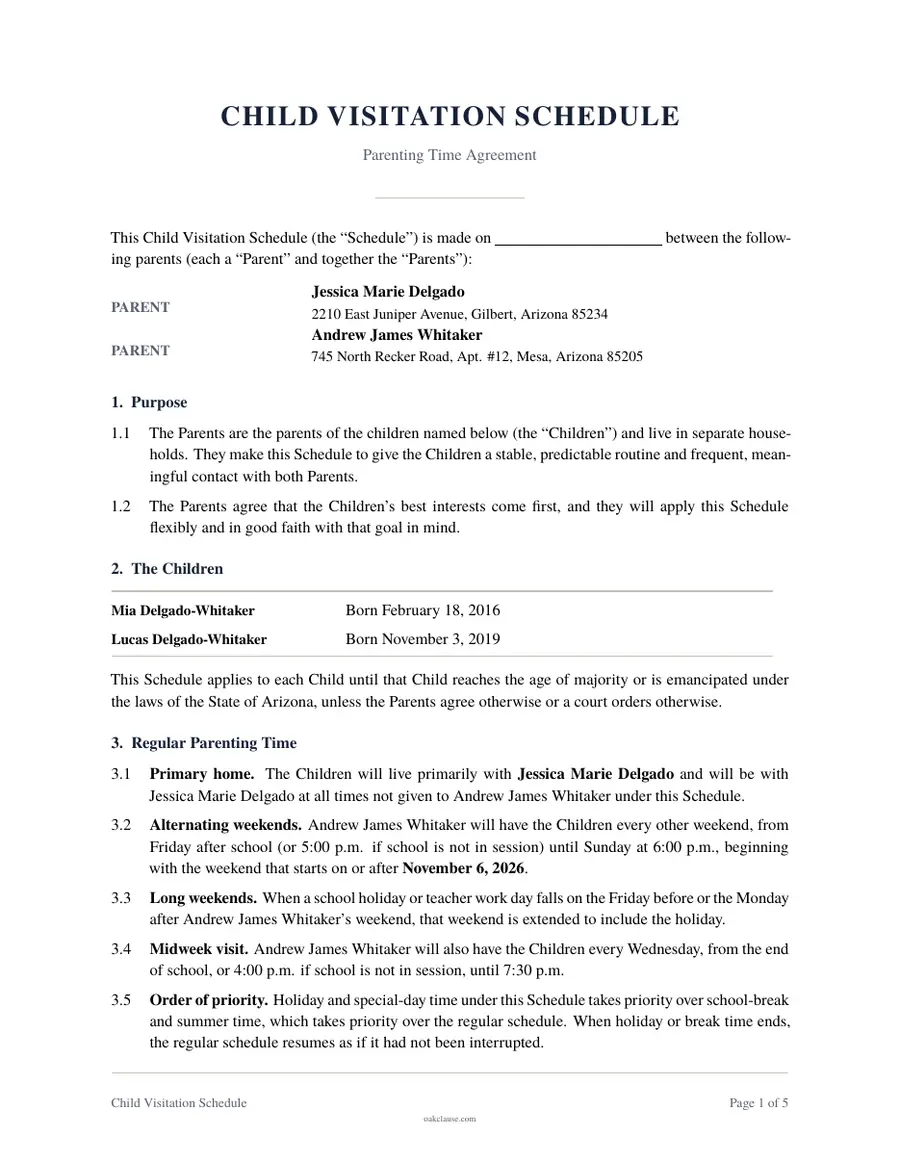
- Legal and physical custody, parenting schedule and relocation notice
- Child support, health insurance and shared child expenses
- Use of the family home and payment of housing costs
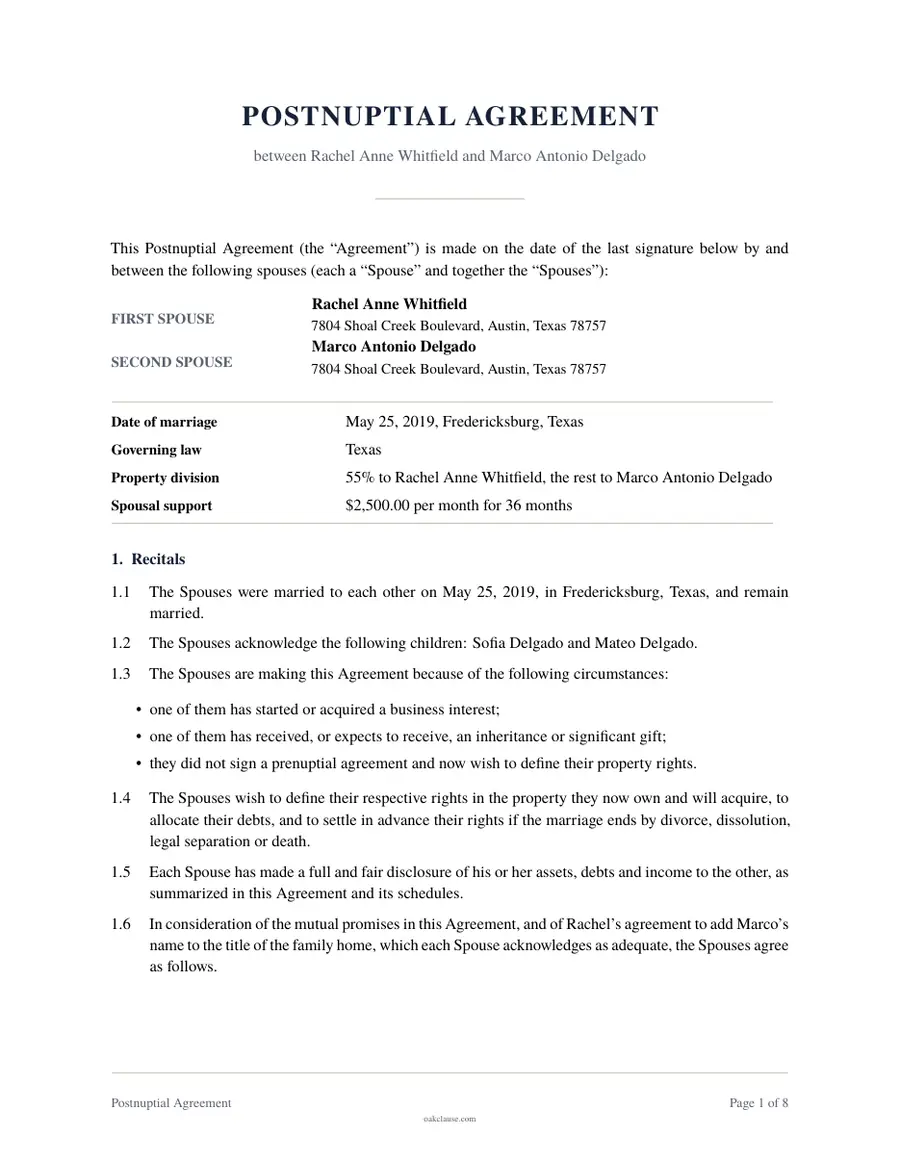
- Division of property, separate property and retirement accounts
- Allocation of debts and protection from new debts
- Spousal support or a mutual waiver
- Mutual release and waiver of inheritance rights
- Tax filing, health insurance, financial disclosure and legal counsel
- Reconciliation, dispute resolution, signatures and notary acknowledgment
How to make your Separation Agreement
Answer the questions
Tell us about the parties and the terms you want. Most documents take about 5 to 20 minutes.
Review the preview
Check the draft as you go and change any answer. The document updates instantly.
Download, sign and keep a copy
Download a print-ready PDF, sign it with the other parties, and give everyone a copy.
Separation Agreement in another state
Back to the general separation agreement page51 states shown
- ALAlabama
- AKAlaska
- AZArizona
- ARArkansas
- CACalifornia
- COColorado
- CTConnecticut
- DEDelaware
- DCDistrict of Columbia
- FLFlorida
- GAGeorgia
- HIHawaii
- IDIdaho
- ILIllinois
- INIndiana
- IAIowa
- KSKansas
- KYKentucky
- LALouisiana
- MEMaine
- MDMaryland
- MAMassachusetts
- MIMichigan
- MNMinnesota
- MSMississippi
- MOMissouri
- MTMontana
- NENebraska
- NVNevada
- NHNew Hampshire
- NJNew Jersey
- NMNew Mexico
- NYNew York
- NCNorth Carolina
- NDNorth Dakota
- OHOhio
- OKOklahoma
- OROregon
- PAPennsylvania
- RIRhode Island
- SCSouth Carolina
- SDSouth Dakota
- TNTennessee
- TXTexas
- UTUtah
- VTVermont
- VAVirginia
- WAWashington
- WVWest Virginia
- WIWisconsin
- WYWyoming
Frequently asked questions
Is a separation agreement the same as a legal separation?
Not quite. A separation agreement is a private contract between spouses. A legal separation is a court order, available in many but not all states, that formally recognizes the separation. In states that offer legal separation, a signed agreement is often submitted to the court so the judge can approve it and include its terms in the order.
Is a separation agreement legally binding?
A properly signed separation agreement is generally an enforceable contract, as long as both spouses entered it voluntarily, disclosed their finances honestly and the terms are not grossly unfair. Terms about children are different: a court can always review and change custody, parenting time and child support if needed to protect the children.
Do we need to have the agreement notarized?
Some states require a separation agreement to be signed before a notary or witnesses to be enforceable, and many courts prefer it even where it is not required. This document includes an optional notary acknowledgment so you can satisfy that requirement if your state has one.
Can we use this agreement if we later divorce?
Often, yes. Many couples submit their separation agreement to the court during a divorce and ask the judge to incorporate its terms into the final judgment. You can state in the agreement that you intend it to be used that way. The court will still review the terms, especially anything involving children.
How is child support decided in a separation agreement?
Every state has child support guidelines, usually based on each parent's income and the parenting schedule. Parents can agree on an amount, but if it differs from the guideline amount, a court may require an explanation or adjust it. It is a good idea to run your state's guideline calculation before choosing a number.
What happens if we get back together?
It depends on your state. In some states, getting back together and resuming married life automatically cancels the parts of the agreement that have not yet been carried out, whether or not you sign anything. Brief attempts to work things out may be treated differently. The agreement defers to your state's law on this point, and you can confirm in writing which terms, if any, should continue.
Do we each need our own lawyer?
It is not required, but it is common, and it makes the agreement harder to challenge later. One lawyer cannot usually represent both spouses. The agreement records whether each spouse had independent legal advice or chose to proceed without it.
Can we change the agreement after signing it?
Yes. You can amend it at any time with a written document signed by both spouses, with the same formalities used for the original. Child-related terms can also be changed by a court if circumstances change significantly.
More Kentucky documents
Other documents people prepare for Kentucky, each with the state’s rules where we have checked them.
All Kentucky documents and rules