Pet Custody Agreement
Decide in writing who keeps a shared dog, cat or other pet, how visits or shared time will work, and who pays for food, vet bills and other costs.
Includes 30 days of edits
- 5 to 20 minutes
- Print-ready PDF
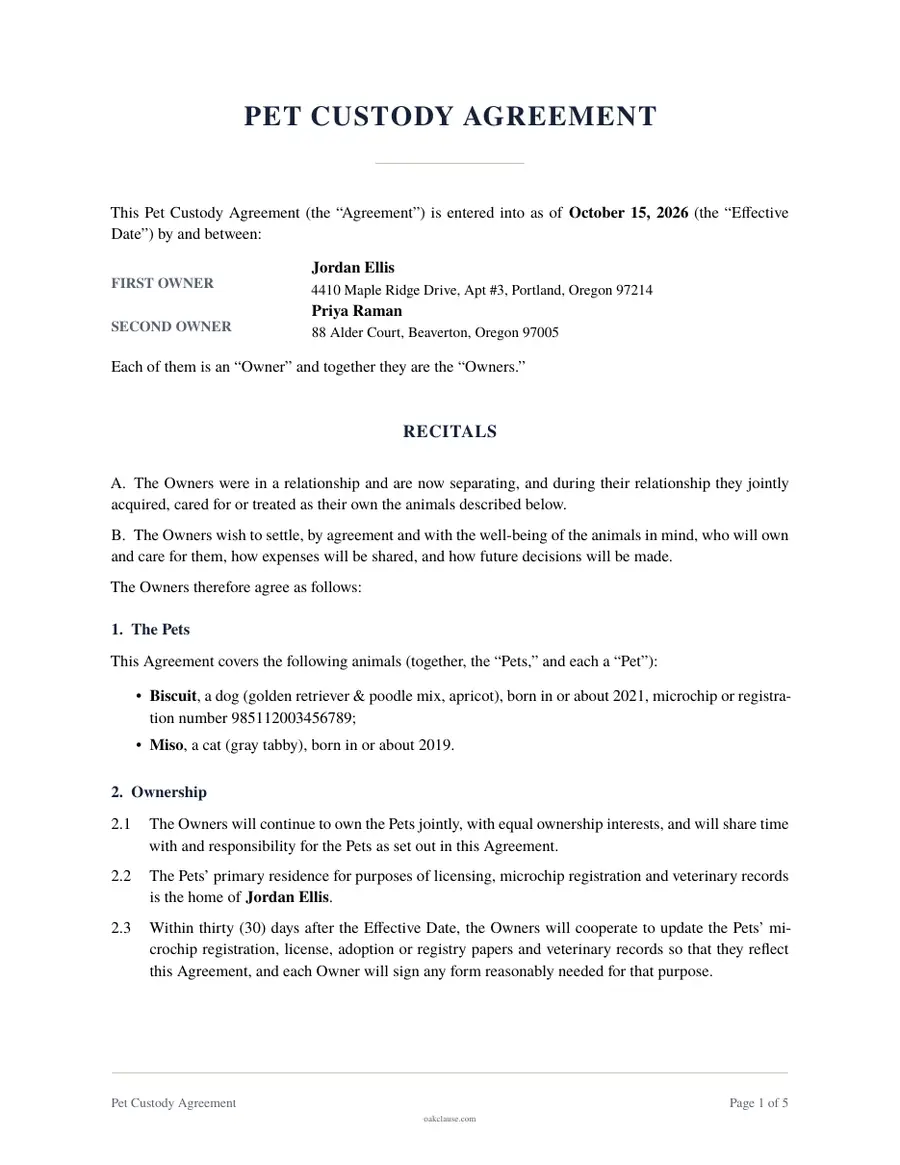
What is a Pet Custody Agreement?
A pet custody agreement is a written contract between two people who share a pet, such as spouses who are separating, unmarried partners who are breaking up, or roommates and friends who adopted an animal together. It records who owns the pet going forward, where the pet will live, and how the other person stays involved, if at all.
In most states, the law treats pets as personal property. Without an agreement, a court deciding a dispute may simply ask who paid for the animal or whose name is on the adoption papers, rather than what arrangement suits the pet and the people who love it. A signed agreement lets the owners set those rules themselves, including shared schedules, visits, care standards and the division of expenses.
This agreement covers one or more pets, lets you choose sole ownership or a shared arrangement, and addresses the practical issues that cause friction later: exchanges, vet decisions, moving away, travel, what happens if one owner can no longer care for the pet, and how disagreements will be handled.
When to use it
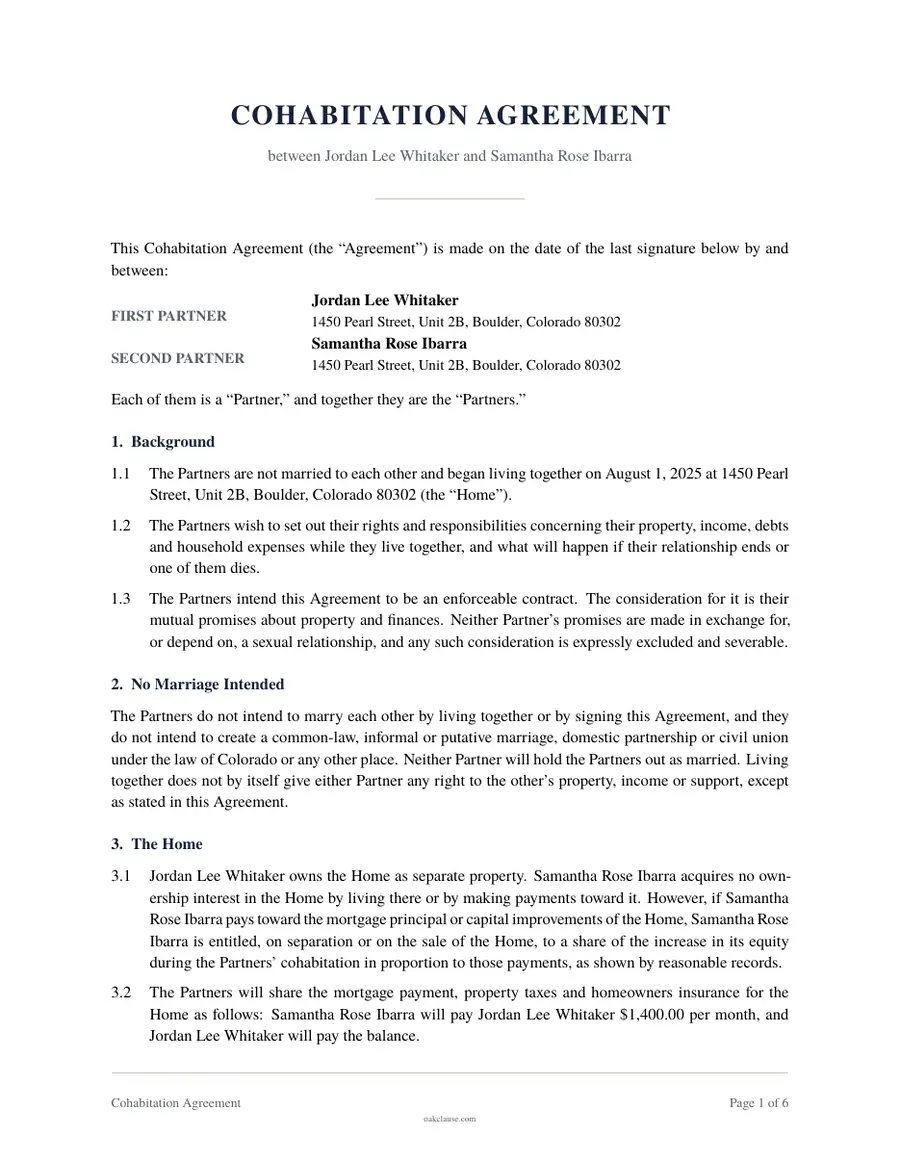
- You and a spouse or partner are separating and need to decide who keeps the family pet.
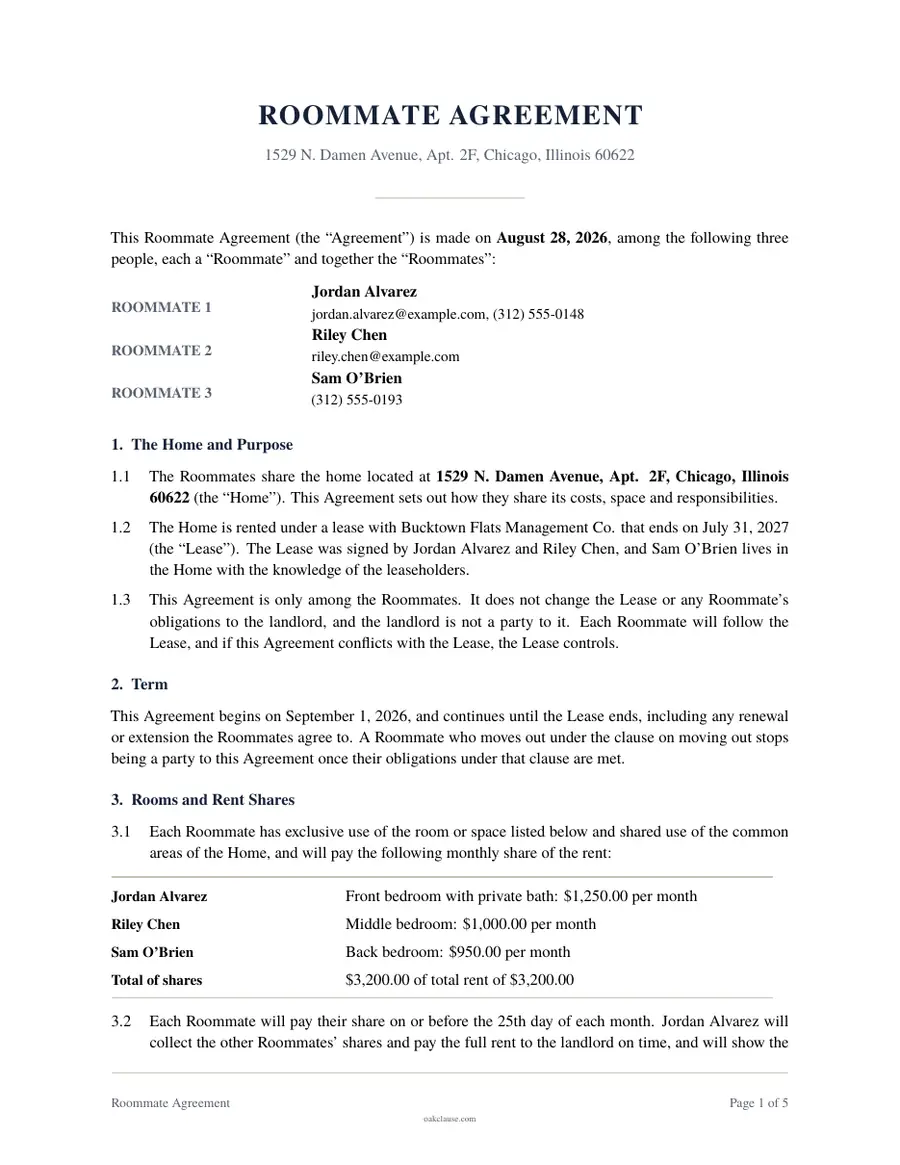
- Two roommates or friends adopted a pet together and one is moving out.
- You want to share a dog or cat on a rotating schedule and split the costs fairly.
- One person is keeping the pet but the other would like regular visits.
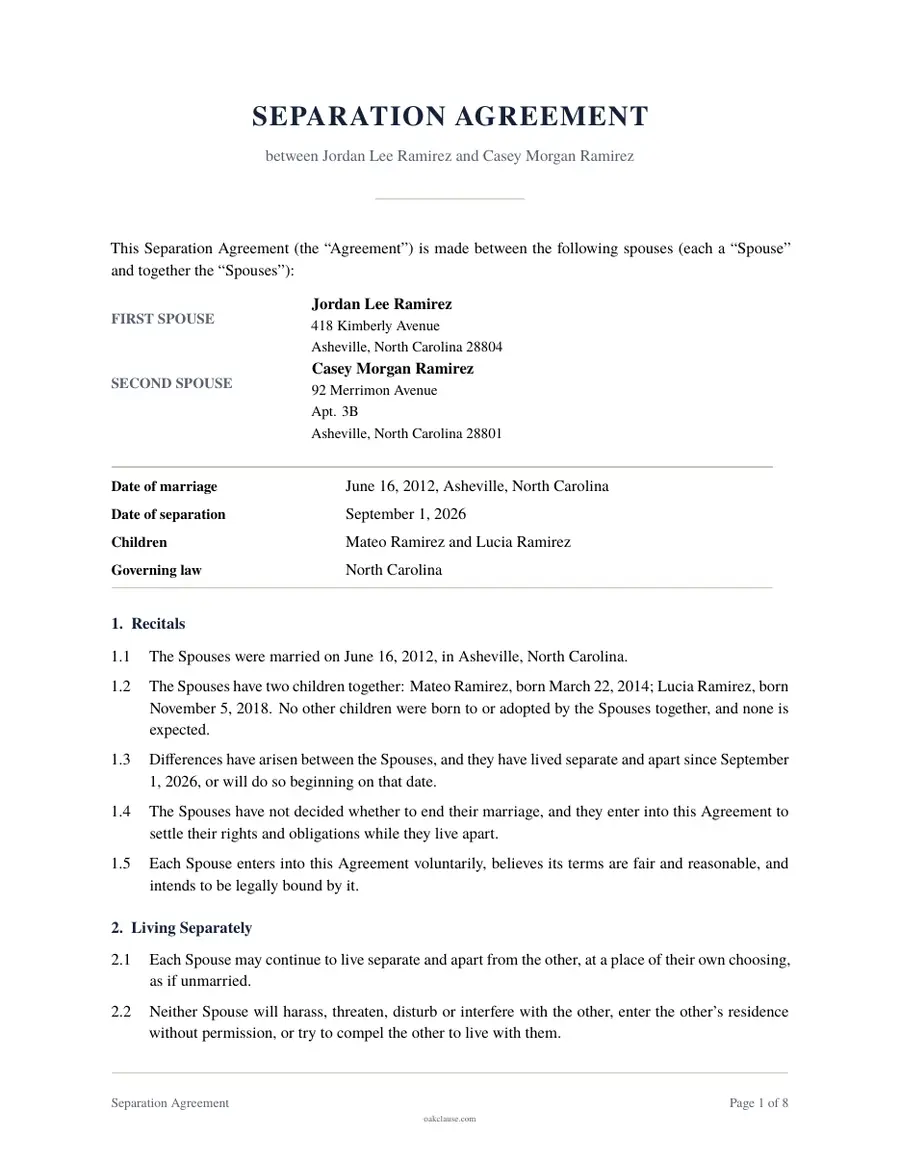
- You want to attach clear pet terms to a separation or divorce settlement.
What is included
- Identification of each pet, including microchip details
- Sole ownership or shared ownership arrangement
- Custody schedule, visits and exchange logistics
- Division of routine and veterinary expenses
- Veterinary decision-making and emergency care
- Agreed care standards for diet, exercise and training
- Relocation and travel notice rules
- Right of first refusal if an owner cannot keep the pet
- End-of-life decisions and dispute resolution
- Signature blocks with an optional notary acknowledgment
How to make your Pet Agreement
Answer the questions
Tell us about the parties and the terms you want. Most documents take about 5 to 20 minutes.
Review the preview
Check the draft as you go and change any answer. The document updates instantly.
Download, sign and keep a copy
Download a print-ready PDF, sign it with the other parties, and give everyone a copy.
Frequently asked questions
Are pet custody agreements legally binding?
A pet custody agreement is a contract, and courts generally enforce contracts about personal property, which is how most states classify pets. Some courts are more willing than others to enforce detailed visitation or shared schedules, so the clearest terms are the ones about ownership and costs.
How do courts usually decide who gets a pet?
Traditionally, courts treat a pet like other property and look at who bought or adopted it, whose name is on the registration or microchip, and who paid for its care. A few states now allow judges in divorce cases to consider the animal's well-being. A written agreement avoids leaving the decision to those general rules.
Can we share custody of a dog or cat?
Yes. Many owners alternate weeks or months, or agree on a custom schedule. This agreement lets you set the schedule, where and how exchanges happen, and who pays for what while the pet is with each owner.
Who pays for vet bills under a pet custody agreement?
Whatever the owners agree. Common options are that the owner who keeps the pet pays everything, that costs are split by a set percentage, or that each owner covers routine costs during their own time while major vet bills are shared.
Can a pet custody agreement be part of a divorce?
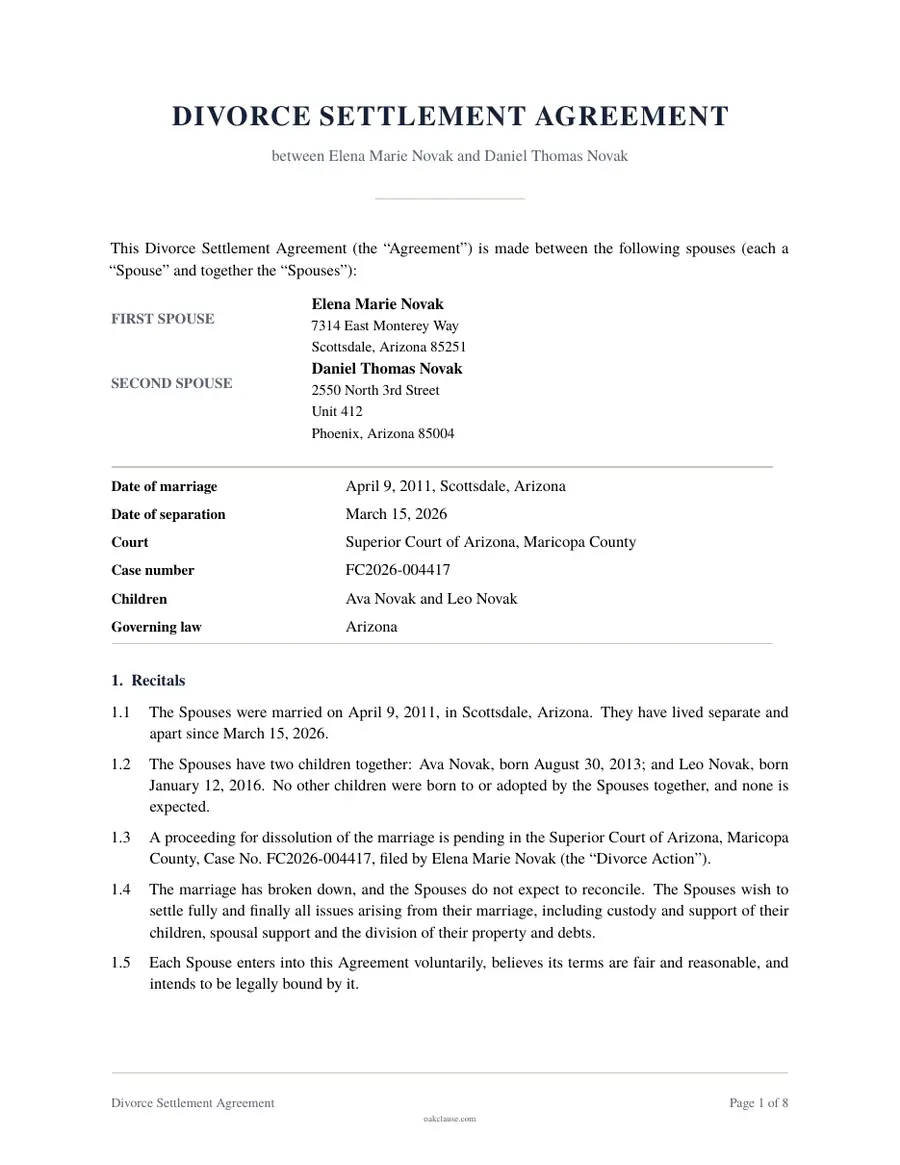
Yes. Many couples sign a pet agreement and then attach it to or reference it in their separation or divorce settlement. If you are already in a court case, ask your attorney how the court in your state handles pet terms.
What happens if one owner wants to move away?
This agreement can require an owner to give advance written notice before moving the pet's main home, so the owners can revisit the schedule. If the owners cannot agree on a new arrangement, the dispute resolution clause applies.
Does a pet custody agreement need to be notarized?
Notarization is usually not required for a private agreement like this. Some owners choose to notarize it anyway because it confirms the identity of the signers and can be helpful if the agreement is later filed with a court.
What if one owner can no longer care for the pet?
You can include a right of first refusal, which means the owner giving up the pet must first offer it to the other owner before rehoming it with anyone else or surrendering it to a shelter.