Montana Divorce Settlement Agreement
Turn the deal you and your spouse have reached into a complete written settlement covering property, debts, support and the children, ready to present to the divorce court.
Includes 30 days of edits
- 5 to 20 minutes
- Print-ready PDF
- Tailored to Montana
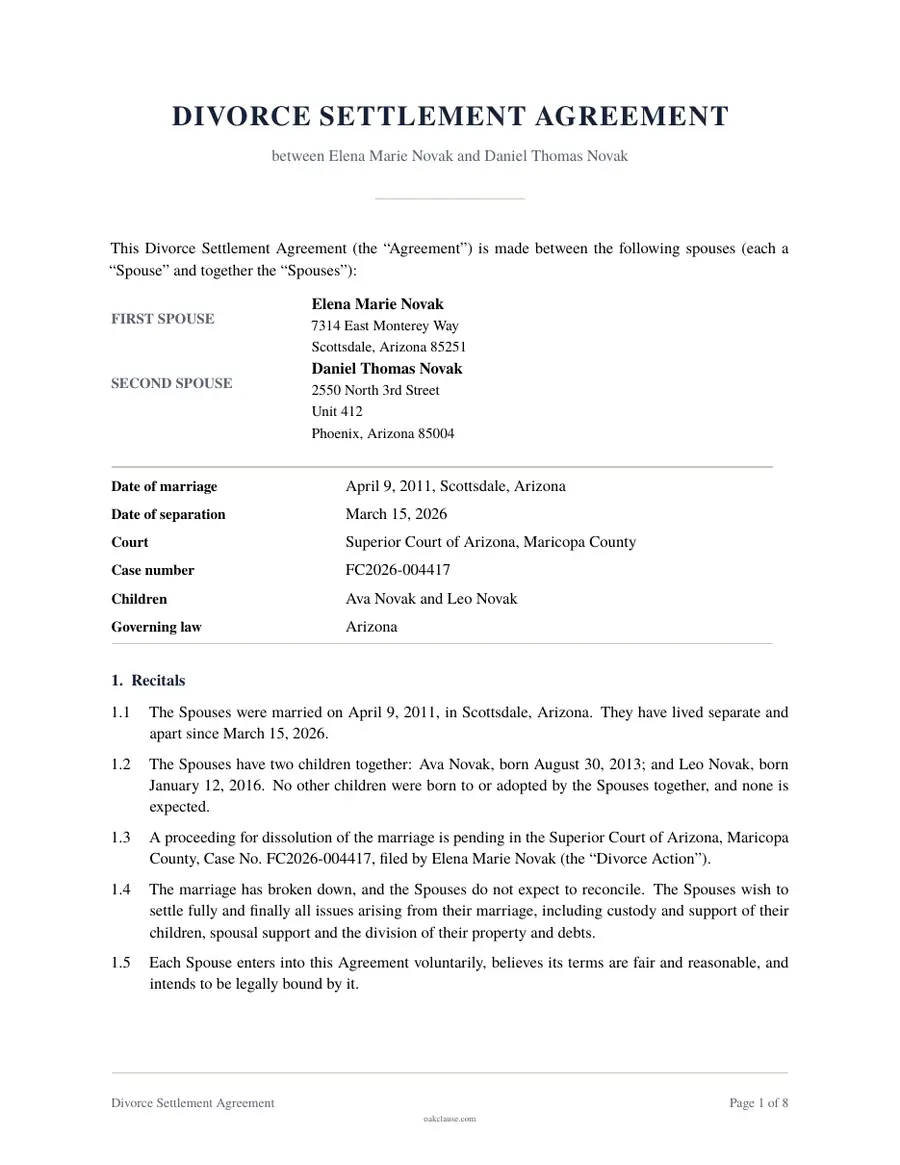
Divorce Settlement rules in Montana
Every state sets its own divorce rules. Some divide marital property equally as community property, while most divide it equitably based on a range of factors. States also differ in their child support guidelines, how long and under what conditions spousal support may be paid and modified, residency and waiting-period requirements, and whether a settlement agreement must be notarized or filed on a court-approved form. This agreement is governed by the law of the state you select and defers to that state's rules on support guidelines, property division standards, modification and court approval. Many courts also require their own financial affidavits or parenting plan forms, which you can file alongside this agreement. For a high-asset or contested matter, consider having each spouse consult a family law attorney.
When you create this document for Montana, the questionnaire uses Montana as the governing law and adds wording that defers to Montana requirements where they apply. Laws change, so confirm current rules with official Montana sources or a local attorney for anything critical.
What is a Divorce Settlement Agreement?
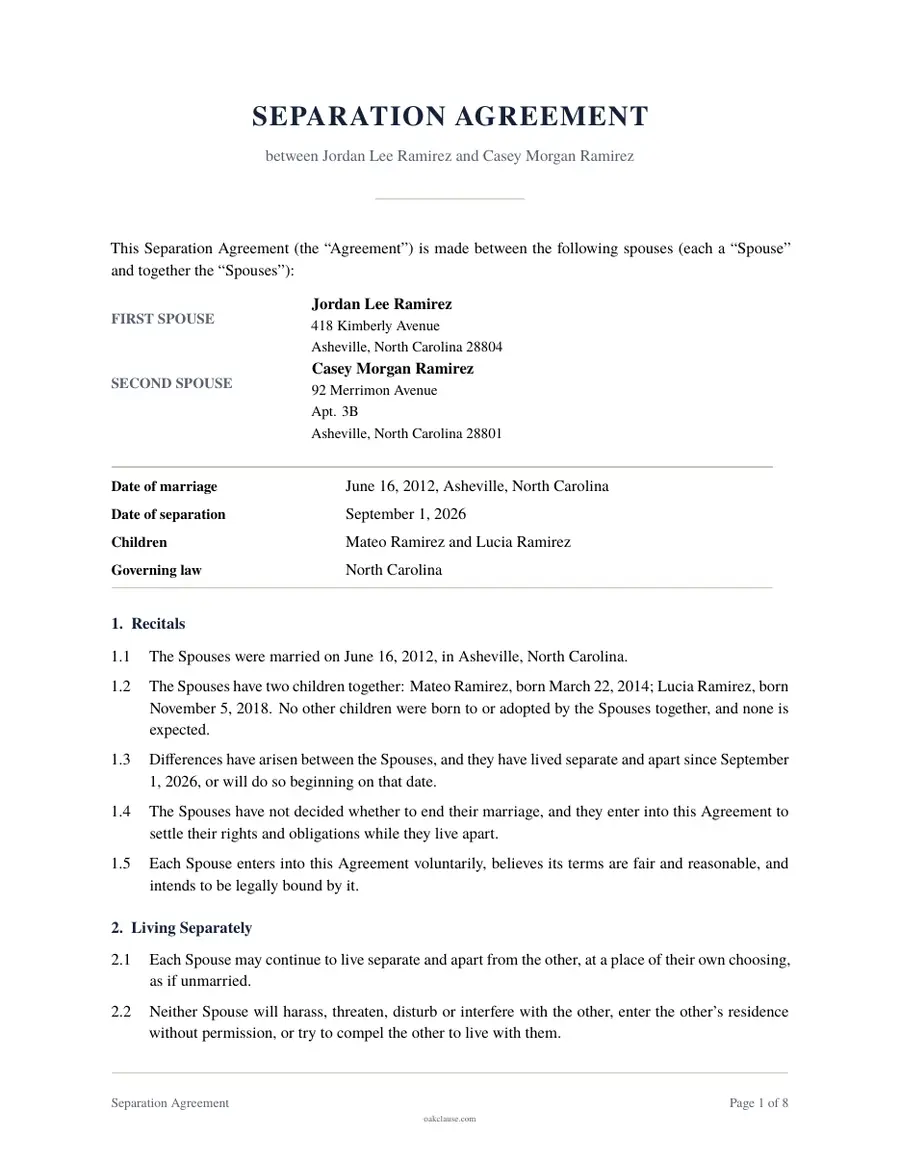
A divorce settlement agreement, often called a marital settlement agreement, is the contract spouses sign when they agree on how to end their marriage. It divides real estate, accounts, vehicles, retirement savings and debts, sets any spousal support, and, for parents, records custody, parenting time and child support.
In an uncontested divorce, the settlement agreement does most of the work. The spouses file it with the court, and the judge reviews it and, if it is acceptable, makes it part of the final divorce judgment or decree. Once that happens, the terms can usually be enforced like any other court order, and the spouses avoid a trial over issues they have already resolved.
Divorce law is state law. Each state has its own rules for dividing property, calculating child support and approving agreements, and many courts have their own required forms. This agreement asks for your state, applies that state's law, and defers to state requirements rather than guessing at them, so it works alongside whatever forms your court requires.
When to use it
- You and your spouse agree on how to divide your property and debts and want an uncontested divorce.
- You have negotiated a deal, on your own or through mediation, and need to put it into a formal written agreement.
- You need to decide who keeps the house, how retirement accounts are split and who pays which debts.
- You have children and want to set custody, a parenting schedule and child support in one document.
- One spouse will pay spousal support or a lump-sum payment to even out the property division.
What is included
- Recitals identifying the marriage, the court and the divorce case
- Custody, parenting plan, relocation and tax dependency terms
- Child support, health insurance, shared expenses and college costs
- Division of real estate with deed and refinance deadlines
- Division of accounts, vehicles and retirement plans, with an equalization payment
- Allocation of debts with hold-harmless protection
- Spousal support or a mutual waiver, with optional life insurance security
- Name restoration, taxes, beneficiary updates and mutual releases
- Incorporation into the divorce judgment and dispute resolution
- Signature blocks and optional notary acknowledgments
How to make your Divorce Settlement
Answer the questions
Tell us about the parties and the terms you want. Most documents take about 5 to 20 minutes.
Review the preview
Check the draft as you go and change any answer. The document updates instantly.
Download, sign and keep a copy
Download a print-ready PDF, sign it with the other parties, and give everyone a copy.
Divorce Settlement in another state
Back to the general divorce settlement page51 states shown
- ALAlabama
- AKAlaska
- AZArizona
- ARArkansas
- CACalifornia
- COColorado
- CTConnecticut
- DEDelaware
- DCDistrict of Columbia
- FLFlorida
- GAGeorgia
- HIHawaii
- IDIdaho
- ILIllinois
- INIndiana
- IAIowa
- KSKansas
- KYKentucky
- LALouisiana
- MEMaine
- MDMaryland
- MAMassachusetts
- MIMichigan
- MNMinnesota
- MSMississippi
- MOMissouri
- MTMontana
- NENebraska
- NVNevada
- NHNew Hampshire
- NJNew Jersey
- NMNew Mexico
- NYNew York
- NCNorth Carolina
- NDNorth Dakota
- OHOhio
- OKOklahoma
- OROregon
- PAPennsylvania
- RIRhode Island
- SCSouth Carolina
- SDSouth Dakota
- TNTennessee
- TXTexas
- UTUtah
- VTVermont
- VAVirginia
- WAWashington
- WVWest Virginia
- WIWisconsin
- WYWyoming
Frequently asked questions
What is the difference between a divorce settlement agreement and a divorce decree?
The settlement agreement is the contract the spouses sign. The divorce decree, or judgment, is the court's order ending the marriage. When the judge approves a settlement agreement, its terms are usually incorporated into the decree so they can be enforced as a court order.
Do we still have to go to court if we sign a settlement agreement?
You still need a court to grant the divorce, but an agreement usually makes the process much simpler. Many courts approve uncontested divorces on the paperwork or after a short hearing. Your court may also require its own forms, such as financial disclosures or a parenting plan, in addition to this agreement.
Can a judge reject our settlement agreement?
Yes. Judges review settlement agreements, and they may refuse to approve terms that seem unfair, were signed without full financial disclosure, or are not in the children's best interests. Child support that is far from the state guideline amount is a common reason for a judge to ask questions.
How are retirement accounts divided in a divorce?
Many employer retirement plans, such as 401(k) plans and pensions, can only be divided with a special court order, commonly called a qualified domestic relations order. IRAs are usually divided by a direct transfer under the divorce judgment. This agreement records the agreed split and commits both spouses to sign the paperwork the plan requires.
If my ex agrees to pay a joint debt, can the creditor still come after me?
Usually, yes. A settlement agreement binds the spouses but not the creditors, so a lender can still pursue anyone whose name is on the account. That is why this agreement includes a hold-harmless promise, so you can seek repayment from your former spouse if they fail to pay a debt assigned to them.
Can spousal support or child support be changed later?
Child support can almost always be modified by a court when circumstances change substantially. Spousal support depends on the state and on what the agreement says; some states let spouses agree that support cannot be modified. The agreement lets you choose, within what your state allows.
Does a settlement agreement need to be notarized?
Requirements vary. Some states or courts require signatures on a marital settlement agreement to be notarized, and others accept a signed agreement filed with a sworn statement. Including a notary acknowledgment is a simple way to satisfy the stricter requirement.
Can I go back to my former name as part of the divorce?
In most states you can ask the divorce court to restore a former name as part of the final judgment, which is usually simpler than a separate name change case. This agreement can include that request so it appears in the decree.
More Montana documents
Other documents people prepare for Montana, each with the state’s rules where we have checked them.
All Montana documents and rules